
How do you calculate engagement rate?
Engagement rate = (total interactions / posts analysed) / followers × 100
Add up likes, comments, and shares across the posts you're measuring, divide by the number of posts, then divide by your follower count and multiply by 100. Ten posts earning 4,500 total interactions on a 10,000-follower account works out to a 4.5% engagement rate.
As rough bars, 1–3% is solid on most platforms, 3–6% is good, and above 6% is excellent, though small accounts routinely beat large ones, and TikTok runs well above Instagram or LinkedIn. Your own average is the benchmark worth beating: score every post the same way and hunt for the formats and topics that clear it.
Log each post's likes, comments, and shares in a Ferra table and you can ask which formats or topics run above your average.
How the engagement rate calculator works
Follower count, sample size, interaction total: that's everything the calculator needs. It returns average interactions per post and the rate as a percentage of followers, so accounts of any size land on the same scale.
- Followers
- The account's follower count at the time you measure. If followers grew a lot during the period, the current count works: just apply the same convention every time.
- Posts analysed
- How many posts are in the sample. A fixed recent window, the last 10 or 20 feed posts, beats cherry-picking, and stories stay out because their interactions are counted differently.
- Total likes, comments, and shares
- The interaction sum across every sampled post, from the platform's insights. Including saves or other reactions is fine if you include them for every post, every measurement.
Calculating engagement rate
Per-post first: divide total interactions by the number of posts. Then divide that average by followers and multiply by 100. Take an account with 15,000 followers whose 20 posts earned 6,000 total likes, comments, and shares.
6,000 ÷ 20 = 300 interactions per post. Then 300 ÷ 15,000 = 0.02, and 0.02 × 100 = 2%, on a typical post, 2 followers in every 100 interact.
Skip the per-post step and the number explodes: 6,000 ÷ 15,000 would read 40%, twenty times too high, because it bundles 20 posts into one. Mixing bases is the subtler slip: a rate calculated on reach is always higher than one calculated on followers, so the two can never be compared directly.
What is a good engagement rate?
On follower-based math, 1–3% is commonly considered solid across most platforms and above 5% is strong. Below 1%, either the content isn't landing or the follower base has gone stale. Short-video feeds run higher than legacy social networks, so benchmark within a platform, never across platforms.
Size drags the rate down reliably, a niche account of 5,000 true fans out-engages a broad account of 500,000 casual followers. Watch your own trend hardest. A rate drifting down over months is an early warning that reach and relevance are slipping, well before the follower count shows it.
How to improve engagement rate
More of the followers who see a post have to act on it, that's the only way the rate moves. Prompts do the direct work; timing and format decide how many followers see the post at all.
- End with a question
- Polls and clear calls to comment give people a reason to respond. Posts that invite a reply reliably out-engage posts that merely announce.
- Reply within the first hour
- Fast answers keep threads alive and draw further replies, and they signal to the algorithm that the post deserves more reach.
- Publish when followers are online
- Your platform insights show the active window. Posting into it front-loads interactions, which earns further distribution.
- Ride the promoted format
- Platforms push whatever format they're currently backing, short video, carousels. Matching it earns more impressions among followers and more chances to interact.
- Cut what flops
- Review your lowest-engagement posts monthly and stop making them. Trimming weak content raises the average without a single new idea.
- Prune ghost followers
- Bought or long-inactive followers inflate the denominator forever. Growing slowly with real followers keeps the rate honest and the algorithm on your side.
Other calculators
Browse all calculatorsRelated templates
Browse all templates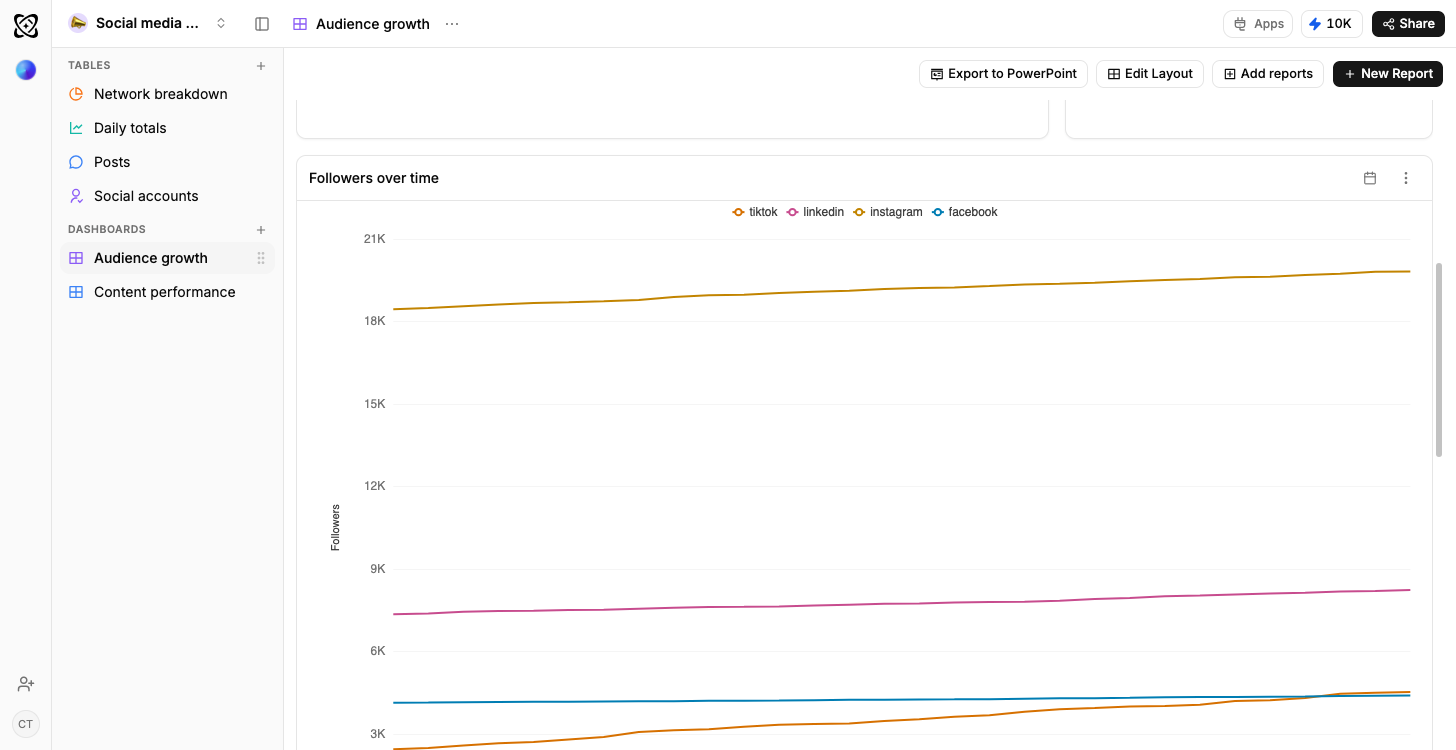
- TikTok
- YouTube
Social media analytics
Every channel compared, and what works where
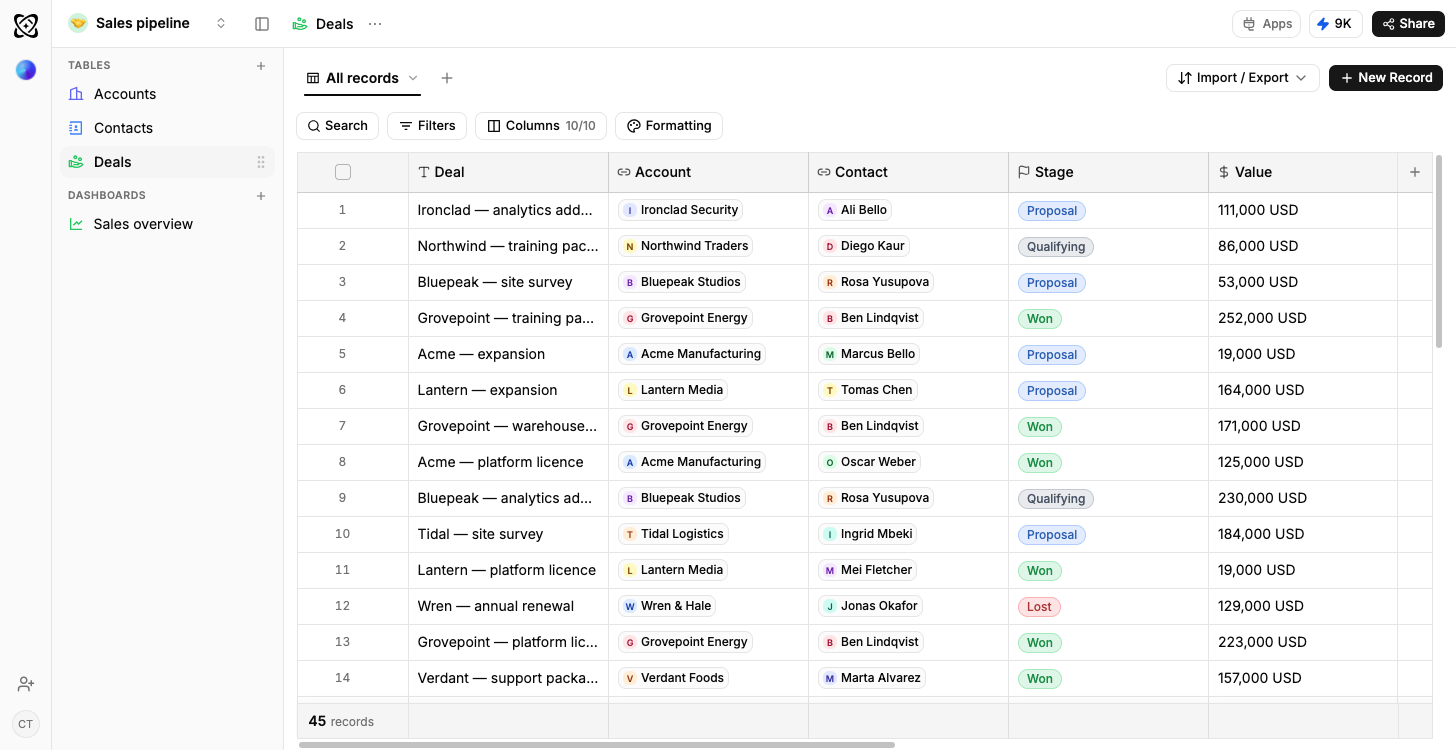
Sales pipeline
Open pipeline by stage, results by owner
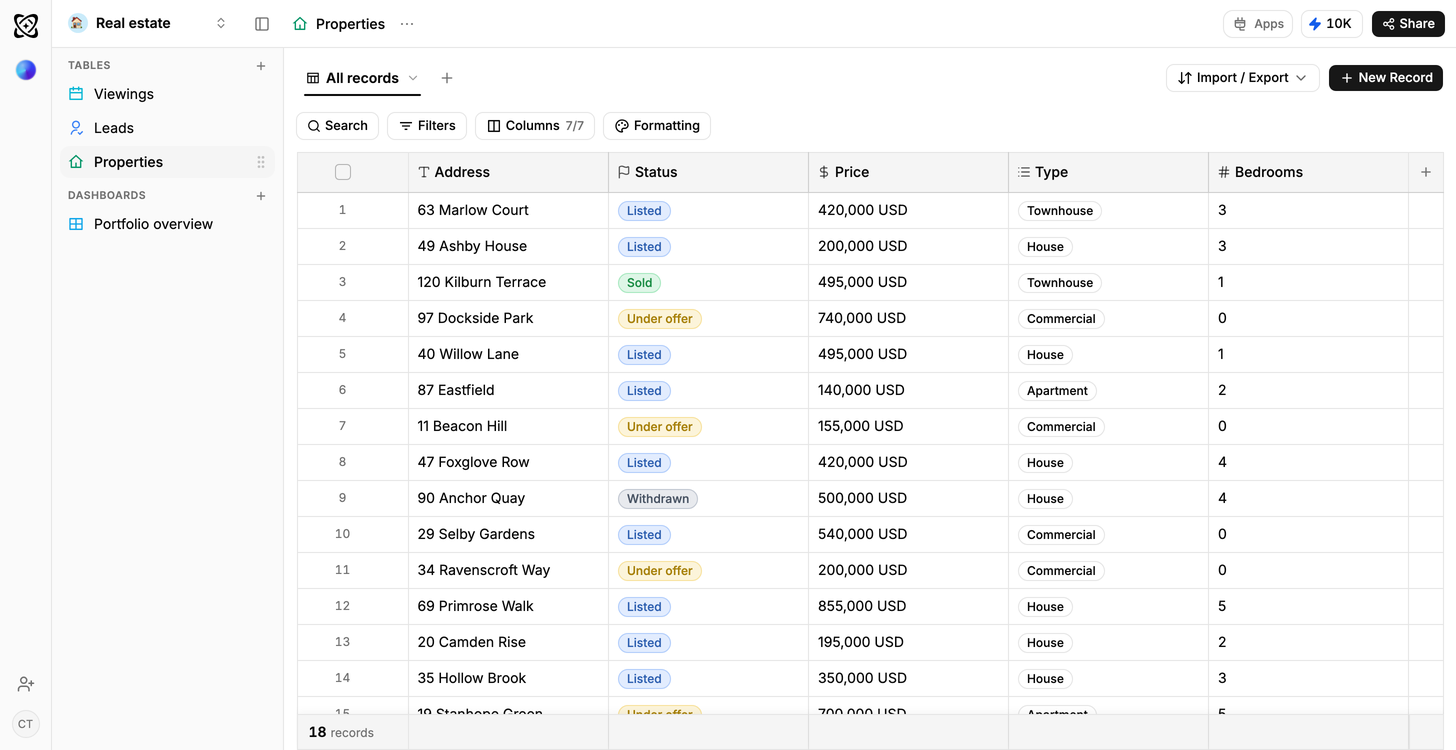
Real estate
Portfolio value and leads, by stage
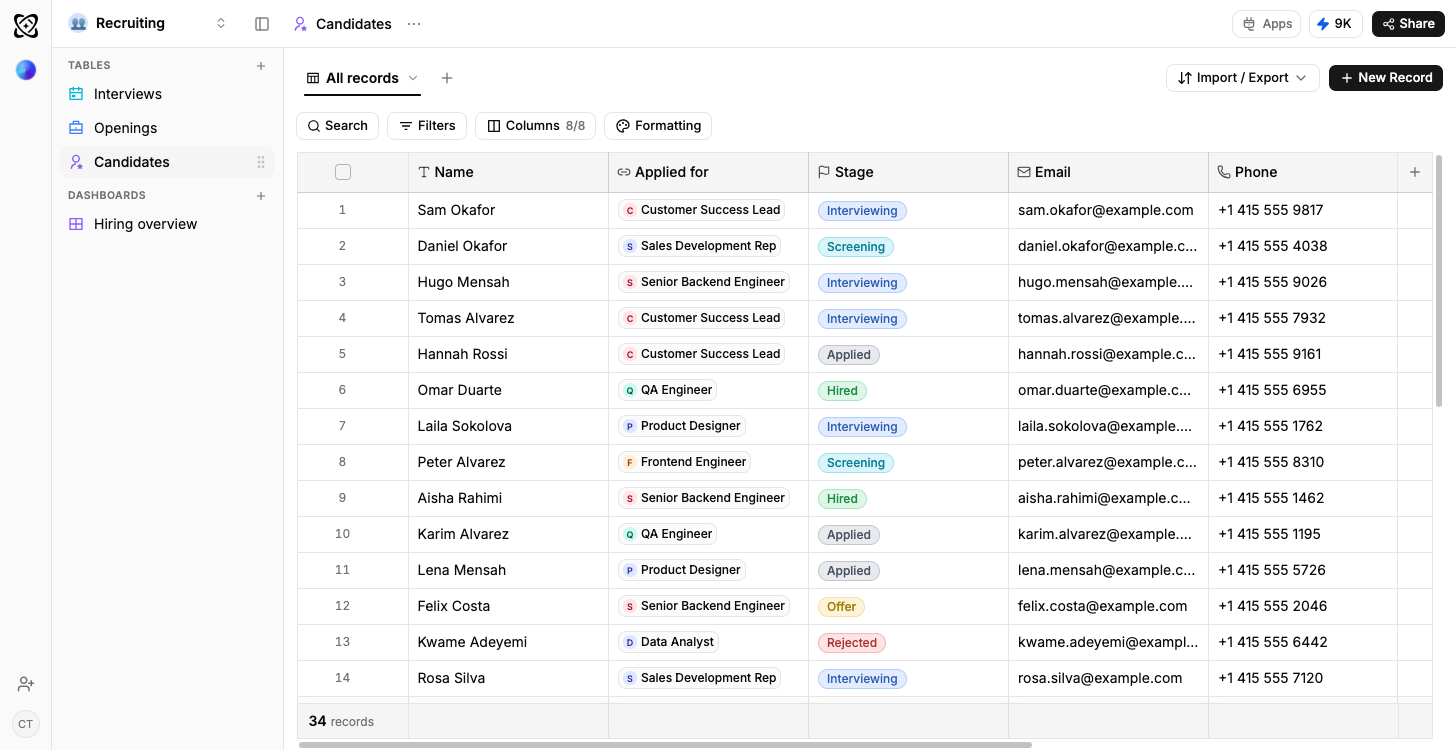
Recruiting
Candidates by stage, openings by status
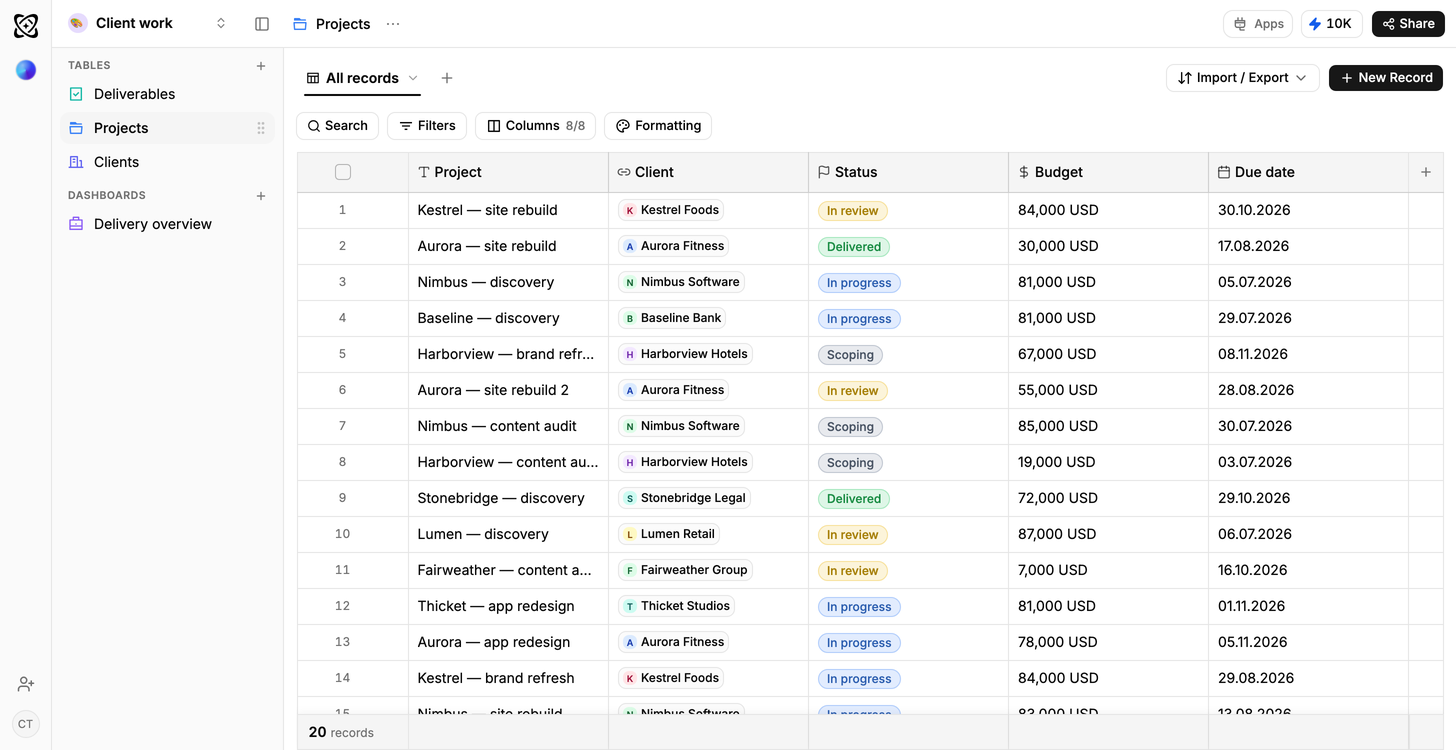
Client work
Due this week; shipped but not billed
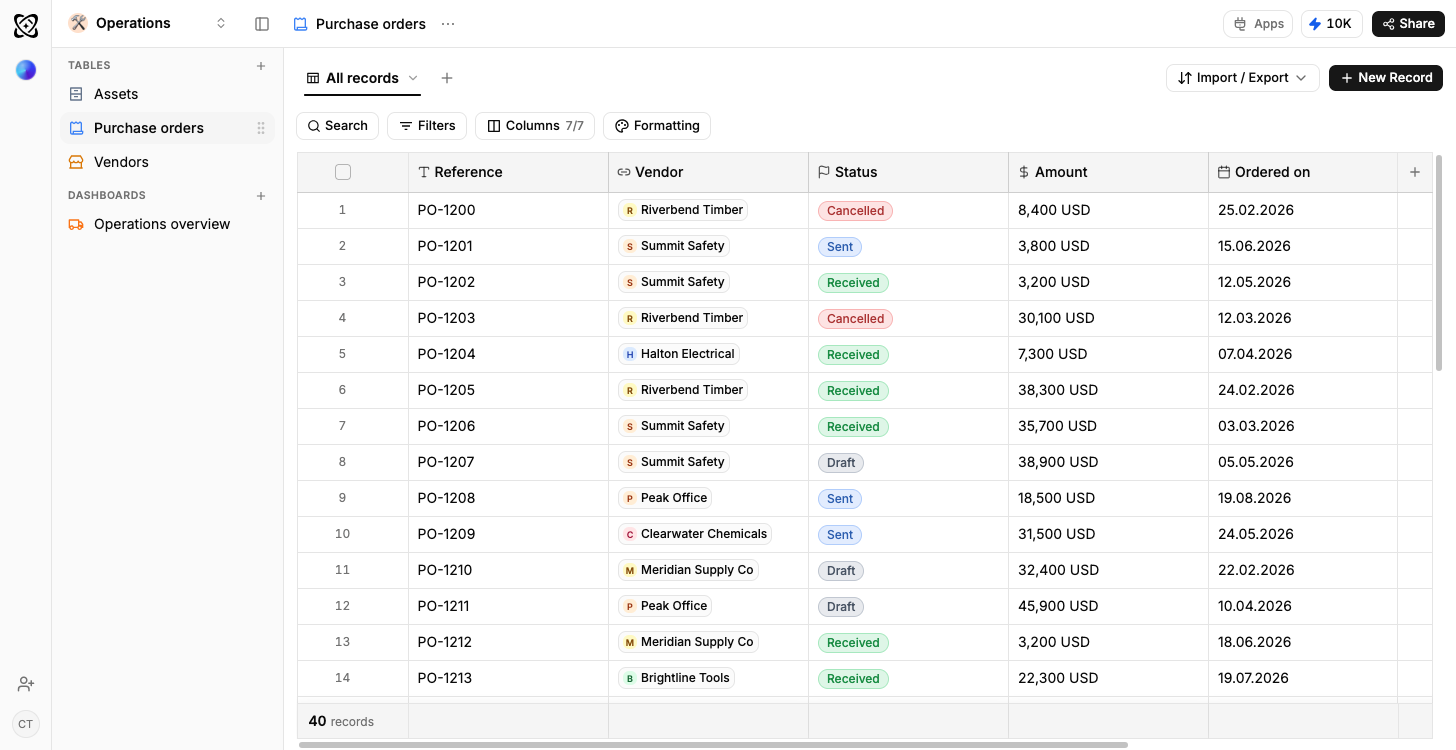
Operations
Orders in flight, spend by supplier