
How do you calculate full-time equivalent (FTE)?
FTE = full-time headcount + part-time headcount × (part-time hours per week / full-time hours per week)
Twelve full-timers plus five people working 20 hours against a 40-hour week comes to 12 + 5 × 20/40 = 14.5 FTE. That's the whole conversion: every full-time employee counts as 1, and each part-time group counts as its weekly hours divided by a full-time week, times its headcount. Add the pieces and you have your roster expressed as full-time workers.
Reach for FTE where headcount would mislead: budgeting labor cost, or comparing team capacity across departments. Regulatory thresholds are usually written in FTE rather than people as well: the US ACA employer mandate applies at 50 FTE. One catch: the definition of a full-time week varies. 40 hours is standard in the US, 35–38 elsewhere, and the ACA uses 30, so state which base you used alongside the number.
A Ferra roster table with a weekly-hours column can carry FTE as a computed value, so the figure recalculates itself as people join, leave, or change hours.
How the FTE calculator works
Enter both headcounts and the weekly hours each group works. The calculator returns your total full-time equivalent, the roster expressed as a number of full-time workers, plus the total weekly hours behind it.
- Full-time employees
- People on your standard full-time schedule. Count people, not positions: an unfilled role contributes no hours and no FTE.
- Full-time hours per week
- What a full week means at your company: commonly 40, but 37.5 or 35 in many organizations. Every part-time schedule gets divided by this base, so use your actual policy number.
- Part-time employees
- People working less than the full-time week. Different part-time schedules? Run each group separately and add the results.
- Part-time hours per week
- The weekly hours each part-timer works: scheduled contract hours, not occasional overtime. Where hours vary week to week, average over a recent representative period.
Calculating FTE
Every full-time employee is exactly 1 FTE. A part-timer is the fraction of a full week they work: weekly hours divided by the full-time base, multiplied by the number of people on that schedule, then added to the full-time headcount.
Take 8 full-time employees on a 40-hour week and 6 part-timers working 25 hours each. The part-time contribution is 6 × (25 / 40) = 6 × 0.625 = 3.75 FTE, so total FTE = 8 + 3.75 = 11.75. Total weekly hours confirm it: 8 × 40 + 6 × 25 = 320 + 150 = 470 hours, and 470 / 40 = 11.75.
The wrong full-time base quietly poisons the whole roster. Divide by 40 when your company's full week is 37.5 hours and every part-timer's contribution comes out understated: an error that compounds across the roster. Overtime is the related trap: for headcount planning, most definitions cap each person at 1.0 FTE, because one person working 50 hours is still one person.
When to use FTE
Twenty people could be anywhere from 10 to 20 FTE: that's how far headcount drifts from reality once schedules are mixed, and it's why budgets and capacity plans are set in FTE, staffing ratios too. The unit also makes teams comparable: revenue per FTE and cost per FTE line up fairly across departments with very different part-time mixes, and support tickets per FTE does the same for workload.
FTE also gates regulations and eligibility: employer mandates and grant conditions are often written as "50 FTE" or similar, and small-business definitions work the same way. Tread carefully there: each regulation defines full-time with its own hour cutoff and its own averaging period, which may not match your internal base. Use this calculator for planning and the regulation's own formula for compliance.
Tips for using FTE
FTE holds up only as long as the conventions behind it do. These keep the number meaningful across teams and time.
- Fix one full-time base and write it down
- Your week might be 40 hours, or 37.5, or 35. What matters is that every FTE calculation in the company divides by the same number: two teams on different bases can't be compared or summed.
- Use scheduled hours, not badge time
- Contracted or scheduled hours give a stable planning number. Actual hours bounce with holidays and sick leave and turn FTE into noise.
- Cap individuals at 1.0
- For headcount and capacity purposes, overtime doesn't create additional people. Track it as a cost line, never as extra FTE.
- Group part-timers by schedule
- The formula assumes all part-timers share the same hours. Split 20-hour and 30-hour staff into separate groups, calculate each, add the results.
- Decide how contractors count
- Include them when measuring capacity, exclude them when measuring payroll headcount, and label which version a report uses so the two never mix.
- Refresh after every schedule change
- FTE is a snapshot. Recalculate whenever schedules change or people join and leave, and date each figure so quarter-over-quarter comparisons compare like with like.
Other calculators
Browse all calculatorsRelated templates
Browse all templates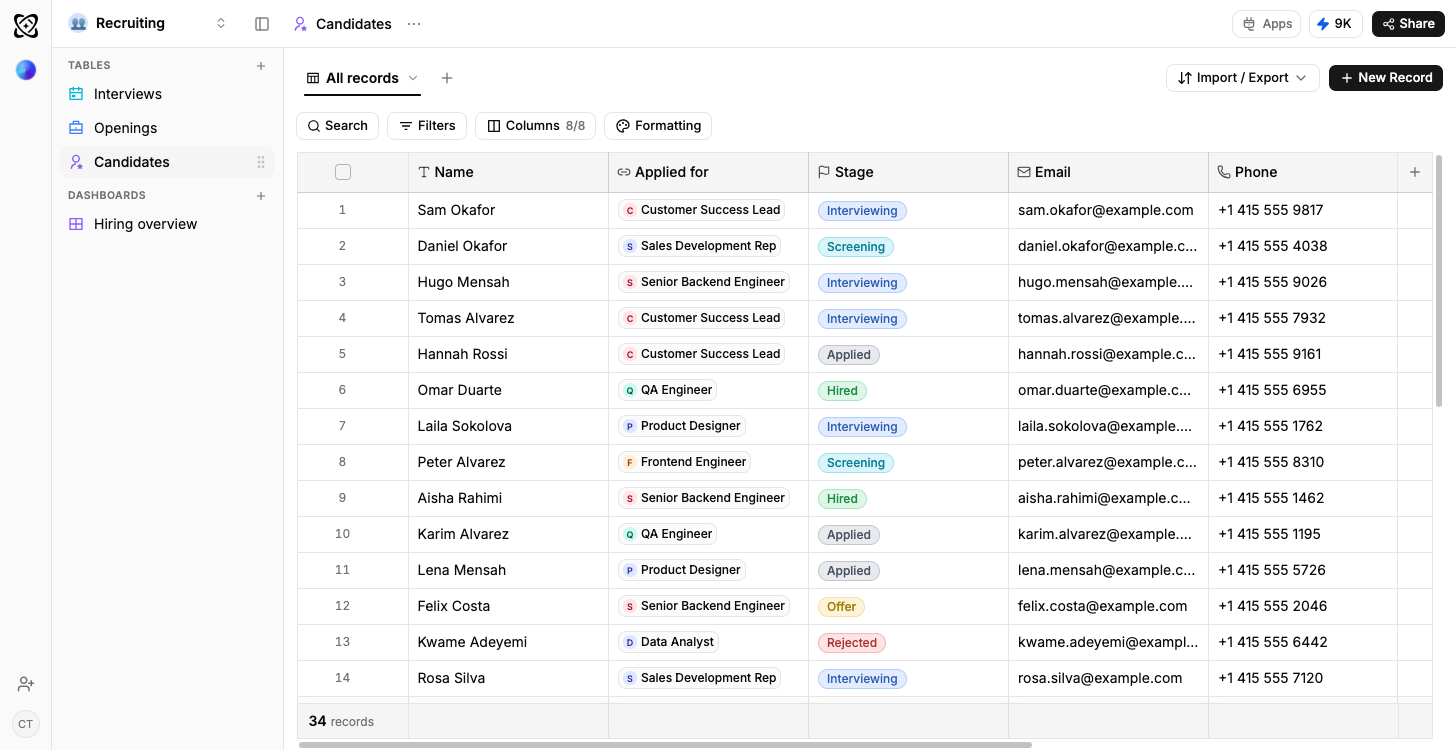
Recruiting
Candidates by stage, openings by status
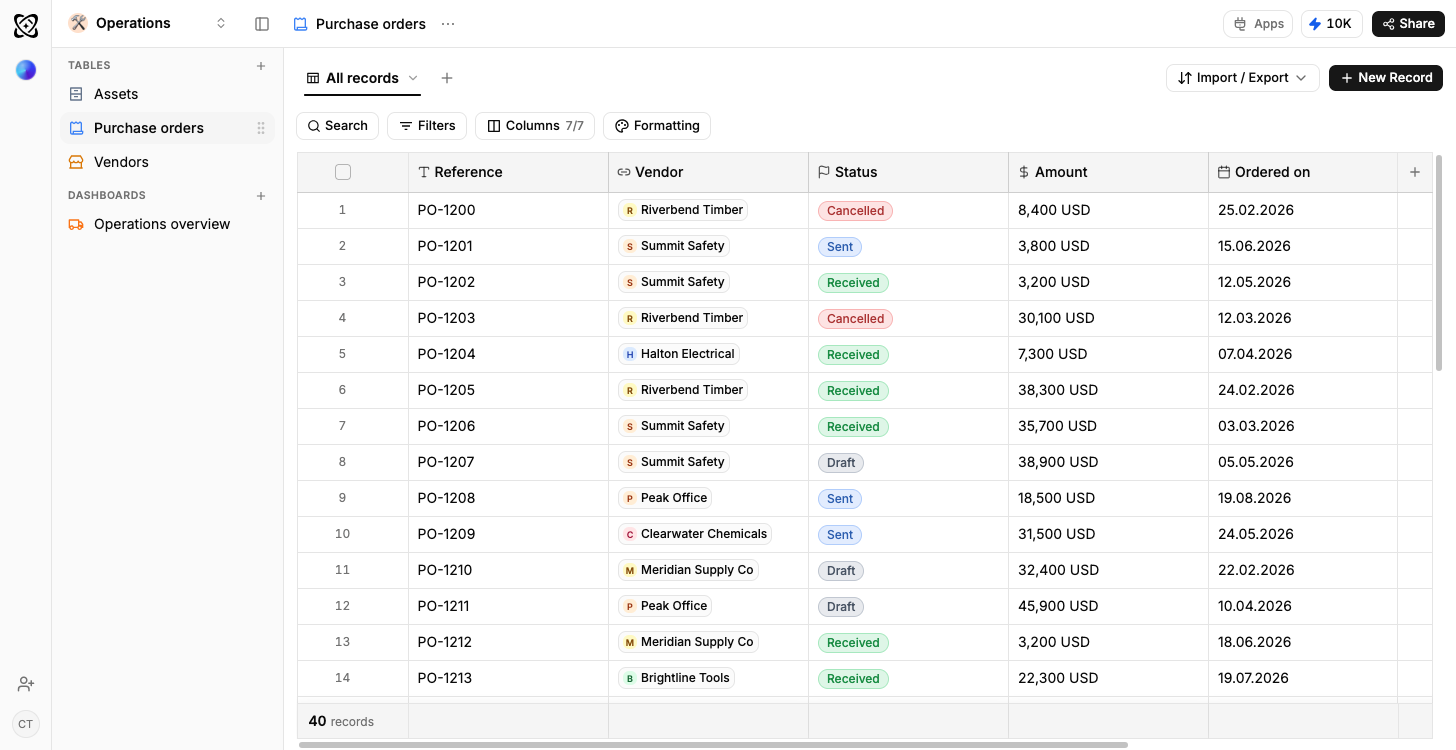
Operations
Orders in flight, spend by supplier
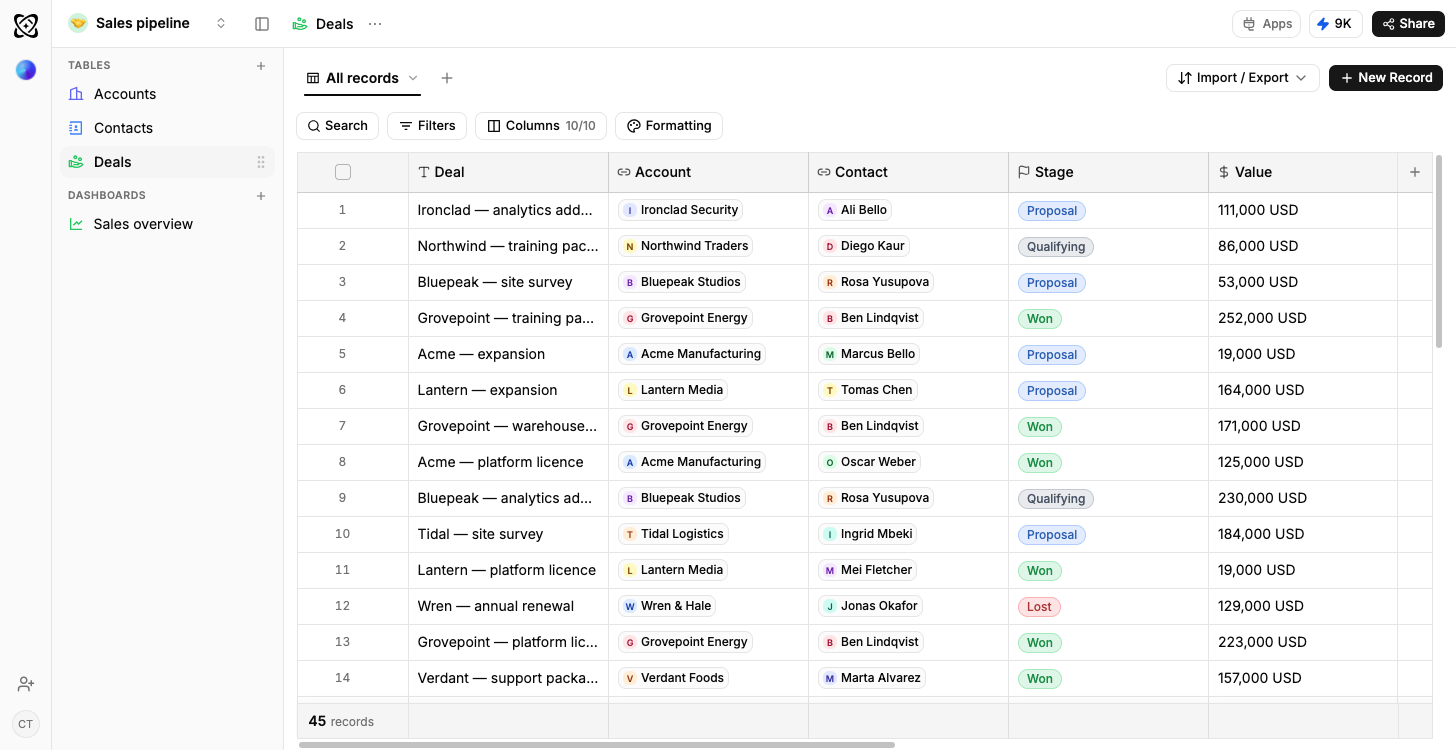
Sales pipeline
Open pipeline by stage, results by owner
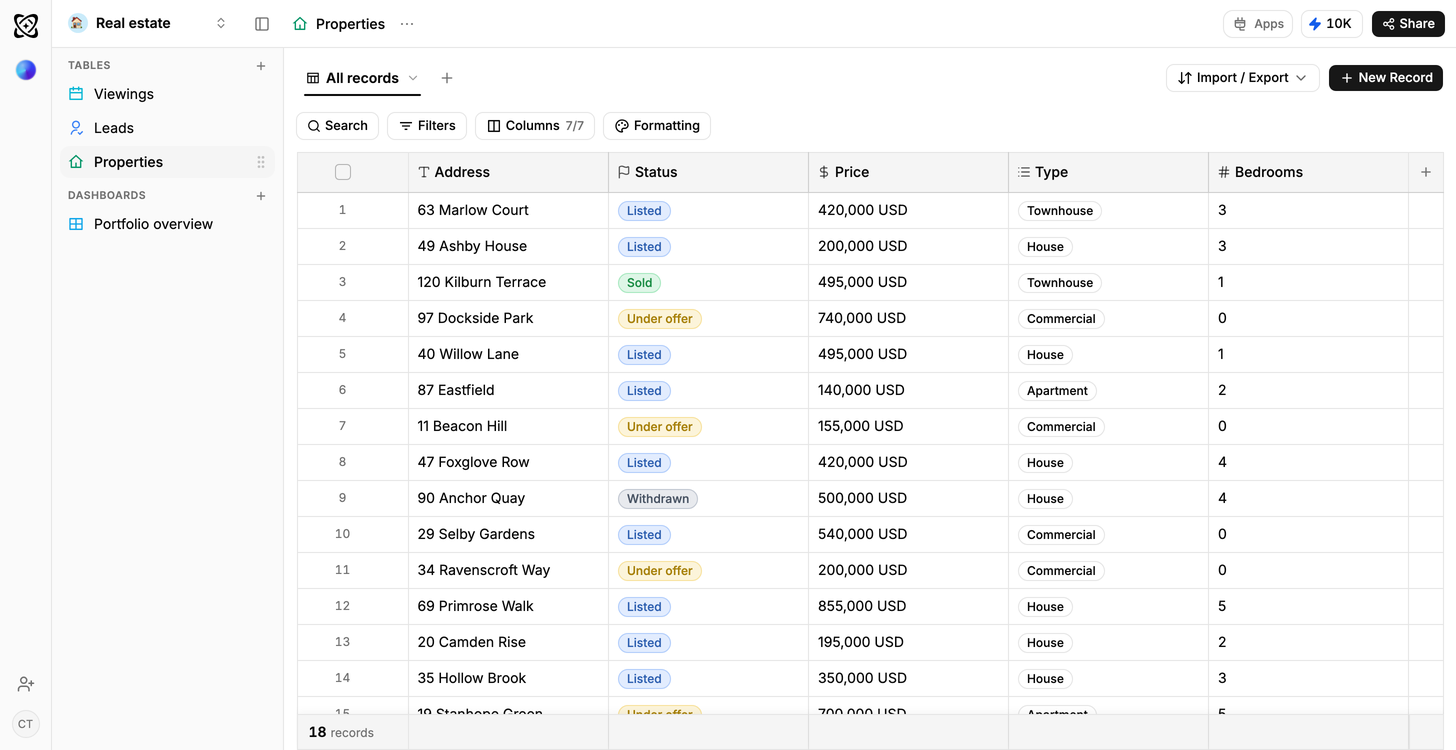
Real estate
Portfolio value and leads, by stage
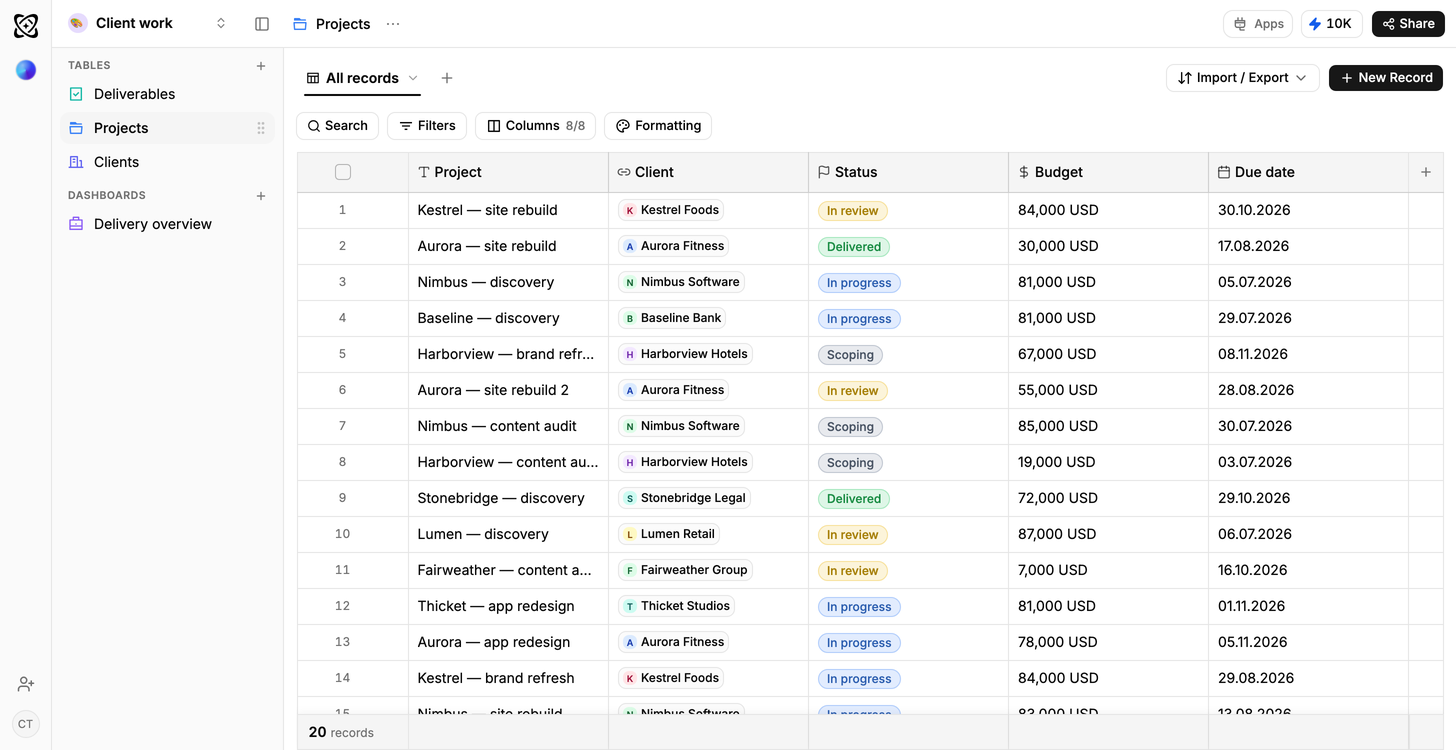
Client work
Due this week; shipped but not billed
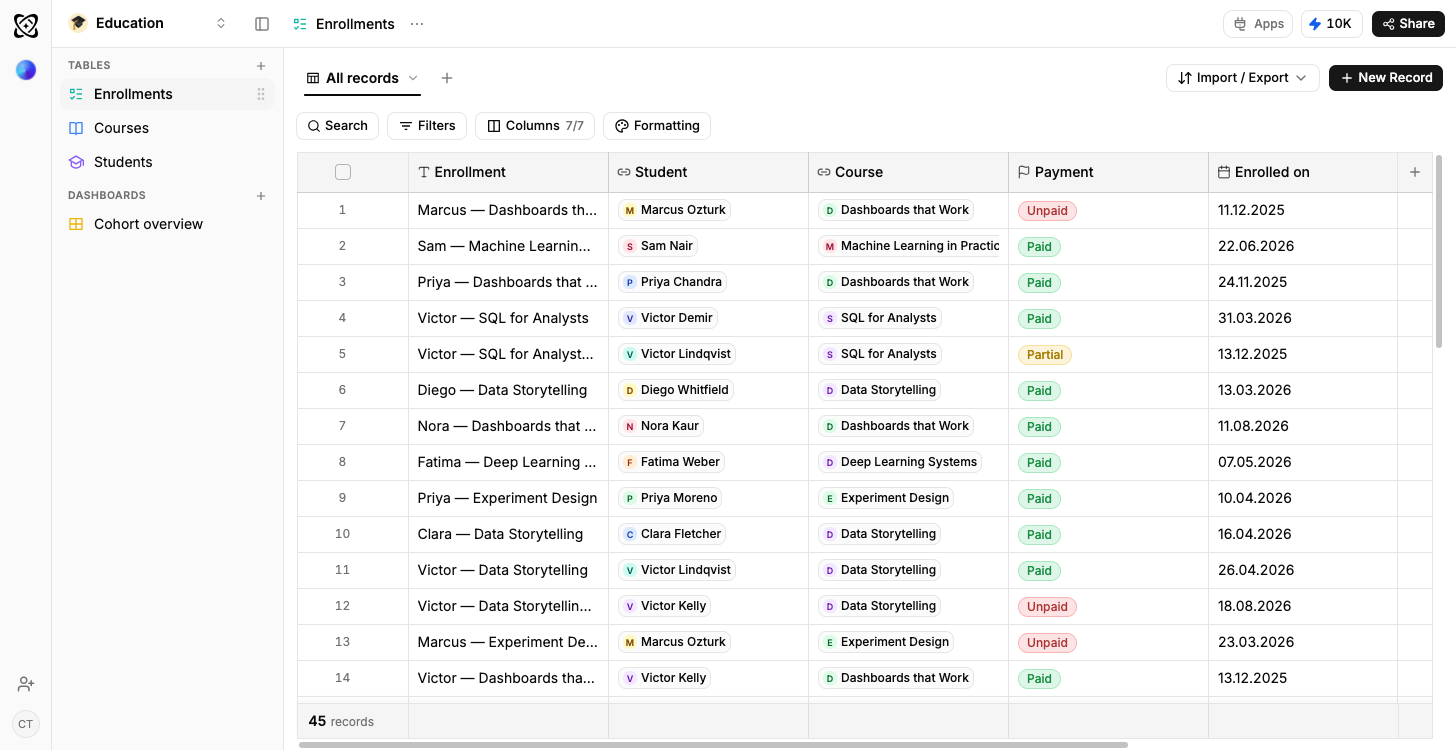
Education
Attendance and completion by cohort
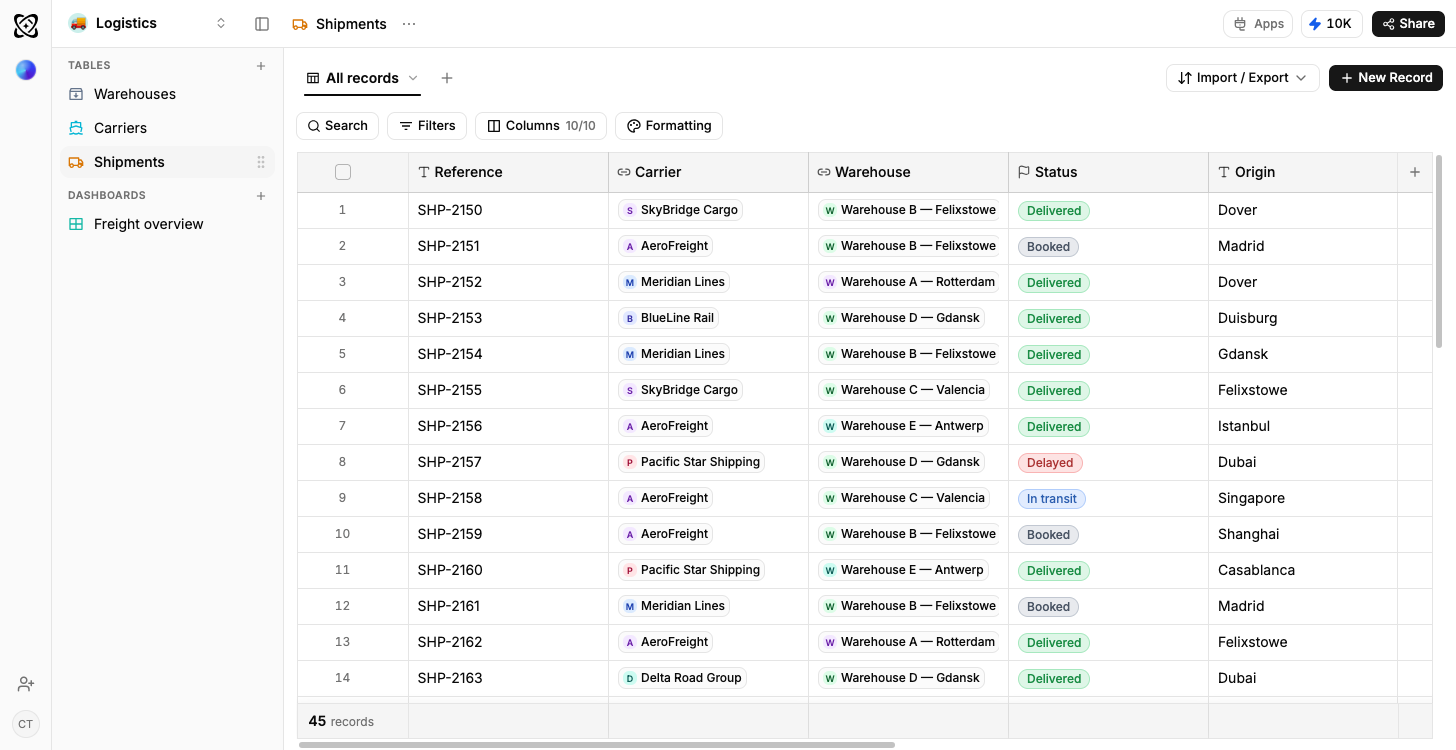
Logistics
On-time rate by carrier and lane
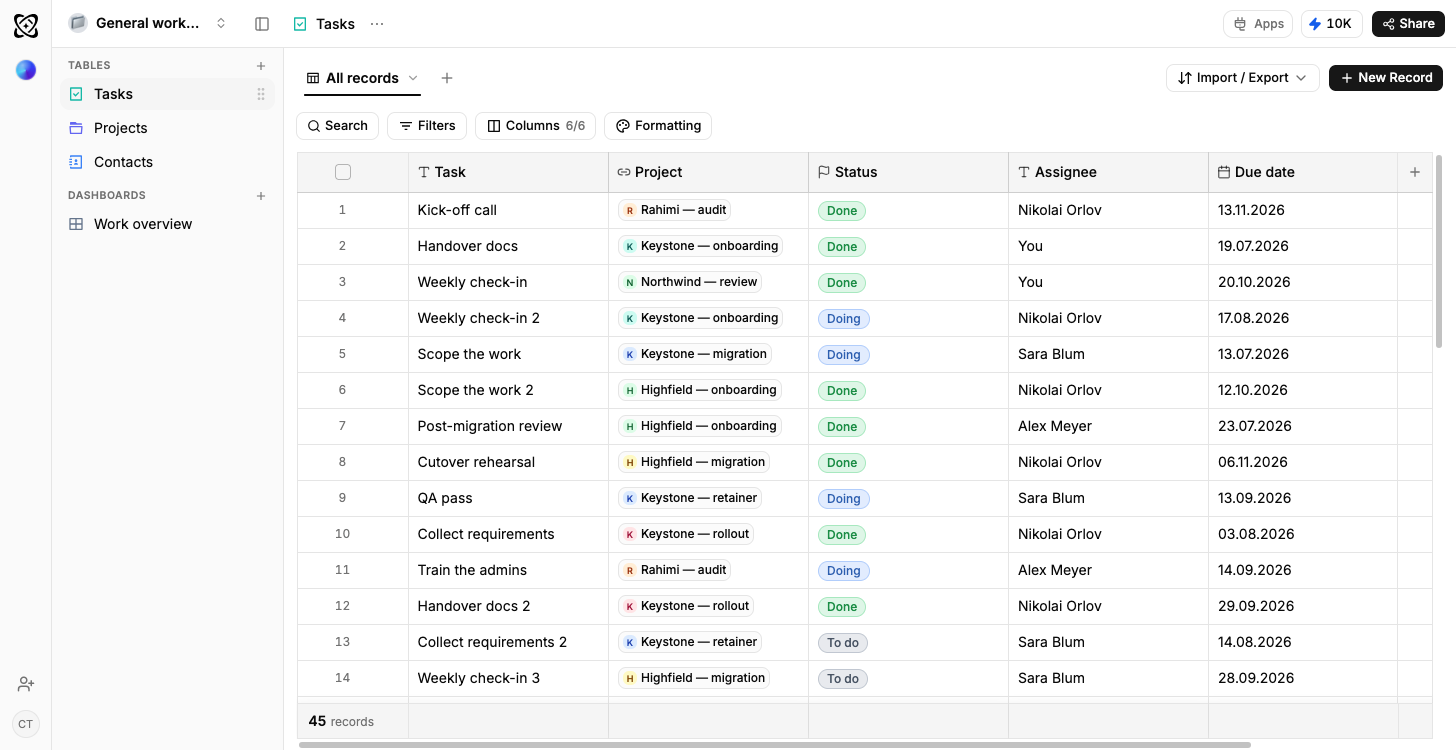
General workspace
Projects and budget by status