
How do you calculate reading time?
reading time (minutes) = word count / words per minute
A 1,500-word article takes about 6.7 minutes at 225 words per minute: word count divided by reading speed, nothing more. Most adults read non-fiction silently at roughly 200–250 words per minute, which is why 225 is the common default. Know your audience reads faster or slower? Change the speed, not the formula.
Treat the result as a planning number, not a promise. Dense technical material reads closer to 100–150 words per minute, skimming runs much faster, and images or code blocks add time the word count never sees. For display, most sites round up to whole minutes: "7 min read." Text meant to be read aloud needs a speaking pace instead: about 130–150 words per minute.
Drafts kept in a Ferra content table with a word-count column and a computed reading-time column carry a current estimate for every piece as you write.
How the reading time calculator works
The speed is the lever. Enter a word count and a words-per-minute figure; the calculator returns the estimated reading time in minutes. Pick the speed for your actual audience rather than accepting the default blindly: the same 1,800 words run 8 minutes at 225 words per minute and 12 minutes at 150.
- Word count
- Every word a reader will actually read: body text plus headings and captions, straight from your editor's word count. Leave out navigation and footnotes readers skip, and code blocks, which get scanned rather than read.
- Reading speed (words per minute)
- How fast your audience reads silently. 200–250 wpm is typical for adult non-fiction, with 225 the usual default; drop toward 100–150 for dense technical material or non-native readers, and use 130–150 if the text will be read aloud.
Calculating reading time
Take 1,800 words at 225 words per minute: 1,800 / 225 = 8 minutes. The formula is linear, double the length, double the time at the same speed.
Your choice of speed matters more than the precision of the count. The same 1,800 words at 150 words per minute, a realistic pace for a technical tutorial the reader is actually following along with: takes 1,800 / 150 = 12 minutes, half again the original estimate. Unsure? Run it at two speeds and quote the range.
Scripts are where estimates go wrong. Podcast and video scripts run spoken, at roughly 130–150 words per minute, presentations too, so estimating a script with 225 wpm undercounts its runtime by about a third. The reverse error, a listening speed applied to a blog post, makes an ordinary article look intimidatingly long.
What is a good reading time?
Around 7 minutes, roughly 1,600 words at typical speeds, gets cited as the engagement sweet spot for blog posts: long enough to say something substantive, short enough that most readers who start will finish. News briefs and marketing emails do their work under 2–3 minutes. In-depth guides and research pieces routinely run 15 minutes or more and still perform, because that audience came for depth.
Read the number against intent, never against a universal target. A short reading time on a how-to guide can signal thin content as easily as efficiency; a long one on an announcement post usually means it needs an edit. The estimate earns its keep as a label, publishing "8 min read" sets expectations, and as an editing check: a reading time that surprises you means the piece is probably the wrong length for its job.
Tips for using reading time
Reading time estimates attention, not seconds on a stopwatch. These keep the estimate honest and useful.
- Match the speed to the audience
- General business readers sit at 200–250 wpm; technical and non-native audiences read slower. One realistic speed beats a flattering default.
- Discount for density
- Tables, formulas, and code force readers to stop and reread. Halve the speed for sections the reader must work through rather than skim.
- Budget time for images
- Screenshots and diagrams eat attention the word count misses. Add a few seconds per image, more for charts the reader must interpret.
- Use a speaking speed for scripts
- Anything read aloud runs at about 130–150 wpm. A webinar or video script estimated at silent-reading speed comes up a third short on runtime.
- Round before publishing
- Display "8 min read," not "7.6 minutes." False precision erodes trust in the label, and the extra digit tells the reader nothing.
- Recheck after editing
- Word counts drift through revision. Recalculate before publishing so the label matches the piece readers actually get.
Other calculators
Browse all calculatorsRelated templates
Browse all templates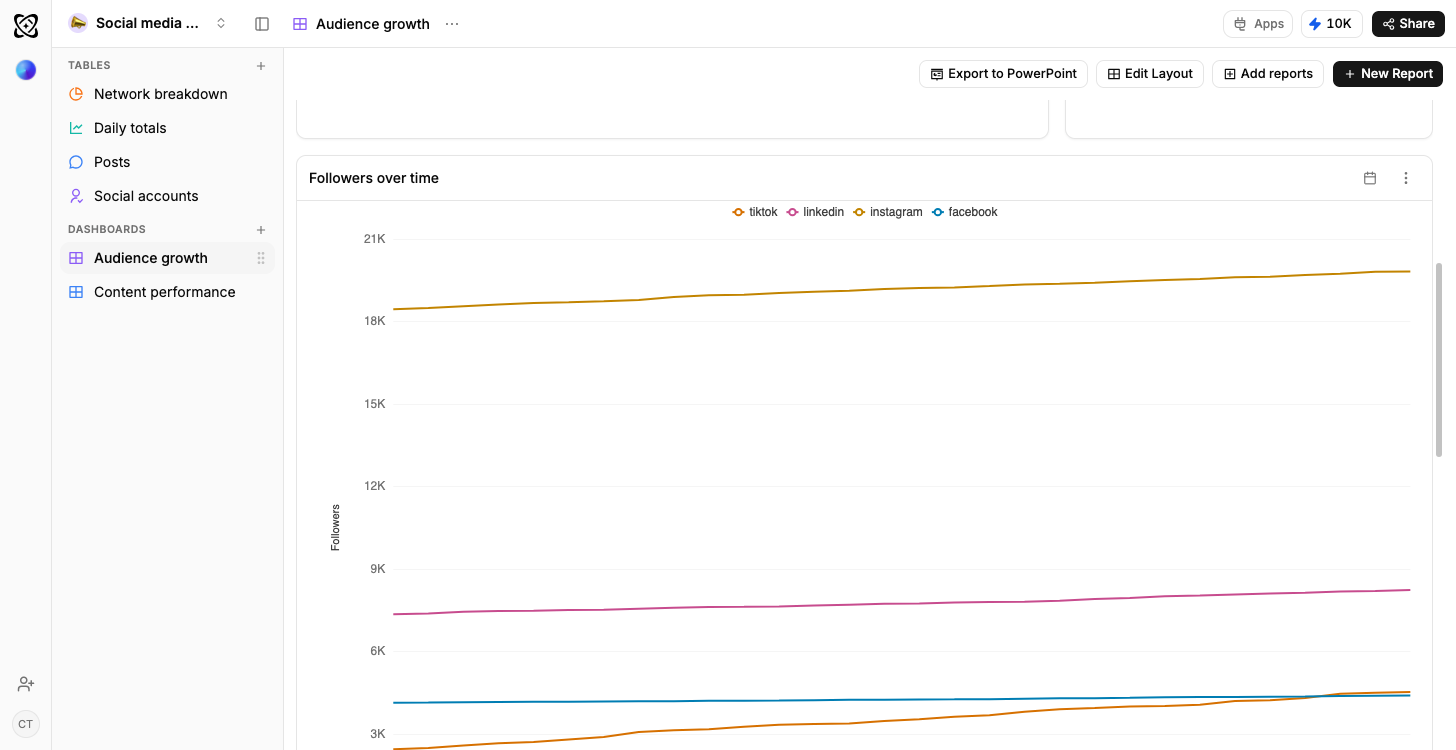
- TikTok
- YouTube
Social media analytics
Every channel compared, and what works where
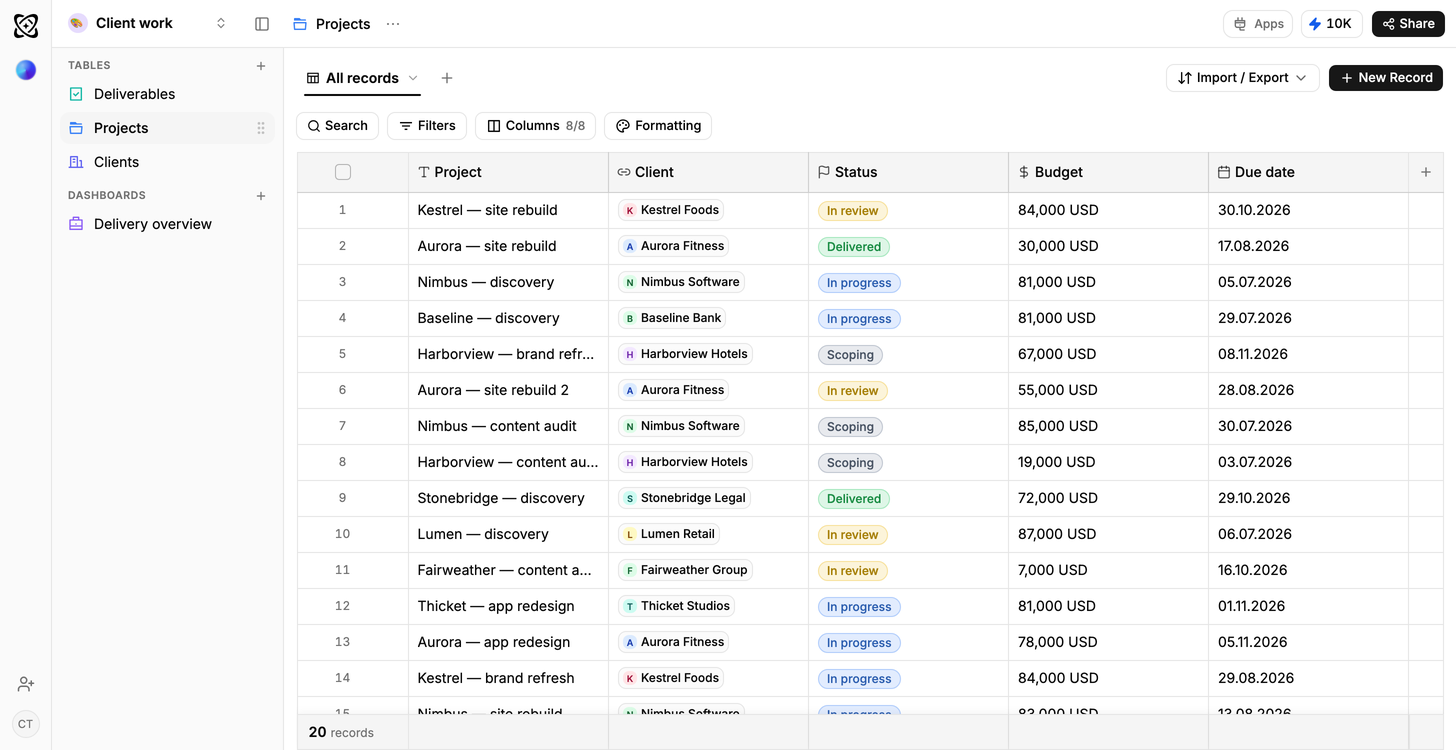
Client work
Due this week; shipped but not billed
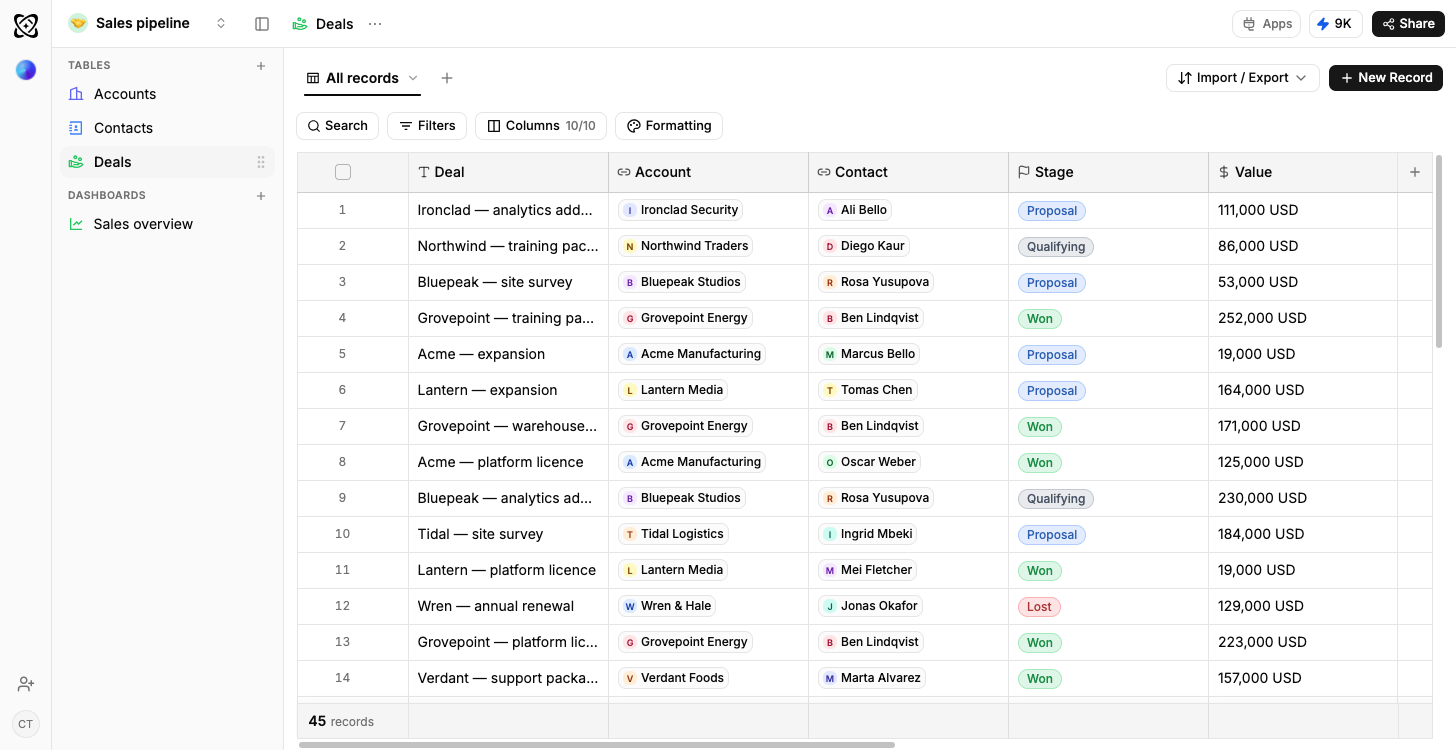
Sales pipeline
Open pipeline by stage, results by owner
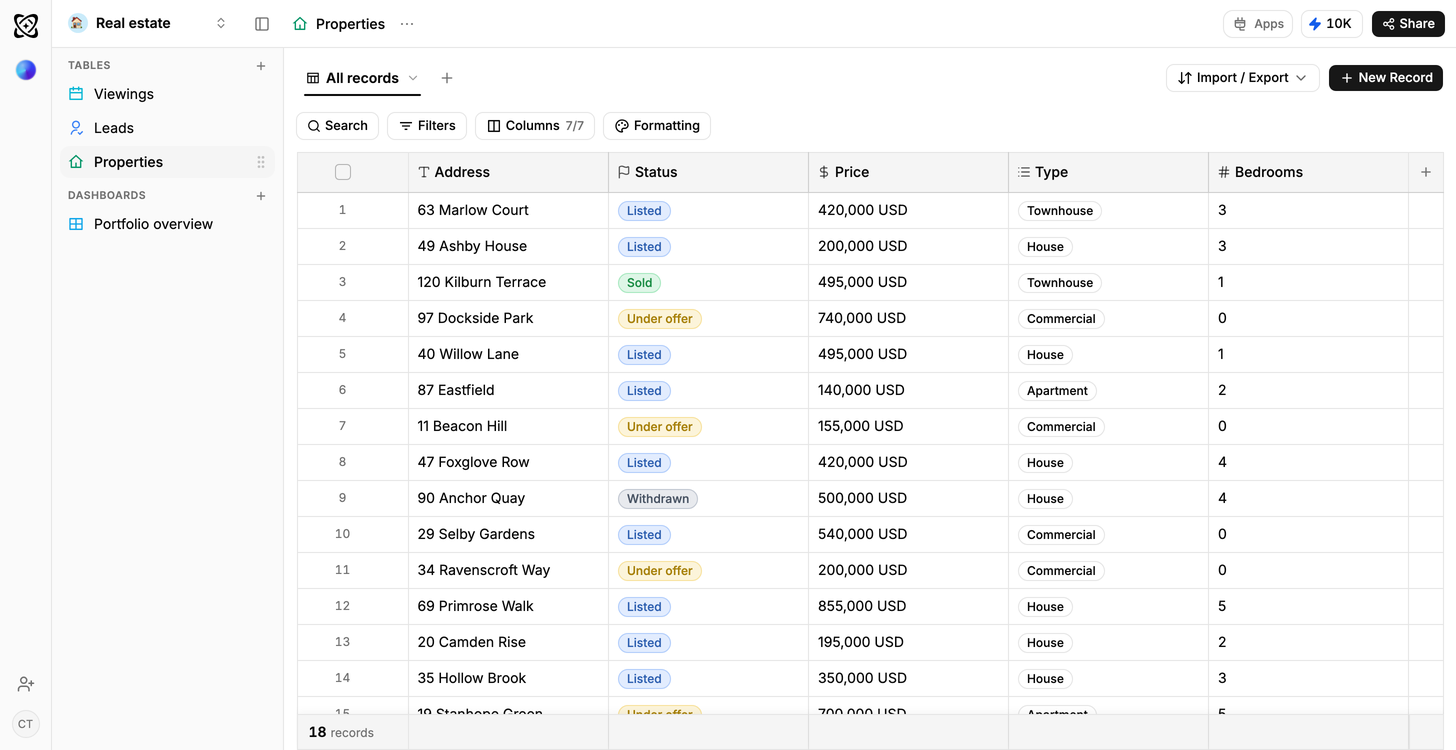
Real estate
Portfolio value and leads, by stage
Recruiting
Candidates by stage, openings by status
Operations
Orders in flight, spend by supplier
Education
Attendance and completion by cohort
Logistics
On-time rate by carrier and lane