
 BoltvsFerra
Ferra is the Bolt alternative when the data matters more than the app
Bolt generates a working invoice app. Ferra tracks the actual invoices.
See how Ferra compares to Bolt
| Functionalities | Ferra | Bolt |
|---|---|---|
| The first ten minutes | Part of what this tool is for. Your invoices in a table, totals you are actually owed. | Part of what this tool is for. A project, a running preview, a dashboard. Genuinely impressive. |
| Getting your own data in | Part of what this tool is for. Upload the spreadsheet or forward the email, no import to write. | Possible, with a step you do yourself. Through the generated app, or an import you write yourself. |
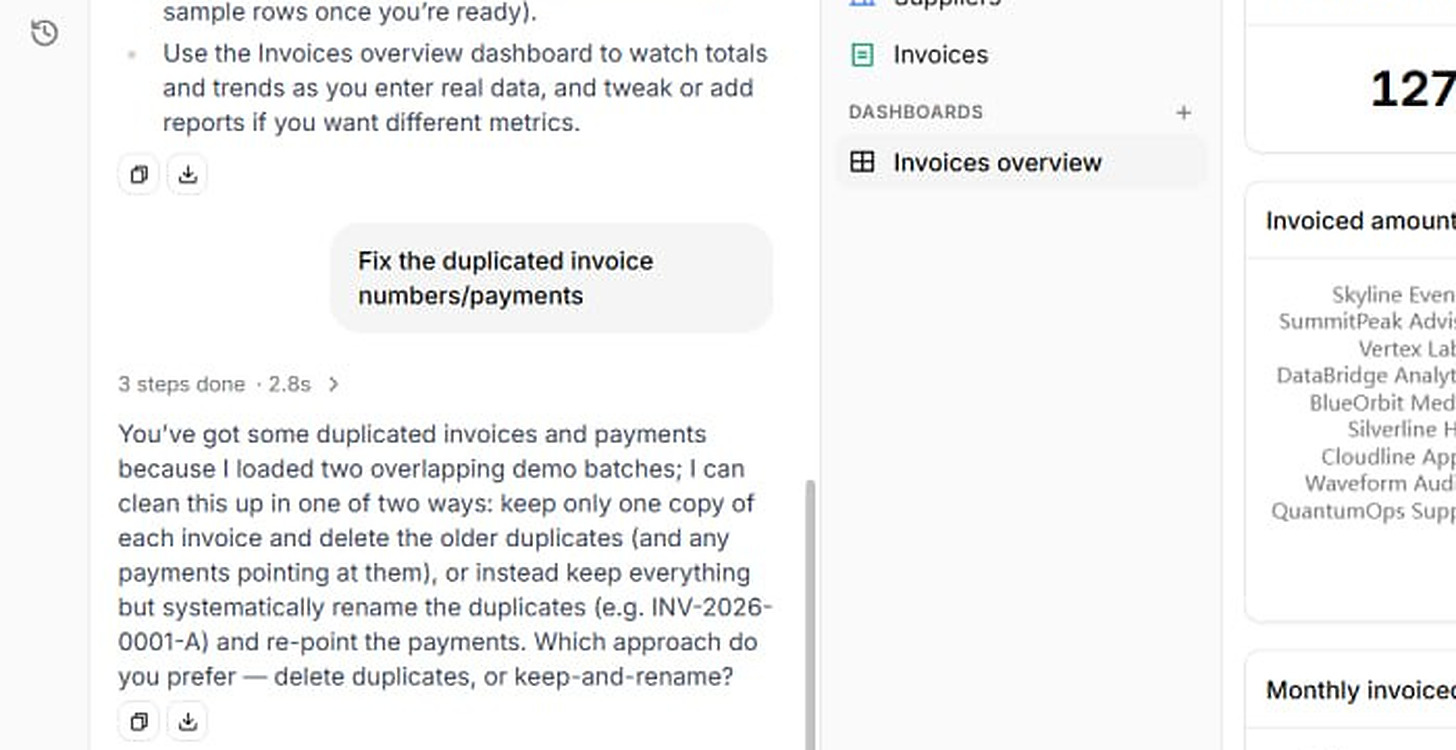
| The second week | Part of what this tool is for. Duplicates, renamed suppliers and re-pointed payments, sorted out in the chat. | Possible, with a step you do yourself. A generated app is finished when it runs; the messy middle comes after that. |
| Adding a field later | Part of what this tool is for. Add the column, describe it. It fills from the same sources. | Possible, with a step you do yourself. Prompt again, review what changed, ship it. |
| Designing the screens | A different tool's job. One interface: tables, dashboards, and a chat beside them. | Part of what this tool is for. A working front end from a description, styled for you. |
| Owning the code | A different tool's job. No codebase to own, rather the point. | Part of what this tool is for. A real project in a real stack, yours to take anywhere. |
| Hosting and keeping it running | Part of what this tool is for. Nothing to host: adding a table or a report is a sentence, not a deploy. | Possible, with a step you do yourself. What it hands over is software: dependencies, config, and the next change. |
| Asking a question | Part of what this tool is for. Ask in plain English, every figure links to its rows. | Possible, with a step you do yourself. Whatever the generated screens were built to show. |
| Dashboards and reports | Part of what this tool is for. Ask for the report; it lands on the dashboard and reads from your own rows. | Possible, with a step you do yourself. A generated dashboard, filled at first with the data the project was seeded with. |
| Automation | Part of what this tool is for. Describe the rule and Ferra watches the rows for it. | Possible, with a step you do yourself. Whatever logic the generated project was written with. |
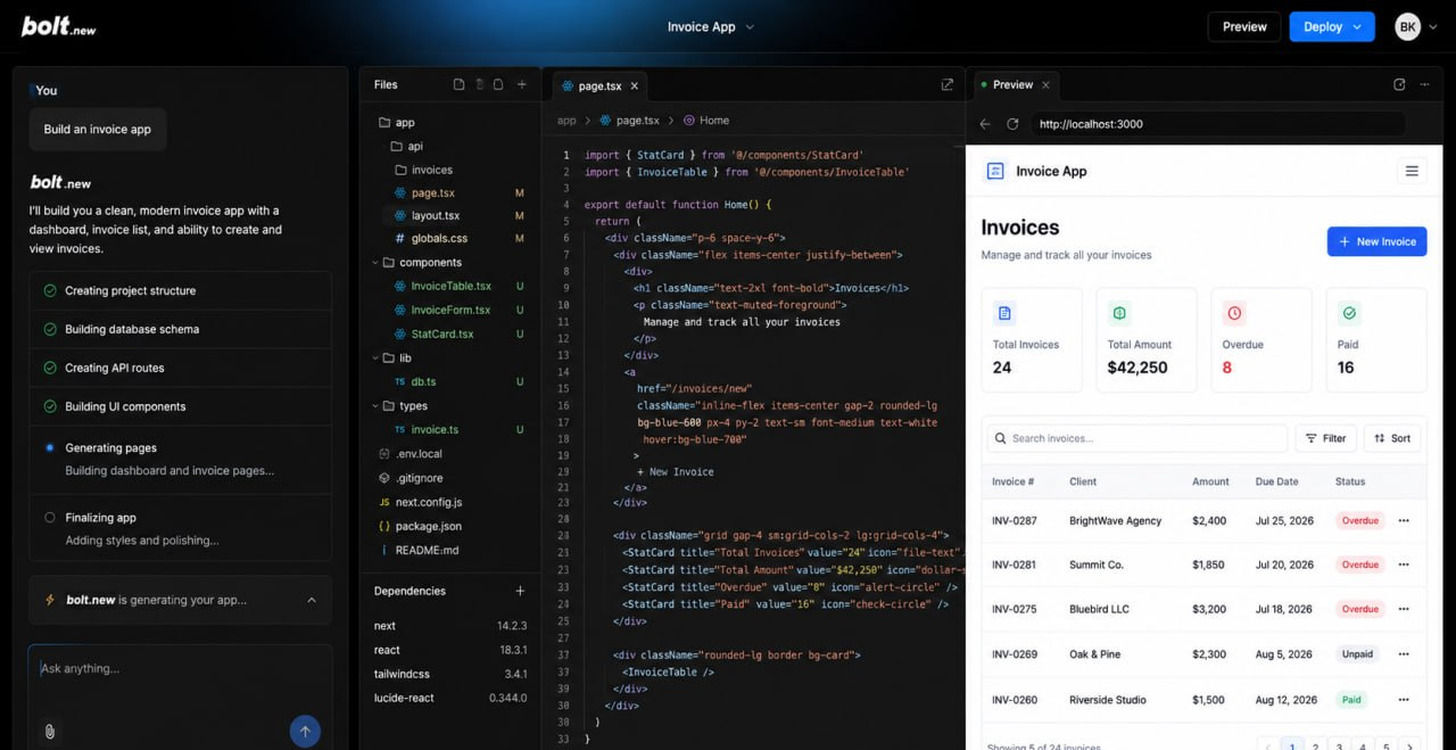
A finished screen, and sample data behind it
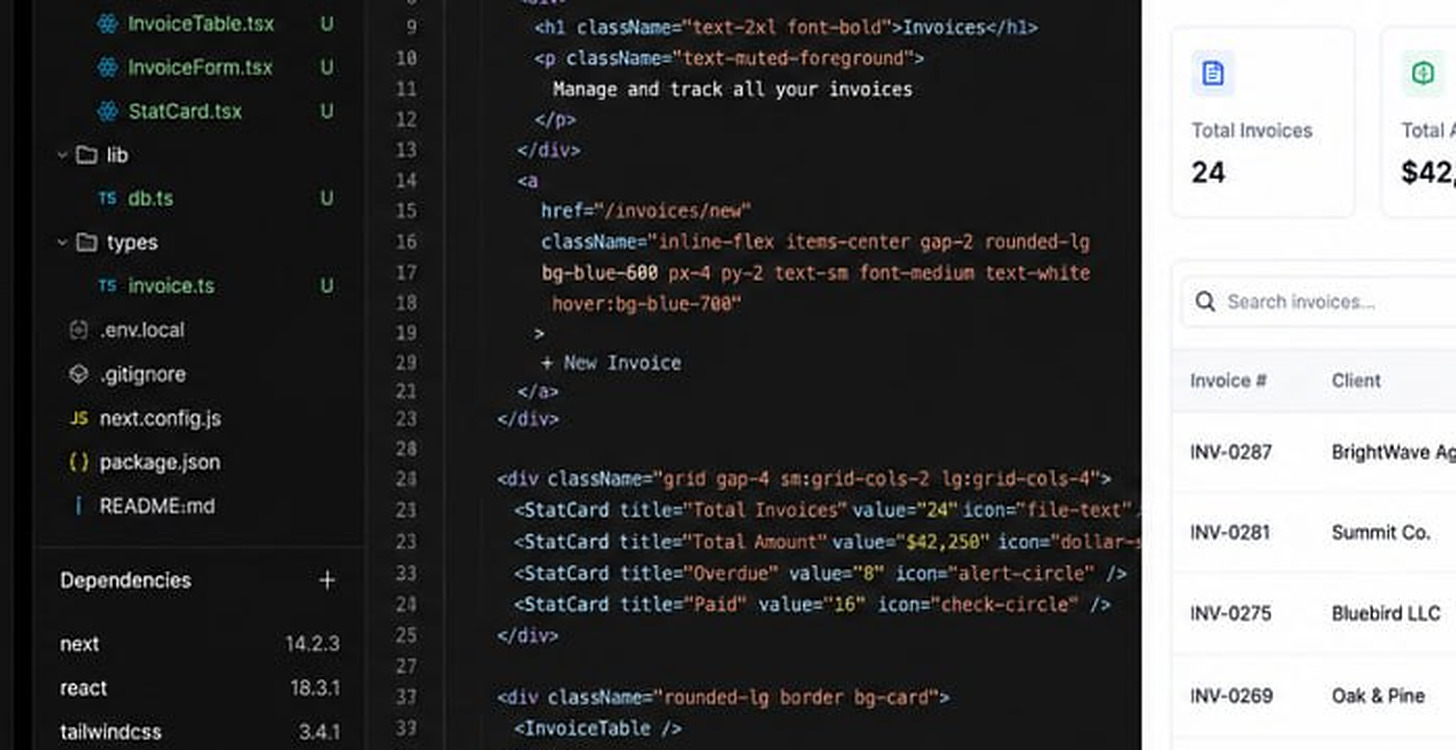
Bolt is good at the first ten minutes: a project, a preview, a dashboard of generated numbers.
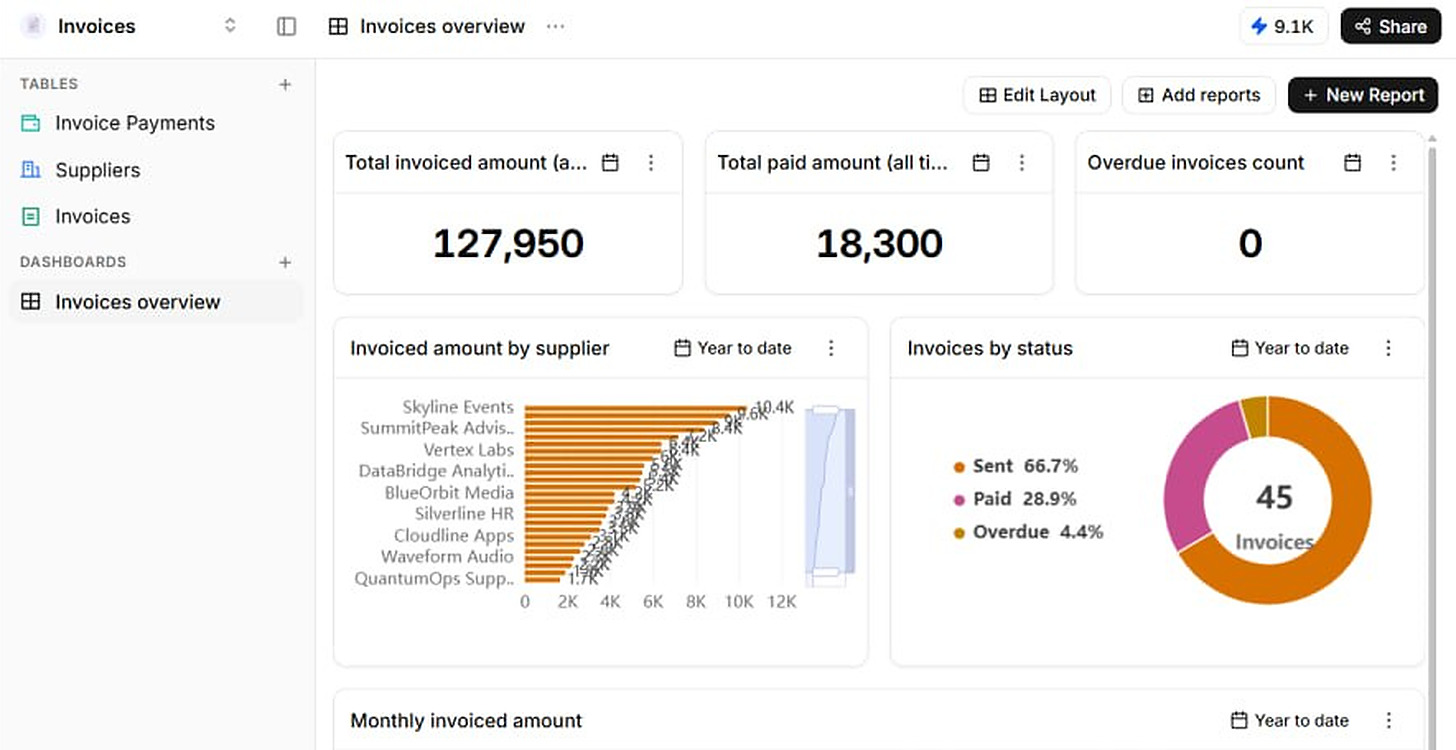
Ferra ends somewhere else: your invoices in a table, totals you are actually owed.
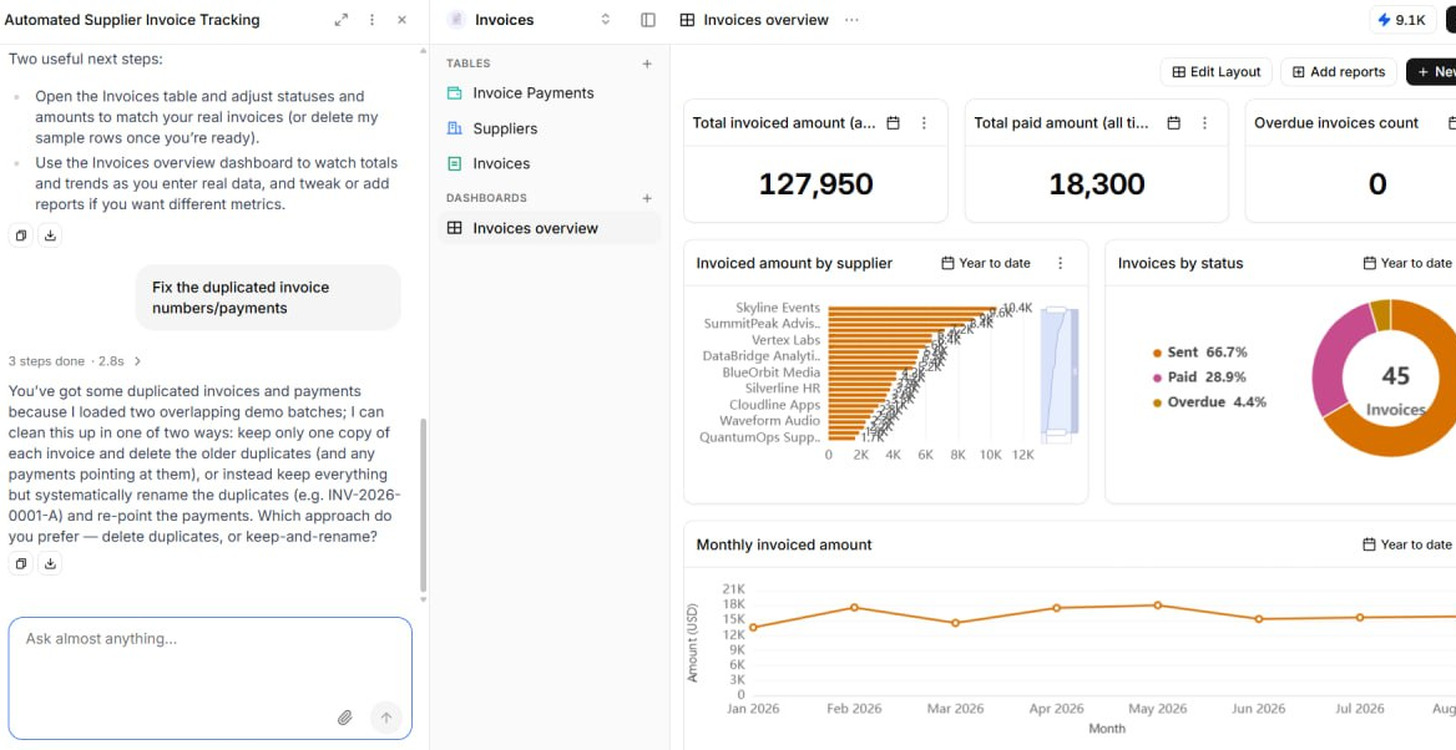
The second week
A generated app is finished when it runs; the work is not, the messy middle above.
You do not run it
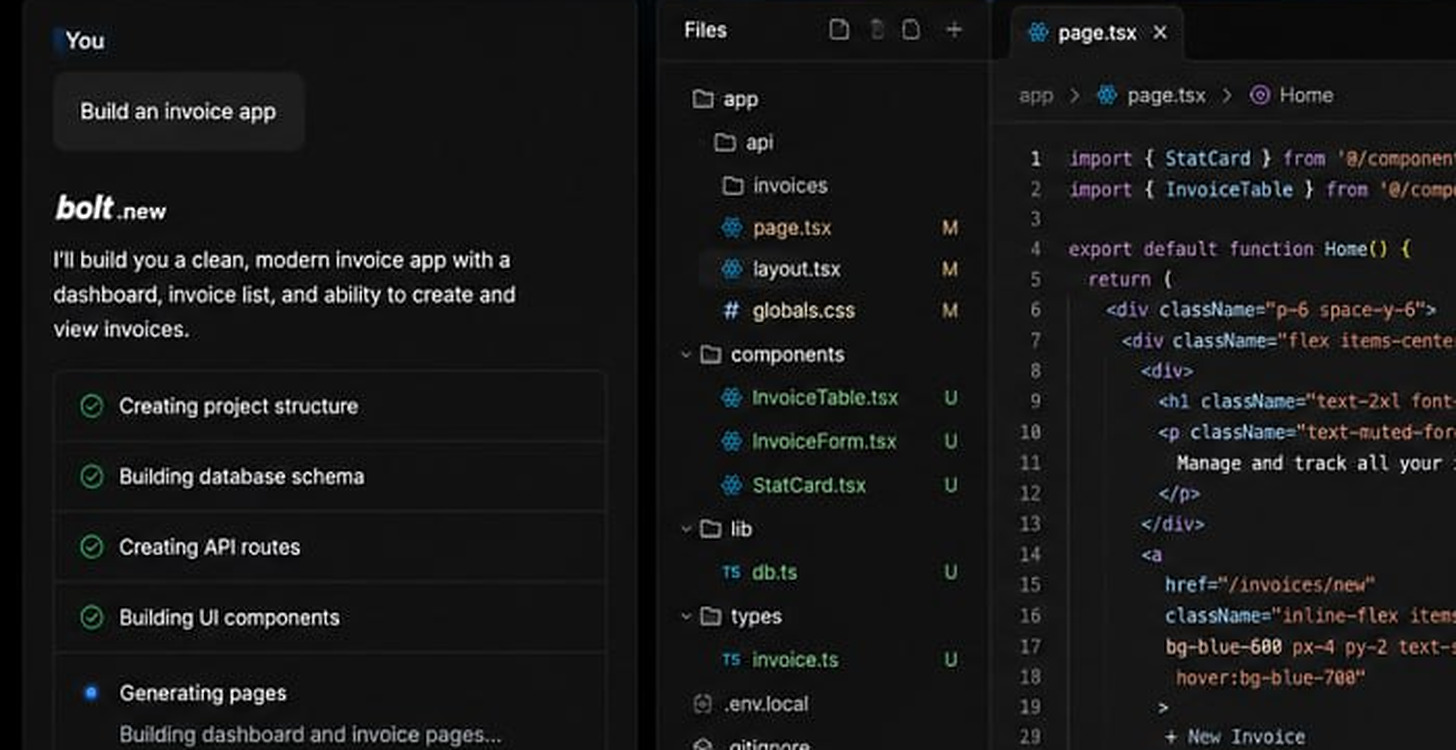
Bolt produces a codebase to host and maintain. Ferra is a product you log into.
Your files are the input
Upload the spreadsheet or forward the email, and the rows appear: no import to write, no schema to define.
Frequently asked questions
What people ask before they move a table across: about Ferra, about Bolt, and about which of the two fits the work you actually have.
Yes, for the tracker kind of request. You get the tracking, not an app. If you wanted code, Bolt gives you code.
That is the starting point. Upload the spreadsheet or forward the emails and Ferra reads them, builds the columns, and fills the rows.
No: Ferra is hosted. No project, no build step, nothing to deploy.
Yes: duplicates, mismatched supplier names and half-filled columns can be described once and fixed across the table.
Yes: it watches a table for new rows, changed values or missed dates, then emails or updates.