
Describe the app. Ferra builds the whole thing.
Not a scaffold you finish by hand: typed columns, linked tables, formulas, a dashboard, and workflows that fire on change.
None of this was set up by hand
A workspace, not a blank canvas
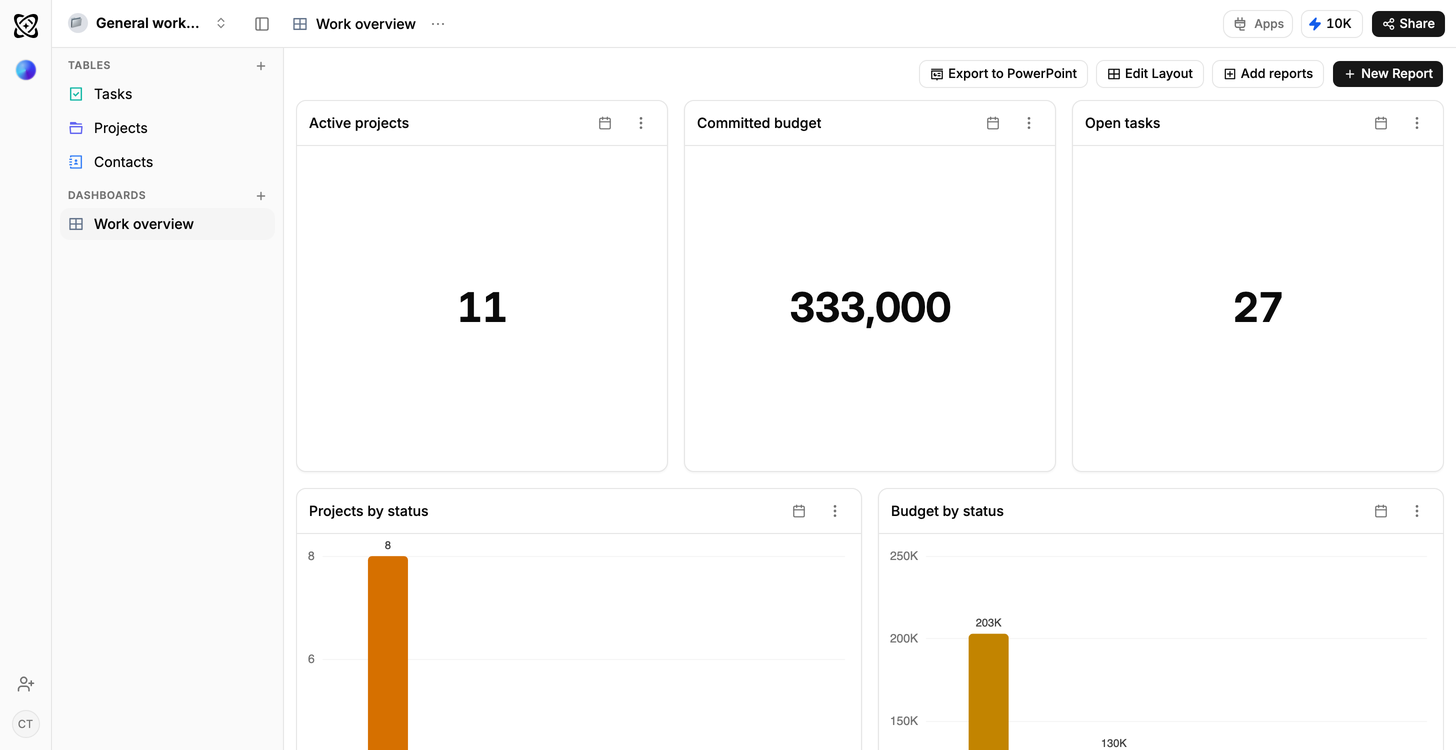
Tasks, Projects and Contacts in the sidebar, and a dashboard already counting them: 11 active projects, 333,000 committed, 27 open tasks. The charts were drawn at build time, not added afterwards.
Columns that already know what they are
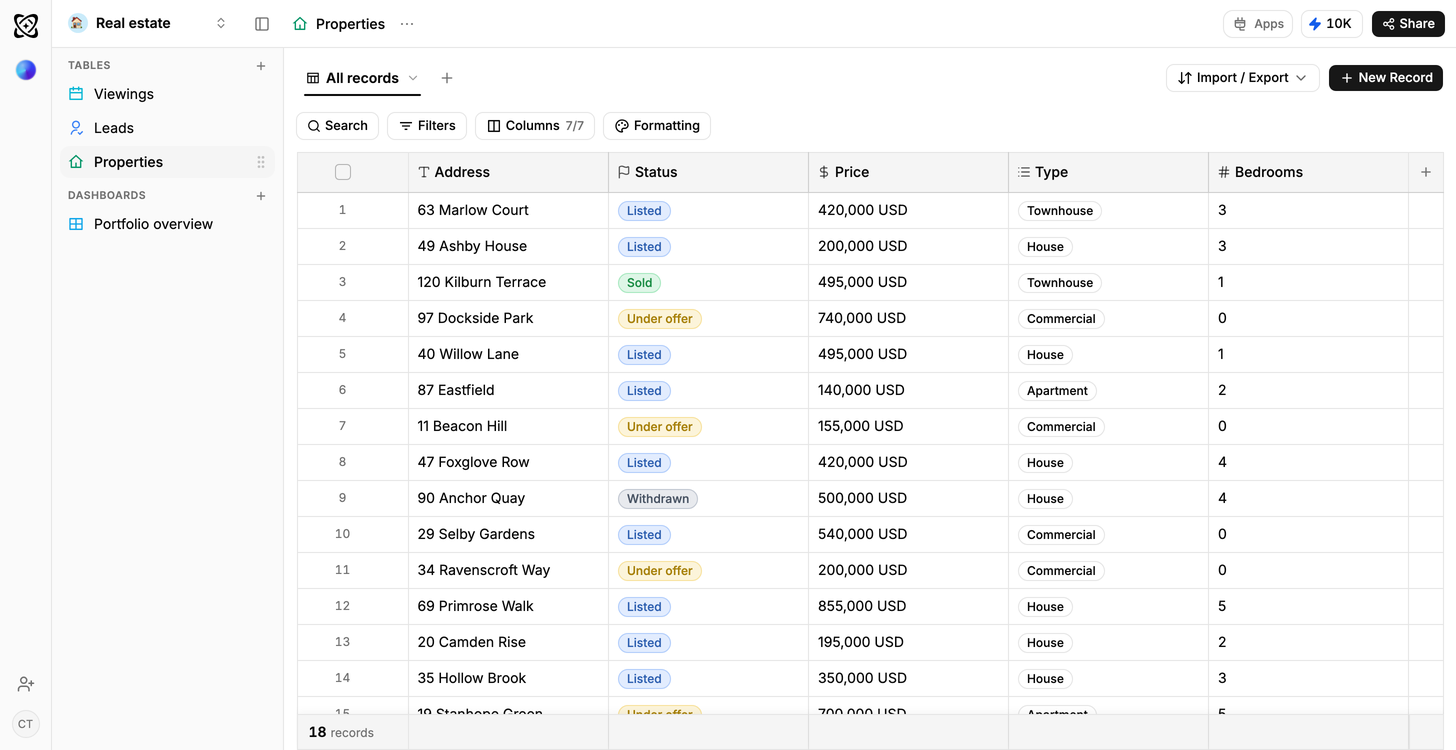
Price is currency, bedrooms is a number, status is a fixed list of four. Listed, Sold, Under offer, Withdrawn. Ferra reads the values under your headers and types the column, so sorting and totals work on the first day.
Tables that point at each other
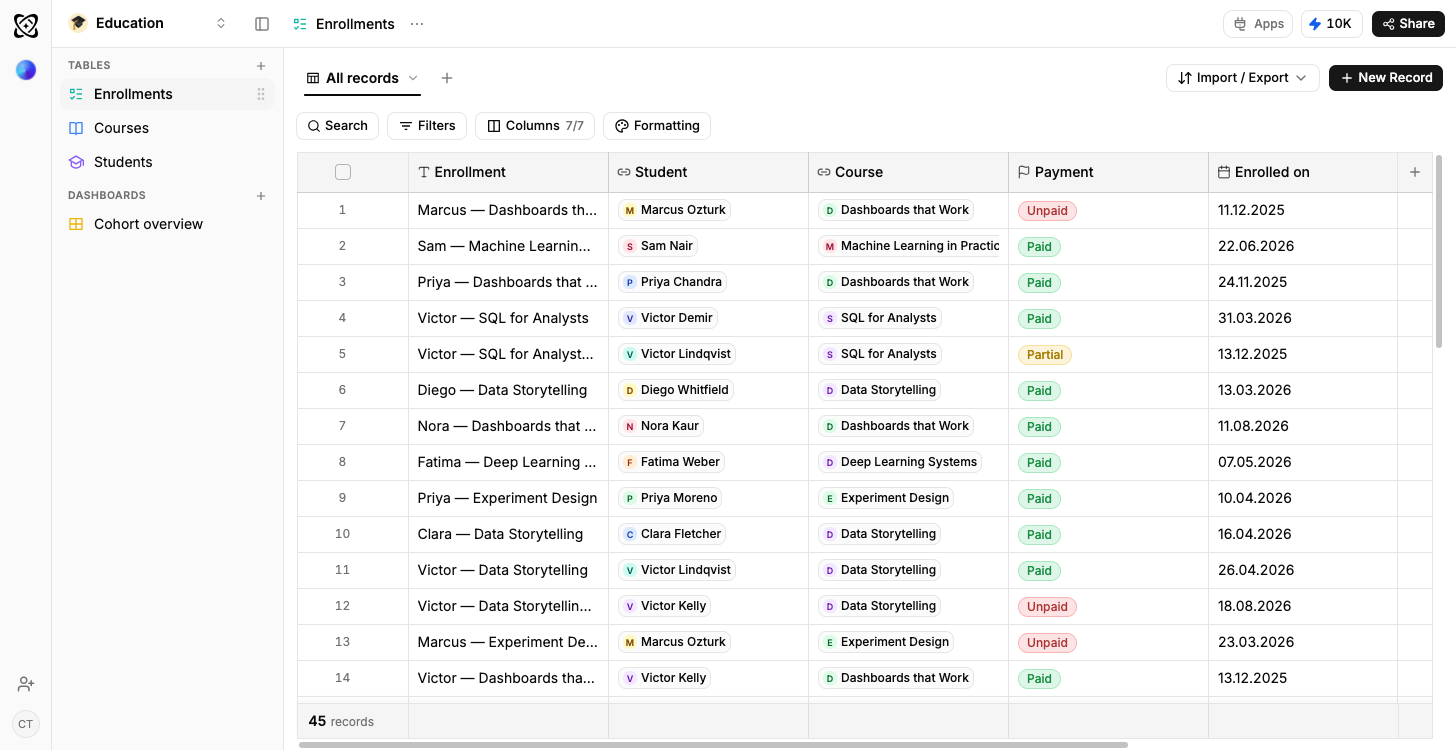
An enrollment is a student and a course, not two names retyped. Ferra decides what earns a table and links them while it builds, so opening the student shows the courses without a lookup formula anywhere.
Or start from the file you already have
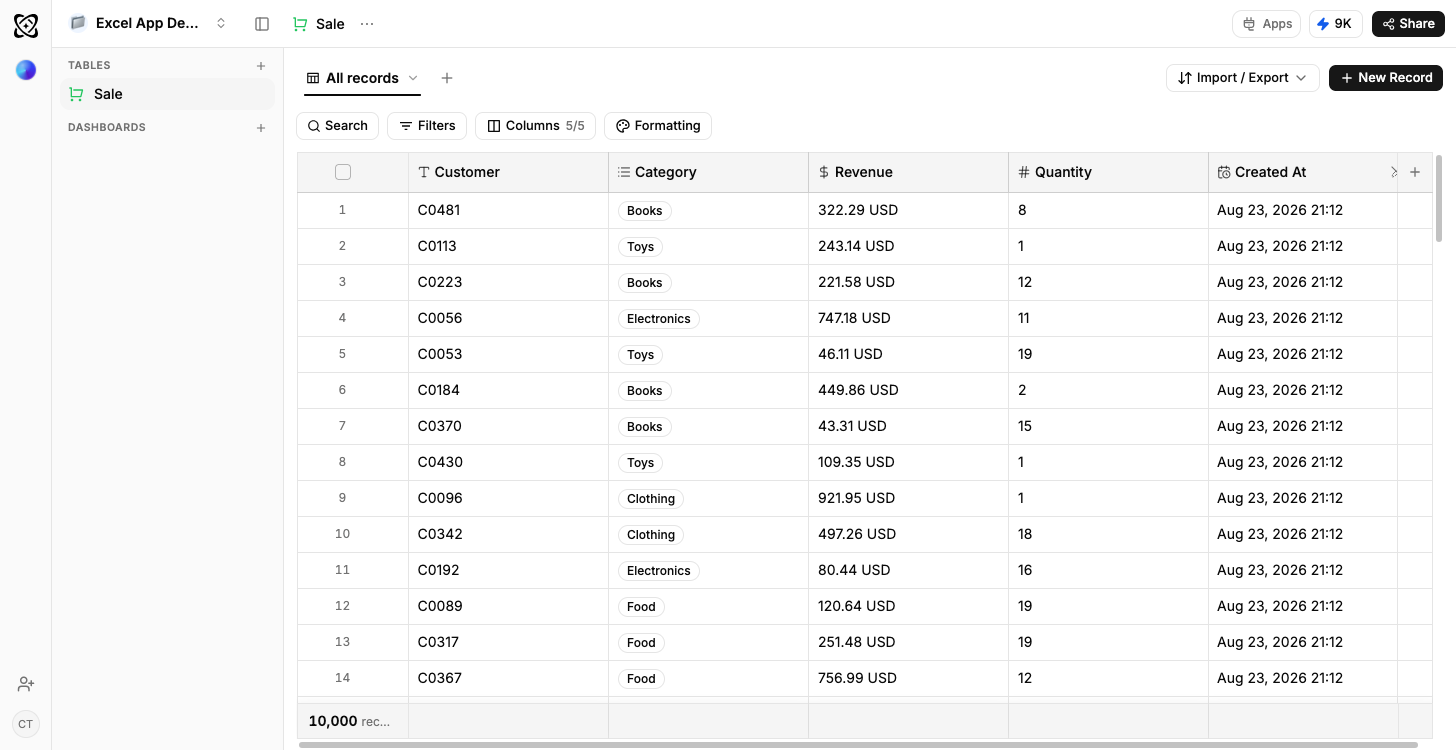
Upload the spreadsheet instead of describing it. Ferra reads what is under your headers: customer as text, revenue as currency, the date as a date, and ten thousand rows land in a table that already has a shape.
Frequently asked questions
No: working that out is the part Ferra does. Describe the work in plain words; it proposes the structure, then asks about what it had to guess.
Tell it: describe the change and it applies it, including to the rows already there.
Yes: upload a CSV or XLSX. A real file settles questions a description leaves open.
No. Ferra generates a database application, not code: no front end, no framework, no deploy step.
Yes: a workspace is shared, and everyone works against the same tables the assistant reads.