
Recruiting template
Roles, candidates and interviews, with a funnel showing where applicants are stalling and how long each stage takes.
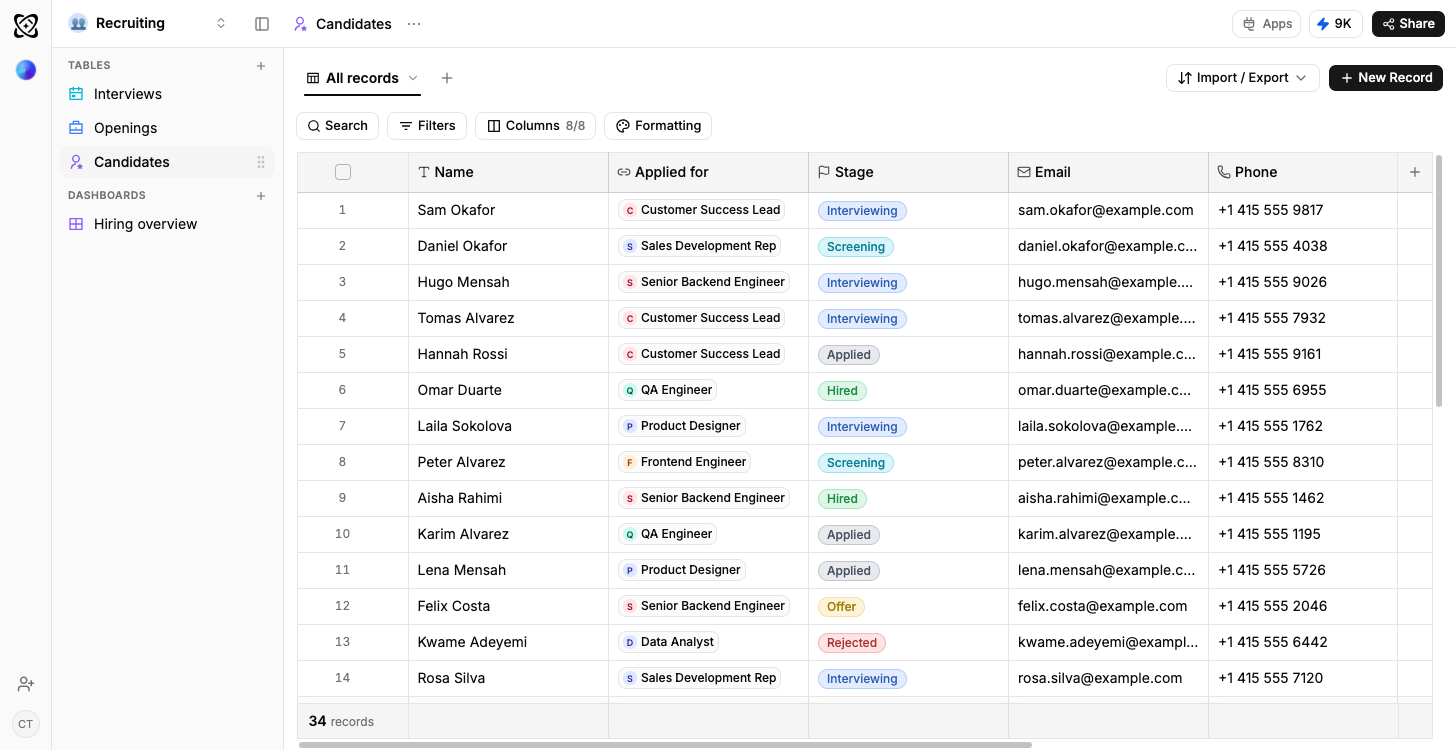
- Linked tables, not tabs
- Relationship columns join the rows instead of copying them into three places.
- Sample rows on arrival
- Every table opens with data in it, so the dashboards draw before yours does.
- Your own data, imported
- CSV, XLSX, a connected Google Sheet, or an email you forward straight in.
- Reshaped by describing it
- Say what is different and Ferra changes the structure and the rows together.
What is a recruiting tracker template?
An applicant pipeline that's already built: the open roles, the people applying to them, and every interview round, kept in linked tables instead of one person's inbox. Ferra's version arrives with Roles, Candidates and Interviews already related, sample candidates spread across the stages, and two dashboards drawing from the first minute: a funnel by role, and the average wait at each step.
Hiring goes wrong quietly. Nobody decides to leave a strong candidate sitting for eleven days after their technical round; it just happens because the pipeline lives in one person's inbox. This template puts roles, candidates and interview rounds in linked tables and derives days-in-stage from the dates already on the row, so the funnel shows you where people are stalling instead of only where they ended up.
Roles, candidates and interviews
Roles keeps one row per open position: the title, the department, the hiring manager, how many seats it has to fill, a status and the date it opened. Read one aloud: Senior Backend Engineer, Engineering, Ana, two openings, Open, 9 Jan. Candidates is one row per person applying, linked to the role they applied for, with the stage they're at, where they came from, the date they applied, and a Days in stage column that's a formula rather than a number anybody maintains. Interviews holds one row per round per candidate, linked back to the candidate, carrying the round, the interviewer, the date, a score and the notes: strong on systems, light on testing.
Hiring goes wrong quietly
Nobody decides to leave a strong candidate sitting for eleven days after their technical round. It happens because nothing in the process is counting, and because the pipeline lives in an inbox where nothing carries a date. Days in stage counts without anyone remembering to update it: the difference between a funnel that shows where people ended up and one that shows where they're stuck right now. Interview notes work the same way: written on the interview row, they're still there after the person who wrote them has left.
The two dashboards
The drop-off between screen and technical is usually the one worth arguing about, and Funnel by role is where you see it: how many people sit at each stage for each opening, and what fraction get through. Time in stage gives the average wait at each step, then lists, by name, the candidates currently over it. A report that ends in a name gets acted on; a report that ends in a percentage gets noted. Both draw on the sample candidates the workspace ships with.
Questions the funnel answers
Where are candidates dropping out of the funnel is a question about stages and counts. Which candidates have sat in the same stage for more than ten days comes straight off the formula column and ends in a list of people to chase. How long a hire takes from application to offer, by role, runs the applied date against the interview rounds that followed. And which source gives us hires rather than just applicants decides where next quarter's referral budget goes.
Adapting it to your process
Every company runs a different loop, so treat these stages as scaffolding rather than law. Add one, rename one, or split technical into two rounds. Ferra moves the candidates already sitting in them rather than leaving anyone stageless. The addition teams reach for first is structured feedback: a Scorecards table with one row per interviewer per round, and the debrief stops living in email threads and starts being something you can compare across candidates.
Who it suits
The center of the target is a company hiring for a handful of roles at a time without an applicant tracking system. It also works for an agency running searches for clients, or for a hiring manager handed a spreadsheet and a shortlist. A full ATS with job boards, careers-page publishing and offer approvals wired in won't be replaced by this, but the reporting that ATS makes hard to extract has a reasonable home here.
Getting your candidates in
Roles go in first, so candidates have something to link to. Then the people: a CSV or XLSX export goes in as-is, a connected Google Sheet keeps updating if someone else maintains the list, and a forwarded email can be read into a table. Say which column names the role and the relationship is set from that: no matching text by hand.
You may also like
Browse all templates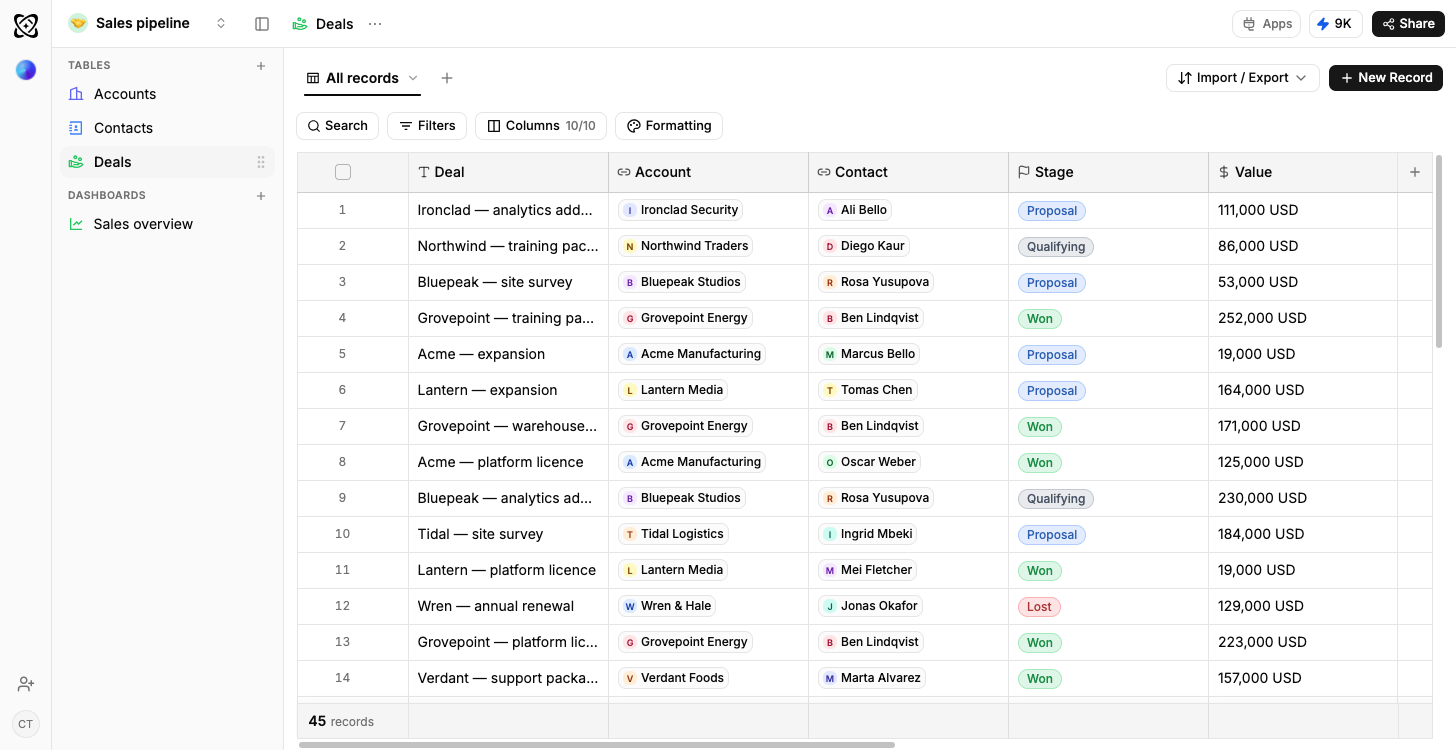
Sales pipeline
Open pipeline by stage, results by owner
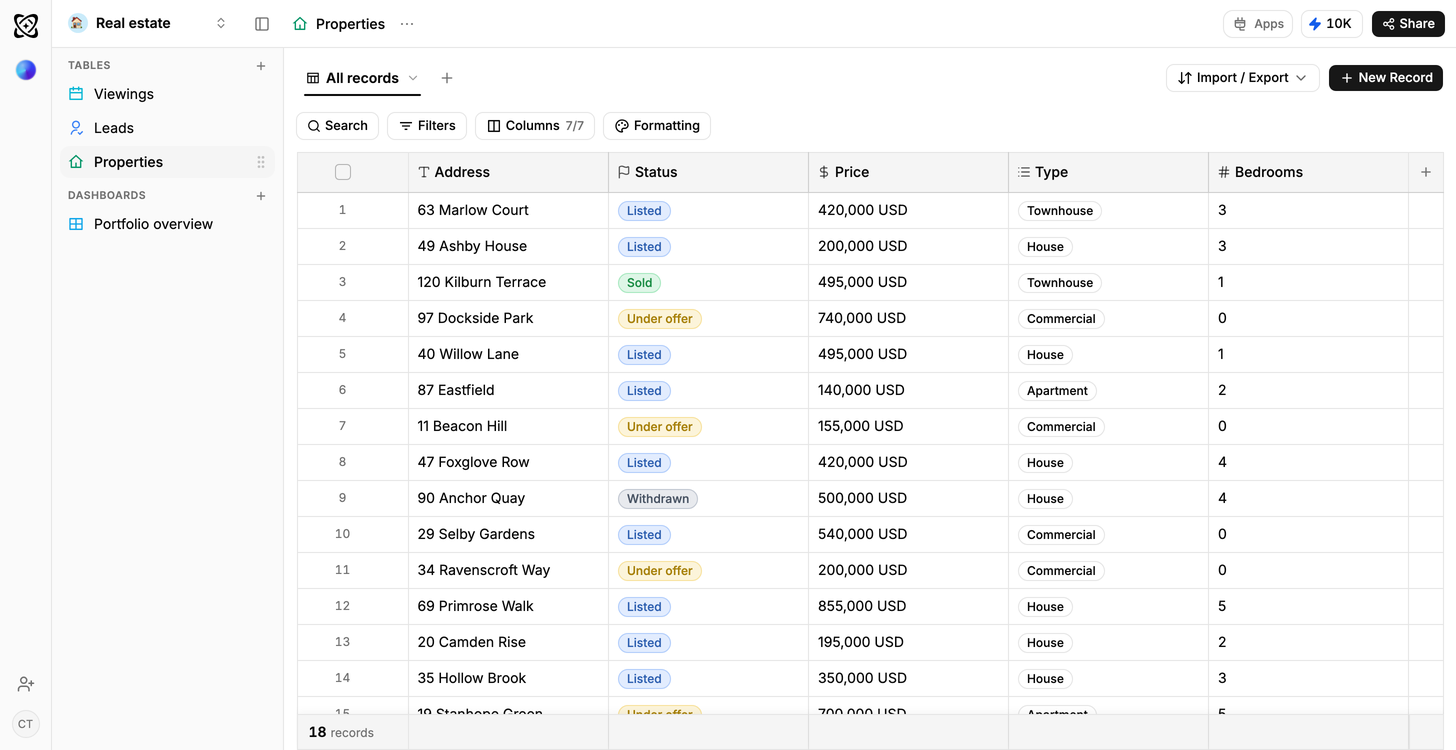
Real estate
Portfolio value and leads, by stage
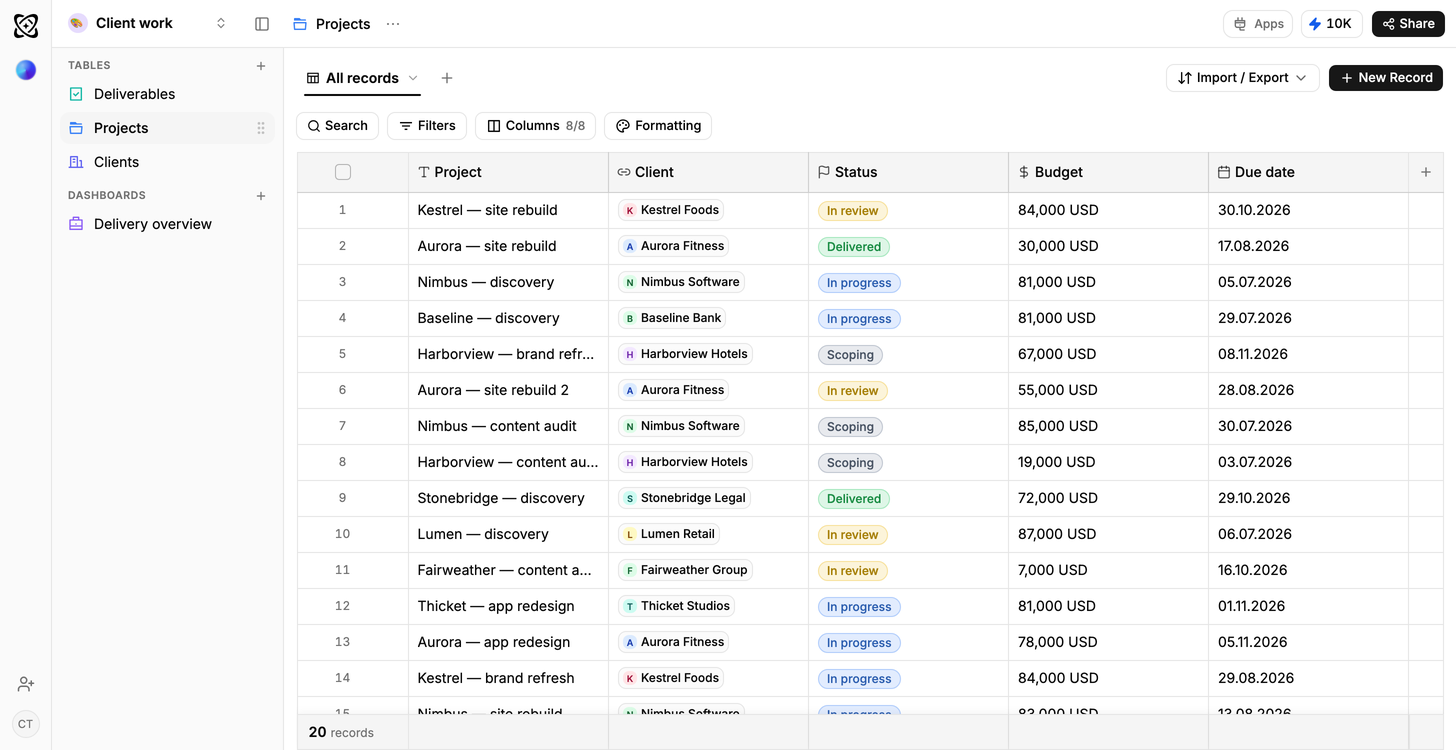
Client work
Due this week; shipped but not billed
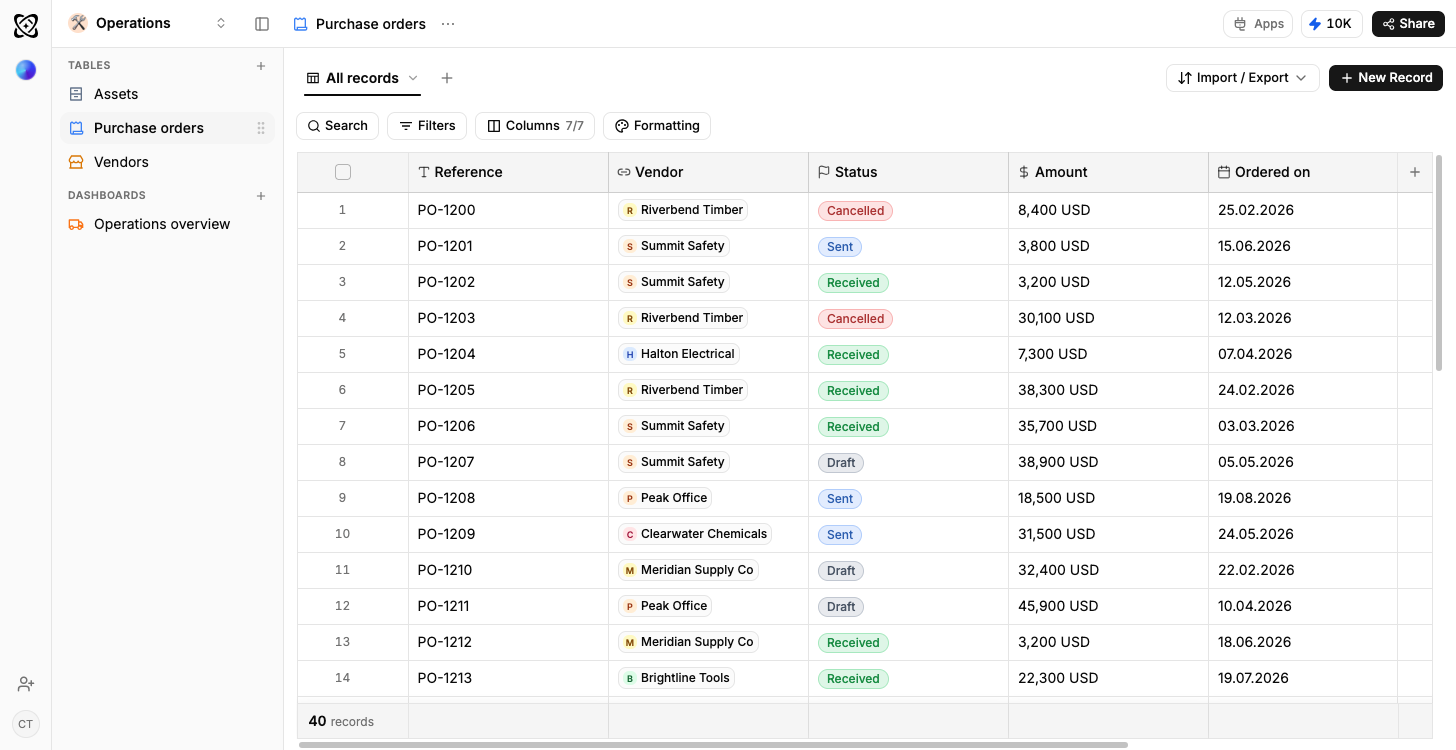
Operations
Orders in flight, spend by supplier
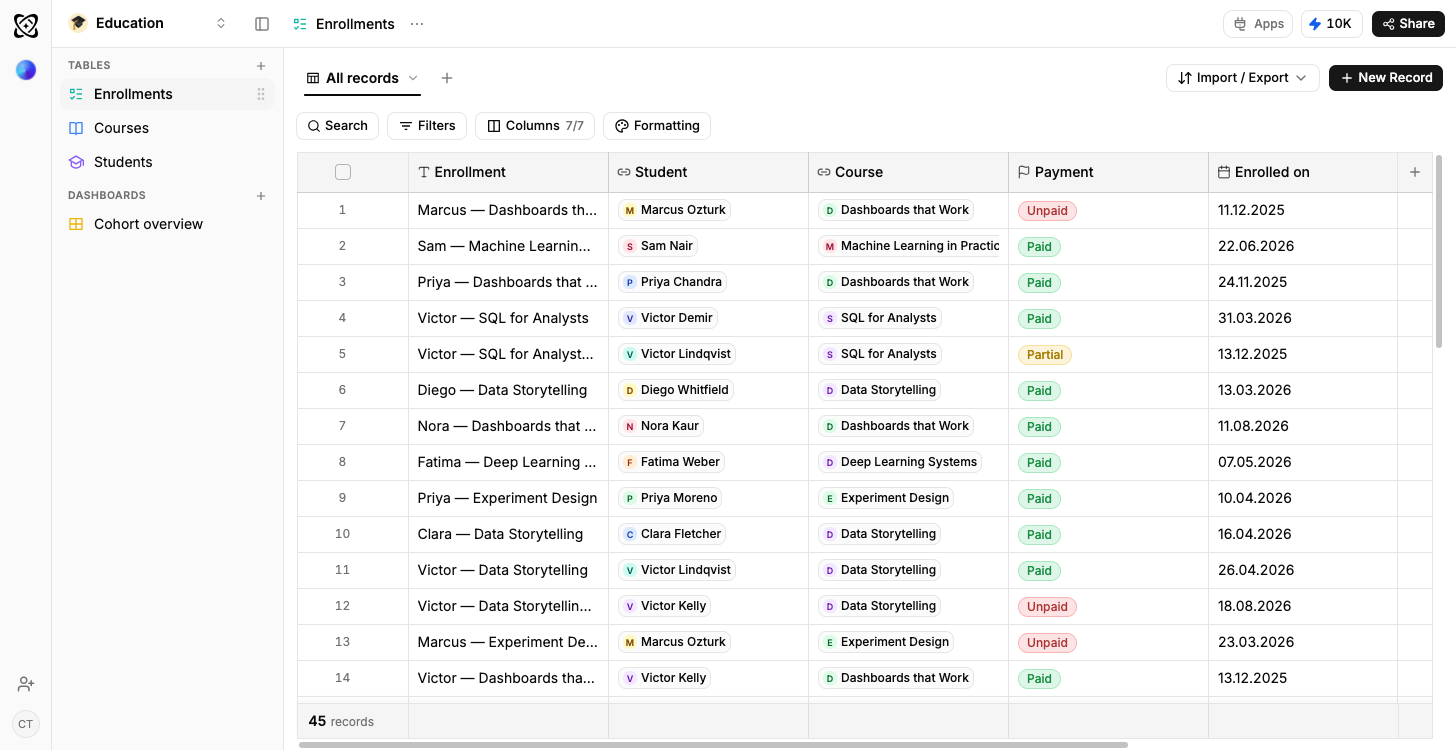
Education
Attendance and completion by cohort
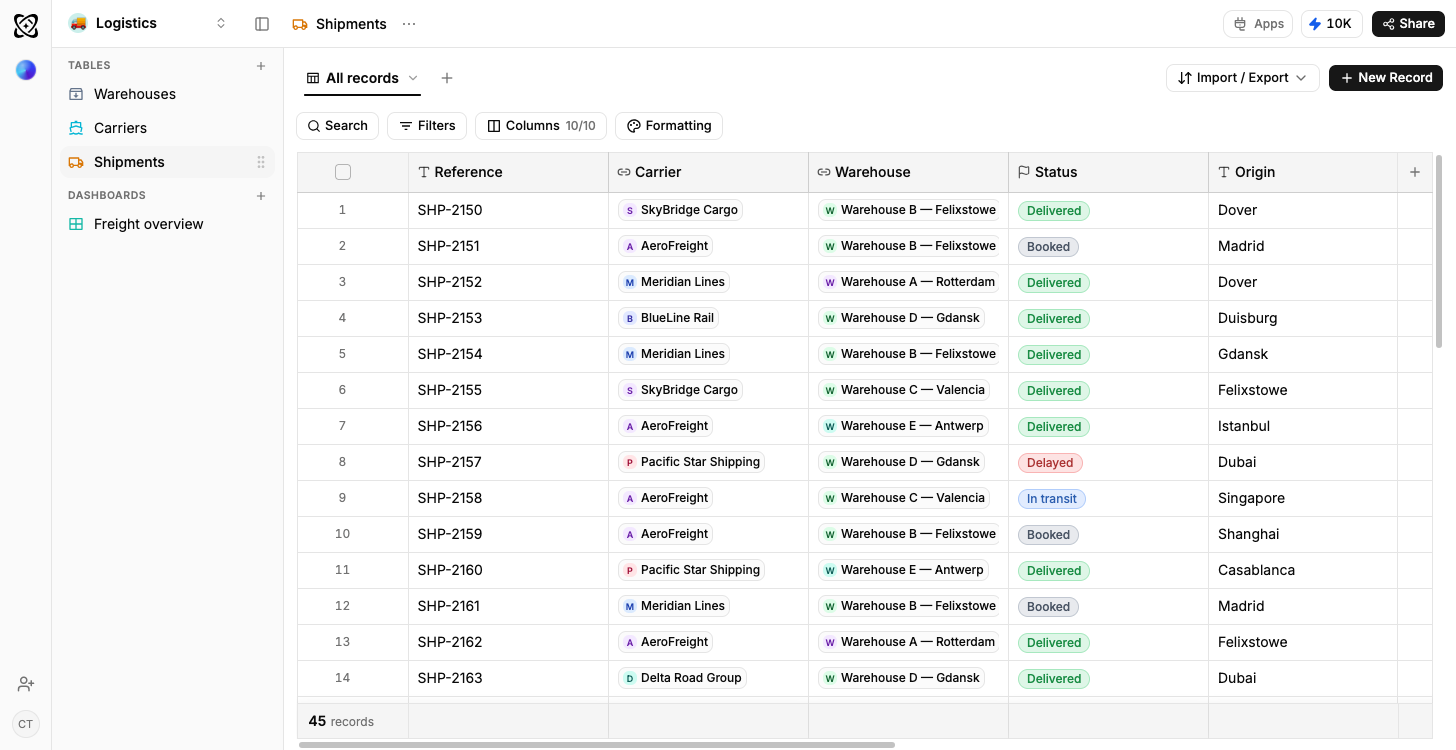
Logistics
On-time rate by carrier and lane
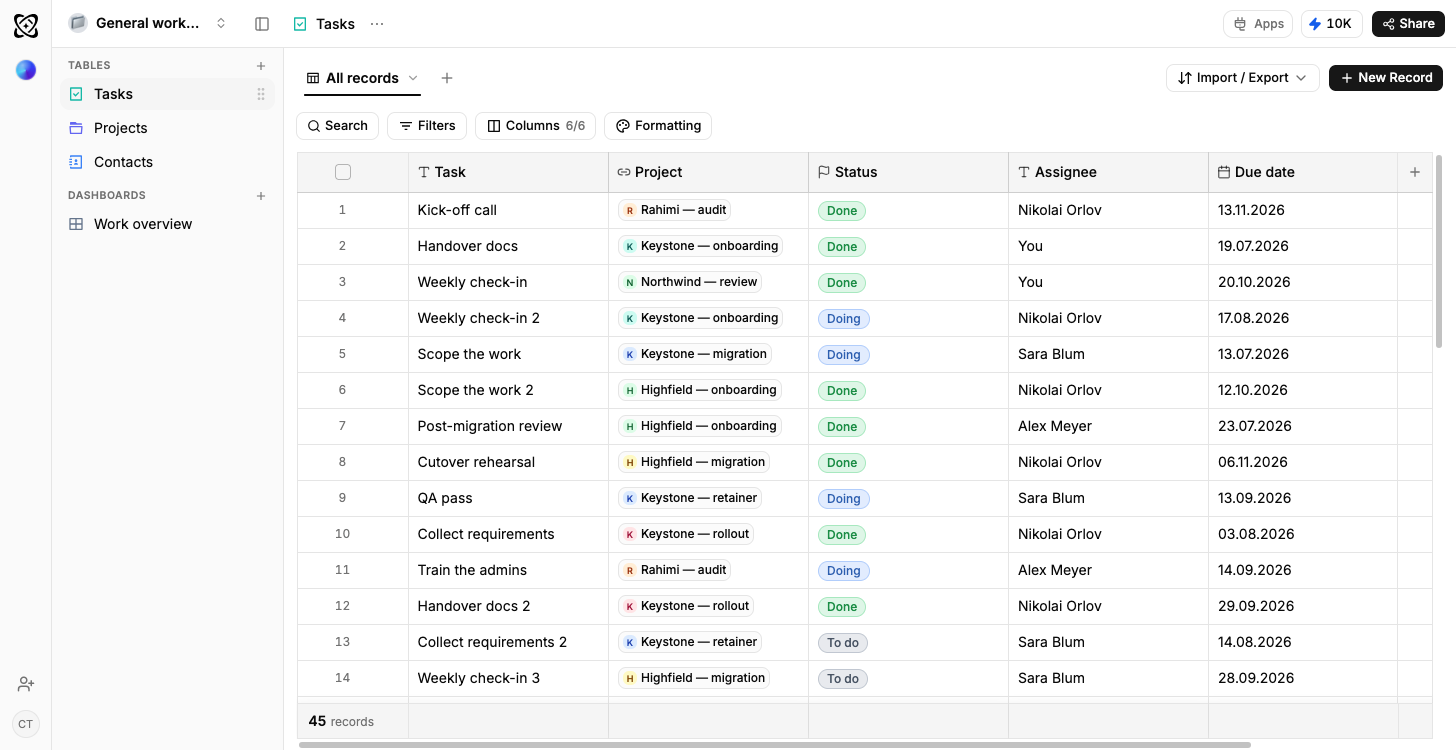
General workspace
Projects and budget by status
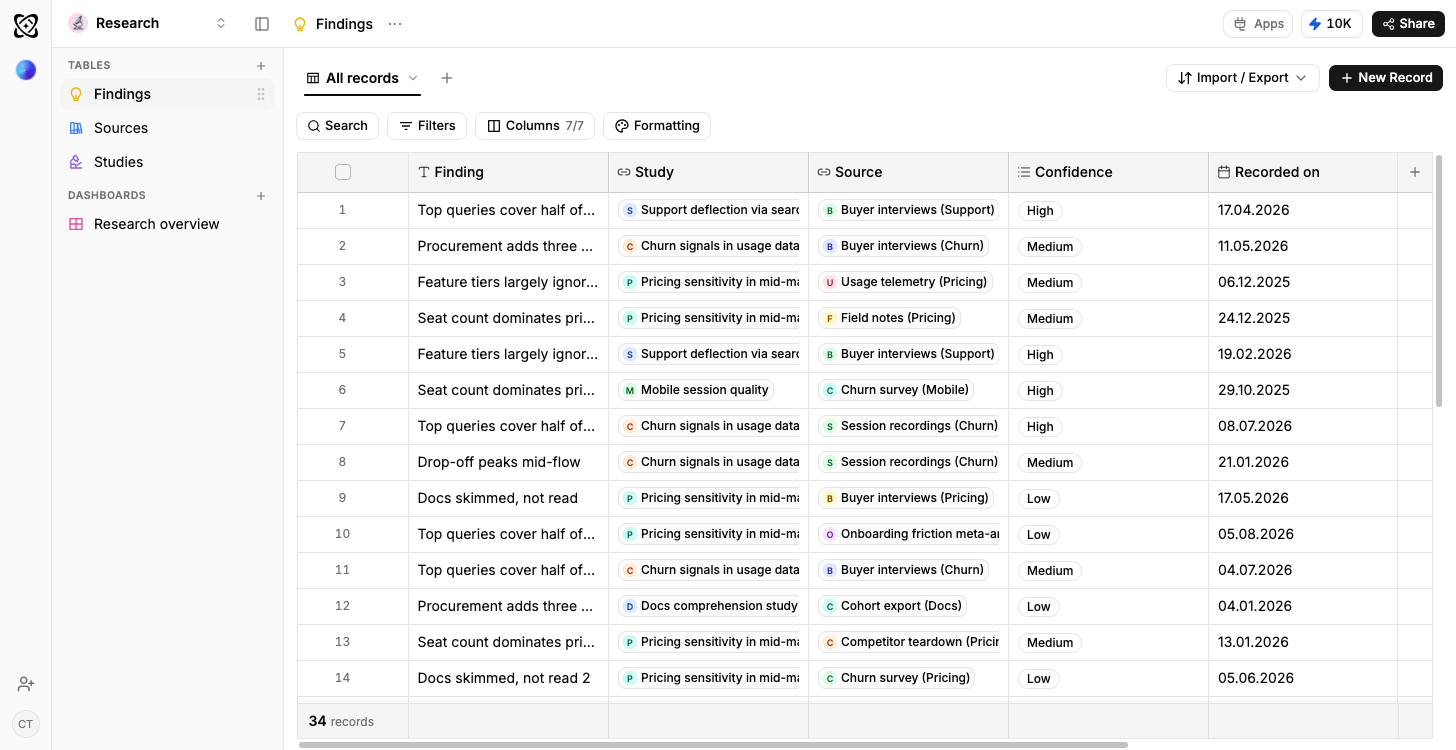
Research
Findings per theme, by confidence and source
Frequently asked questions
The questions people ask before starting from the Recruiting template.
Yes. It opens on the free plan with no credit card, and the template travels through sign-up, so you land in a workspace with sample candidates already spread across the stages.
It is a formula column on the candidate row rather than a number anybody types, so it is current every time you look at it and nobody has to maintain it.
Yes. Add a Scorecards table with one row per interviewer per round and link it to Interviews, and structured feedback stops living in email threads.
Not the job-board and careers-page parts. It covers roles, candidates, interviews and the funnel reporting over them, which is what most small teams need first.
Catch the candidate who has been waiting since their technical round.
Days in stage is derived from the dates already on the row, so the funnel ends in the name of someone waiting rather than in an average.
Use template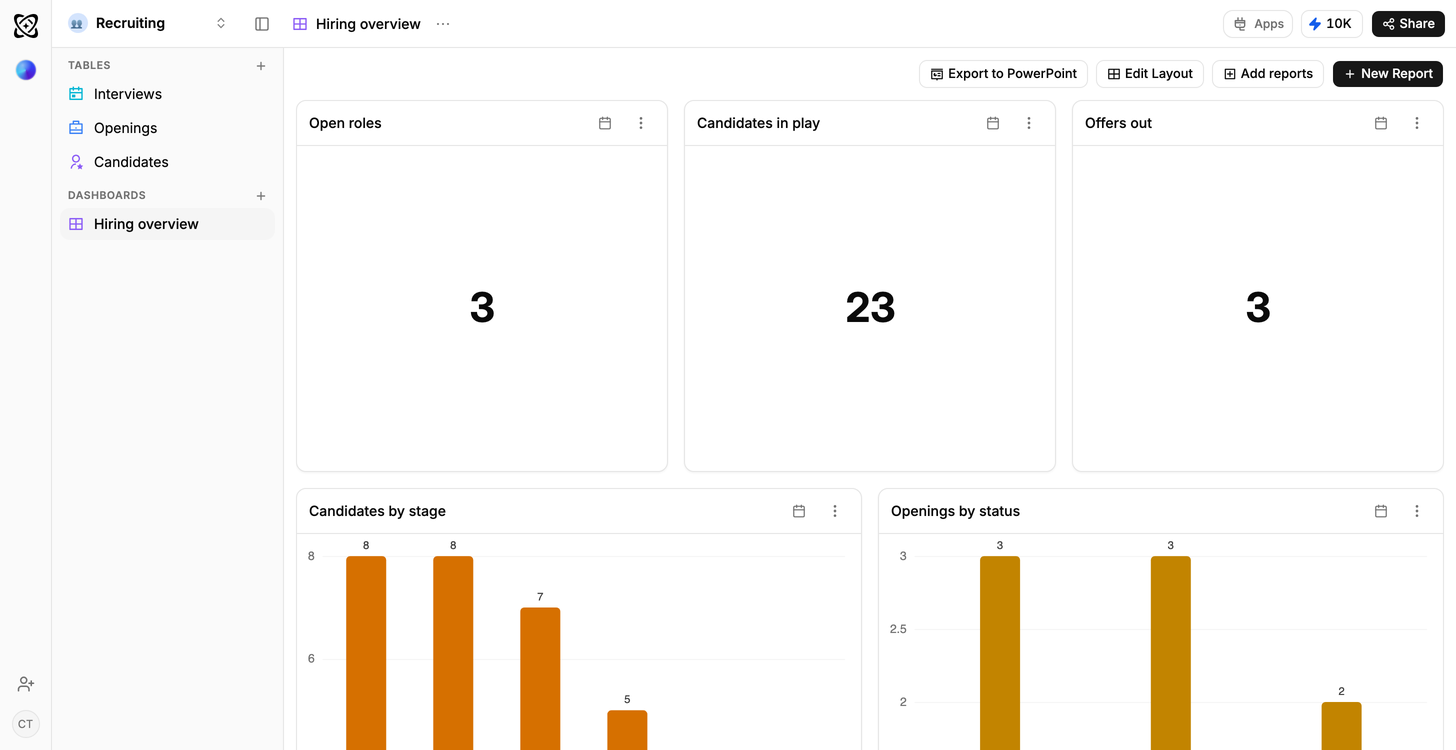
Days in stage, derived not typed
The formula reads the dates already on the candidate row, so eleven days of silence after a technical round is a number and not a feeling.
How a derived column stays filledA funnel that ends in a name
Time in stage lists the individuals currently over the average underneath the chart, so the report tells you who to email.
How a dashboard gets builtApplications arrive as mail
Forward a candidate's email straight into the workspace and it lands as a row; a job board's CSV imports into the same table.
Ways your data gets in