
Research template
Sources, findings and themes, so notes from interviews and reading end up somewhere you can actually query later.
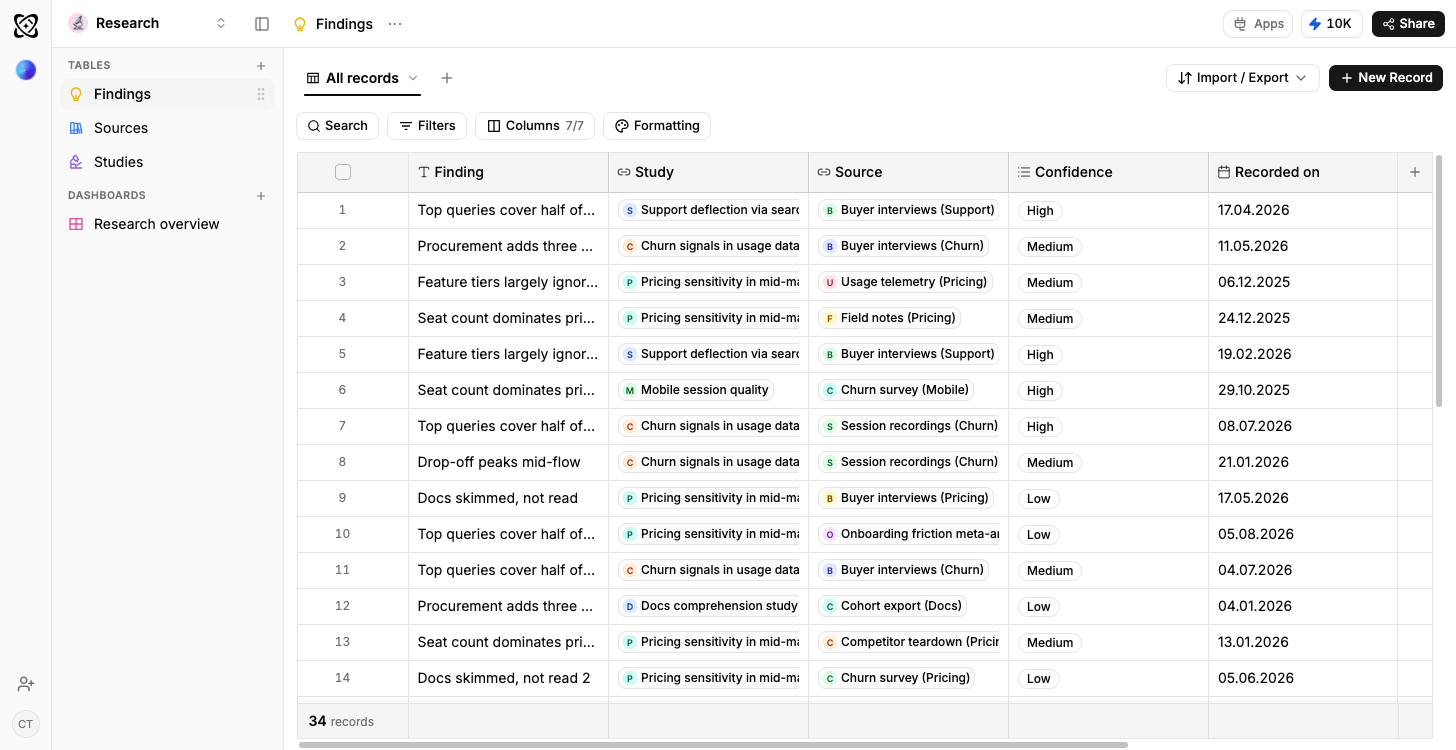
- Linked tables, not tabs
- Relationship columns join the rows instead of copying them into three places.
- Sample rows on arrival
- Every table opens with data in it, so the dashboards draw before yours does.
- Your own data, imported
- CSV, XLSX, a connected Google Sheet, or an email you forward straight in.
- Reshaped by describing it
- Say what is different and Ferra changes the structure and the rows together.
What is a research repository template?
Most teams keep what they wrote and lose what they learned. Ferra's research repository template keeps the learning instead: the sources you gathered it from, the individual findings inside them, and the themes those findings add up to: three linked tables, opening on a dashboard that shows which themes actually have evidence behind them.
Research notes rot in documents because a document cannot tell you that six of the nine things you believe come from the same interview. This template separates a source from a finding and a finding from a theme, and links them, so a claim carries its evidence, a theme carries its weight, and the strongly held opinion resting on one enthusiastic conversation looks different from the one with nine sources behind it.
Sources, findings, themes
Sources logs everything you read, watched or ran: a type such as Interview, an author, a date, a reliability rating, and a formula counting the findings pulled from it. Findings holds one claim per row, linked twice: back to its source, up to its theme. Each row carries the statement itself (“approvals are the bottleneck, not entry”), a confidence rating, the supporting quote, and the date it was captured. Themes is one row per pattern, with a description, a status such as Confirmed, an owner, and two formulas that matter more than they look: total evidence, and distinct sources.
Why notes rot in documents
Six of the nine things you currently believe might come from the same enthusiastic interview, and no document can tell you that. That's the rot a better document can't fix. Separate a source from a finding and a finding from a theme, and it becomes countable; the two formulas on the theme row are the count. Nine pieces of evidence across five distinct sources is a different claim from nine across one, and the gap between a supported pattern and a memorable anecdote stops being a matter of tone and becomes a number.
The test a repository has to pass
Open it months from now: is it still useful? That's the only real test, and it's a question about context, not storage. Every finding keeps its quote, its source and its confidence rating on one row, so a claim gets re-read in the words it arrived in rather than trusted because someone once wrote it down. A finding that turns out to rest on one unusually keen customer shows up as exactly that: the thing a tidy summary document quietly hides.
Where the evidence sits
The dashboard plots findings per theme, split by confidence and by source type, so a theme carried by one interview looks visibly different from one carried by five independent sources. Open it before a readout. It tells you which of the things you're about to say are actually supported and which are one conversation wearing a confident sentence.
Asking the repository questions
“Which themes have the most findings behind them” is the ranking the dashboard already draws. “What did operations people specifically tell us” cuts the findings by where they came from. Before every readout, run the honesty check: “which findings rest on only one source.” And “summarise everything tagged to the approval bottleneck theme” walks the link from a theme to every finding attached to it and hands you back the quotes.
Adapting it to your study
Interviewing across segments? Add a Participants table and findings become countable by segment as well as by source, which is what tells you whether a pattern belongs to enterprise buyers or to everybody. The same goes for a study round or a product area, even for the decision a finding fed into; the structure changes with the rows already in it, so nothing gets re-tagged by hand.
Who it suits, and how to load it
Product and UX researchers get the obvious use, but insight teams, analysts, and anyone running a literature review or a discovery phase with more notes than memory land here too. Loading it is one import: a CSV or XLSX of existing notes, or a connected Google Sheet, shaped as one row per claim rather than one row per document. Splitting an old write-up into findings is the work. It's also the point. That split is what makes the repository answerable later.
You may also like
Browse all templates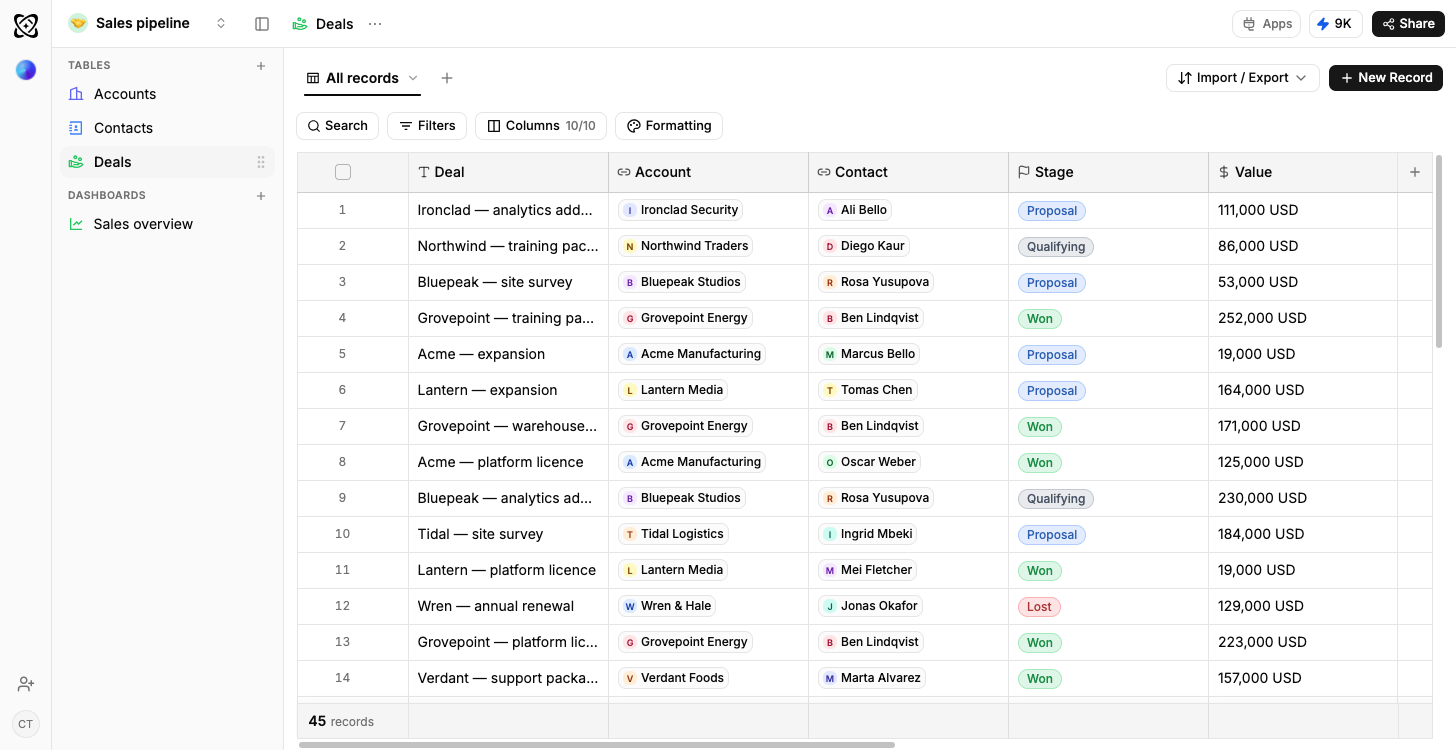
Sales pipeline
Open pipeline by stage, results by owner
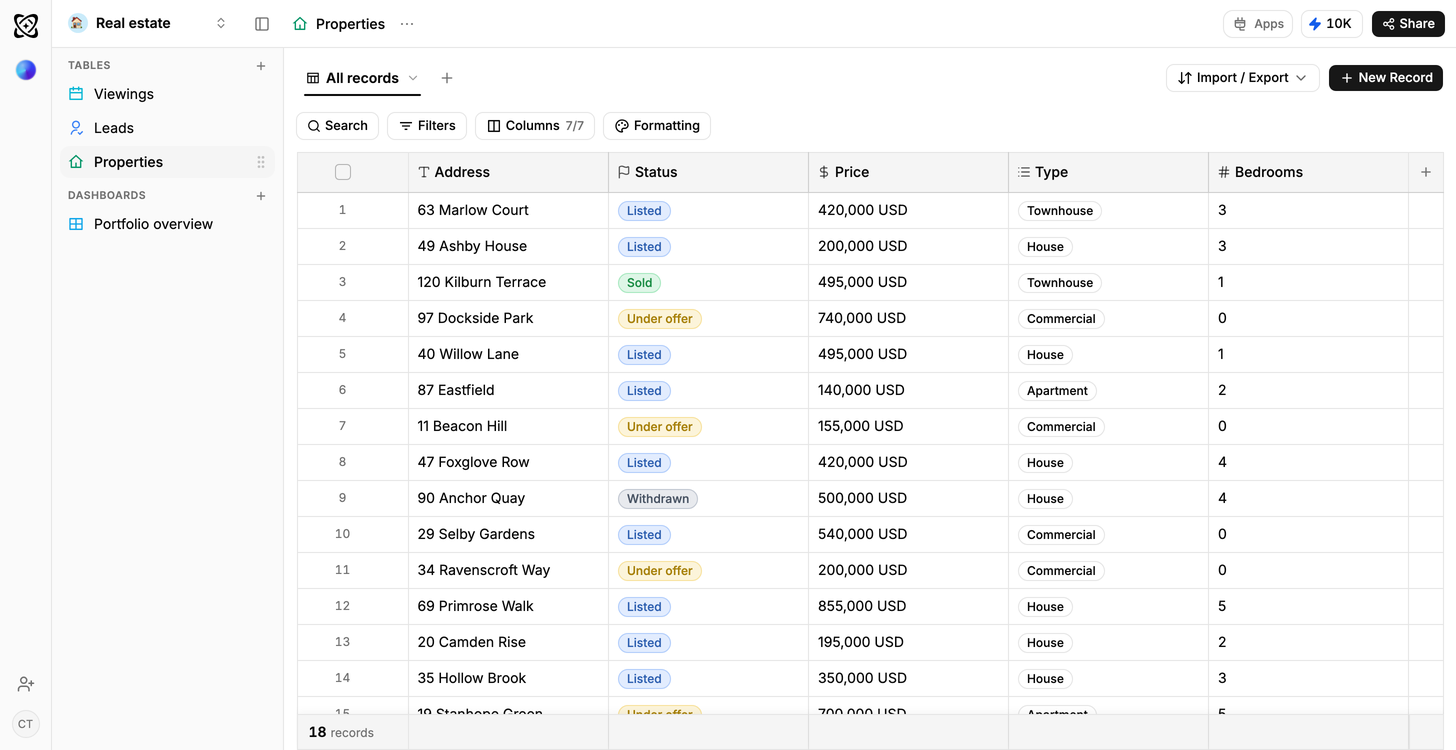
Real estate
Portfolio value and leads, by stage
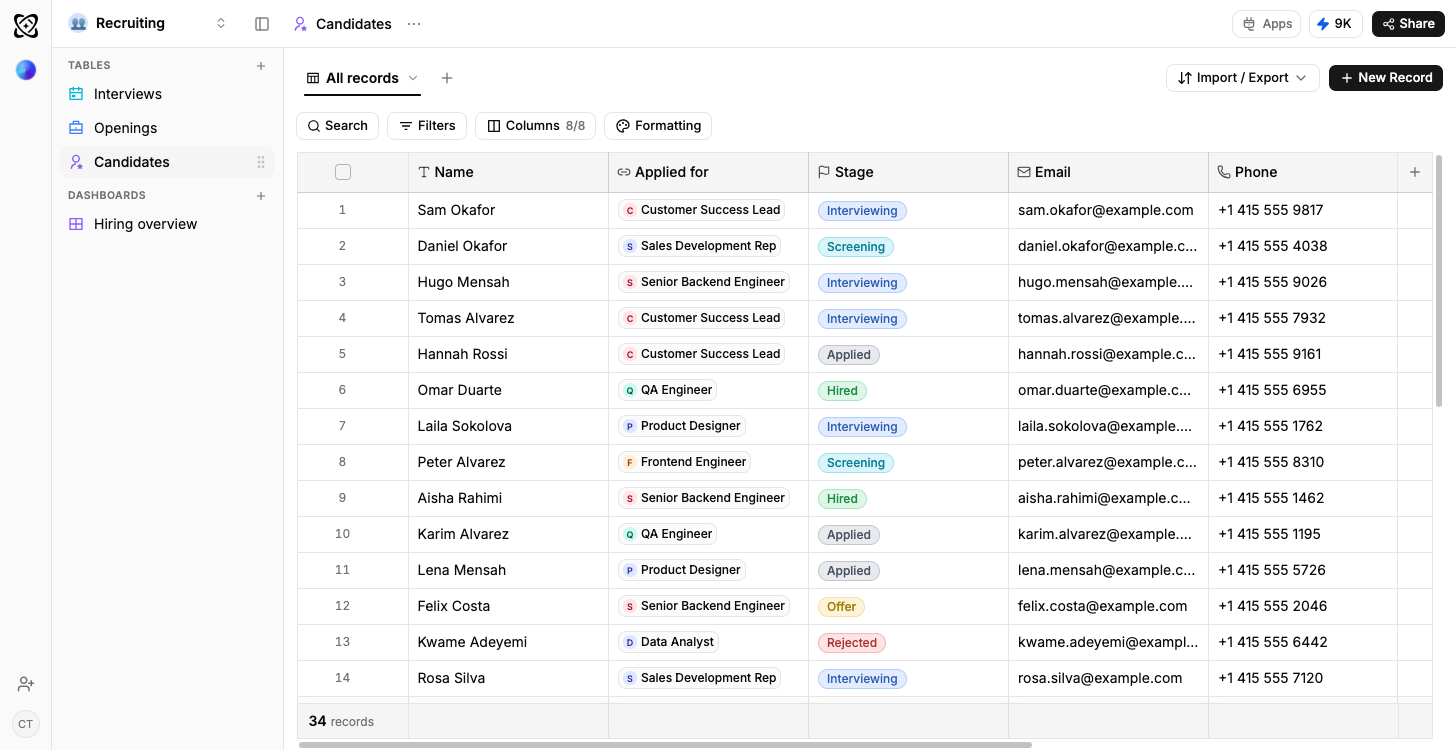
Recruiting
Candidates by stage, openings by status
Client work
Due this week; shipped but not billed
Operations
Orders in flight, spend by supplier
Education
Attendance and completion by cohort
Logistics
On-time rate by carrier and lane
General workspace
Projects and budget by status
Frequently asked questions
The questions people ask before starting from the Research template.
So a claim can be counted. One row per claim is what lets a theme show nine pieces of evidence across five sources rather than nine mentions in one interview.
Yes. Add a Participants table and link findings to it, and evidence can be counted by segment rather than only by source.
Findings per theme, split by confidence and source type, so a theme resting on one interview looks different from one carried by five independent sources.
Yes, on the free plan with no credit card, and it opens with sample sources, findings and themes, including a theme resting on a single interview.
Notes you can still query a year from now.
Findings point at their sources and themes at their findings, so the weight behind an opinion is a count rather than an impression.
Use template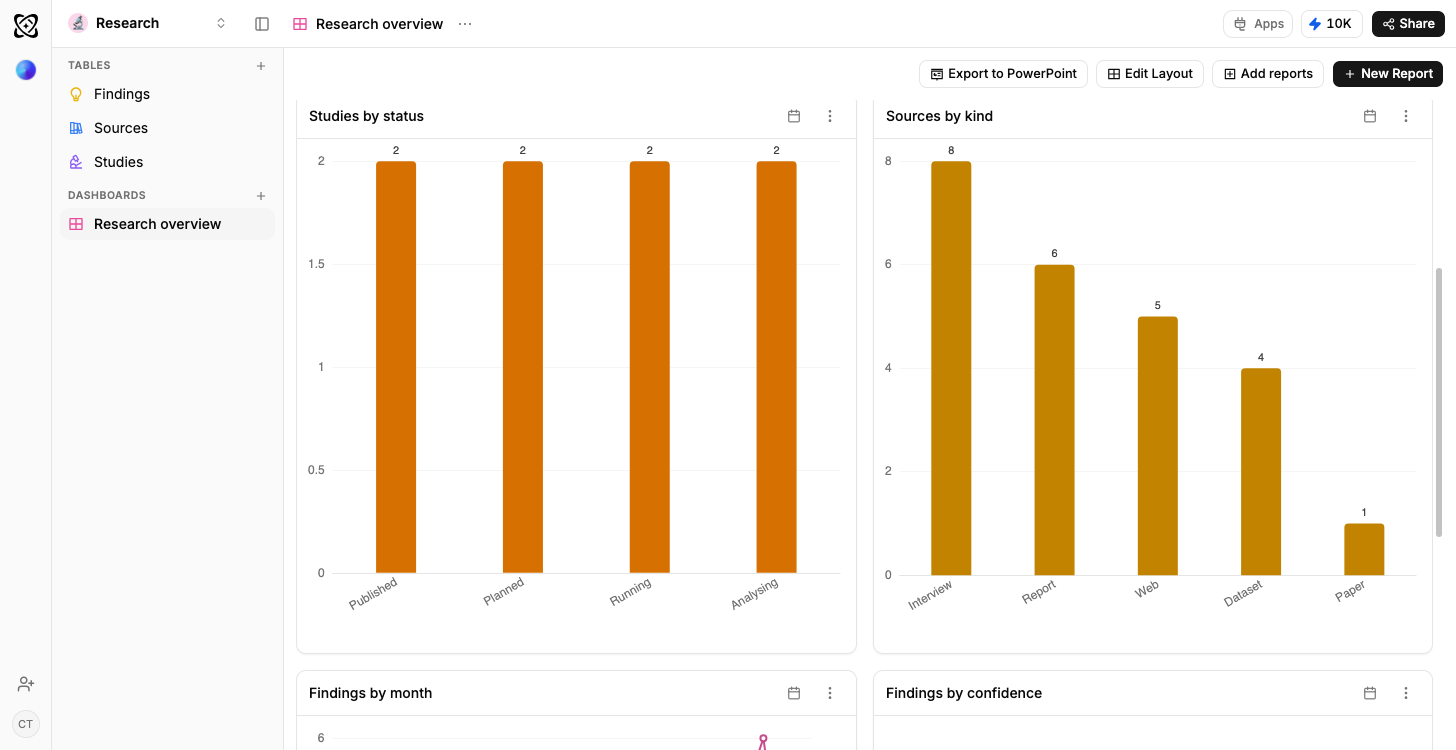
A claim that carries its evidence
Every finding points at the source it came from and the theme it belongs to, so the weight behind an opinion is a count.
How relationship columns workOne good interview versus five sources
Distinct sources is a formula on the theme, which is what separates a pattern from a person you enjoyed talking to.
How a derived column stays filledAsk the theme, not the folder
Summarise everything tagged to the approval bottleneck and the assistant walks the links instead of searching a document.
Ask it in a sentence