
How do you extract domains from text?
An email thread works. So does a spreadsheet export or a page of notes. Whatever you paste gets scanned for domains, the host in every URL, the part after the @ in every email address: then deduplicated and returned one domain per line. Nothing needs cleaning first; everything that isn't a domain is ignored.
Subdomains count as distinct entries, so docs.example.com and example.com come out as two different lines: collapse them yourself if you only want registered domains. Case never splits an entry: Example.com and example.com are the same domain and appear once. And the domain in someone's email address is their mail domain, which is usually: not always: the same as the company's web domain.
The one-per-line output pastes straight into a Ferra table as one row per domain: a clean starting column for a lead list or a link audit.
How the domain extractor works
Paste text of any size and the list appears at once. The tool finds domains inside full URLs and email addresses, deduplicates them, and prints each unique domain on its own line, ready to copy into a spreadsheet or the next tool in your chain.
- Text
- Anything containing links or addresses qualifies: raw HTML, CSV rows, meeting notes, a newsletter draft. The extractor pulls the domains and ignores the rest.
What the output means
Paste "Met the team at https://acme.io/pricing, follow up with sara@acme.io and review https://docs.partner.co/start" and the output is two lines: acme.io and docs.partner.co. acme.io appears twice in the text: once in the URL, once in the email address, and exactly once in the output.
Don't expect docs.partner.co to merge into partner.co. They're different hosts, and the tool reports what's actually in the text. Deduplication has a second consequence: the list shows which domains appear, never how often. If frequency matters, count occurrences in the original text instead.
When to use the domain extractor
Turning a pile of contacts into a company list is the classic run. Export the email addresses from your CRM or a conference follow-up thread, paste them in, and each company's domain comes out once: the standard join key for enrichment and firmographic lookups, and the field you dedupe against existing accounts.
It earns its keep on link work too. Paste a newsletter draft or a partner page, a competitor's resources section works just as well, and you get every domain being linked to. That's an outbound-link review in one paste, and the raw material for an allowlist or blocklist of the third parties a page depends on.
Tips for the domain extractor
The list inherits the quality of the paste, and most of what goes wrong happens in the step after.
- Paste generously
- No pre-cleaning needed; the extractor skips everything that isn't a URL or an email address.
- Decide on subdomains
- docs.acme.io and acme.io come out as separate lines. If you want companies rather than hosts, strip subdomains in your next step.
- Watch for personal inboxes
- gmail.com or outlook.com in the output means some contacts used personal addresses, flag those rows before running enrichment.
- Don't assume mail equals web
- A company's email domain occasionally differs from its website. Verify before you build lookups on it.
- Count separately
- The list is deduplicated, so it tells you which domains appear, not how often each one does.
Other tools
Browse all toolsRelated templates
Browse all templates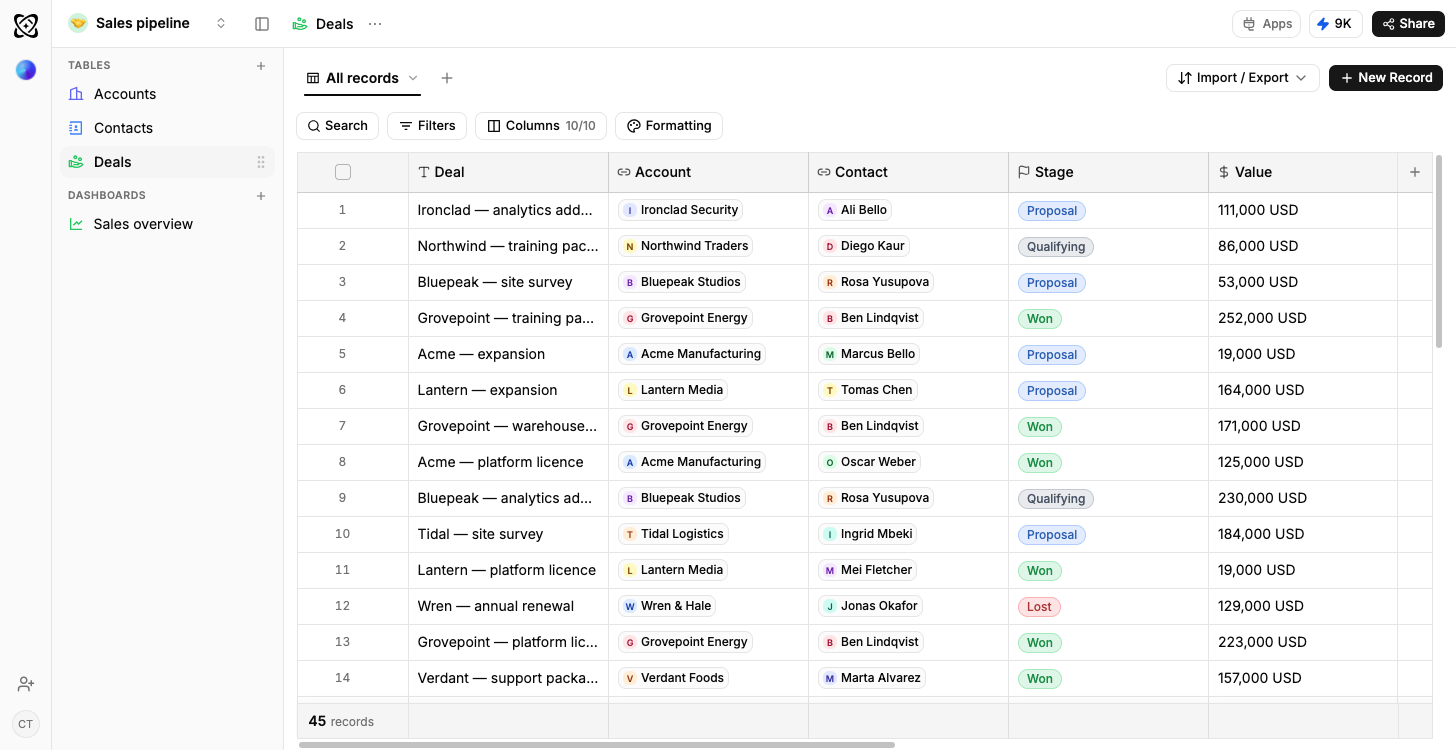
Sales pipeline
Open pipeline by stage, results by owner
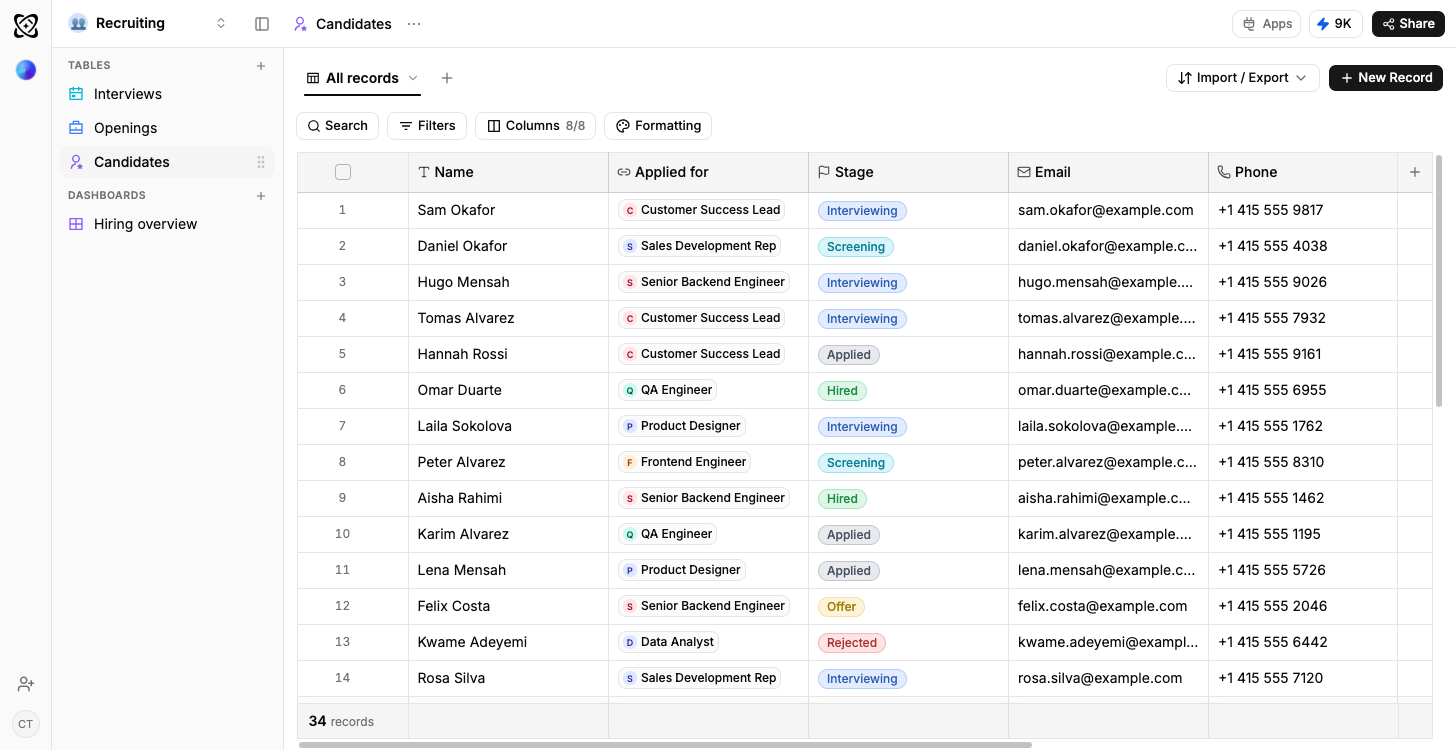
Recruiting
Candidates by stage, openings by status
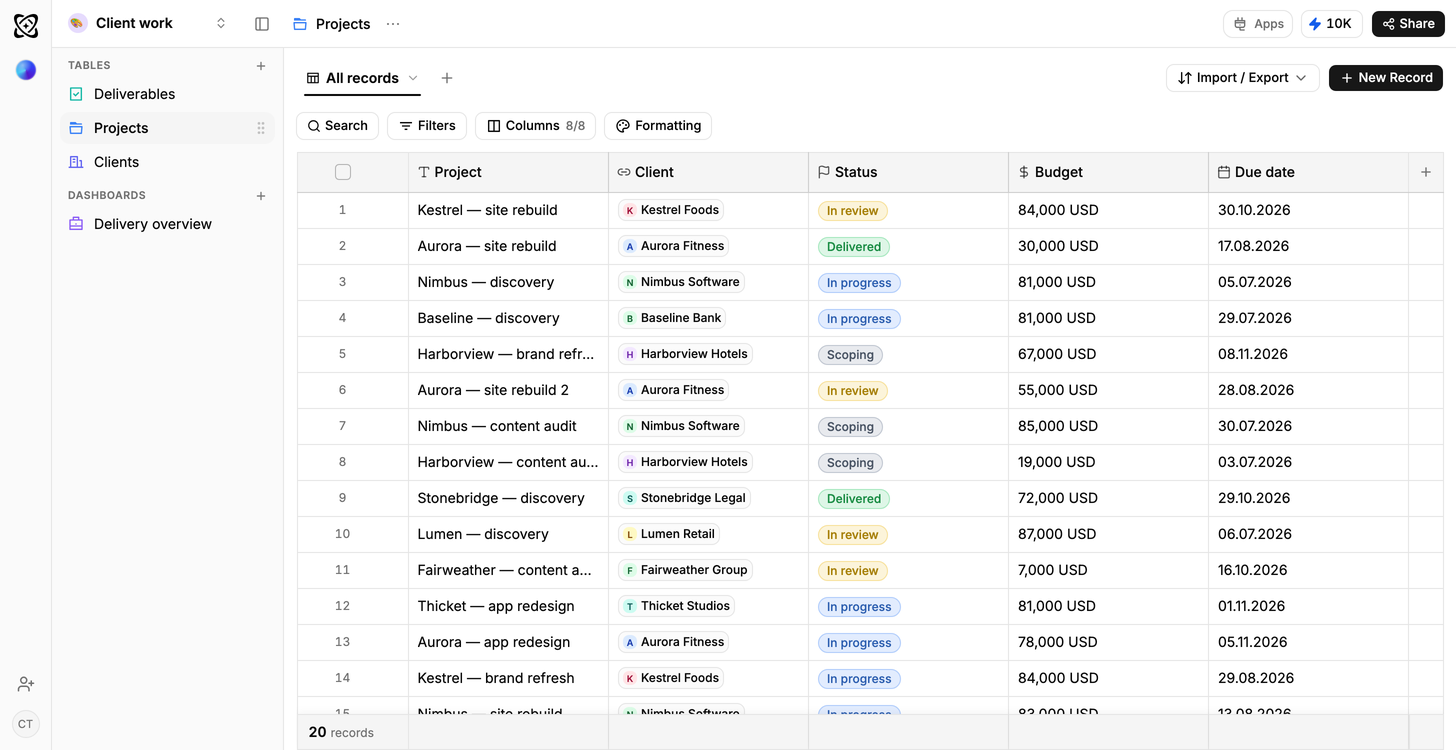
Client work
Due this week; shipped but not billed
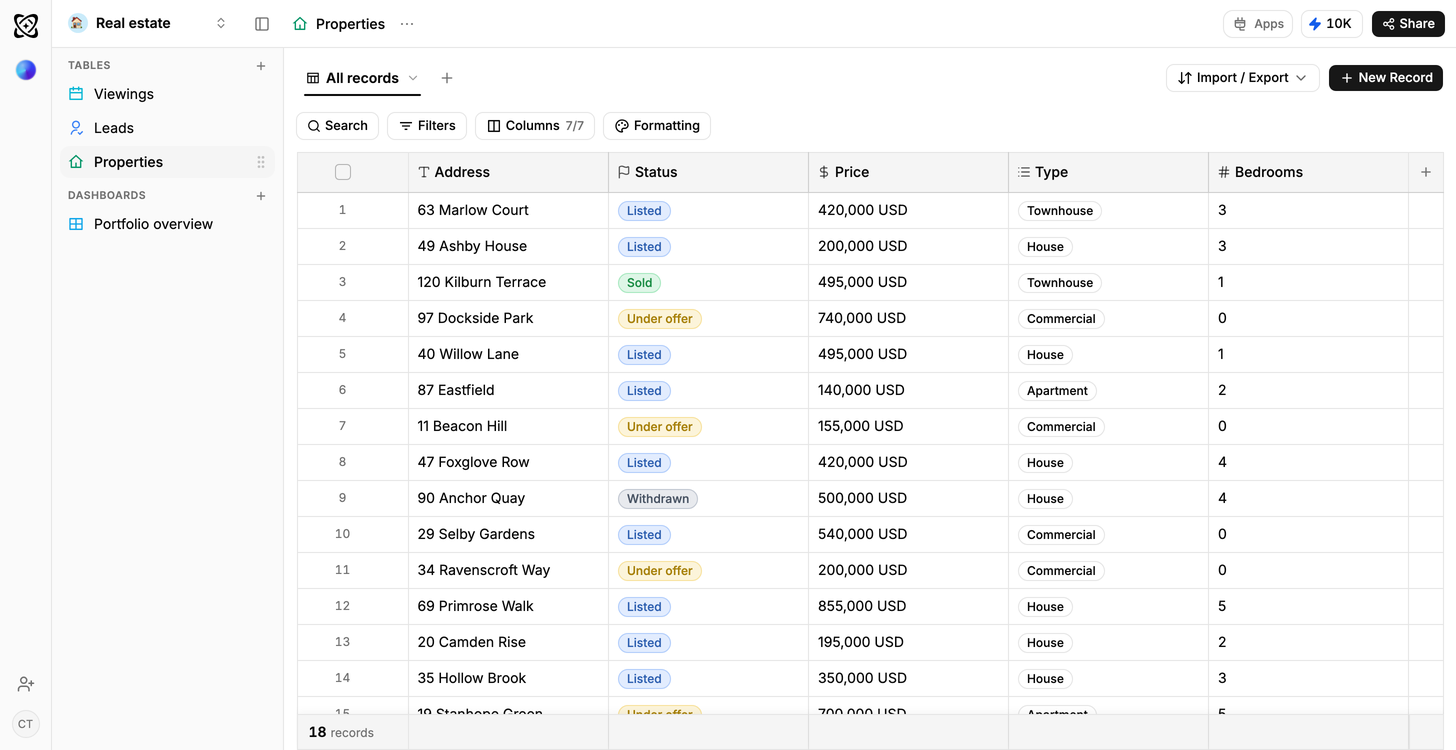
Real estate
Portfolio value and leads, by stage
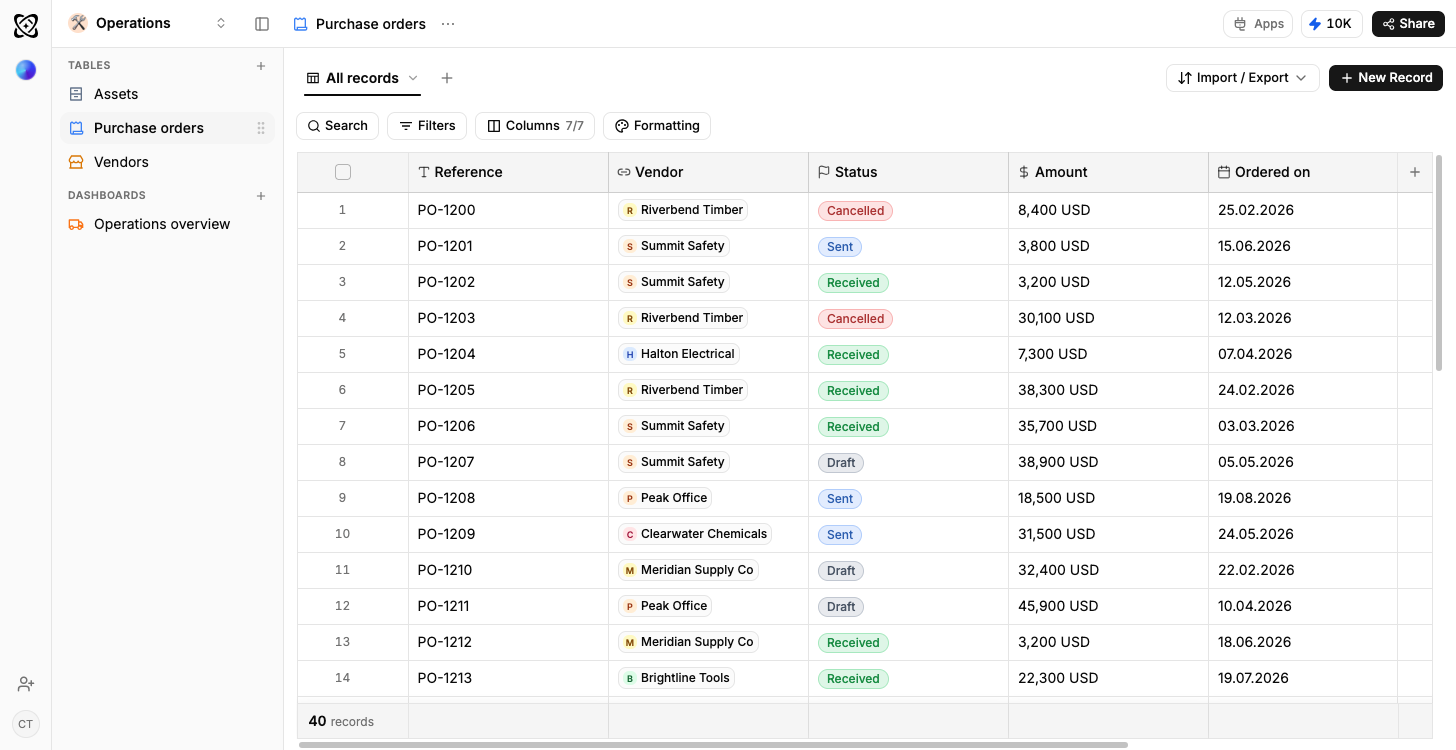
Operations
Orders in flight, spend by supplier
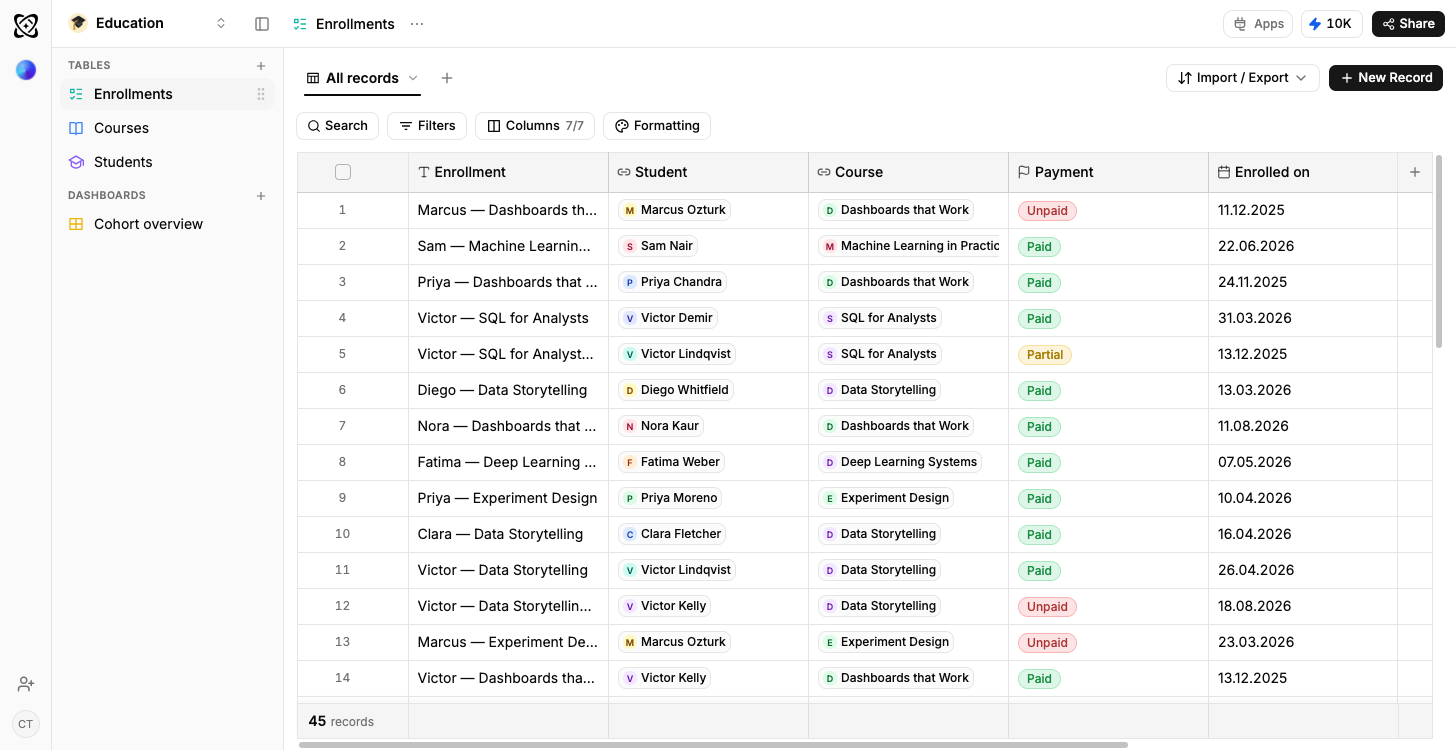
Education
Attendance and completion by cohort
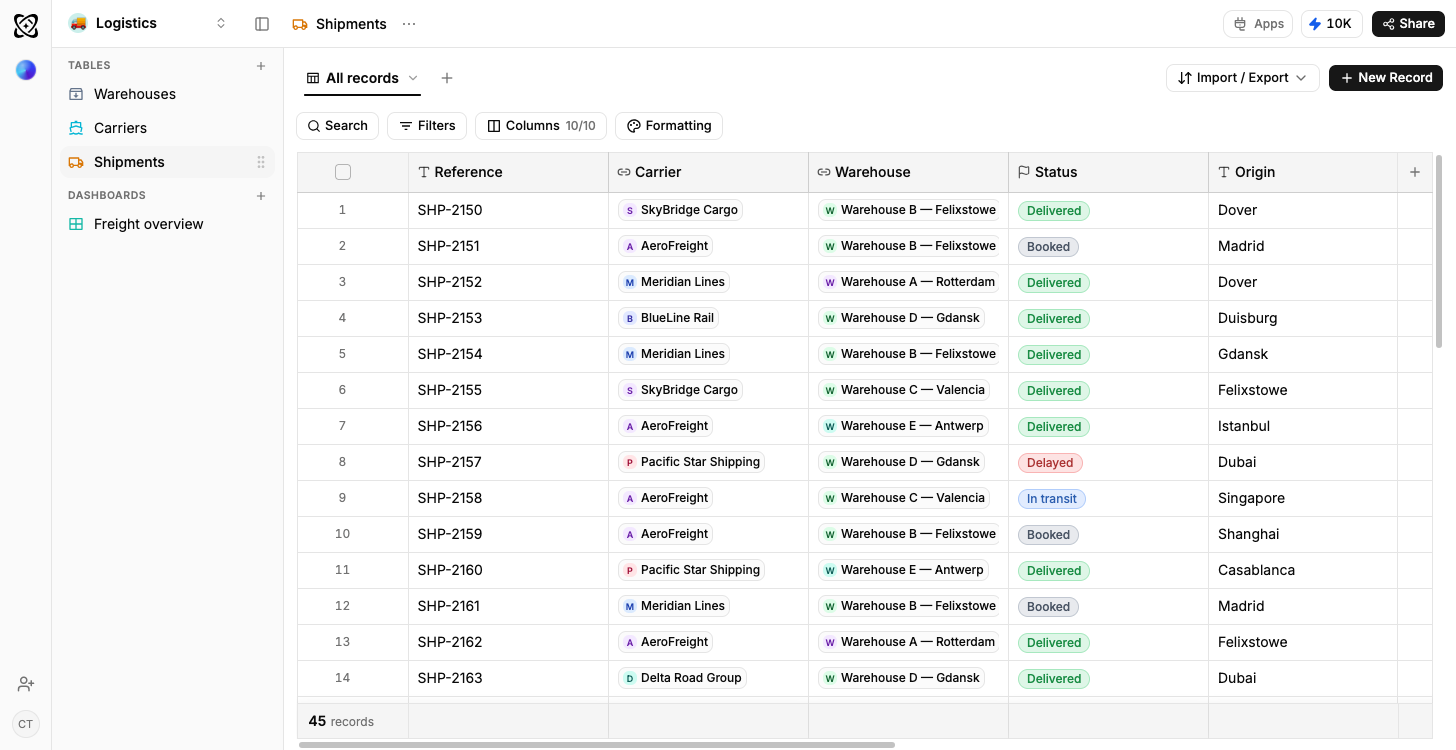
Logistics
On-time rate by carrier and lane
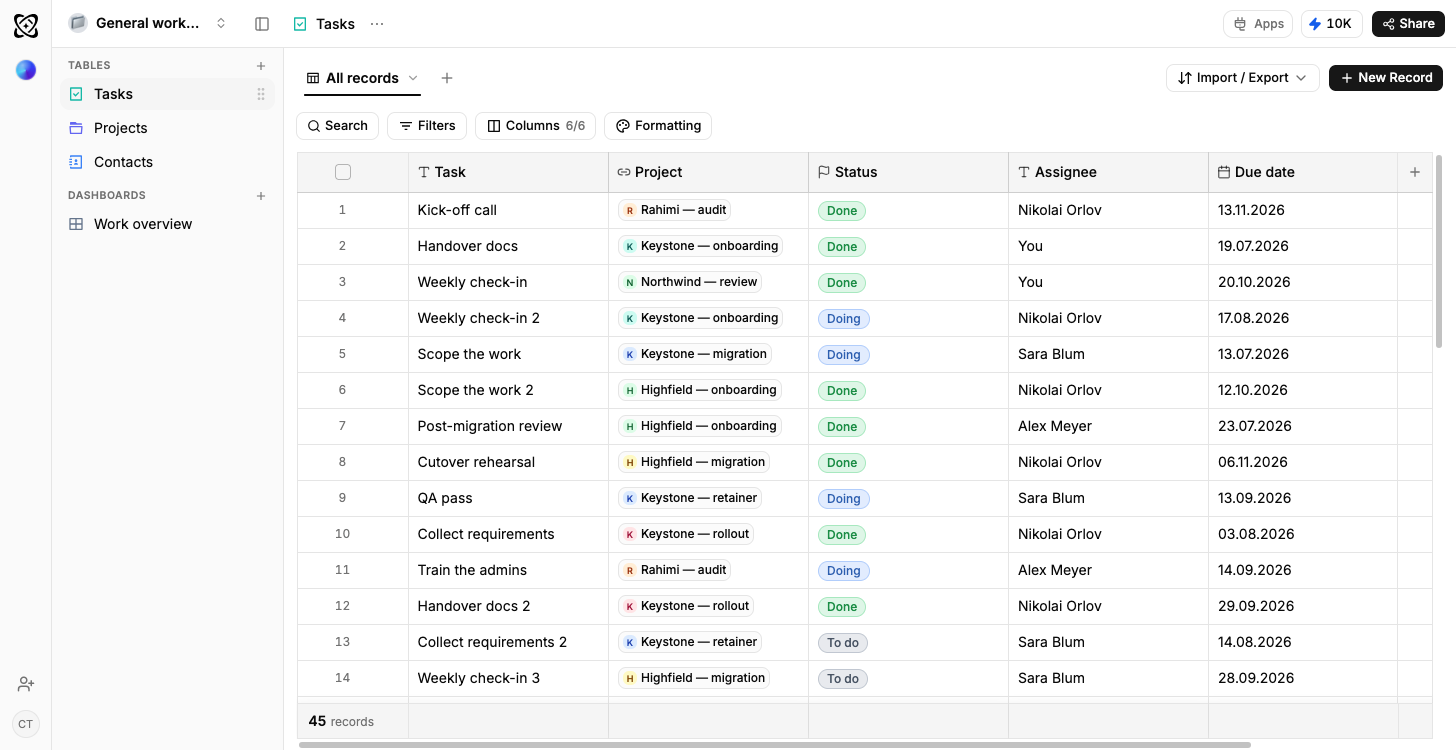
General workspace
Projects and budget by status