
Client work template
Clients, projects and deliverables, with a dashboard for what is due this week and what has shipped but not been billed.
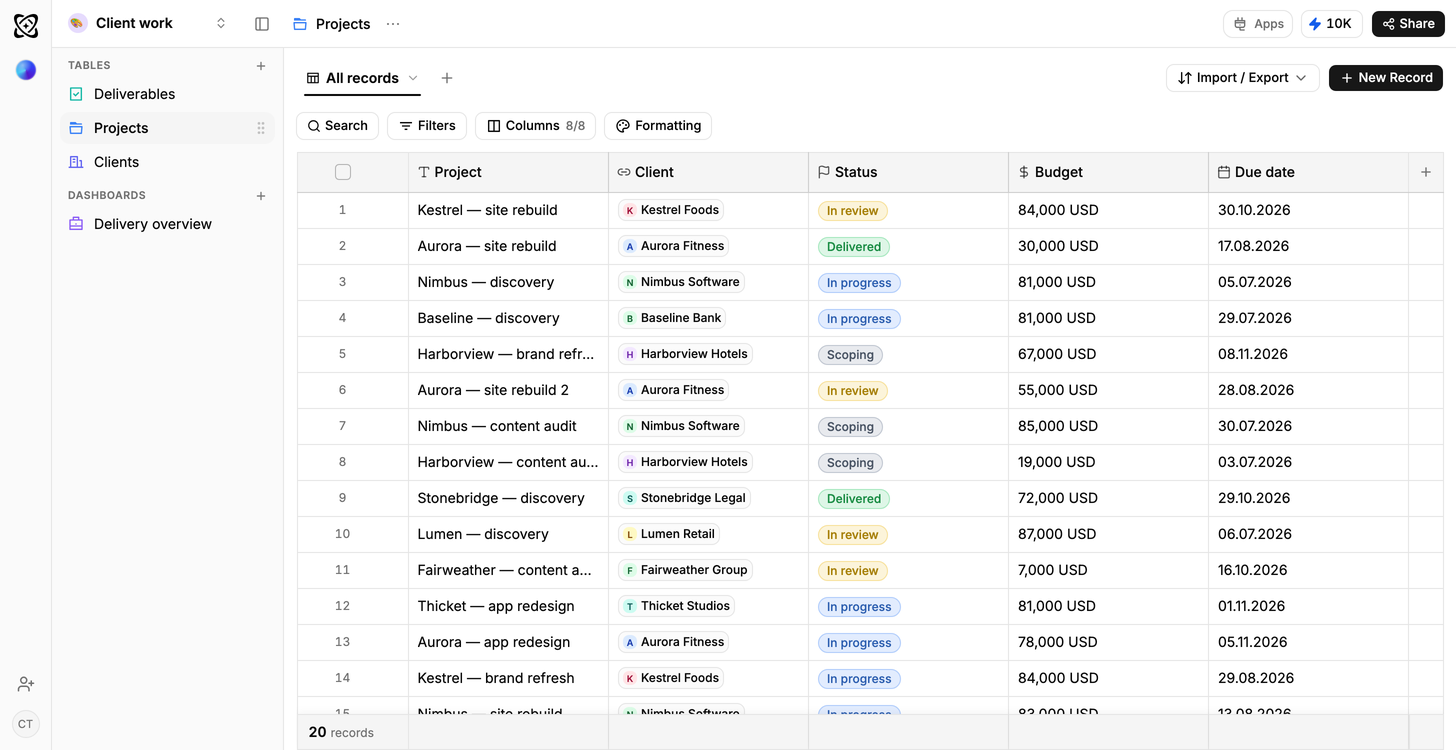
- Linked tables, not tabs
- Relationship columns join the rows instead of copying them into three places.
- Sample rows on arrival
- Every table opens with data in it, so the dashboards draw before yours does.
- Your own data, imported
- CSV, XLSX, a connected Google Sheet, or an email you forward straight in.
- Reshaped by describing it
- Say what is different and Ferra changes the structure and the rows together.
What is a client work tracker template?
A workspace built for agencies and studios: the clients, the projects you run for them, and the individual deliverables those projects are actually made of. Ferra's version links all three, gives every deliverable an owner, a due date and a billed flag, and ships two dashboards: what's due this week, and what has shipped without being invoiced.
Studios and agencies rarely lose money on the work; they lose it on the gap between delivering something and invoicing it. This template links clients to projects and projects to individual deliverables, each with an owner, a due date and a billed flag, so "what shipped last month and never made it onto an invoice" is a view rather than an archaeology project. It is also the shape that answers "can we take this on" without opening five files.
Clients, projects, deliverables
One row in Projects reads Q1 site refresh, Halden & Co, In progress, $18,000, 62 hours, due 28 Mar: one piece of work for one client, linked to it, with a status, a budget it can run past, the hours used so far and a due date. Above it sits Clients, one row per account: the name, the account lead, the retainer, a status, the date they came on, and a Billed to date column that's a formula rather than a running total somebody keeps. Below it sits Deliverables, the level the work actually happens at: one row is a thing somebody owes somebody, linked to its project, with an owner, a due date, a status such as With client, and whether it has been billed.
The gap where the money goes
Studios rarely lose money on the work. They lose it in the gap between delivering something and billing for it, and that gap is invisible in a normal project plan because a project plan finishes at done. Putting Billed on the deliverable row, rather than on an invoice living in another system entirely, is the whole trick: what shipped last month and never made it onto an invoice becomes a view, not an afternoon of archaeology. And because the row already knows which client it belongs to, the total comes out by account.
Two dashboards, one for each half of the week
One chart for the work, one for the money. Due this week groups every deliverable landing in the next seven days by owner and pulls the overdue ones to the top instead of leaving them buried in the same list. Shipped but not billed totals approved work with no invoice against it, by client: the number that quietly funds a month if somebody looks at it. Sample clients, projects and deliverables arrive with a few already past their date, so neither chart opens empty or reassuringly green.
Questions worth typing
What's due in the next seven days, and who owns it: that's the Monday question. Which projects are over budget on hours compares hours used against the budget on the project row. What has been approved but never billed pays for itself. And how much revenue is sitting in active retainers this month needs the Clients table and nothing else. None of them requires a view built first.
Can we take this on?
Every new-business conversation hides the same question, and this shape answers it. Projects carry a budget and hours used, deliverables carry owners and dates, so capacity is a look at who's already carrying what over the next two weeks: not a guess followed by an apology three weeks later. Want that in hours rather than counts? Add a Time entries table linked to deliverables, and hours roll up to the project without anybody adding them up.
Who it suits
Retainers and project work running side by side is the tell. Design and development studios, marketing and PR agencies, consultancies, freelancers with more than one client at a time: the shape fits all of them. What it isn't is accounting software: Billed is a flag that tells you an invoice should exist, not the invoice itself, and reconciliation still happens where your invoices do.
Getting your current projects in
Three imports, top down: clients, then projects, then deliverables, each one pointing at the level above it. CSV and XLSX come across untouched, a Google Sheet somebody already keeps can stay connected, and forwarding an email in gets it read into a table. Describe how the columns match up; the relationship columns get set, and nothing is pasted across as reference codes.
You may also like
Browse all templates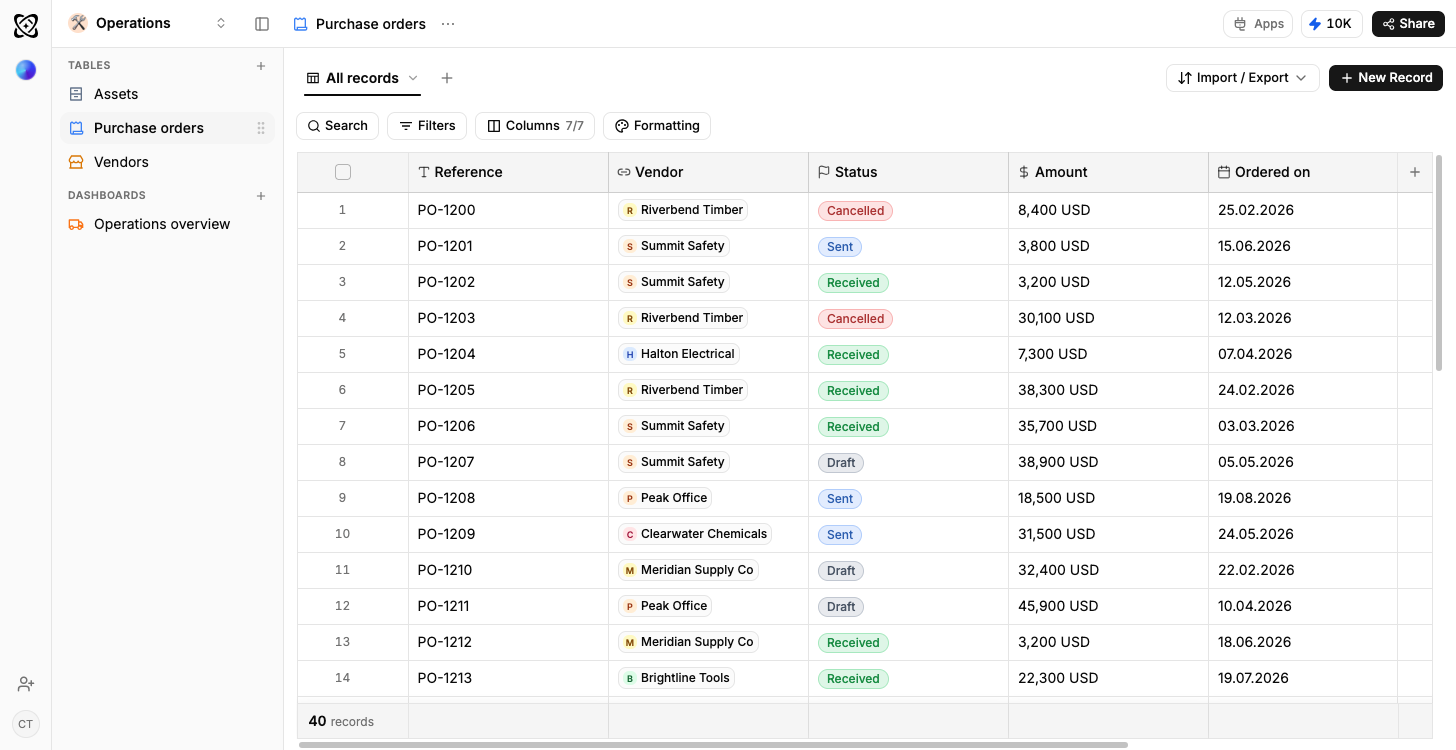
Operations
Orders in flight, spend by supplier
Education
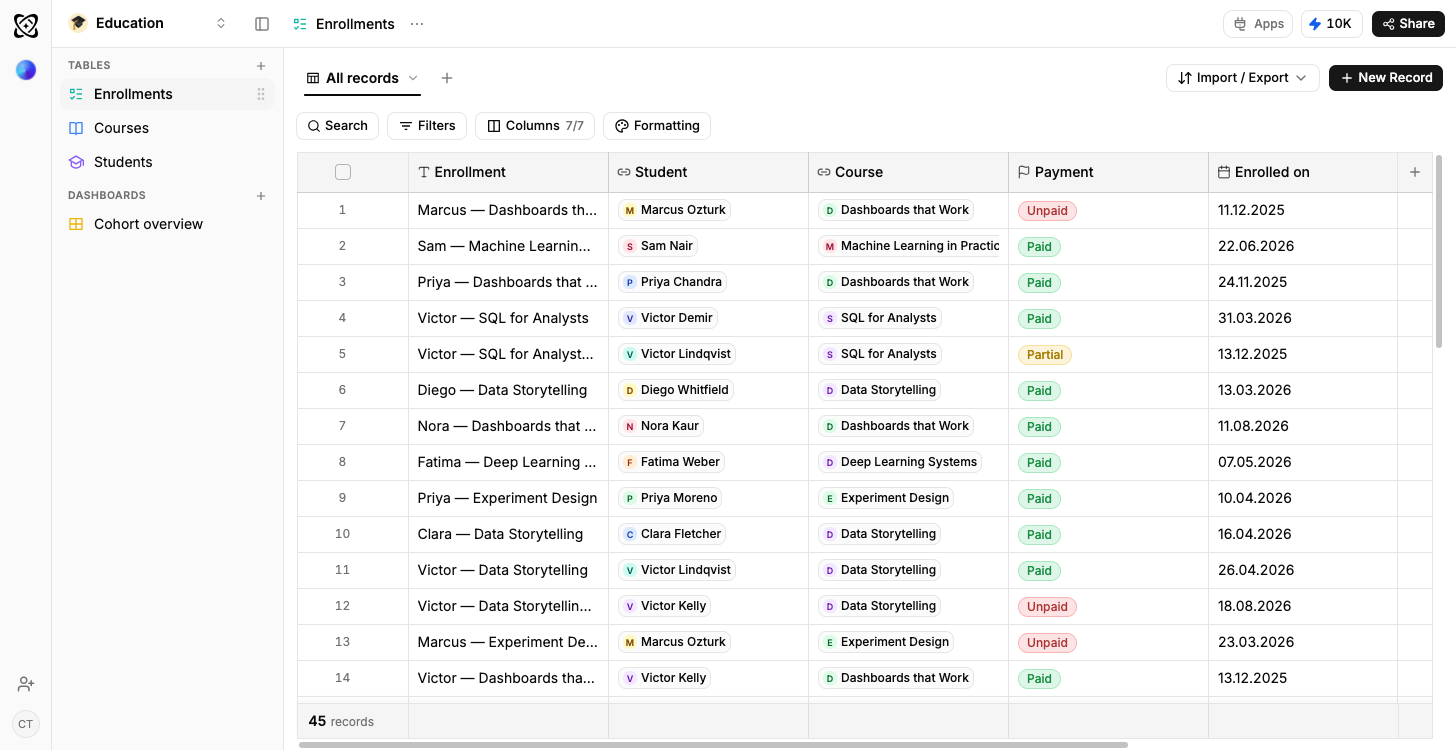
Attendance and completion by cohort
Logistics
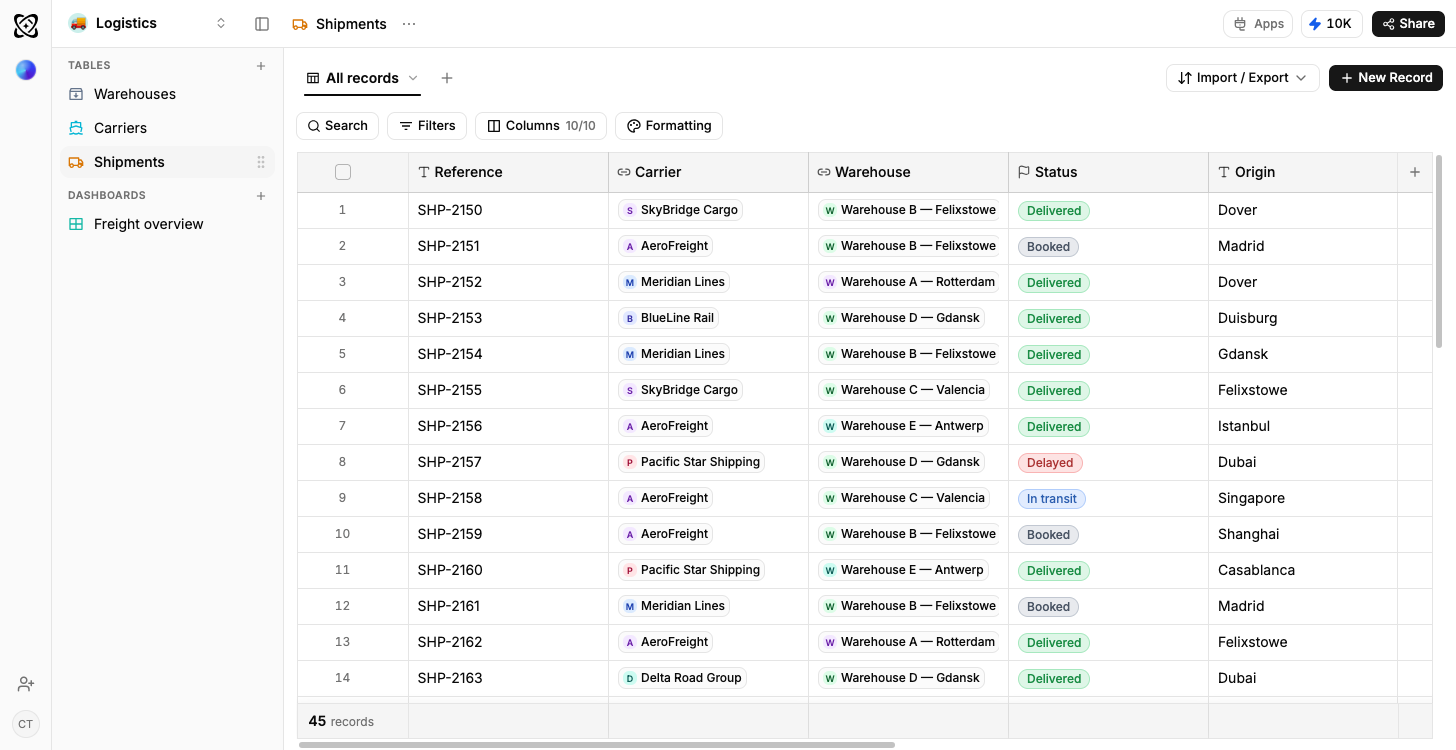
On-time rate by carrier and lane
General workspace
Projects and budget by status
Sales pipeline
Open pipeline by stage, results by owner
Real estate
Portfolio value and leads, by stage
Recruiting
Candidates by stage, openings by status
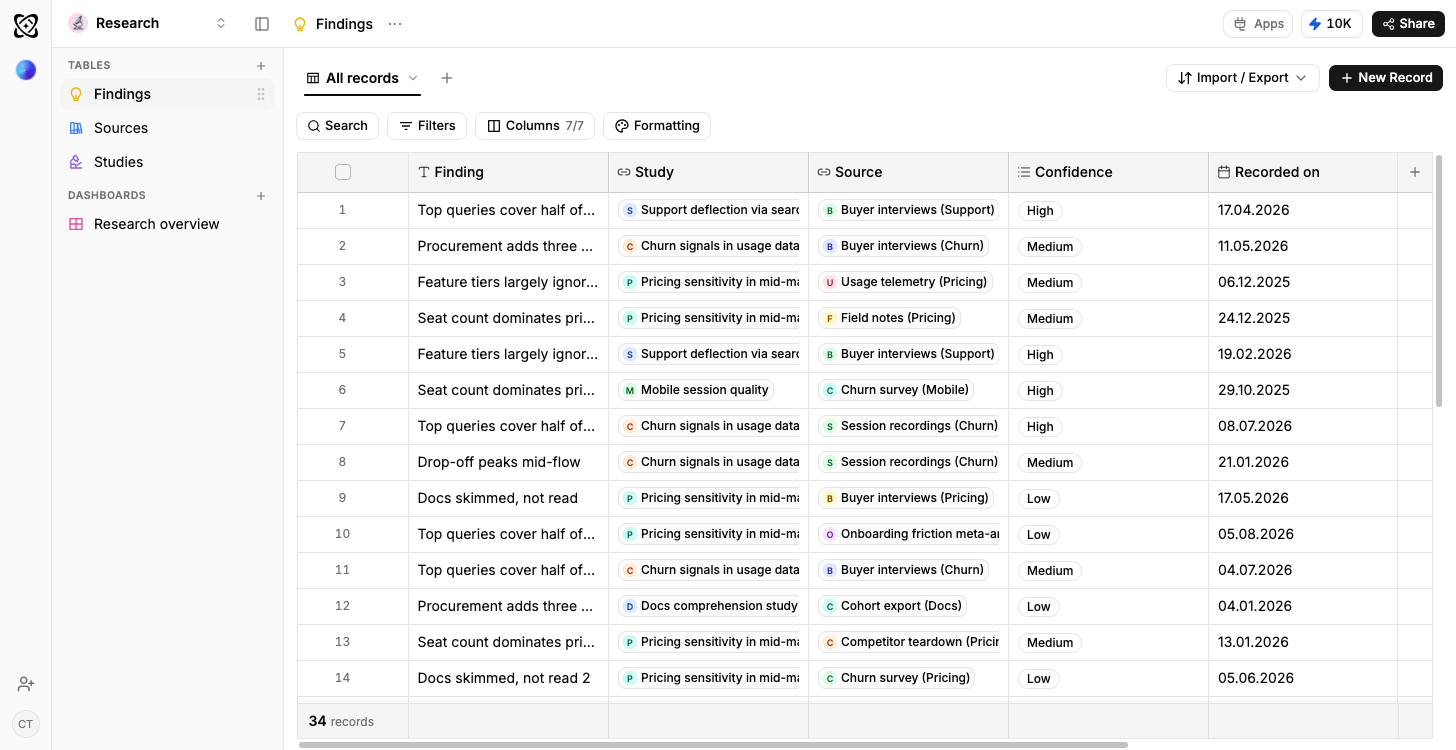
Research
Findings per theme, by confidence and source
Frequently asked questions
The questions people ask before starting from the Client work template.
No. The Billed flag on a deliverable tells you an invoice should exist and totals what has not been raised; the invoice itself still lives in your accounting tool.
Yes. Add a Time entries table linked to Deliverables and hours roll up to the project without anyone totalling them.
That is one of the two dashboards it ships with: approved deliverables with no invoice against them, totalled by client.
Yes, on the free plan with no credit card. The template travels with you through sign-up, so you land in the workspace rather than on an empty page.
Bill for everything you actually delivered.
Deliverables carry an owner, a due date and a billed flag, so the approved-and-unbilled total is a view somebody can open on a Friday.
Use template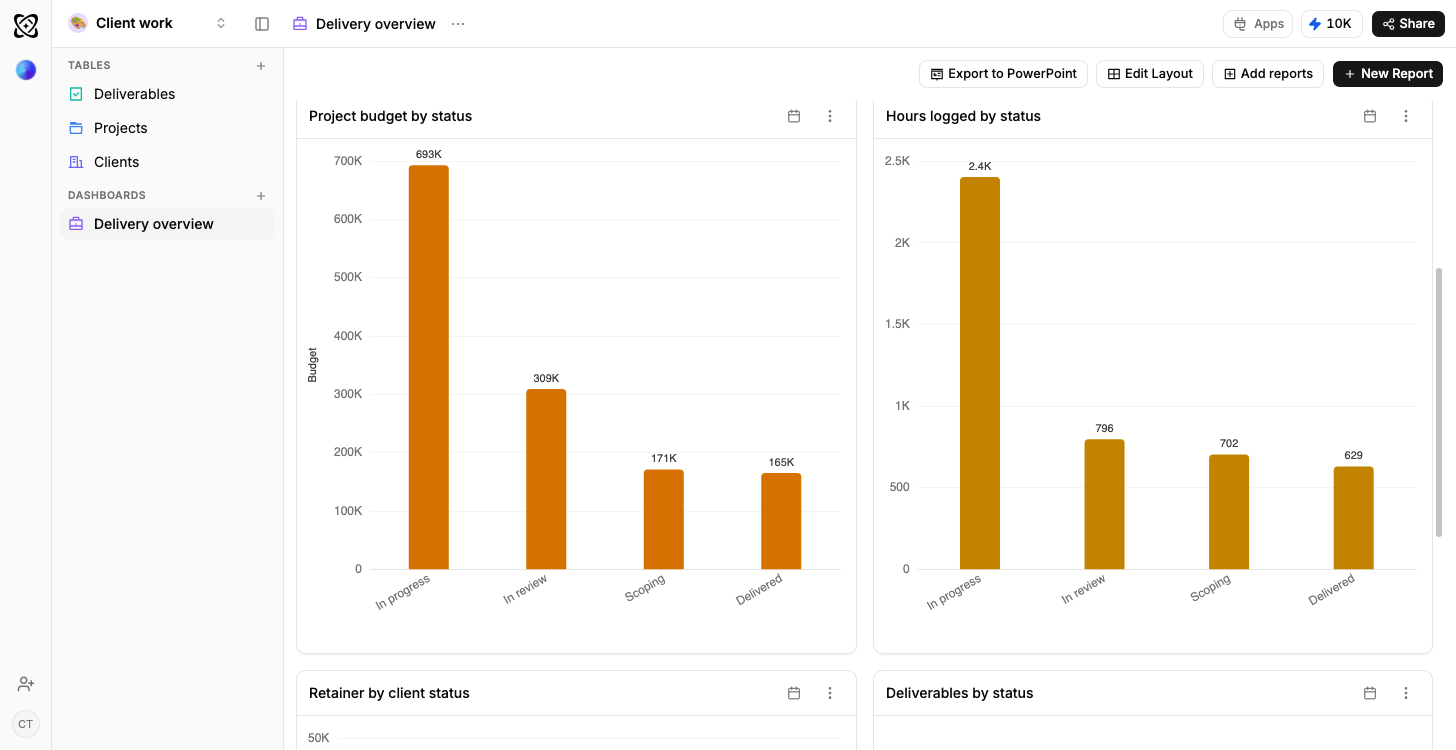
Approved, and still unbilled
Deliverables carry a billed flag, so the total nobody invoiced is a view somebody opens on a Friday rather than an archaeology project.
Typed columns, explainedDue this week, by who owes it
Anything already past its date is pulled to the top instead of being buried in the same list as next Thursday.
How a dashboard gets builtKeep the budget sheet, stop retyping it
Link the Google Sheet finance already maintains and Ferra keeps re-reading it; the columns the sheet owns stay read-only here.
How a sheet stays connected