
How do you calculate your break-even point?
Break-even units = fixed costs / (price per unit − variable cost per unit)
With $20,000 in fixed costs, a $50 price, and $30 of variable cost per unit, you break even at 1,000 units: $50,000 in revenue. The math behind that: subtract variable cost per unit from price to get the contribution margin, divide fixed costs by that margin for break-even units, and multiply units by price for break-even revenue.
Past break-even, every unit contributes its full margin straight to profit. That's what makes the number useful. It tells you how much room you have to cut price or absorb a cost increase, and how much marketing the margin can fund. If the calculator returns no answer, look at your inputs: variable cost at or above price means no volume of sales will ever cover fixed costs.
Keep the cost assumptions in a Ferra table and rerun the break-even whenever a supplier reprices or a fixed cost changes.
How the break-even calculator works
Give it fixed costs for the period, your selling price per unit, and the variable cost per unit. Back come three numbers: the contribution margin each sale earns, the units you must sell to cover all costs, and the revenue that volume represents.
- Fixed costs
- Costs that don't move with sales volume: rent, salaries, insurance, software subscriptions. Total them for the same period you want the break-even for: usually a month or a year.
- Price per unit
- What a unit actually brings in after typical discounts: the average realized price, not the list price. If discounting is routine, the list price understates your true break-even.
- Variable cost per unit
- What each additional sale costs you: materials, packaging, shipping, payment processing fees, per-unit commissions. Enter it per unit, not as a period total.
Calculating your break-even point
Price minus variable cost is the contribution margin: what each sale throws toward fixed costs. Divide fixed costs by it for break-even units; multiply units by price for break-even revenue. Take fixed costs of $12,000 a month, an $80 price, and $50 of variable cost per unit.
$80 − $50 = $30 contribution margin. 12,000 ÷ 30 = 400 units to break even, and 400 × $80 = $32,000 in break-even revenue. Sell fewer than 400 that month and you lose money. Every unit past 400 adds $30 of profit.
Misfiled costs flatter this number. Semi-variable items, sales commissions, hourly labor, get dumped into fixed costs, which understates variable cost per unit and makes break-even look closer than it is. Entering list price instead of what discounted customers actually pay flatters it the same way.
When to use break-even analysis
Run it before any decision that touches your cost structure or your price. Ahead of a product launch it turns a pricing idea into a concrete sales target you can call realistic or not. Weighing a price cut? The formula shows exactly how many extra units it has to sell, usually more than intuition suggests, while a price increase gets the mirror answer: how many sales you can afford to lose.
It frames spending, too. Add a planned marketing campaign to fixed costs and the output becomes the number of incremental sales the campaign must generate to pay for itself. And the gap between current volume and break-even volume is your margin of safety: how far demand can drop before losses start, worth knowing before you sign new fixed commitments.
How to lower your break-even point
A lower break-even means profitability arrives sooner and slow months hurt less. Every lever works the same formula from one of two ends: widen the contribution margin or shrink the fixed costs it must cover.
- Raise prices carefully
- Every dollar of increase lands directly in contribution margin, so even a small bump cuts break-even volume meaningfully. Test it before assuming customers will balk.
- Push variable costs down
- Better supplier terms, cheaper shipping, and lower payment processing fees widen the per-unit margin: fewer units needed to break even.
- Trim fixed costs
- Audit rent, subscriptions, and standing contracts. Each fixed dollar removed lowers break-even by that dollar divided by your contribution margin.
- Convert fixed costs to variable
- Commission-based sales, outsourced fulfillment, and usage-priced tools make costs scale with revenue. You give up margin at high volume but survive at much lower volume.
- Shift the mix toward higher-margin products
- Promotion and shelf space steered at the widest-margin items raise your blended margin, break-even falls without a single price changing.
Other calculators
Browse all calculatorsRelated templates
Browse all templates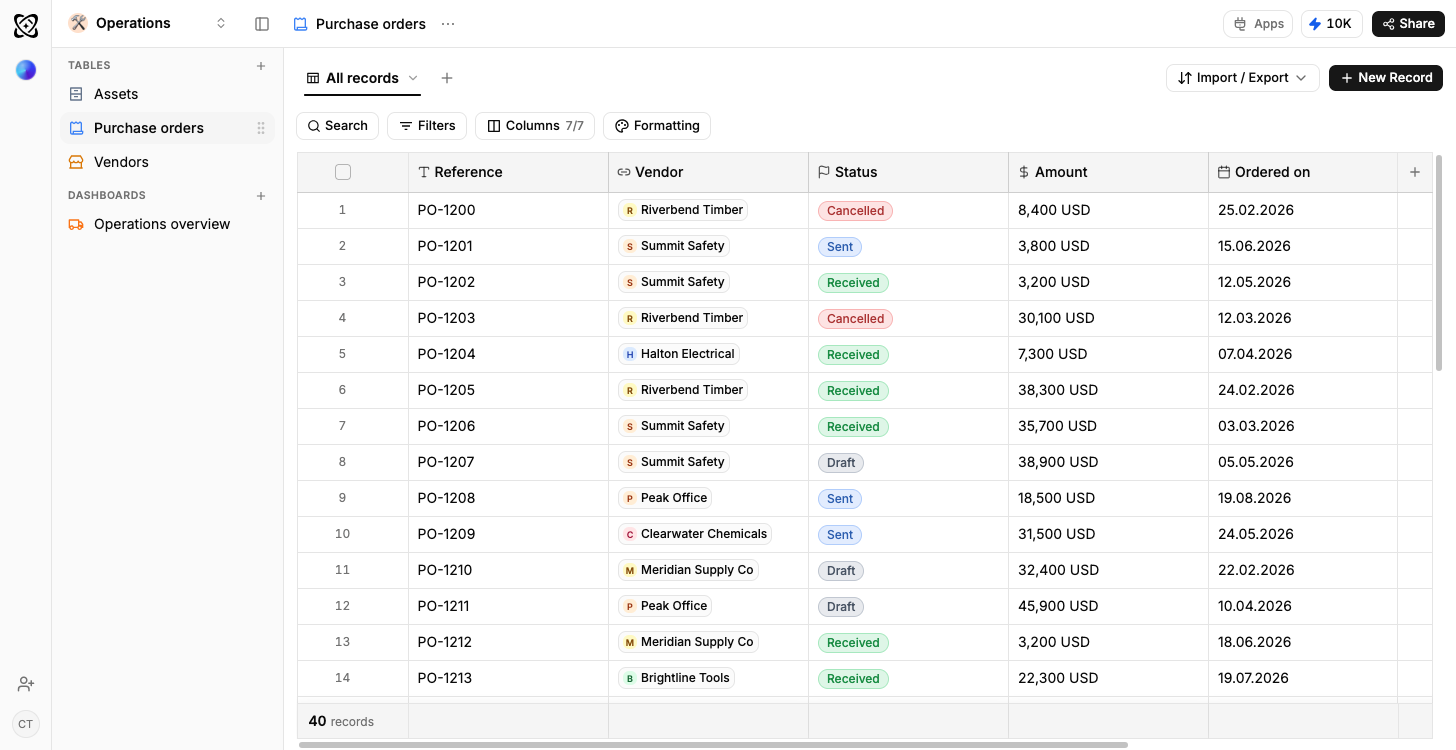
Operations
Orders in flight, spend by supplier
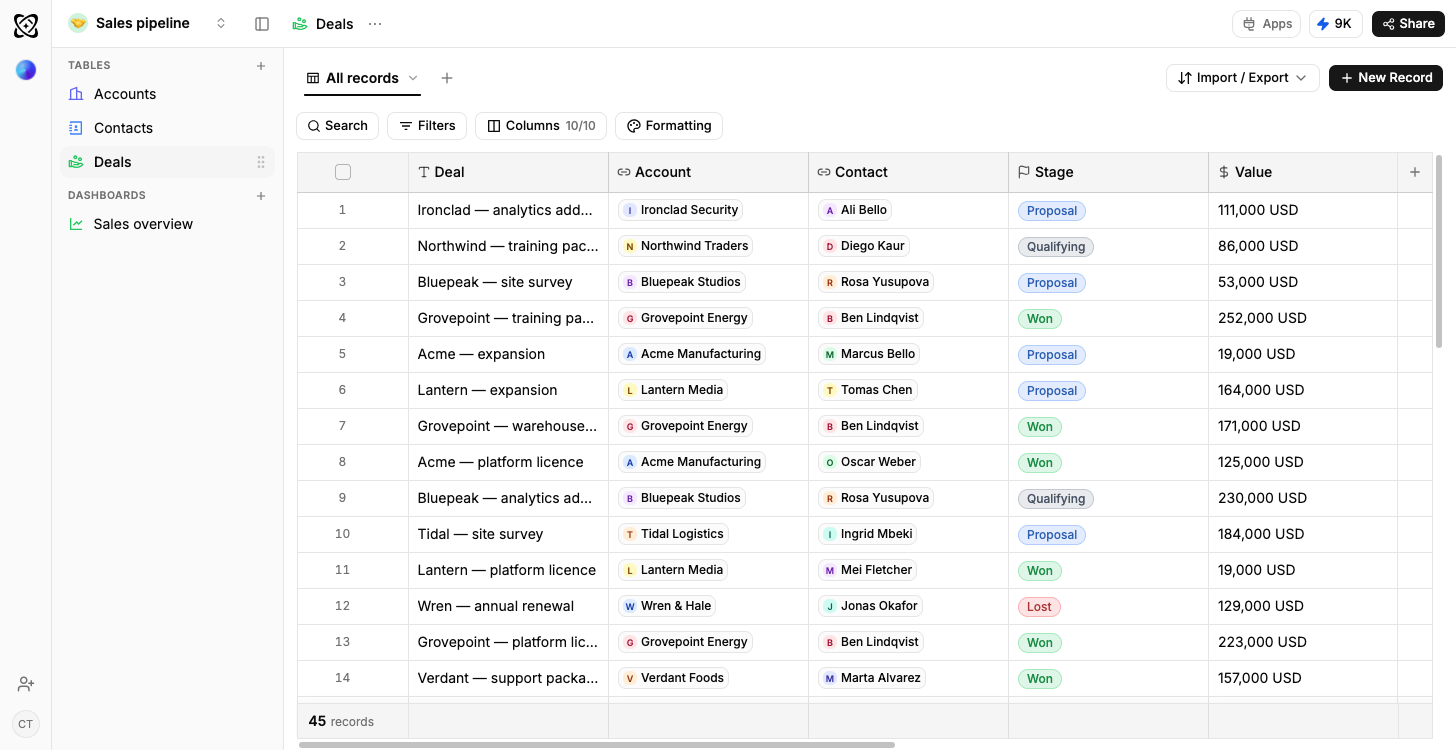
Sales pipeline
Open pipeline by stage, results by owner
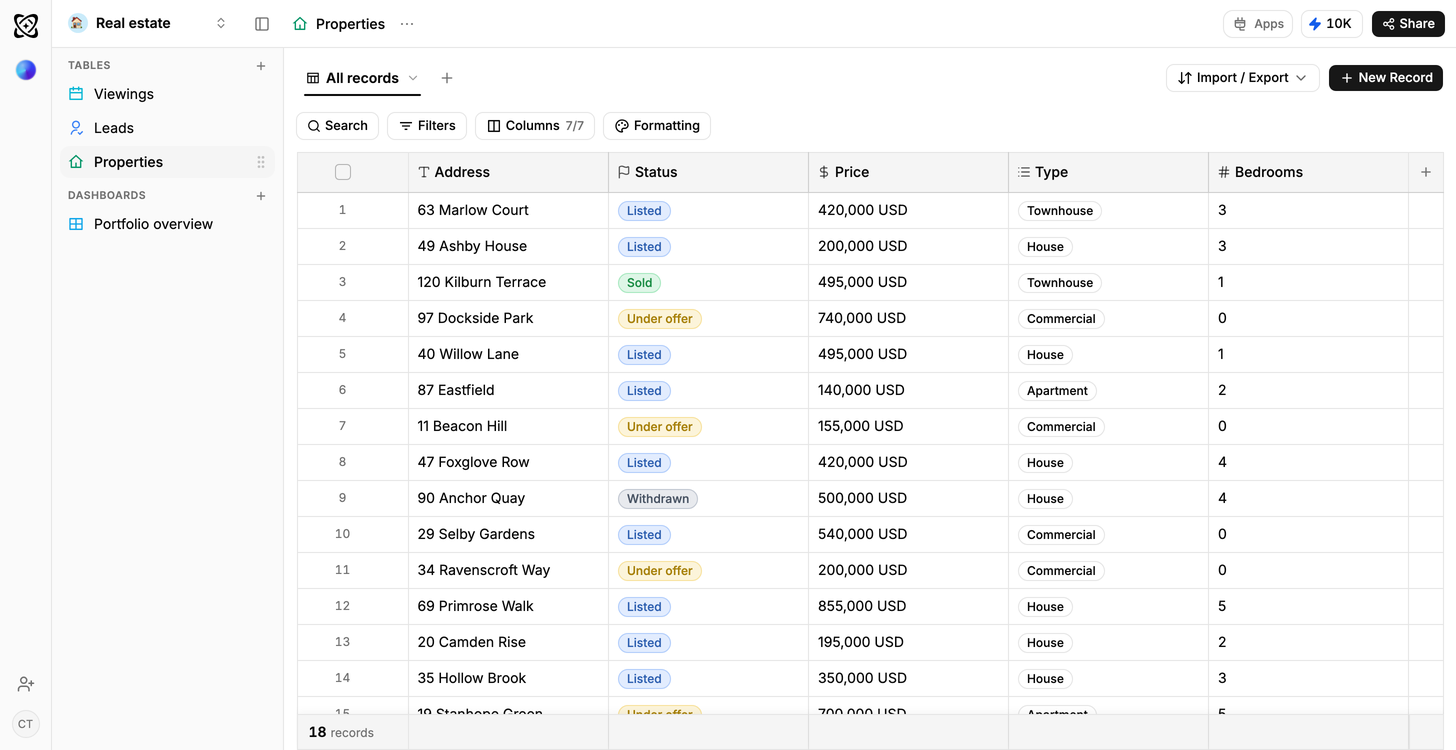
Real estate
Portfolio value and leads, by stage
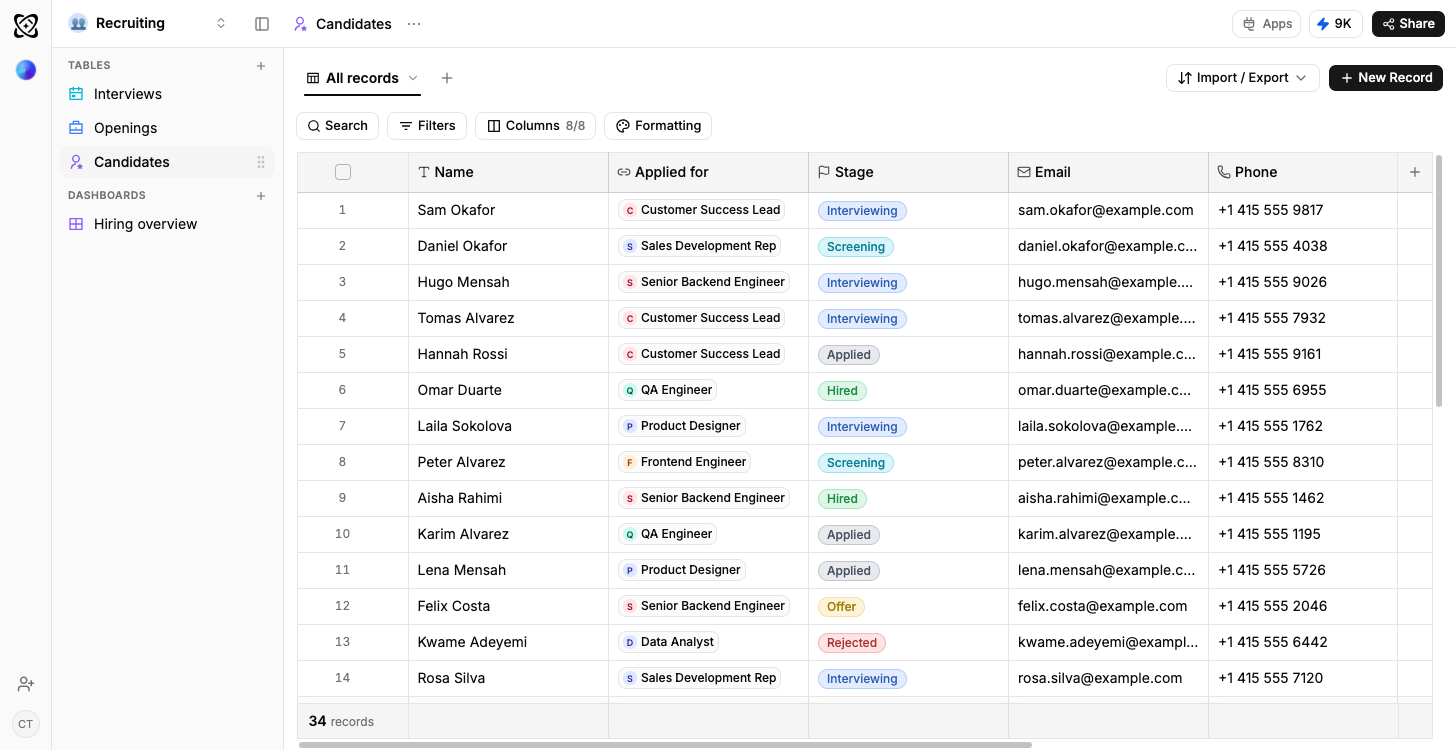
Recruiting
Candidates by stage, openings by status
Client work
Due this week; shipped but not billed
Education
Attendance and completion by cohort
Logistics
On-time rate by carrier and lane
General workspace
Projects and budget by status