
How do you calculate CPM?
CPM = (campaign cost / impressions) × 1,000
Ad impressions are sold by the thousand, and CPM is the price tag: divide total campaign cost by impressions, then multiply by 1,000. A $500 campaign that delivered 250,000 impressions ran a $2 CPM.
Programmatic display often runs $1–5, Facebook and Instagram typically $5–15, and LinkedIn $25 or more for narrow B2B targeting. CPM prices reach, not results: a cheap thousand impressions on the wrong audience is money spent, not saved, so read it alongside conversion rate and ROAS before shifting budget.
Forward campaign reports into a Ferra table and you can line up CPM by channel and month just by asking.
How the CPM calculator works
Give it the campaign's total cost and the impressions delivered, and it returns the cost per 1,000. Both numbers should come from one campaign report and one date range.
- Campaign cost
- The total media cost for the campaign or ad set over the period, straight from the platform's reporting. Creative production and agency fees stay out. CPM is a media-cost metric.
- Impressions
- How many times the ad was served. Every display counts, so one person seeing the ad five times is five impressions. Reach, unique people, is a different metric.
Calculating CPM
Divide cost by impressions, then multiply by 1,000. Suppose a campaign cost $1,200 and delivered 400,000 impressions.
1,200 ÷ 400,000 = 0.003, and 0.003 × 1,000 = $3. You paid $3 for every thousand times the ad was shown. The formula reverses cleanly: at a $3 CPM, a $1,200 budget buys 400,000 impressions.
Skipping the final multiplication is the classic slip: reporting $0.003, the price of one impression, as the CPM. Dividing by reach instead of impressions is the other: reach counts unique people, so the figure inflates whenever anyone sees the ad more than once.
What is a good CPM?
No single benchmark survives contact with platform, format, audience, and season. The broad pattern holds, though: standard display runs a few dollars, social feeds cost more, and video and premium placements more still. Narrow, high-value audiences, decision-makers, competitive retargeting pools, command far higher CPMs than broad consumer targeting.
Cheap isn't the goal. A low CPM on the wrong audience wastes money a thousand impressions at a time, while an expensive CPM is a bargain when those impressions convert. Use it to compare placements reaching similar audiences, or to catch costs creeping up inside a campaign, and always read it next to click-through and conversion rates.
How to improve CPM
Impressions are sold at auction. Your CPM falls when competition for your audience drops, or when the platform decides your ad has earned cheaper delivery.
- Widen the audience
- Very narrow targeting forces the platform to bid for scarce impressions. A broader pool, or letting the algorithm optimize within one, usually cuts the price.
- Earn the relevance discount
- Platforms charge less to deliver ads people engage with. Better creative and tighter audience fit lower your effective CPM.
- Swap creative before it wears out
- As frequency climbs and engagement falls, delivery gets more expensive. Rotating fresh creative keeps engagement, and pricing, healthy.
- Break out placements
- Feed, stories, video, and audience-network placements are priced differently. Shift budget to the cheaper ones that still perform.
- Sidestep peak auctions
- Prices spike around major shopping seasons and events. A campaign that isn't seasonal buys the same impressions for less by scheduling around the peaks.
Other calculators
Browse all calculatorsRelated templates
Browse all templates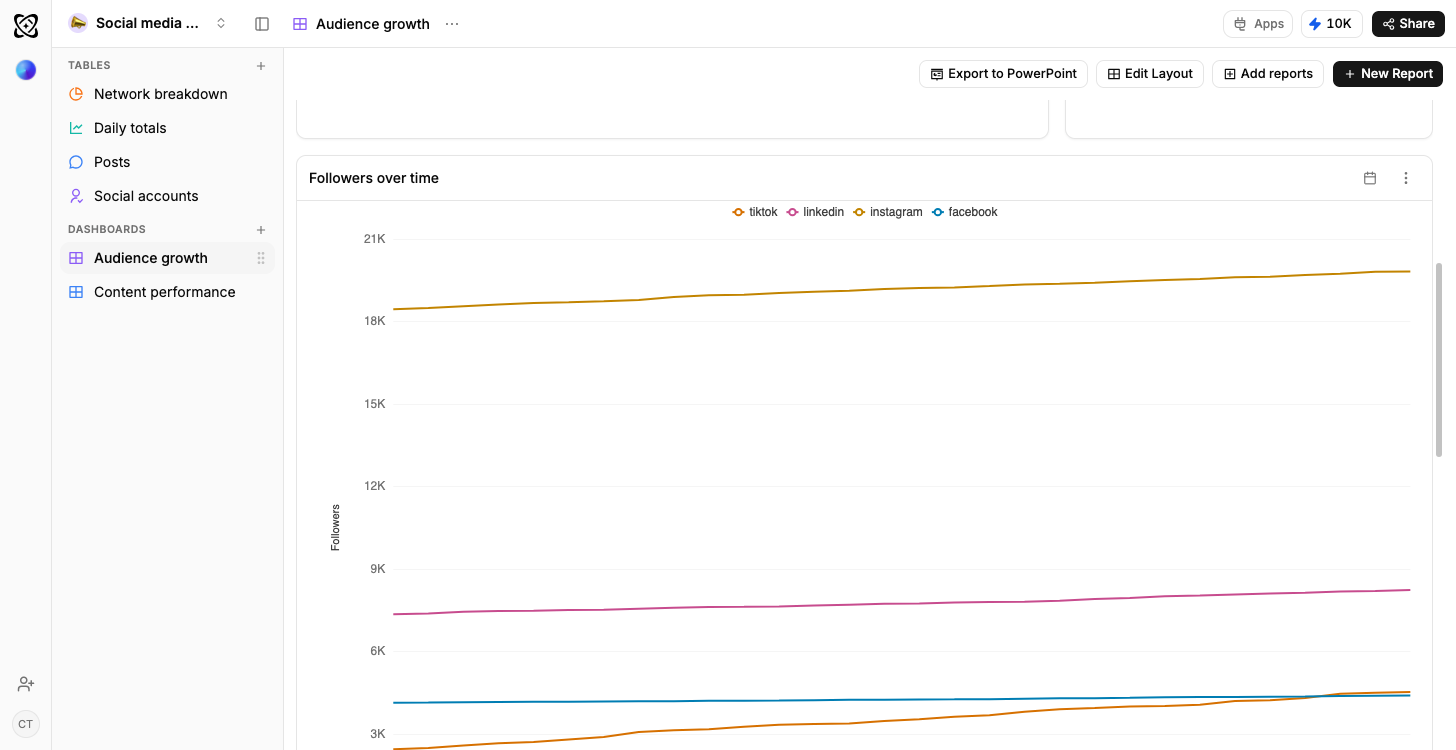
- TikTok
- YouTube
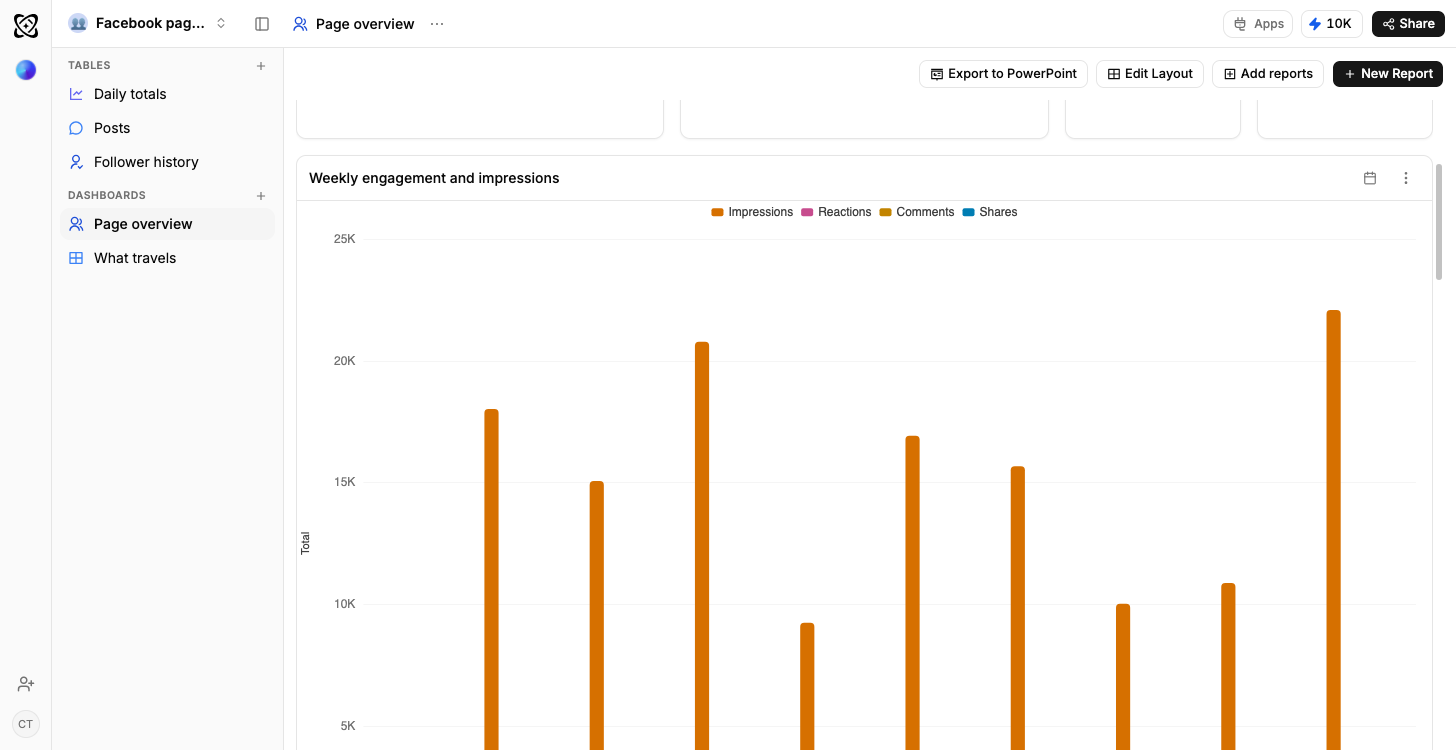
Social media analytics
Every channel compared, and what works where
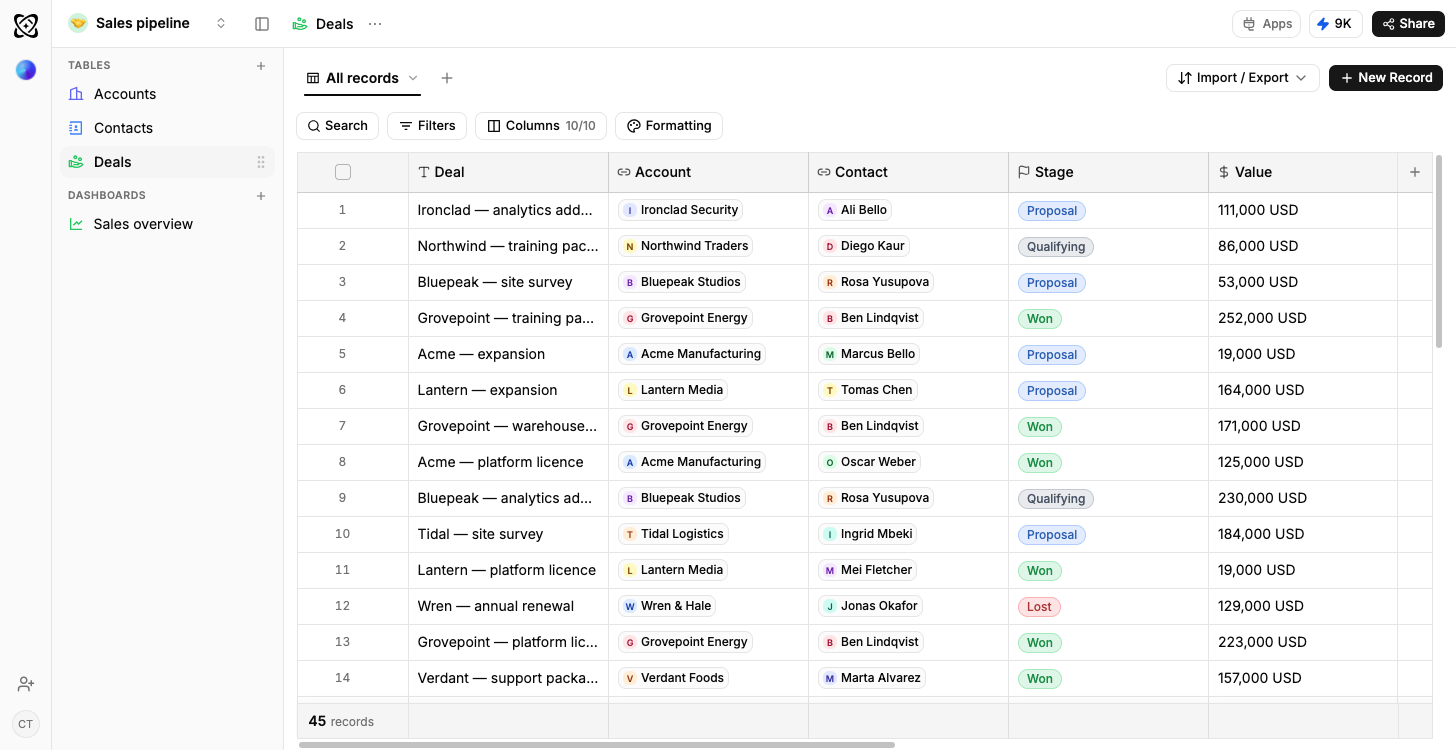
Sales pipeline
Open pipeline by stage, results by owner
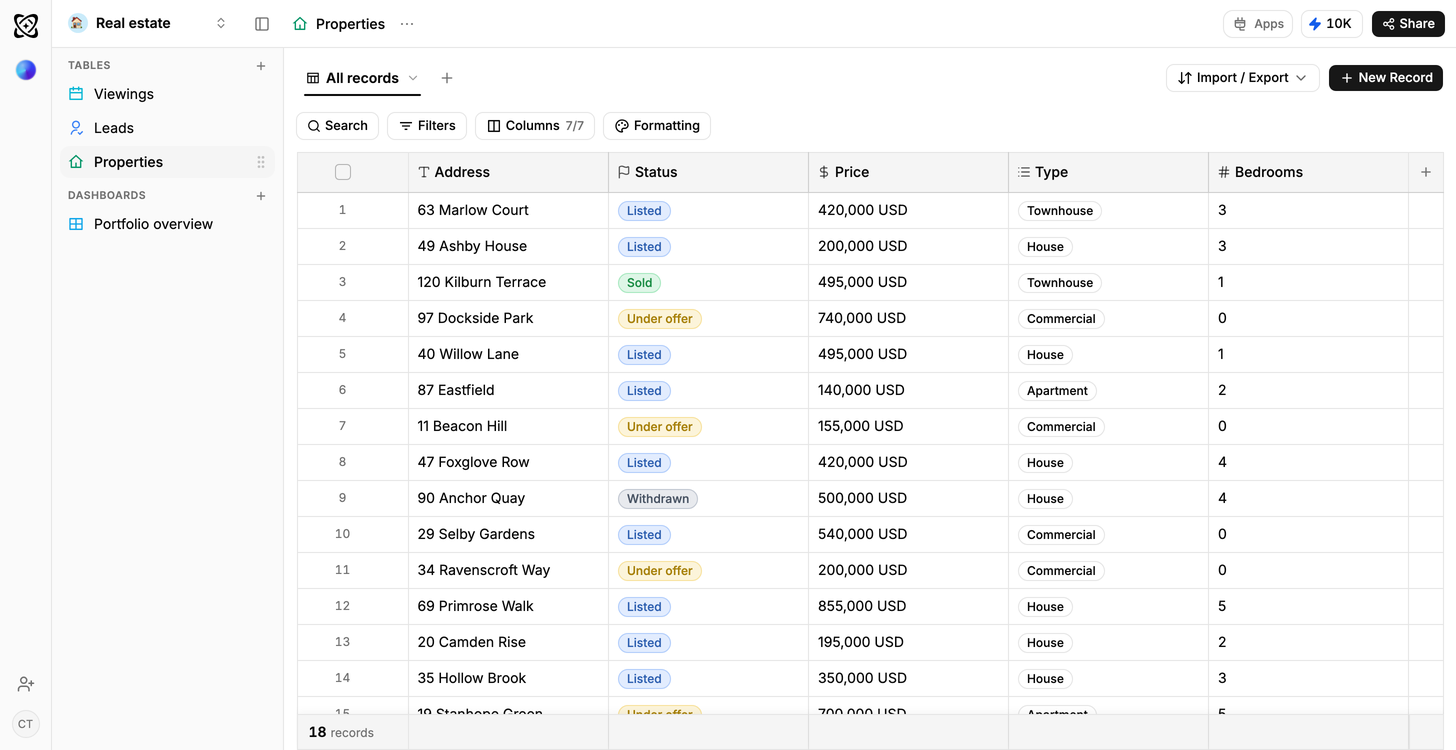
Real estate
Portfolio value and leads, by stage
Recruiting
Candidates by stage, openings by status
Client work
Due this week; shipped but not billed
Operations
Orders in flight, spend by supplier
Education
Attendance and completion by cohort