
How is customer acquisition cost calculated?
CAC = total sales & marketing spend / new customers won
Add up every dollar you spent on sales and marketing over a period, ads, salaries, tools, agency fees, and divide by the new customers closed in that same window. That's customer acquisition cost. Spend $50,000 in a quarter and close 125 new customers, and your CAC is $400.
A $400 CAC is meaningless on its own; it starts talking when you set it against what a customer pays you back. Most teams use two yardsticks: an LTV:CAC ratio near 3:1, and recovering CAC within 12 months of gross profit. Watch the direction too: CAC climbing while conversion holds flat usually means a channel is saturating. And fix what goes in the numerator once, because a CAC built from ad spend alone will always look better than one that carries salaries.
If your ad spend and closed deals already sit in a Ferra table, ask for CAC by channel or by month in plain English: the answer comes back with sources attached.
How the CAC calculator works
Two inputs, one division. Enter your sales and marketing spend for a period and the new customers won in that same window; the calculator divides spend by customers and reports your average cost per new customer.
- Sales & marketing spend
- Everything that went into winning customers during the period: ad budgets, salaries and commissions for sales and marketing, tools, agency and contractor fees, content production. Leave out the cost of serving customers you already have; support and account management are retention costs, not acquisition.
- New customers won
- Genuinely new paying customers closed inside the same window. Upgrades, reactivations, and free signups that haven't converted don't belong in the count.
Calculating CAC
Total spend for the period, divided by customers won in it: both from the same window. Last quarter you spent $120,000 on sales and marketing: $70,000 in salaries, $40,000 in ad spend, $10,000 in tools and agency fees. You closed 200 new customers.
CAC = $120,000 / 200 = $600. Each new customer cost $600 on average. Long sales cycle? Measure quarterly rather than monthly, so one slow month can't distort the figure.
Watch for a period mismatch: dividing this month's spend by this month's new customers, when those deals were really won by money spent two or three months earlier. On a 90-day cycle, lag the customer count or stretch the window to a quarter or a year until the mismatch washes out. The quieter error is leaving salaries out of spend: a paid-media-only CAC understates what customers actually cost.
What is a good CAC?
$600 buys an enterprise software customer cheaply and ruins a $10-a-month app. There is no universal dollar benchmark. CAC means something only next to what a customer is worth, and two yardsticks do most of that work: an LTV:CAC ratio of 3:1 or higher, and CAC payback within 12 months.
Rising CAC usually points at a saturating channel or drifting targeting; sometimes it's competitors bidding up the same audience. Falling CAC deserves scrutiny too. If the cheaper customers churn quickly, your cost per retained customer climbs even while the headline number improves.
How to improve CAC
Two ways down: pay less for the customers you already win, or win more customers from the money you already spend. Each lever below pushes one side or both.
- Raise funnel conversion
- A stronger visitor-to-signup or trial-to-paid rate pulls more customers out of spend you've already committed. Small lifts stack across the funnel.
- Cut the channels that overpay
- Measure CAC per channel, not just blended. A channel running at several times your average is a leak; move its budget to the ones that convert.
- Tighten your targeting
- Concentrating spend on your best-fit segment raises win rates and shortens sales cycles, both cut the cost of each customer.
- Lean on referrals and organic
- Referral programs add customers with little marginal spend, and content and word of mouth do the same. Blended CAC drifts down as they compound.
- Shorten the sales cycle
- Sales time is usually the largest cost inside CAC. Better qualification and self-serve trials let reps close more deals per month, and transparent pricing helps the same way.
Other calculators
Browse all calculatorsRelated templates
Browse all templates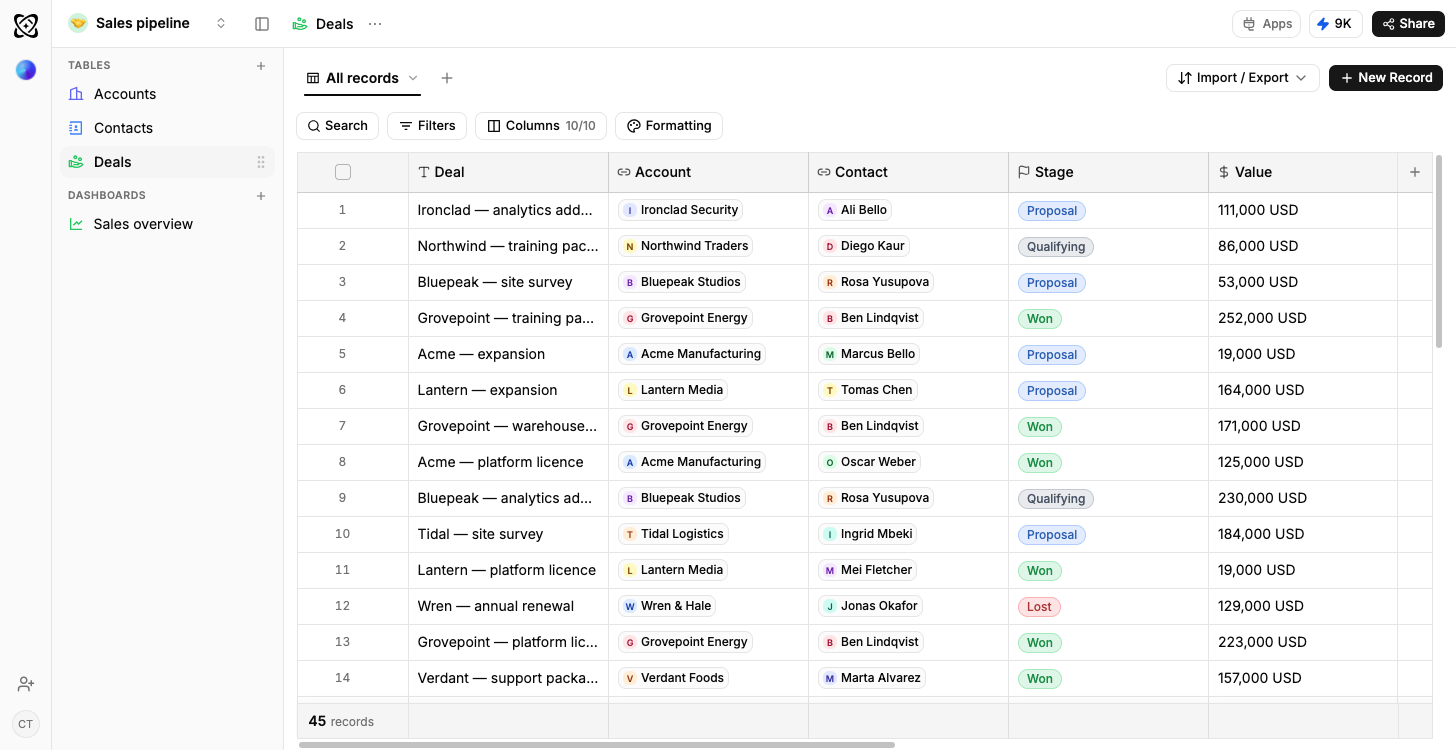
Sales pipeline
Open pipeline by stage, results by owner
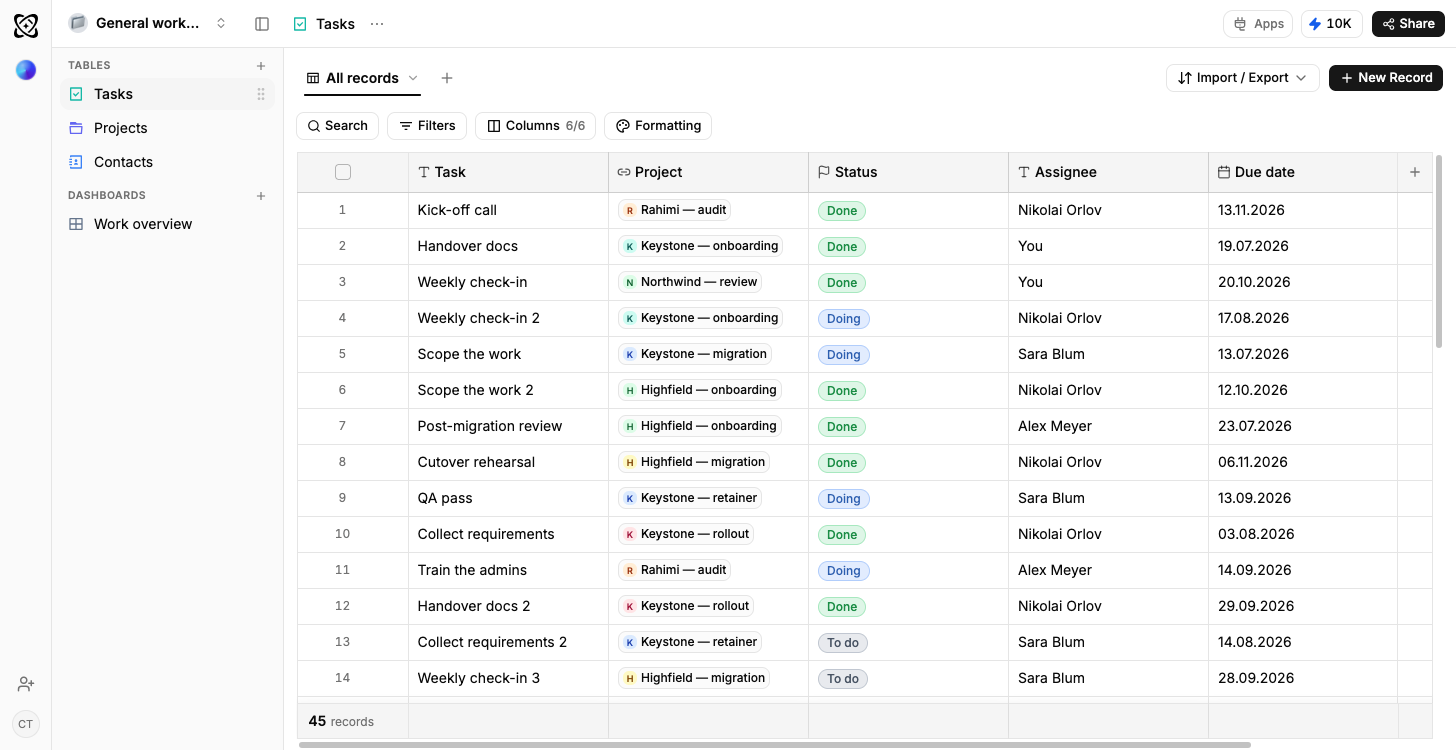
General workspace
Projects and budget by status
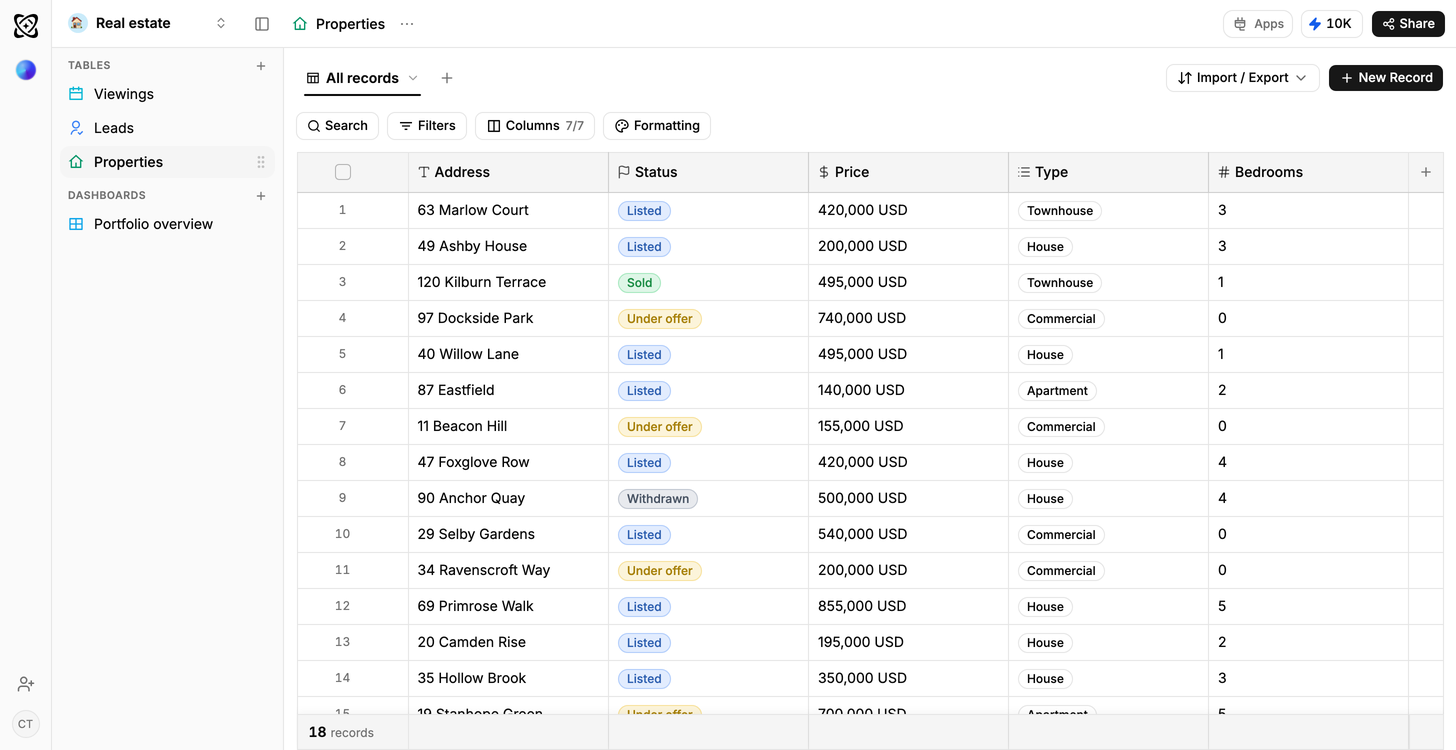
Real estate
Portfolio value and leads, by stage
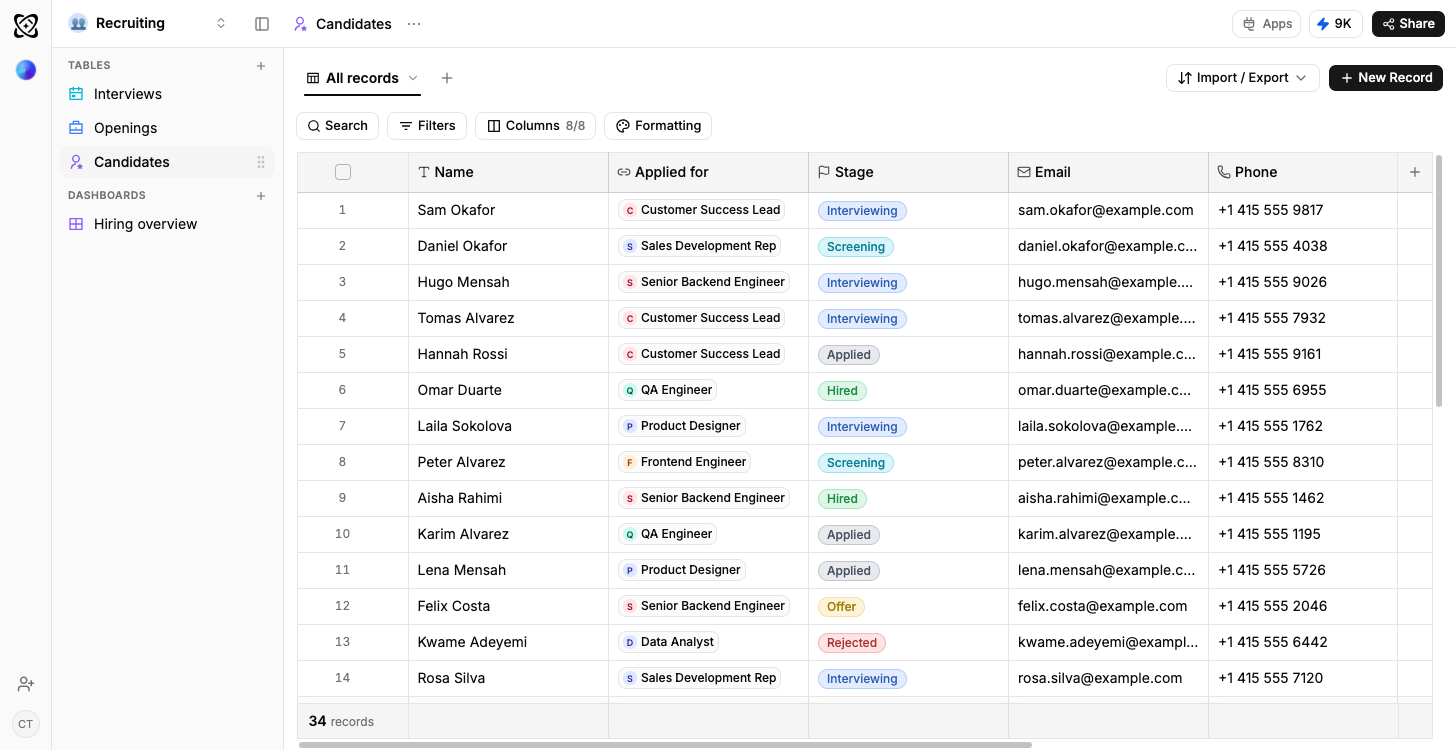
Recruiting
Candidates by stage, openings by status
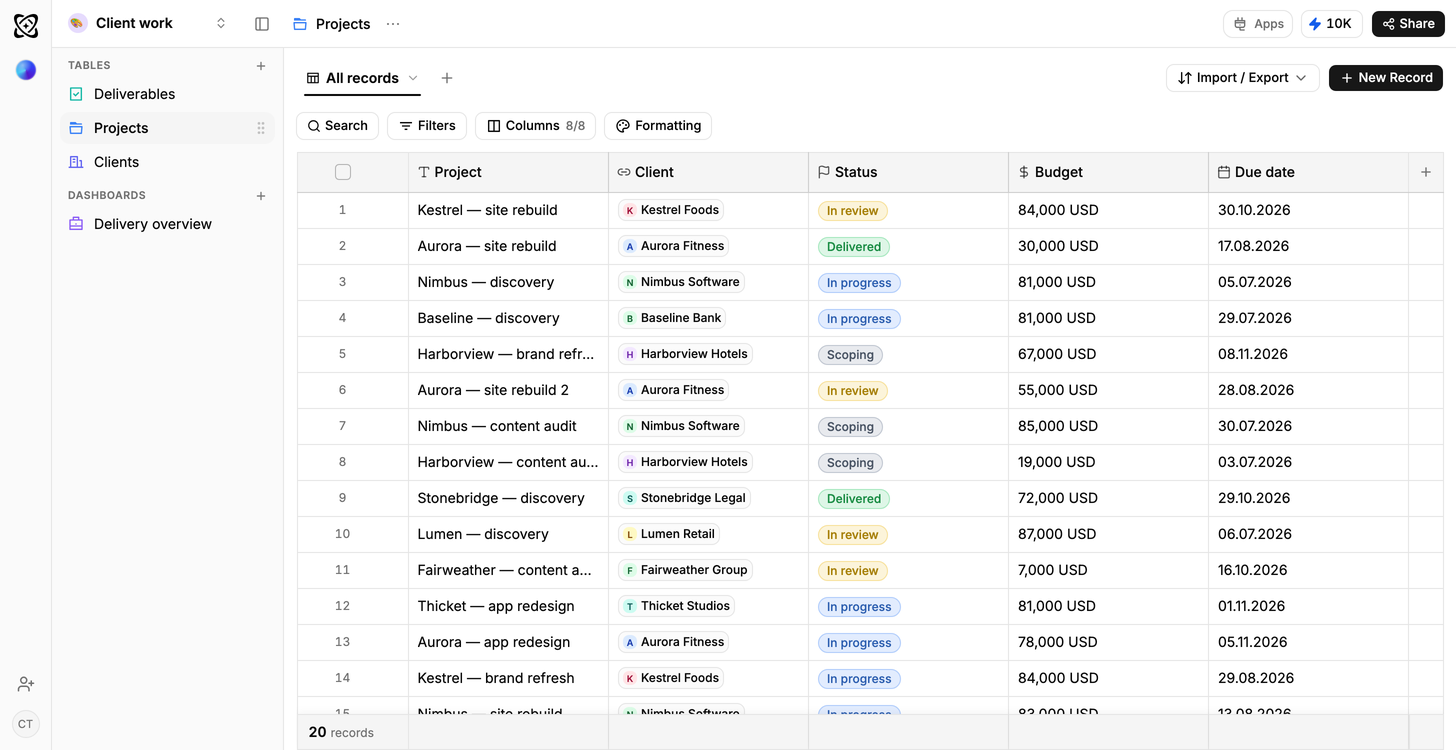
Client work
Due this week; shipped but not billed
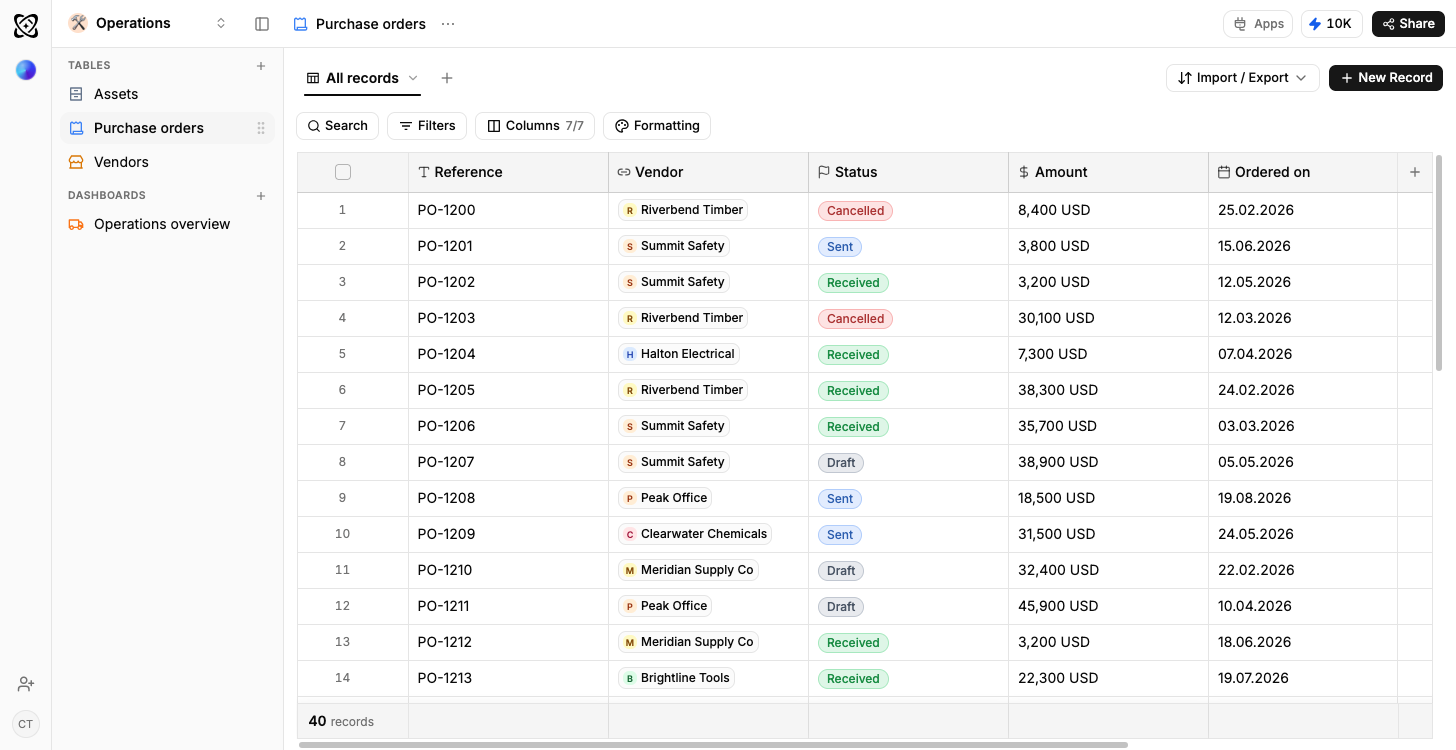
Operations
Orders in flight, spend by supplier
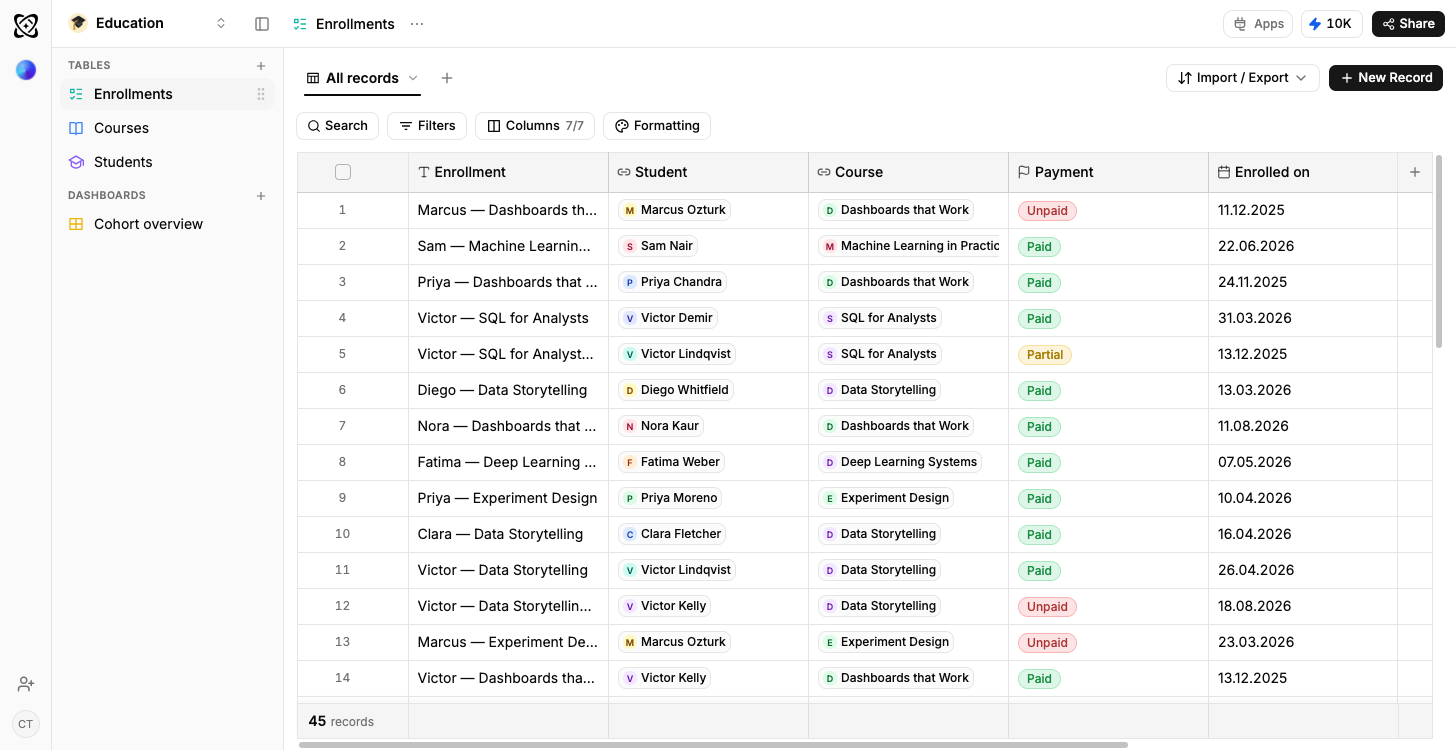
Education
Attendance and completion by cohort
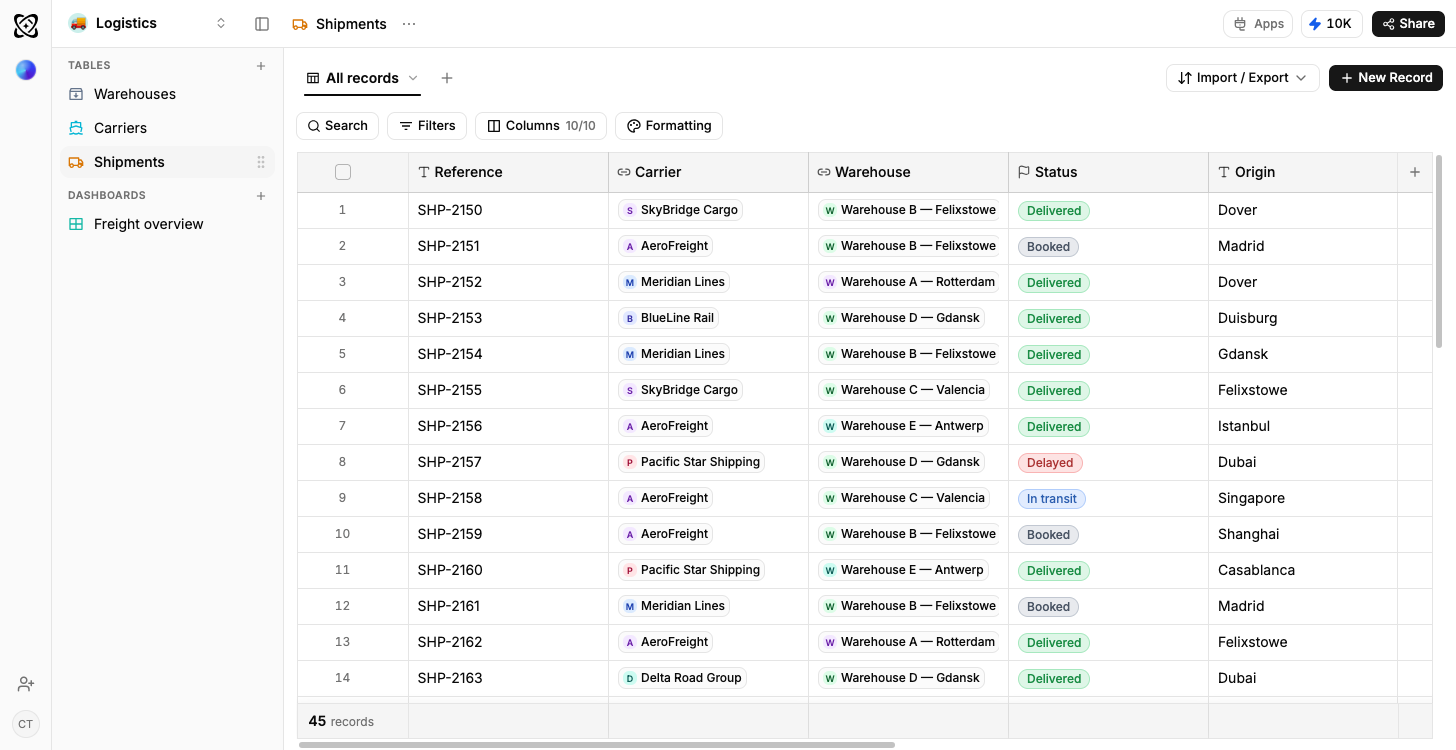
Logistics
On-time rate by carrier and lane