
How do you calculate CAC payback period?
CAC payback (months) = CAC / (monthly revenue per customer × gross margin %)
Ten months: that's the payback on a customer acquired for $800 who pays $100 a month at 80% gross margin. They contribute $80 of gross profit monthly, and ten of those months cover the acquisition cost. The formula: CAC divided by monthly gross profit per customer, where monthly gross profit is monthly revenue times gross margin.
Until a customer clears their CAC, you're financing growth from cash, which is why shorter wins. Under 12 months is generally considered strong for SMB-focused SaaS; enterprise businesses often tolerate 18 to 24 months on the strength of longer contracts and lower churn. And if payback runs longer than the average customer lifetime, the acquisition cost never comes back at all. Fix churn or pricing before scaling spend.
Track acquisition spend and subscription revenue in a Ferra table and payback by channel or by plan becomes a question, not an export.
How the CAC payback calculator works
It needs your CAC, what a customer pays monthly, and your gross margin. Revenue gets converted to gross profit first; then the calculator counts how many months of that profit it takes to cover the acquisition cost.
- Customer acquisition cost
- Total sales and marketing spend over new customers won in the same period. Use the fully loaded figure: salaries, tools, and agency fees, not just the ads.
- Monthly revenue per customer
- Average monthly recurring revenue per customer. For annual contracts, enter the annual price divided by 12.
- Gross margin
- Revenue minus direct service costs, hosting, third-party fees, support, as a percentage. Use margin, not raw revenue: margin is the cash actually available to pay CAC back.
Calculating CAC payback
Convert revenue to gross profit before anything else: monthly revenue per customer times gross margin. Then divide CAC by the result. Say CAC is $900, customers pay $150 a month, and gross margin is 80%: monthly gross profit is $150 × 0.80 = $120.
Payback = $900 / $120 = 7.5 months. For the first seven and a half months, a new customer is repaying their own acquisition cost; everything after is contribution. The figure doubles as a churn-risk lens, because the longer payback runs, the more customers cancel before they've ever paid for themselves.
Skipping the margin step makes payback look better than it is: divide CAC by raw revenue and the answer reads 20-30% faster than reality at typical SaaS margins. Billing is the other trap. Annual prepay is great for cash flow, but the calculation still takes one-twelfth of the annual price, never the invoice amount.
What is a good CAC payback period?
Within 12 months is the standard SaaS benchmark. Under 6 months is excellent, and 12-18 months is common for companies selling to larger customers. Retention sets the tolerance: enterprise businesses with very low churn can afford 18-24 months, because customers reliably stay long enough to repay.
Read payback as a cash and risk metric, not a profitability one. Run long, and acquisition eats cash for a year or more before returning it: growth has to be financed. Run short, and the same dollars recycle into new customers several times a year. That's why payback, more than LTV:CAC, sets how fast you can afford to grow.
How to improve CAC payback period
Payback shortens from either end: a smaller cost to recover, or faster gross profit doing the recovering.
- Lower CAC
- Every dollar cut from acquisition cost comes straight off the top of the formula. Channel-level CAC tracking and conversion work are where most teams start.
- Raise prices or ARPU
- Higher monthly revenue per customer grows the monthly repayment. Repackaging plans so new customers land on higher tiers moves payback quickly.
- Improve gross margin
- More margin sends more of each collected dollar toward repaying CAC. Hosting efficiency and support automation are the usual wins.
- Bill annually upfront
- The metric doesn't move, but the cash arrives on day one: most of the practical pain of a long payback disappears with it.
- Target faster-converting segments
- Shorter sales cycles need less rep time per deal. That lowers CAC, and payback follows it down.
Other calculators
Browse all calculatorsRelated templates
Browse all templates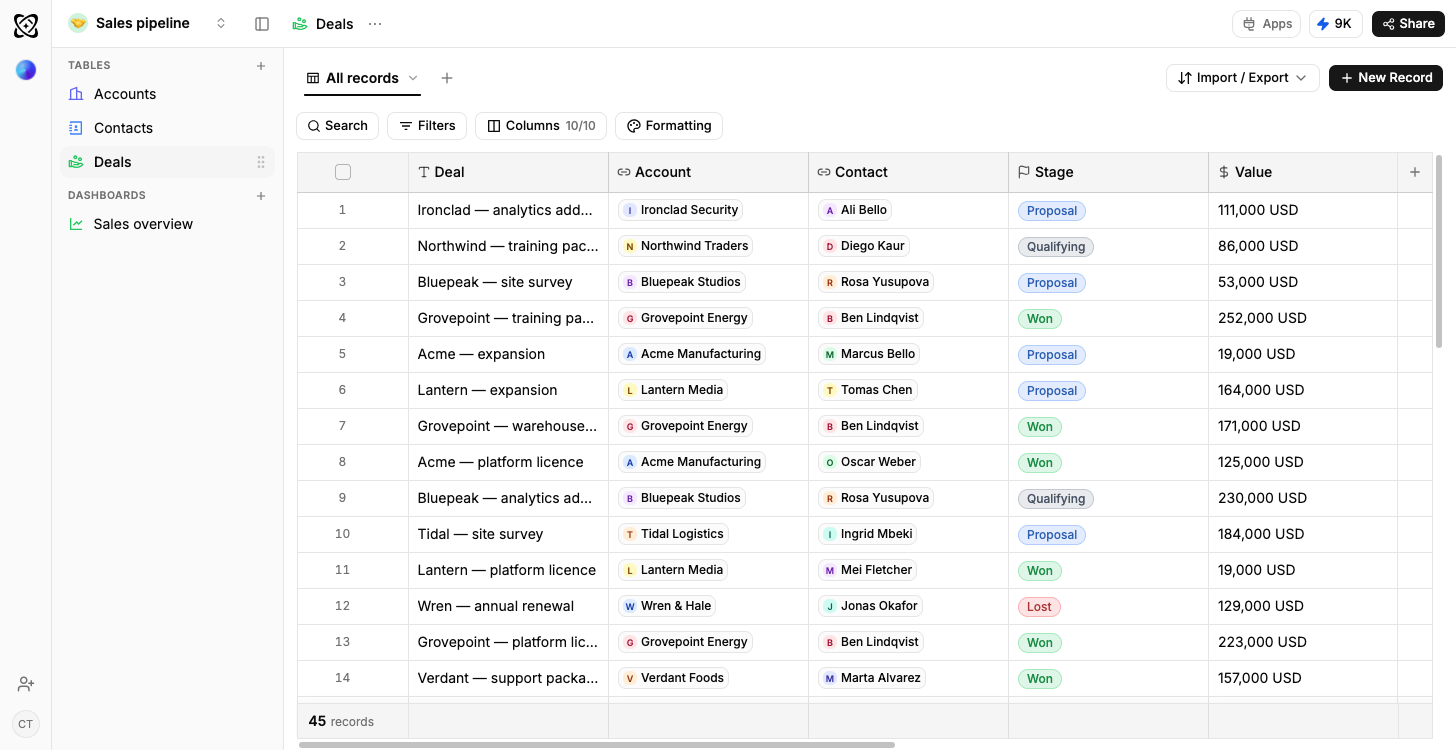
Sales pipeline
Open pipeline by stage, results by owner
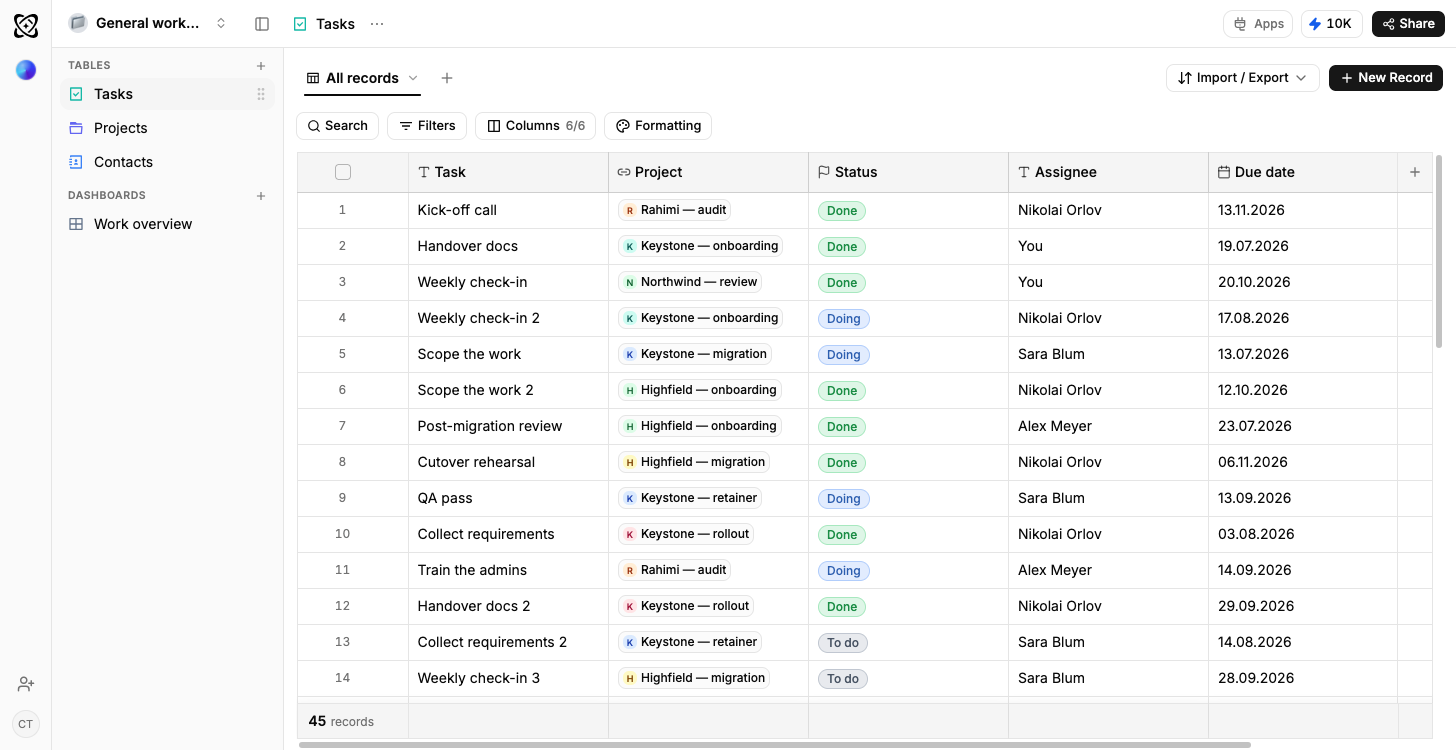
General workspace
Projects and budget by status
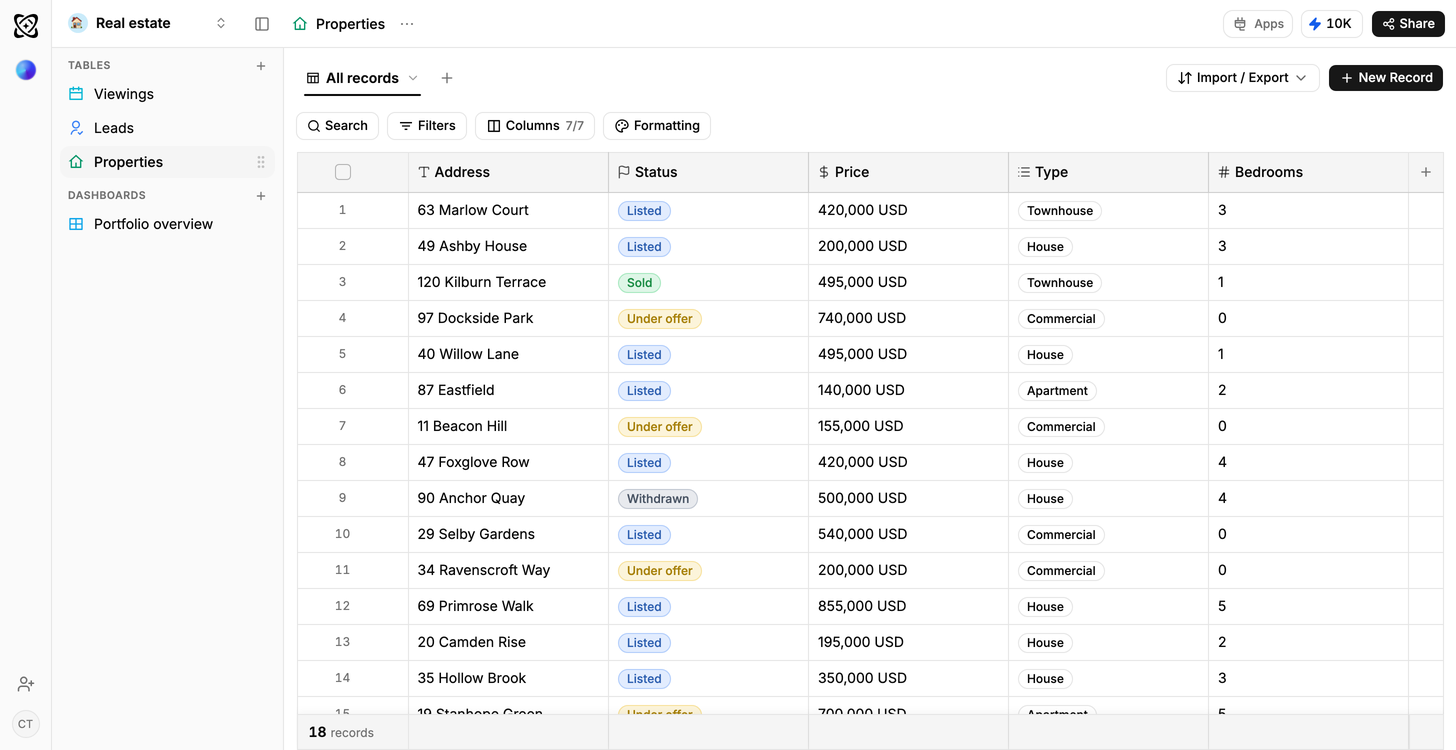
Real estate
Portfolio value and leads, by stage
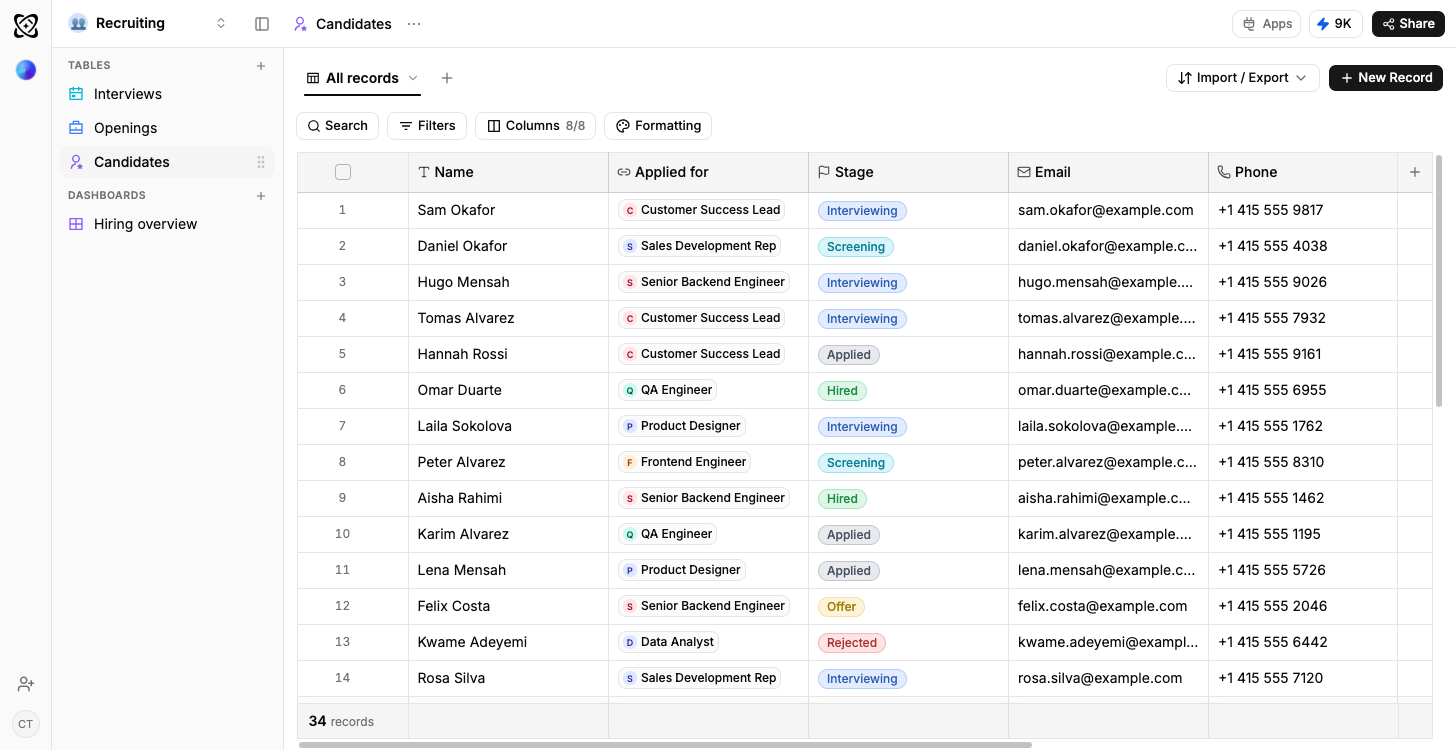
Recruiting
Candidates by stage, openings by status
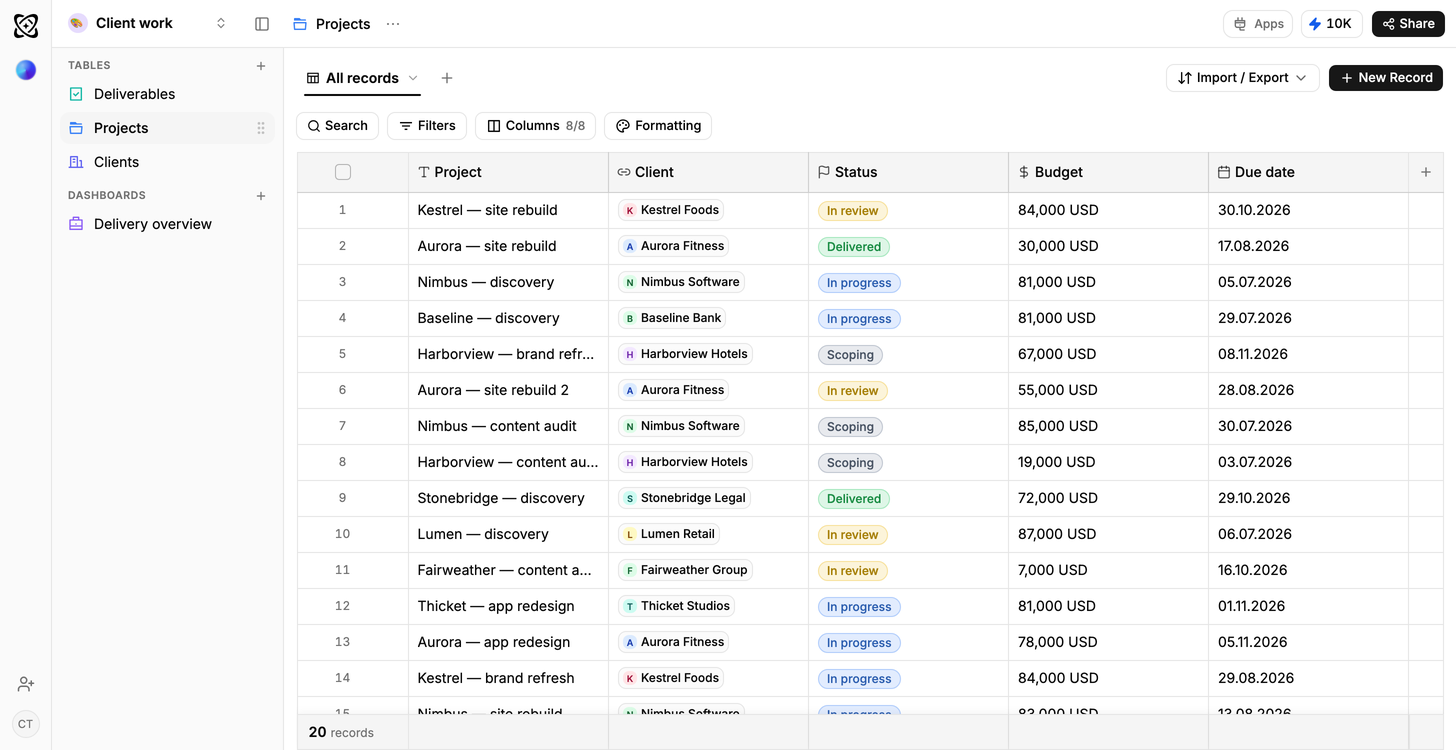
Client work
Due this week; shipped but not billed
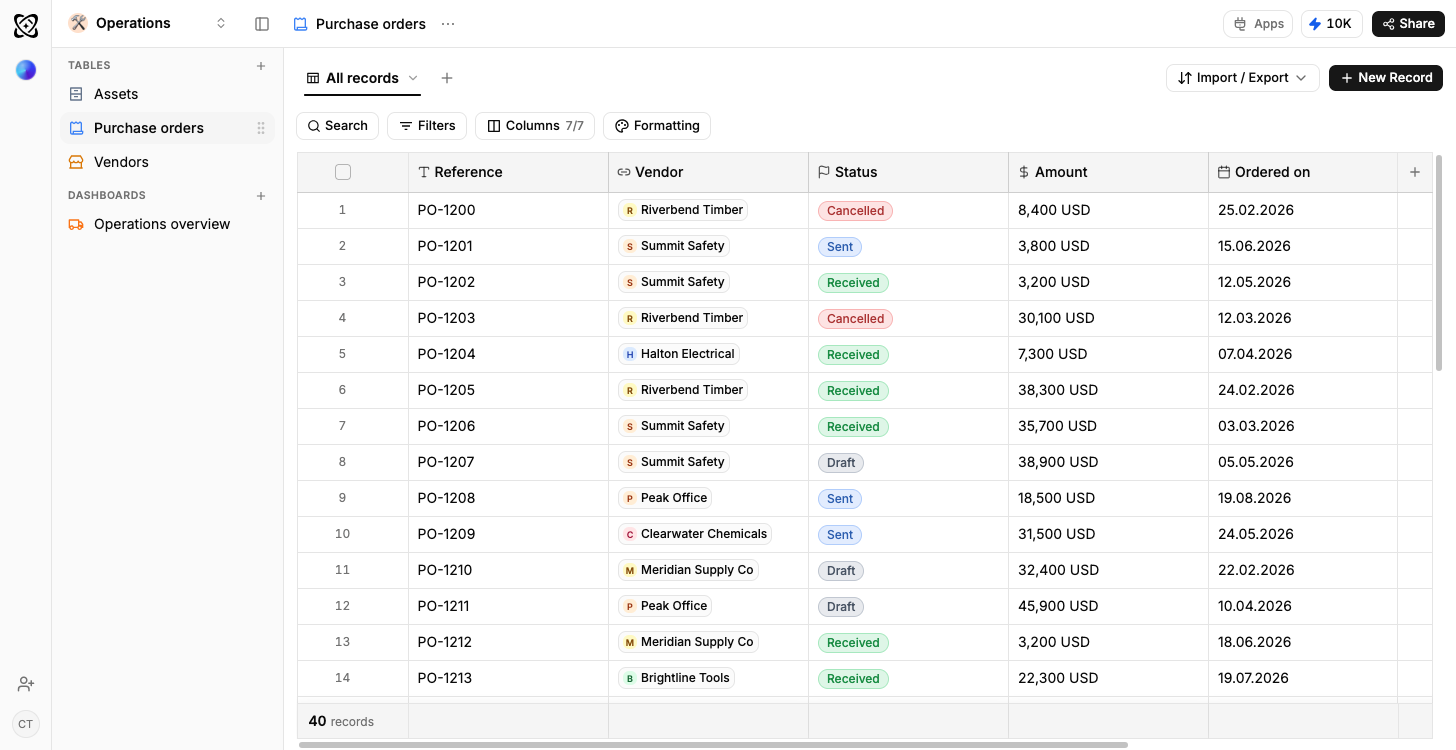
Operations
Orders in flight, spend by supplier
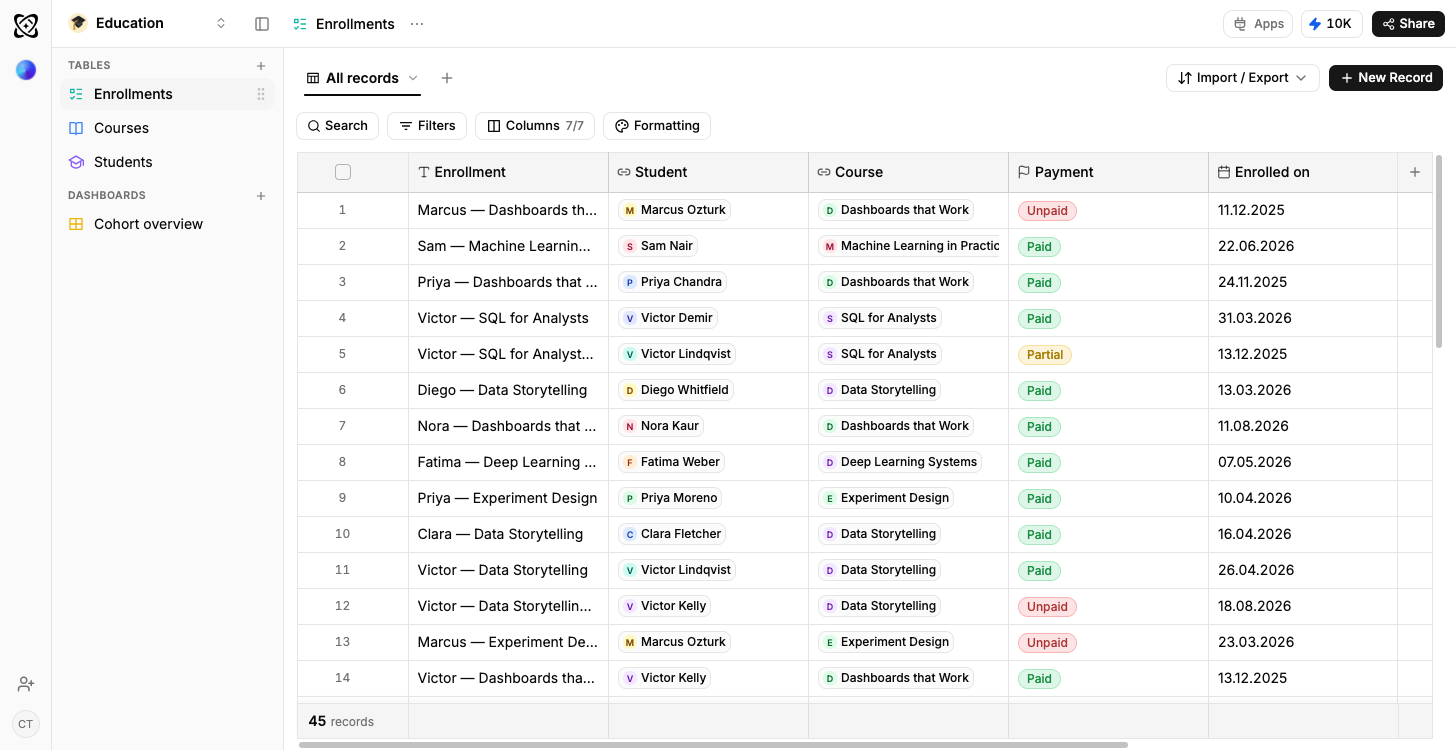
Education
Attendance and completion by cohort
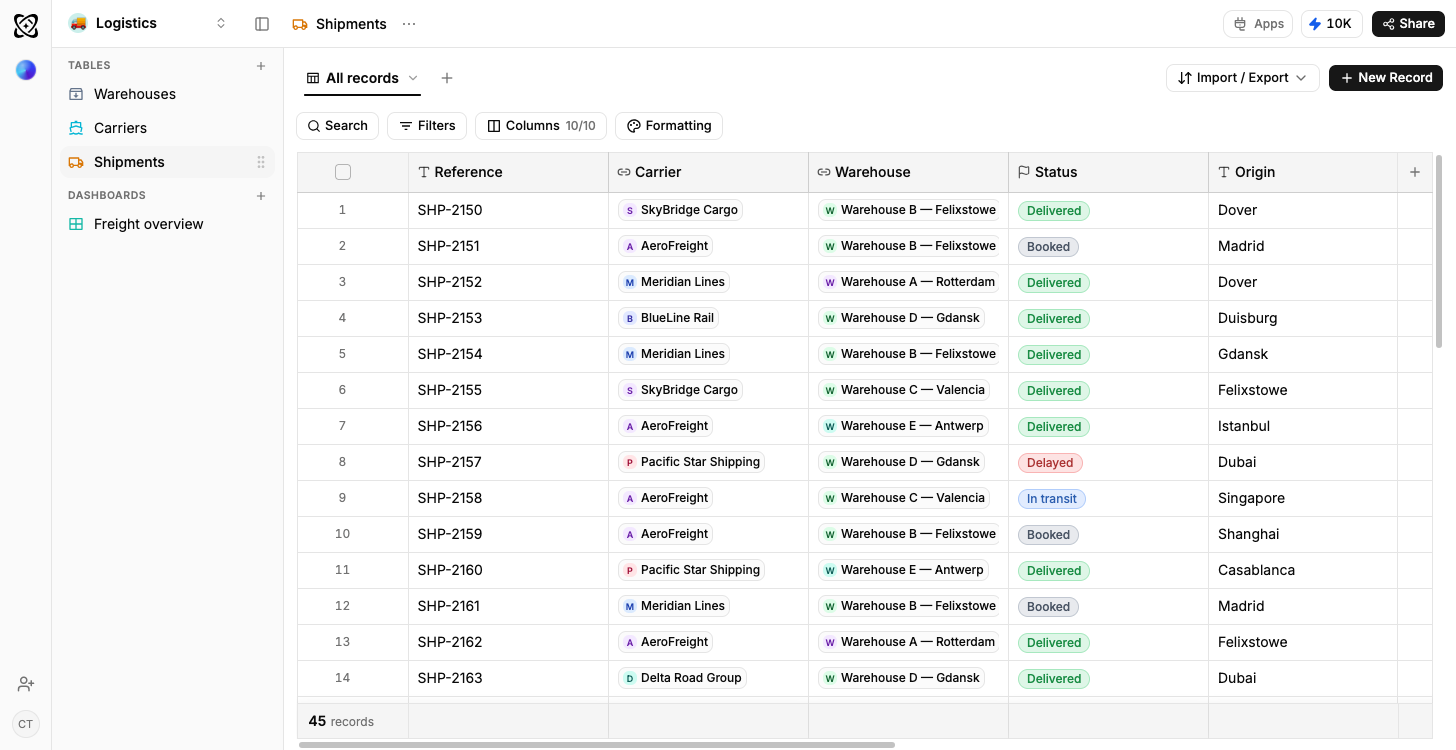
Logistics
On-time rate by carrier and lane