
What is a good LTV to CAC ratio?
LTV:CAC = customer lifetime value / customer acquisition cost
An LTV of $2,400 against a CAC of $800 gives a ratio of 3, written 3:1, and that single division is the quickest check on whether a business model works at all. Divide what a customer is worth over their lifetime by what it cost to win them. At 3:1, each acquisition dollar returns three dollars of gross profit over the customer's life.
Around 3:1 is the widely cited mark for a healthy SaaS business. Below 1:1 you lose money on every customer. Between 1 and 3 the machine runs but leaves little room for overhead, and a very high ratio, say 6:1 or more, often means you're underinvesting and could acquire customers faster. LTV is an estimate underneath it all, so treat the ratio as directional and watch how it trends as you scale spend.
When the spend and revenue figures behind LTV and CAC live in one Ferra workspace, the ratio stays live: nobody has to rebuild it the week before a board meeting.
How the LTV:CAC ratio calculator works
Two dollar figures in, one unitless number out: the calculator divides lifetime value by acquisition cost and reports how many dollars of lifetime gross profit each acquisition dollar earns.
- Customer lifetime value
- The gross profit an average customer generates across the whole relationship: typically monthly revenue per customer times gross margin, divided by monthly churn. Margin-adjusted, never raw revenue.
- Customer acquisition cost
- Sales and marketing spend for a period divided by new customers won in it. Fully loaded: salaries, tools, and agency fees count, not just the ad budget.
Calculating LTV:CAC
The math is one step: lifetime value over acquisition cost. Say LTV works out to $3,000 against a fully loaded CAC of $750.
$3,000 / $750 = 4, written 4:1: four dollars of lifetime gross profit per acquisition dollar. Both inputs are dollars, so the ratio carries no units, and it reads the same on monthly or annual data as long as both sides come from consistent numbers.
Nothing skews this ratio faster than mismatched bases, a revenue-based LTV sitting over a fully loaded CAC. At 75% gross margin, that revenue LTV overstates the ratio by a third. Cohort drift is subtler: LTV measured on loyal older cohorts while CAC reflects today's harder acquisition. Pair both numbers from the same cohorts where you can.
What is a good LTV:CAC ratio?
3:1 or higher is the number that gets cited. Below 1:1, every new customer loses you money. Between 1:1 and 3:1 the model technically works, but leaves little room for overhead: never mind product development or profit. Clear 3:1 and acquisition is generally judged healthy enough to scale.
Push past 5:1 and the reading flips: you're probably underinvesting, and heavier acquisition spend would buy faster growth before the ratio compresses back toward 3:1. Give the trend as much attention as the level. A compressing ratio is usually where rising CAC or slipping retention shows up first.
How to improve LTV:CAC
A ratio has two ends. Push the numerator up, pull the denominator down: the strongest moves do both at once.
- Reduce churn
- Longer lifetimes feed straight into LTV. Cutting monthly churn from 5% to 4% lifts LTV, and the ratio with it, by 25%.
- Convert more of what you already pay for
- Better trial-to-paid and demo-to-close rates win more customers from the same budget, shrinking the denominator without cutting spend.
- Expand existing accounts
- Upsells and seat growth arrive after the acquisition cost is already sunk, so every expansion dollar lands on the ratio's good side.
- Raise gross margin
- LTV is a gross profit figure. Cheaper hosting and leaner support push the numerator up without touching price or churn.
- Double down on best-fit segments
- Your best segment usually carries a lower CAC and a higher LTV at the same time. Shifting acquisition mix toward it moves both ends of the ratio in one motion.
Other calculators
Browse all calculatorsRelated templates
Browse all templates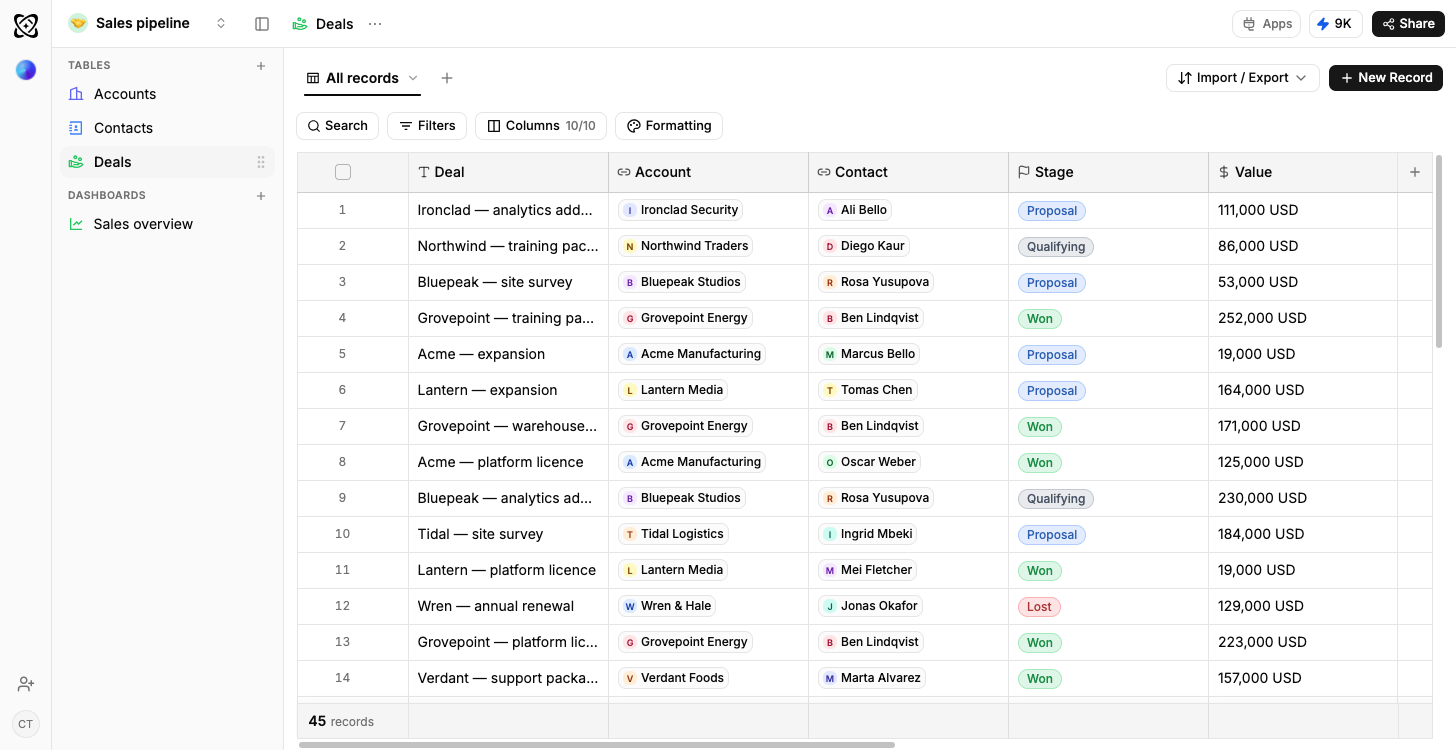
Sales pipeline
Open pipeline by stage, results by owner
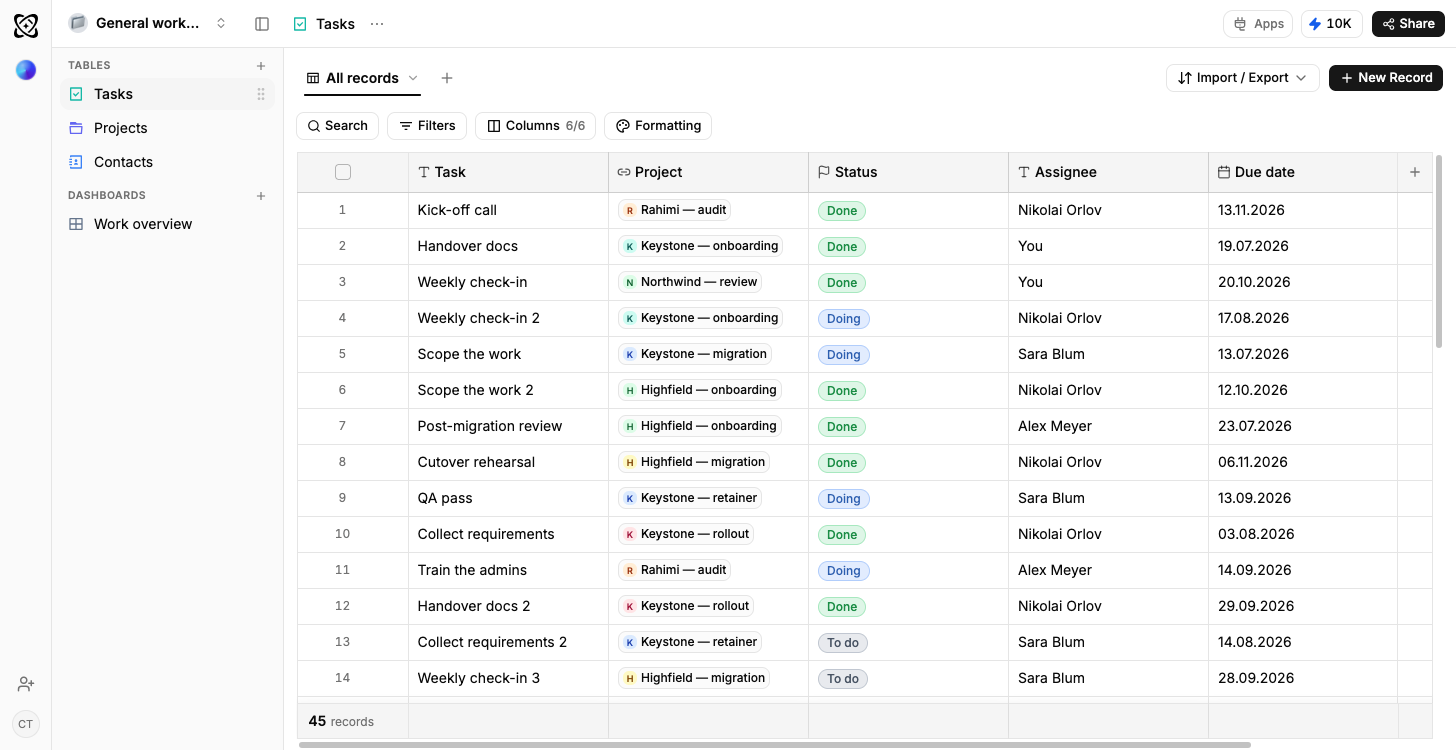
General workspace
Projects and budget by status
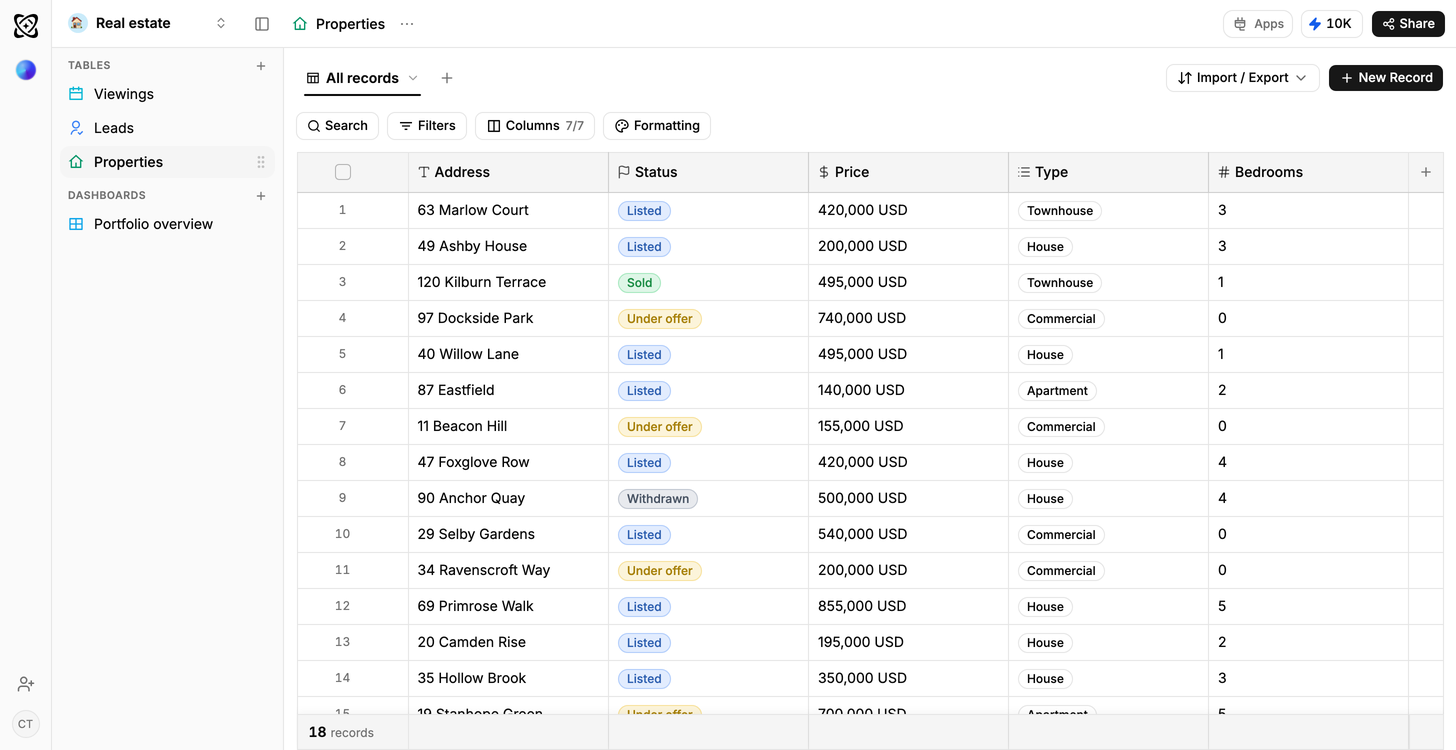
Real estate
Portfolio value and leads, by stage
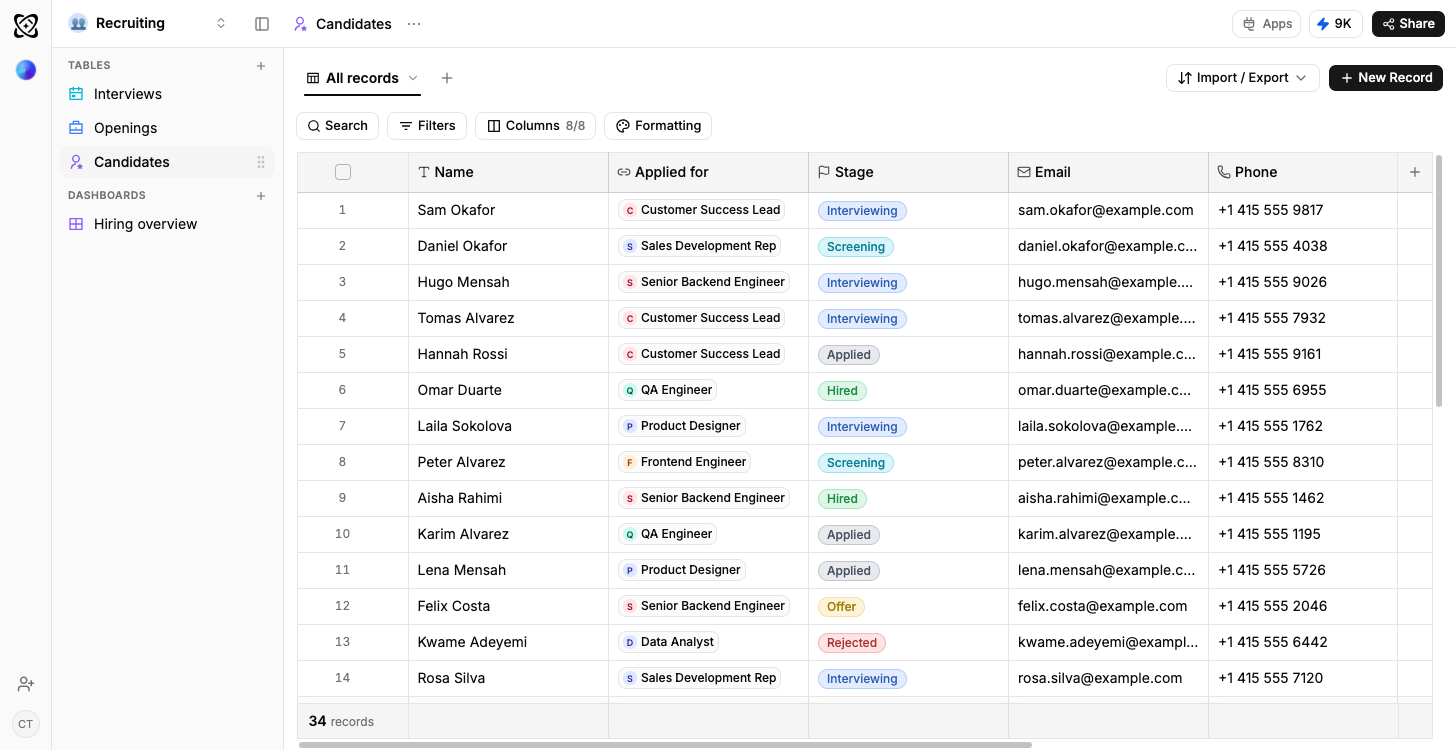
Recruiting
Candidates by stage, openings by status
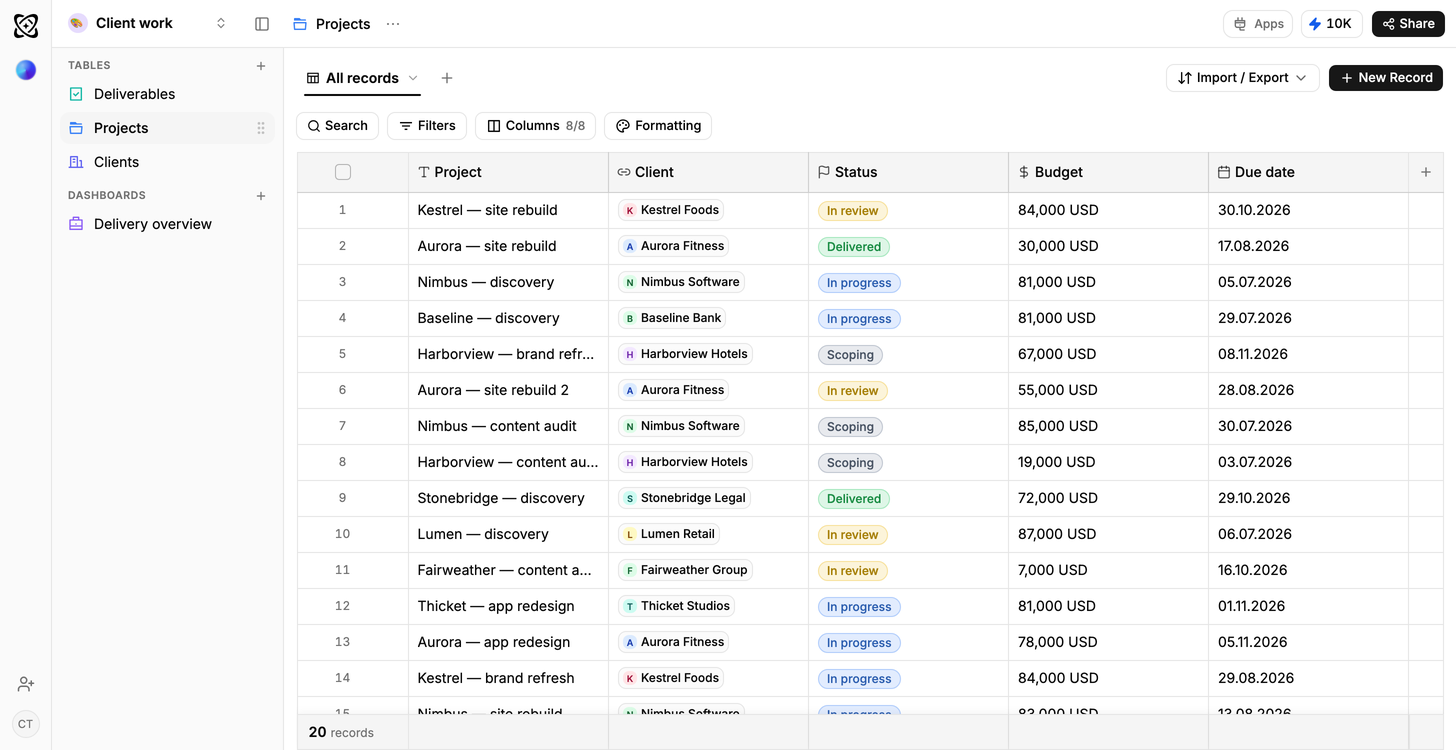
Client work
Due this week; shipped but not billed
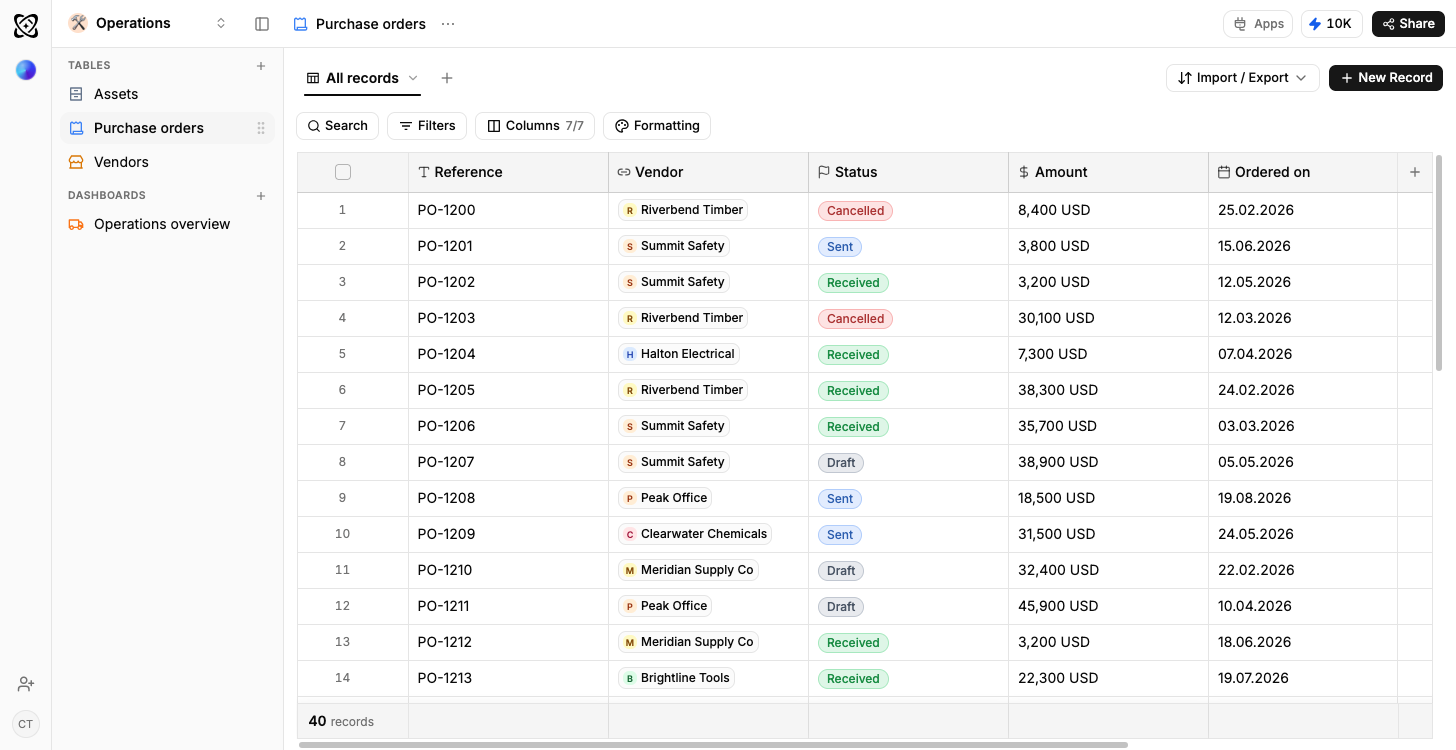
Operations
Orders in flight, spend by supplier
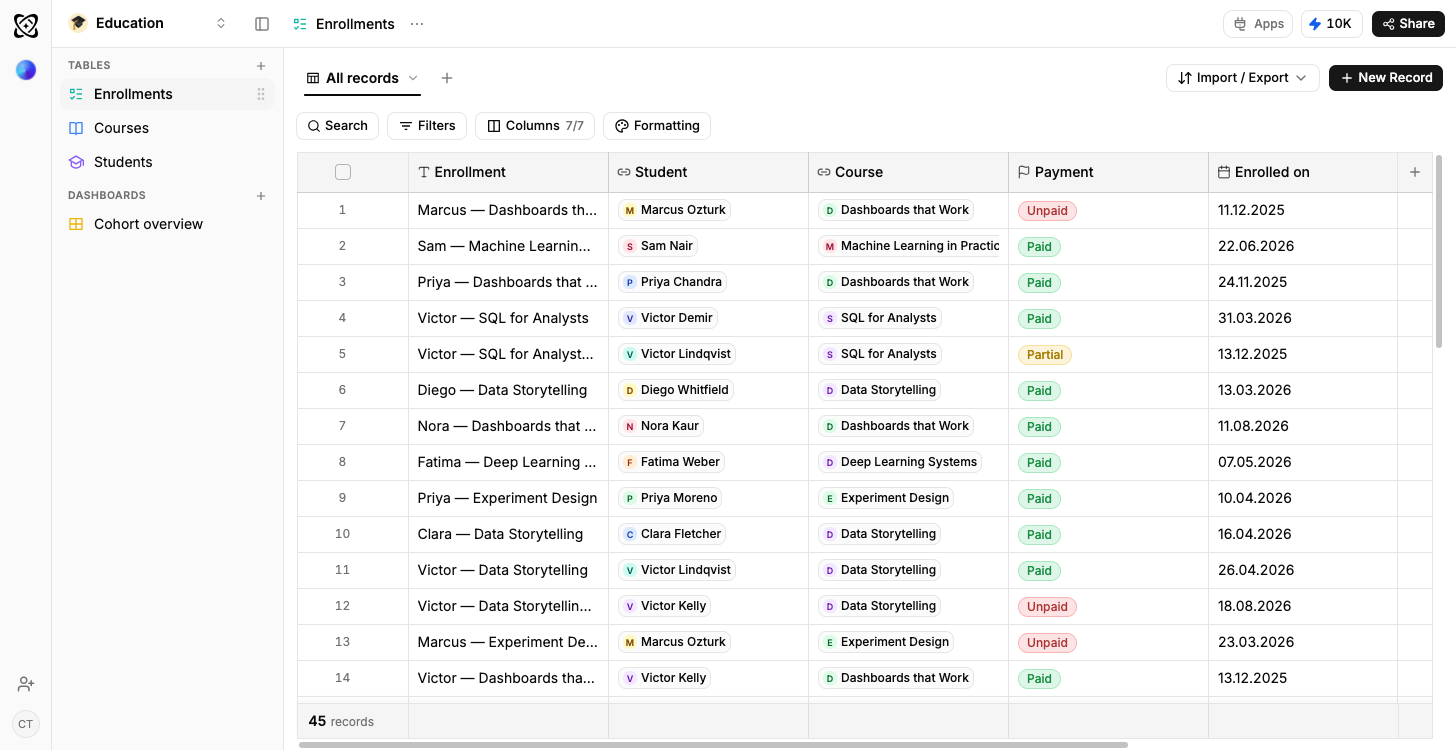
Education
Attendance and completion by cohort
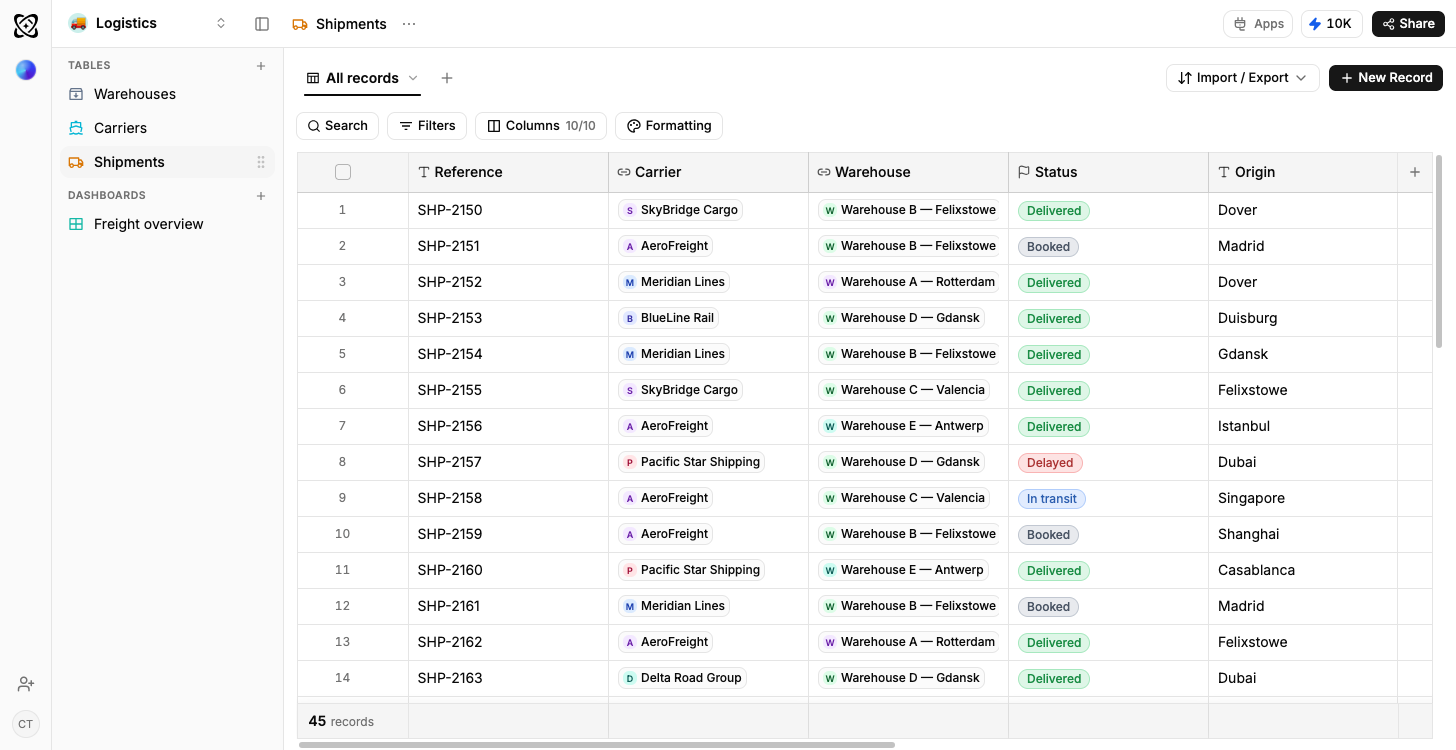
Logistics
On-time rate by carrier and lane