
How is burn multiple calculated?
burn multiple = net burn / net new ARR
Divide net burn by net new ARR over the same period, usually a quarter or a year. Net burn is cash spent minus cash collected; net new ARR is new ARR plus expansion, minus churn and contraction. Burn $500,000 while adding $400,000 of net new ARR and your multiple is 1.25.
David Sacks's scale reads roughly: under 1 amazing, 1 to 1.5 great, 1.5 to 2 good, above 2 expensive. Early-stage companies naturally run higher; what matters is the trend as you scale. When the multiple rises while growth slows, spend is outrunning efficiency.
Land your cash and ARR movements in a Ferra table each month and the burn multiple stays current, nobody reassembles it from scratch the night before a board meeting.
How the burn multiple calculator works
Two inputs, one division. Enter net burn and net new ARR for the same period, same quarter or same year for both, and the calculator divides the first by the second. Read the output as dollars burned per dollar of net new ARR: 1.25 means $1.25 out for every $1 of durable new revenue.
- Net burn
- Cash out minus cash in for the period, the real cash consumed, not the accounting loss. Collect more than you spend and net burn drops below zero.
- Net new ARR
- New ARR from new customers, plus expansion, minus churned and contracted ARR: all pulled from the same period as your burn. Gross new ARR alone flatters the number.
Calculating burn multiple
Start with net burn: cash spent minus cash collected over the period. Build net new ARR next: ARR from new customers, plus expansion, minus churned and contracted ARR, over the same period. Divide net burn by net new ARR. A quarter or a year both work: pick one window and hold both inputs to it.
Take the example: net burn of $500,000, net new ARR of $400,000. 500,000 ÷ 400,000 = 1.25. You burned $1.25 for every $1 of net new ARR you added.
Two errors recur: mismatched periods and the wrong denominator. Burn from one period divided by ARR from another produces a number that means nothing. And swapping in gross new ARR instead of net makes the multiple look better than it is, churned and contracted ARR belong in the denominator.
What is a good burn multiple?
The scale David Sacks popularized reads roughly like this: under 1 is amazing, 1 to 1.5 is great, 1.5 to 2 is good, and above 2 means growth is getting expensive.
Early-stage companies naturally run higher multiples, so a high reading early on isn't the alarm. The trend as you scale is. A burn multiple that rises while growth slows is the classic signal that spend is outrunning efficiency.
How to improve burn multiple
Getting from 1.25 toward under 1 takes one of two motions: burn less, or add more net new ARR. Every lever below pulls on one side of that fraction.
- Cut burn that isn't buying ARR
- Audit spend line by line and kill anything that isn't producing ARR. That cash sits in the numerator with nothing to show for it in the denominator.
- Raise sales efficiency
- Squeeze more net new ARR out of the same sales and marketing spend. The denominator grows while the numerator holds flat.
- Cut churn
- Churned ARR subtracts straight from net new ARR, so every account you save raises the denominator without a dollar of new spend.
- Expand existing accounts
- Expansion ARR adds to net new ARR the same way new-customer ARR does, sell more into the accounts you already have.
- Review it quarterly, next to runway
- Recompute the multiple every quarter and read it alongside runway. The trend across quarters tells you more than any single reading.
Other calculators
Browse all calculatorsRelated templates
Browse all templates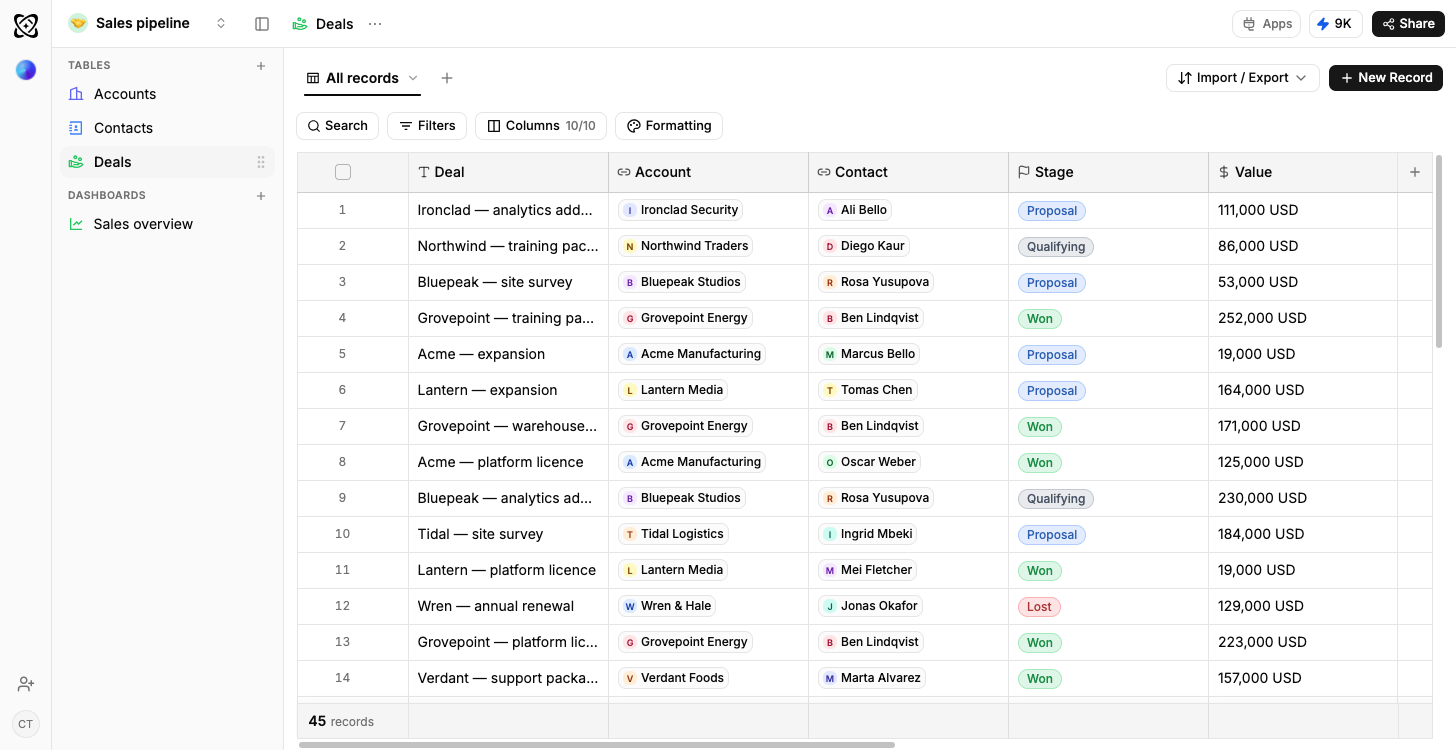
Sales pipeline
Open pipeline by stage, results by owner
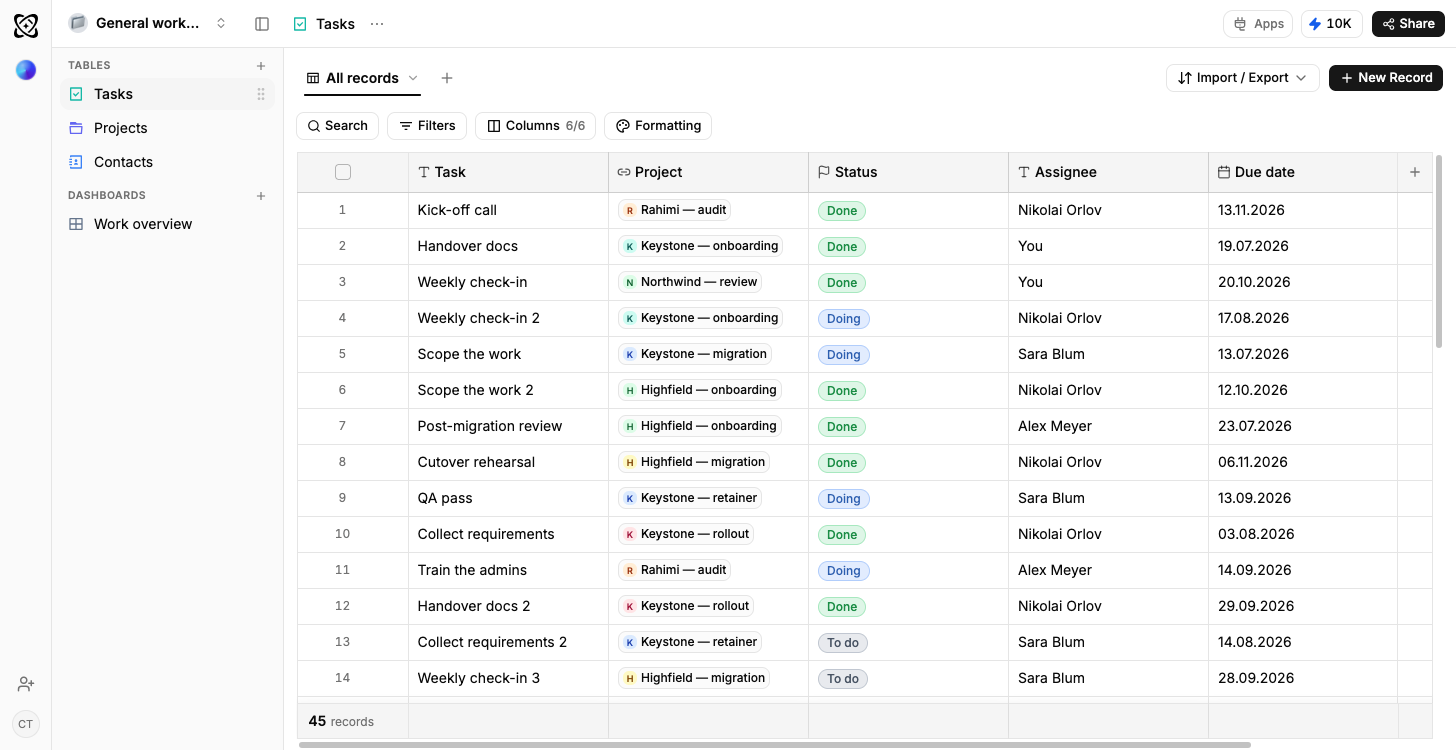
General workspace
Projects and budget by status
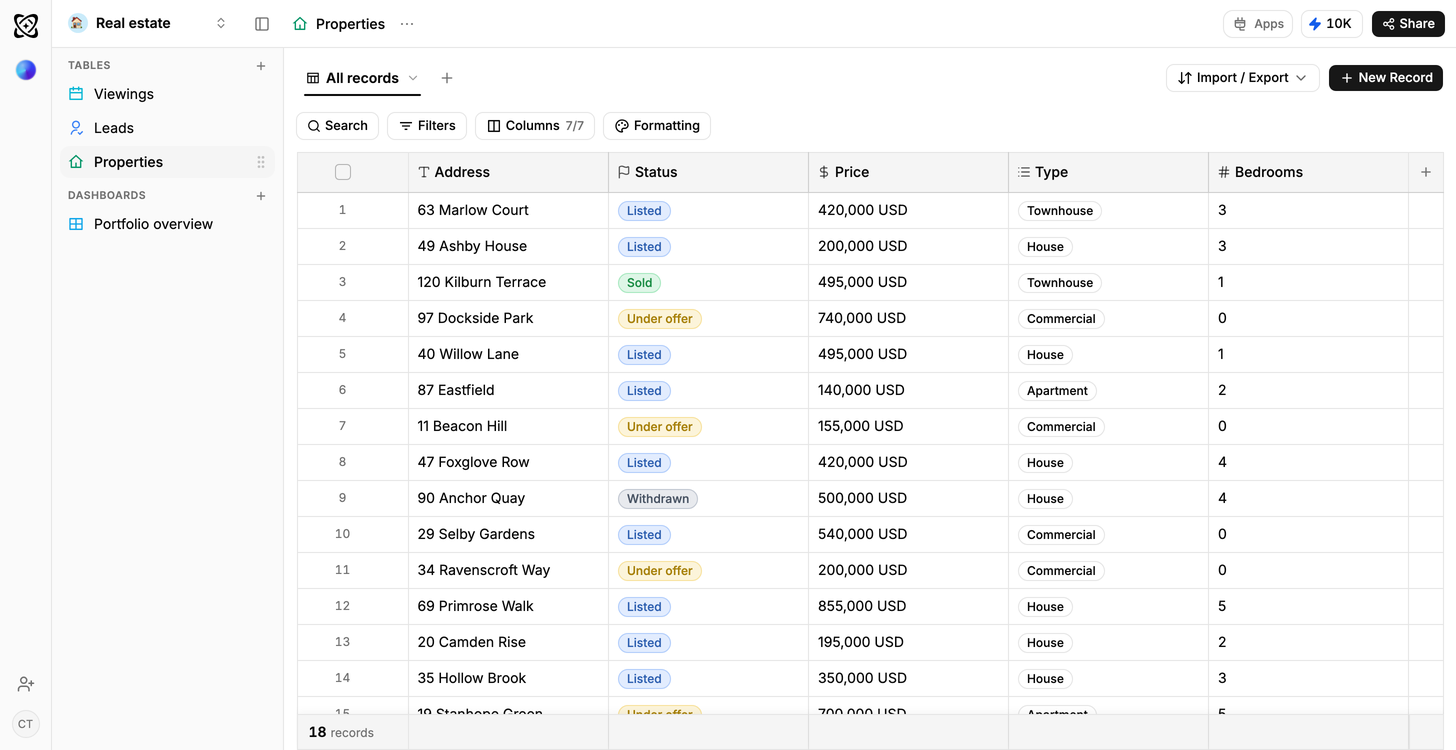
Real estate
Portfolio value and leads, by stage
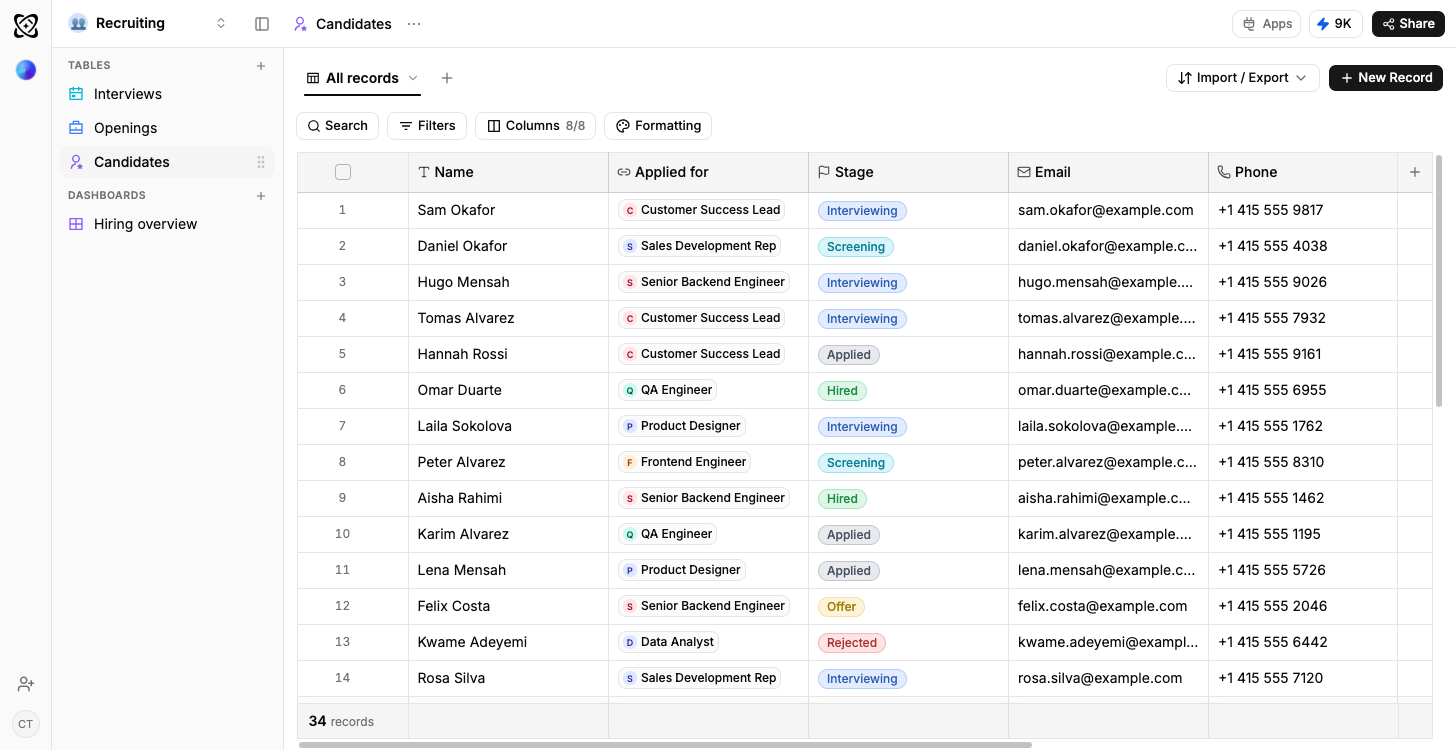
Recruiting
Candidates by stage, openings by status
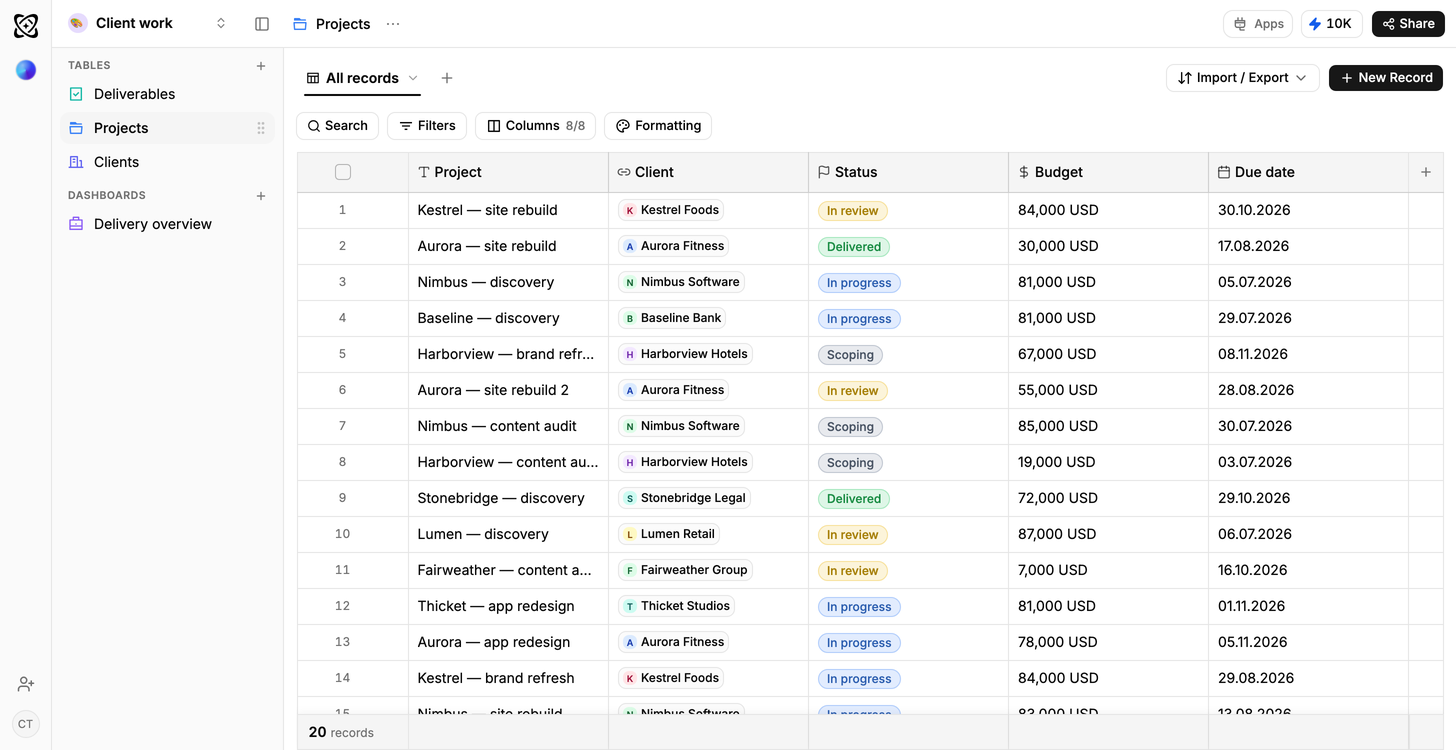
Client work
Due this week; shipped but not billed
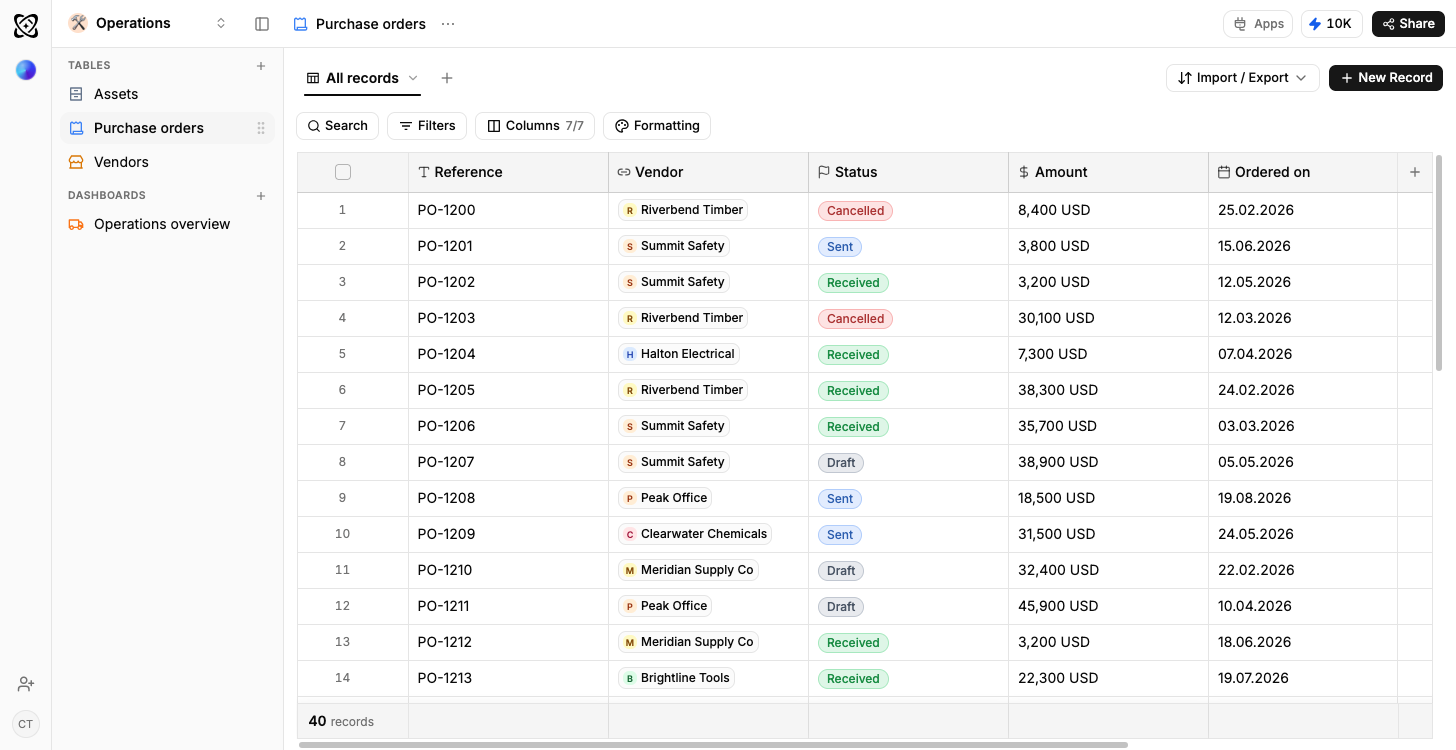
Operations
Orders in flight, spend by supplier
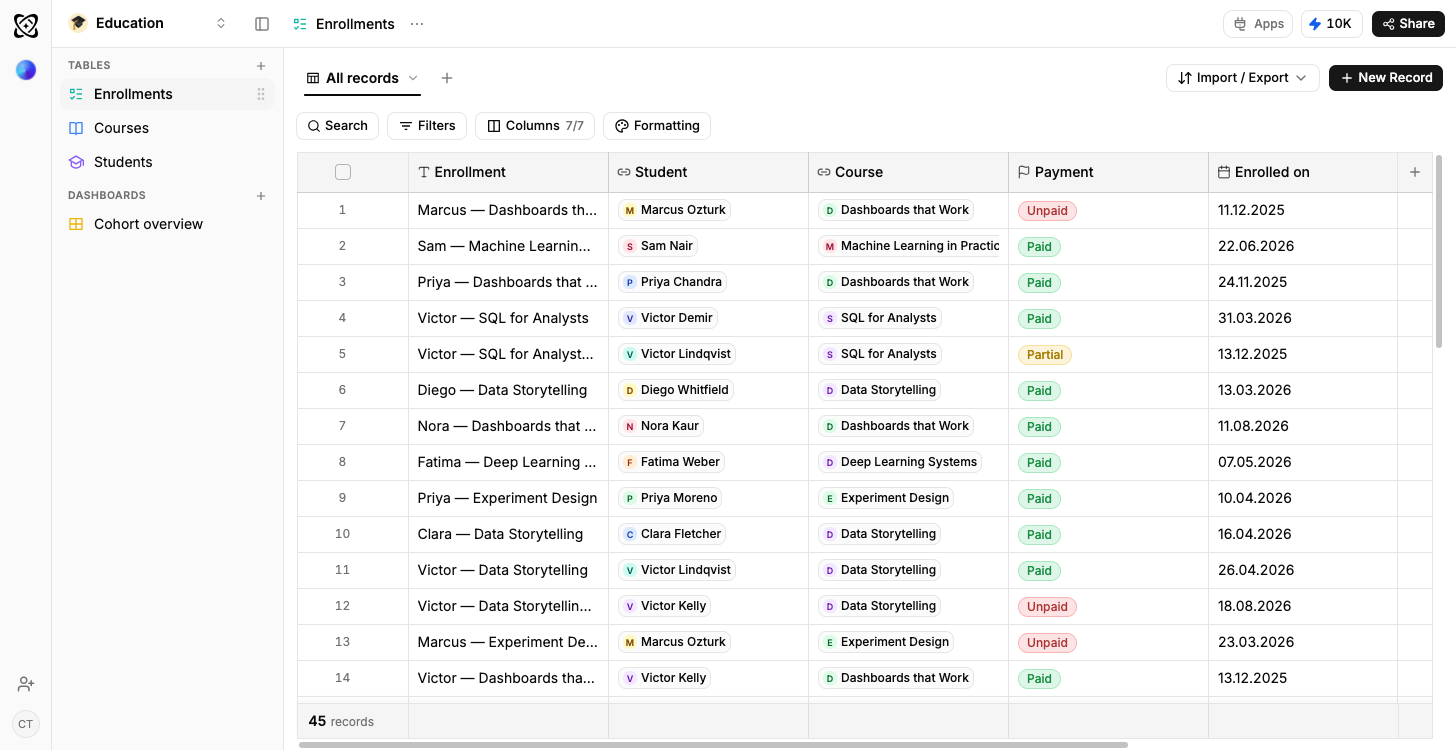
Education
Attendance and completion by cohort
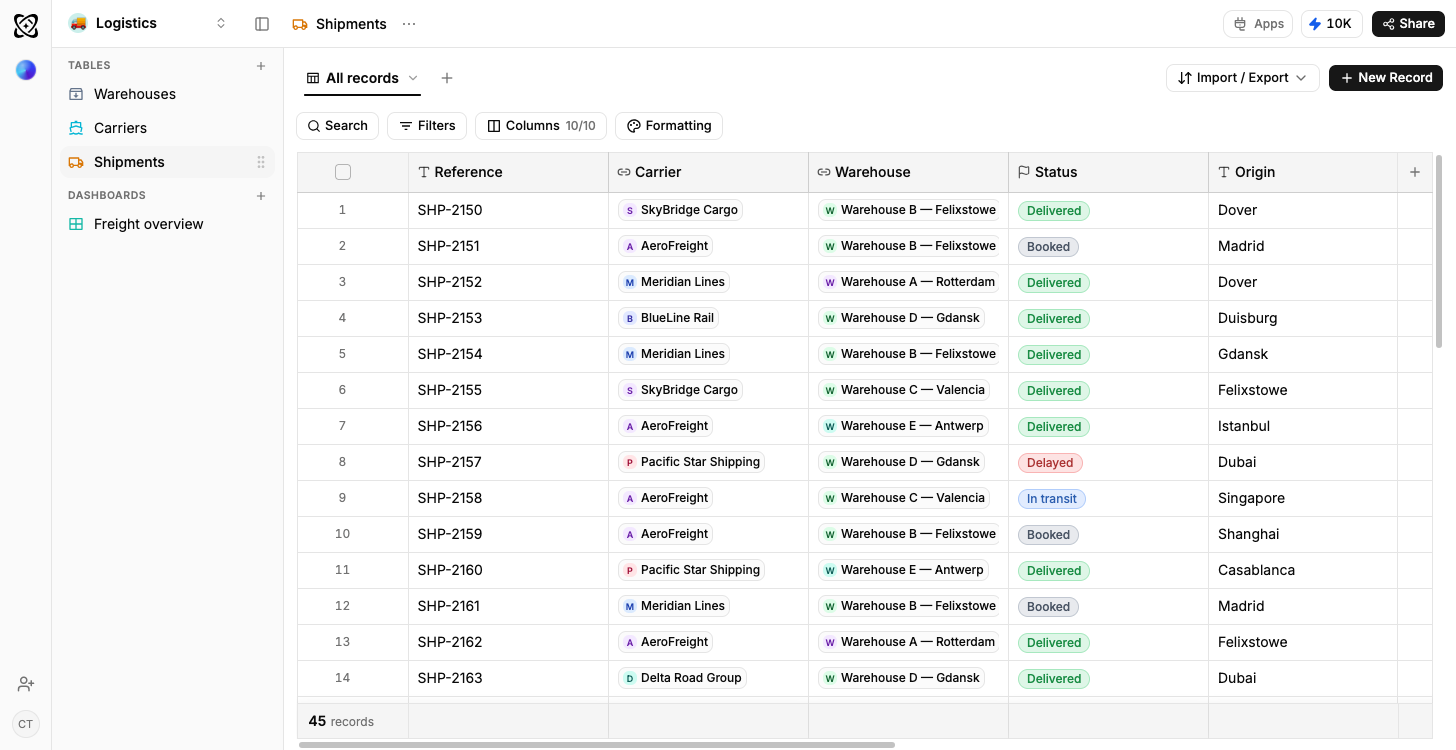
Logistics
On-time rate by carrier and lane