
How do you calculate customer lifetime value?
LTV = monthly revenue per customer × gross margin % / monthly churn %
A customer paying $100 a month at 80% gross margin with 3% monthly churn is worth $100 × 0.80 / 0.03, about $2,667. That's customer lifetime value: monthly revenue per customer, times gross margin, divided by monthly churn. The churn rate holds a second answer too: divide 1 by it and you get the average customer lifetime, roughly 33 months here.
LTV sets your ceiling, the most you can afford to spend winning a customer, and the usual rule of thumb keeps it at 3× CAC or better. Churn sits in the denominator, so retention punches hardest: cut monthly churn from 3% to 2% and LTV jumps by half. Hold the number loosely. The formula assumes churn never changes, and for young cohorts it almost always does.
Keep subscription revenue and churn in a Ferra table and the inputs behind this number stay current; how LTV differs by plan or cohort is a question you can ask in plain English.
How the LTV calculator works
It takes what an average customer pays each month, your gross margin, and your monthly churn rate, and returns two numbers: lifetime value, the gross profit an average customer generates before churning, and average lifetime in months.
- Monthly revenue per customer
- Total MRR divided by customer count. Recurring revenue only, one-time setup fees and services stay out.
- Gross margin
- Revenue minus the direct costs of serving customers, hosting, third-party fees, support, as a percentage of revenue. Most SaaS businesses land between 70% and 85%.
- Monthly churn rate
- The share of customers who cancel in an average month. If you only track annual churn, convert it to monthly first: mixed periods wreck the output.
Calculating LTV
Two steps. Multiply monthly revenue per customer by gross margin to get monthly gross profit, then divide by monthly churn. A customer paying $200 a month at 75% gross margin with 5% monthly churn produces $200 × 0.75 = $150 of gross profit each month.
LTV = $150 / 0.05 = $3,000. The churn rate also sets the lifetime: 1 / 0.05 = 20 months. The average customer stays 20 months and contributes $150 in every one of them.
Mixed periods are the classic failure. Monthly revenue over an annual churn rate understates LTV by roughly a factor of twelve; annual revenue over monthly churn inflates it just as badly the other way. Running raw revenue through the formula instead of margin-adjusted profit overstates it too. Keep every input monthly, and always take the margin step.
What is a good LTV?
A $3,000 LTV is excellent when customers cost $500 to acquire and a problem when they cost $3,000, the metric has no standalone benchmark. The working test is LTV:CAC, where 3:1 or higher reads as healthy. What LTV really measures is headroom: how much you can spend on acquisition and still make money.
Hold it as an estimate, not an asset. The formula assumes churn stays constant forever, and small movements swing it hard: trim monthly churn from 5% to 4% in the example above and LTV climbs from $3,000 to $3,750. If churn is volatile or your history is short, weight recent cohorts over the long-run average.
How to improve LTV
Nothing in the formula is fixed. Customers can stay longer and pay more, and serving them can cost less: each shift lands straight in LTV.
- Cut churn
- Churn is the denominator, so no other lever comes close. Fix onboarding first, then watch usage for early warnings so outreach happens before renewal, not after cancellation.
- Grow expansion revenue
- Upsells and seat growth raise revenue per customer over time, and cross-sells do too. Strong expansion can offset churn entirely.
- Raise prices
- Increases flow almost directly through to gross profit. Even a modest bump at renewal lifts LTV across the whole base.
- Lift gross margin
- Trim hosting waste and renegotiate third-party costs; automating routine support does the rest. A point of margin gained is a point of LTV gained.
- Acquire better-fit customers
- Ideal-profile customers churn less and expand more. Feed retention data back into targeting and LTV improves at the source.
Other calculators
Browse all calculatorsRelated templates
Browse all templates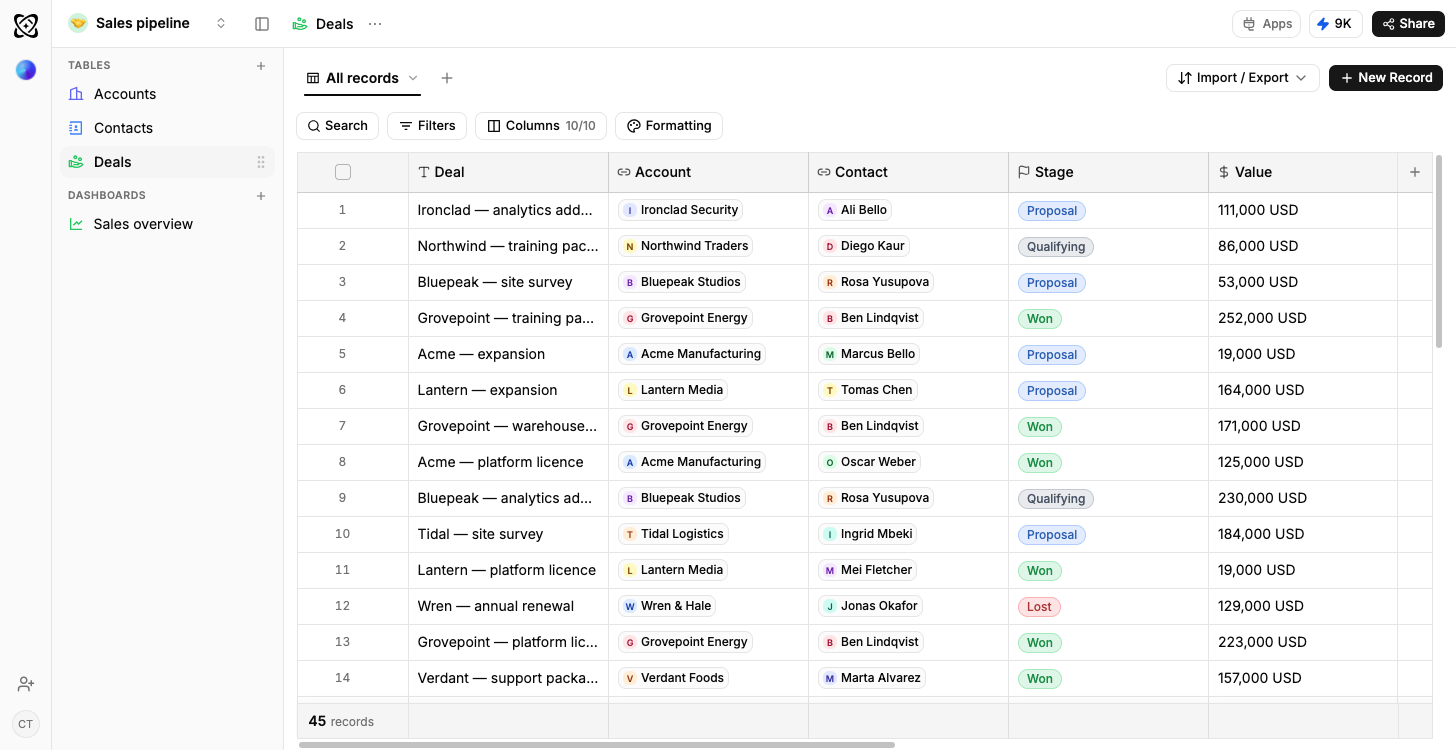
Sales pipeline
Open pipeline by stage, results by owner
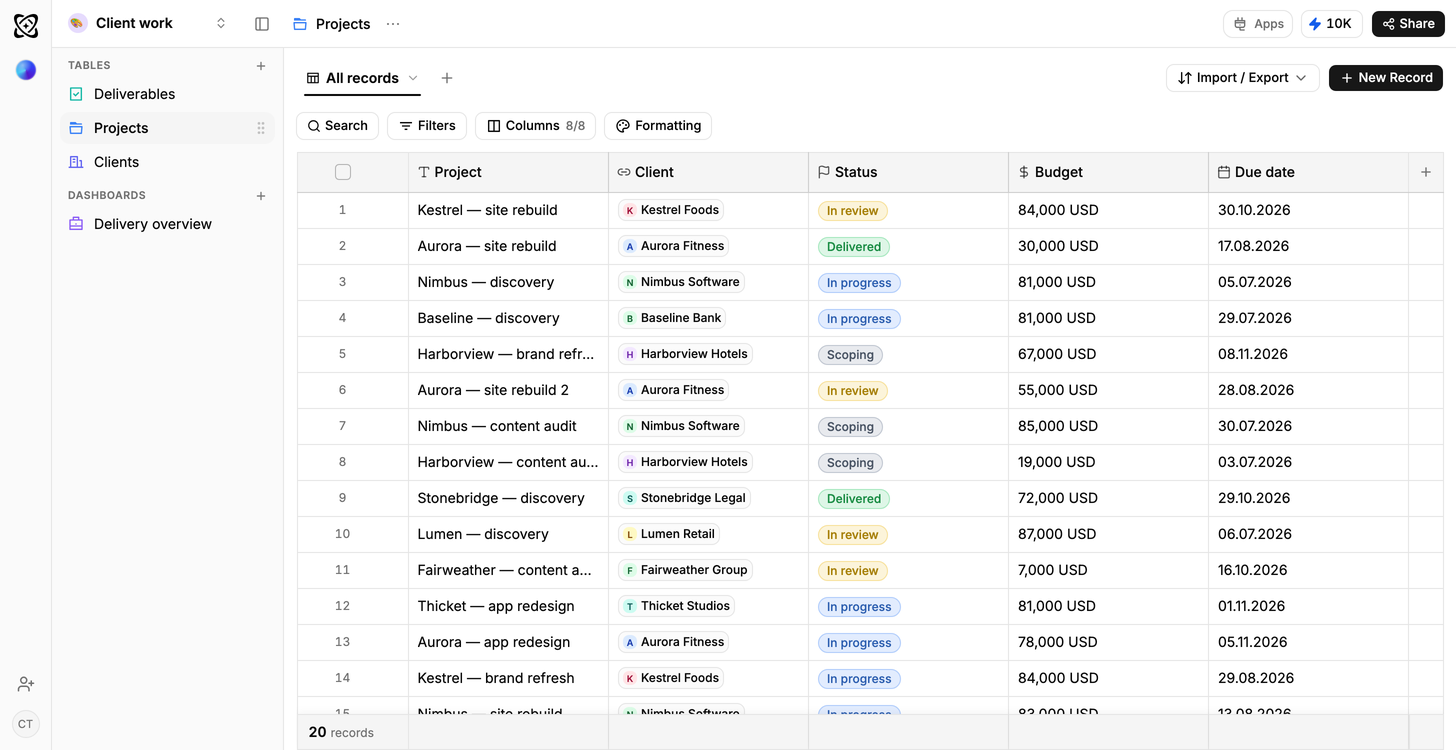
Client work
Due this week; shipped but not billed
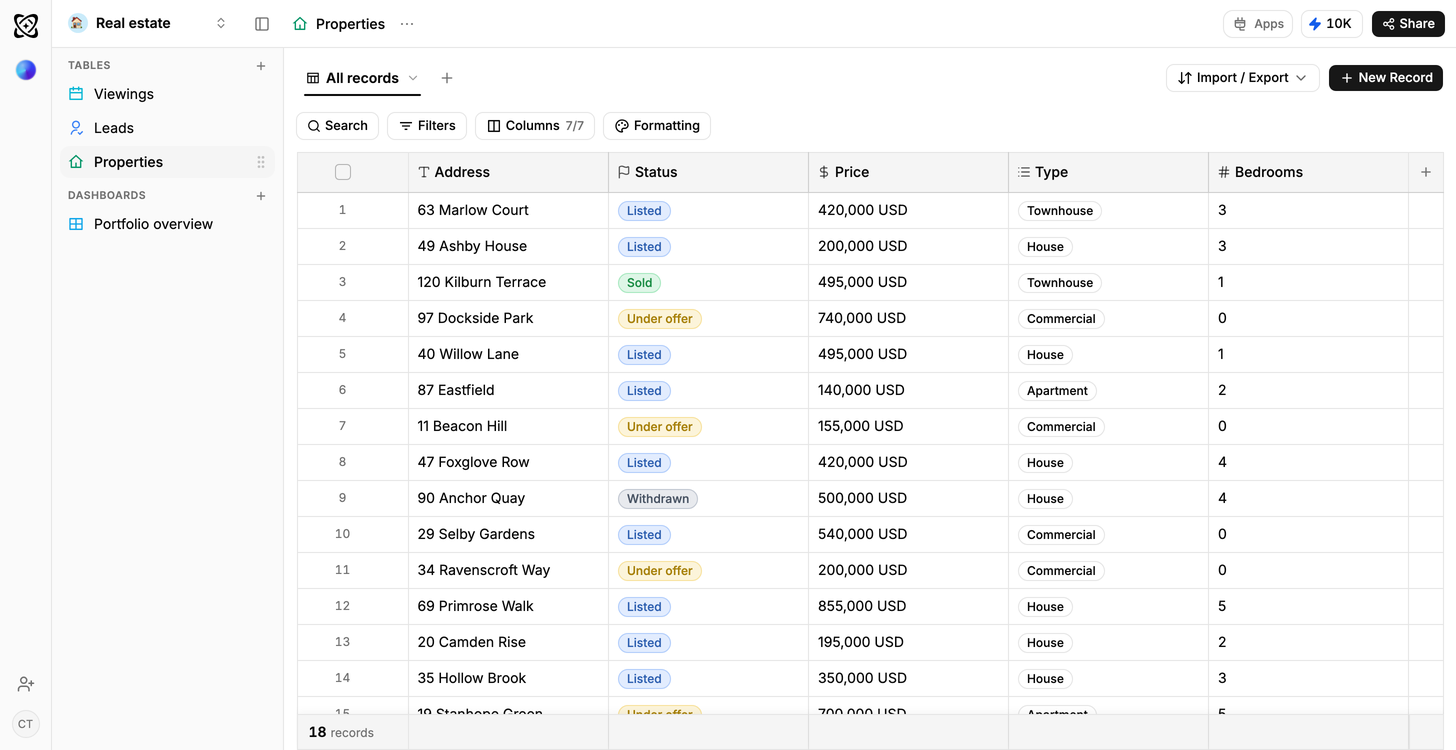
Real estate
Portfolio value and leads, by stage
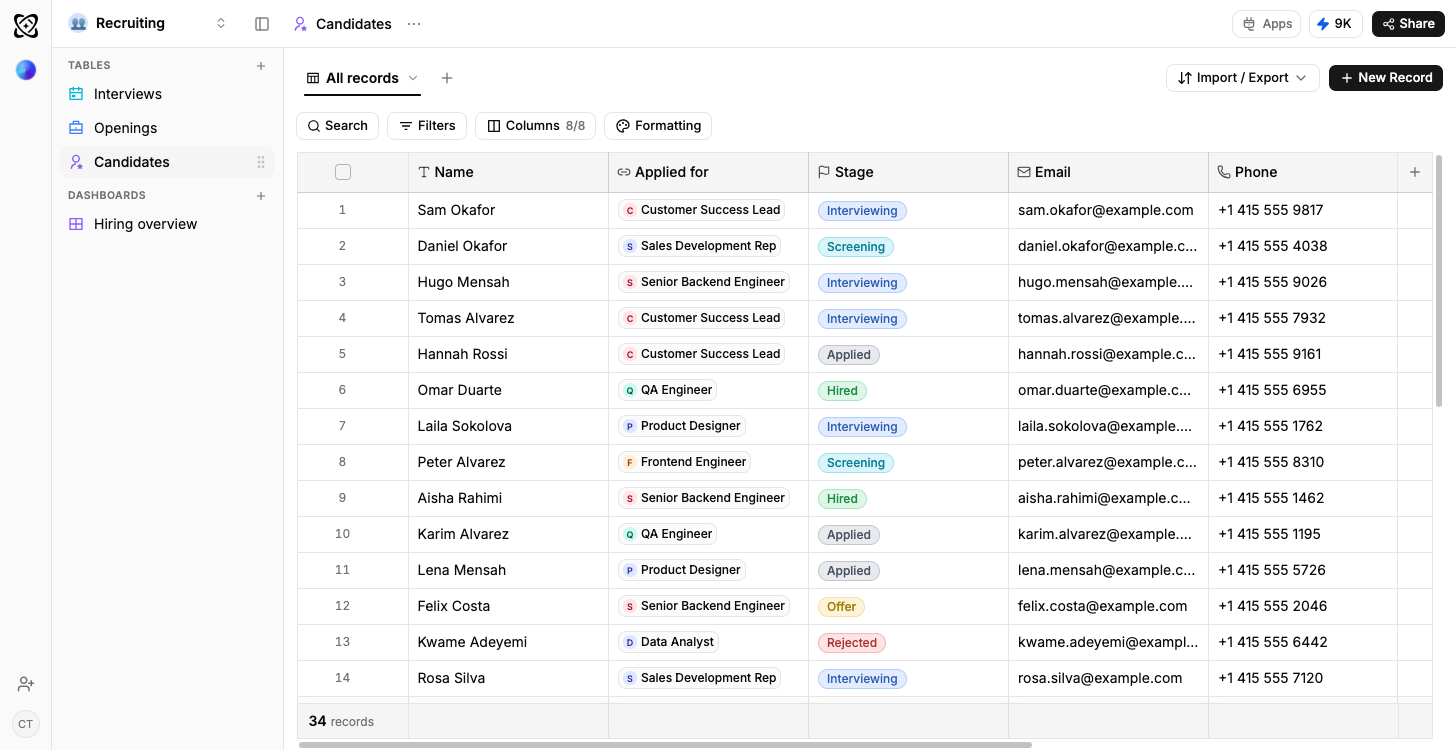
Recruiting
Candidates by stage, openings by status
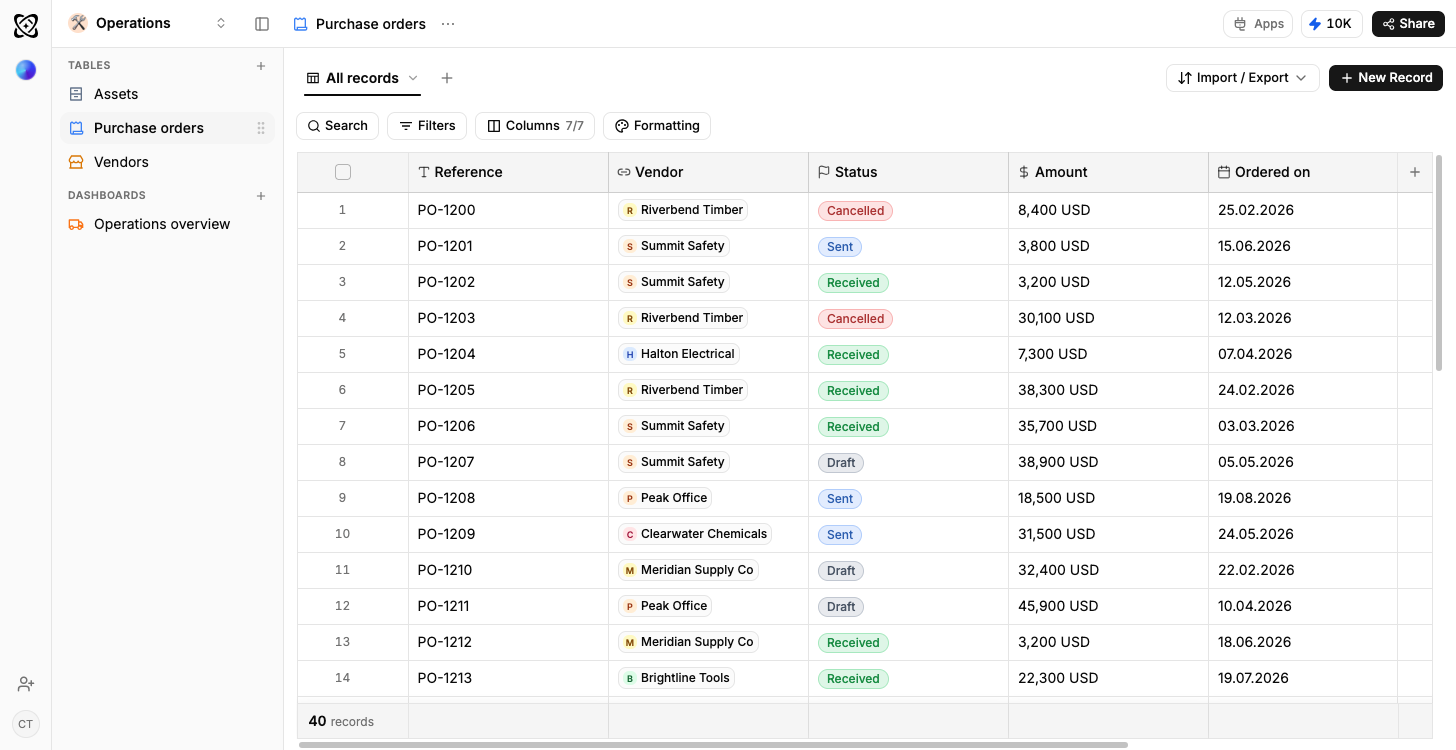
Operations
Orders in flight, spend by supplier
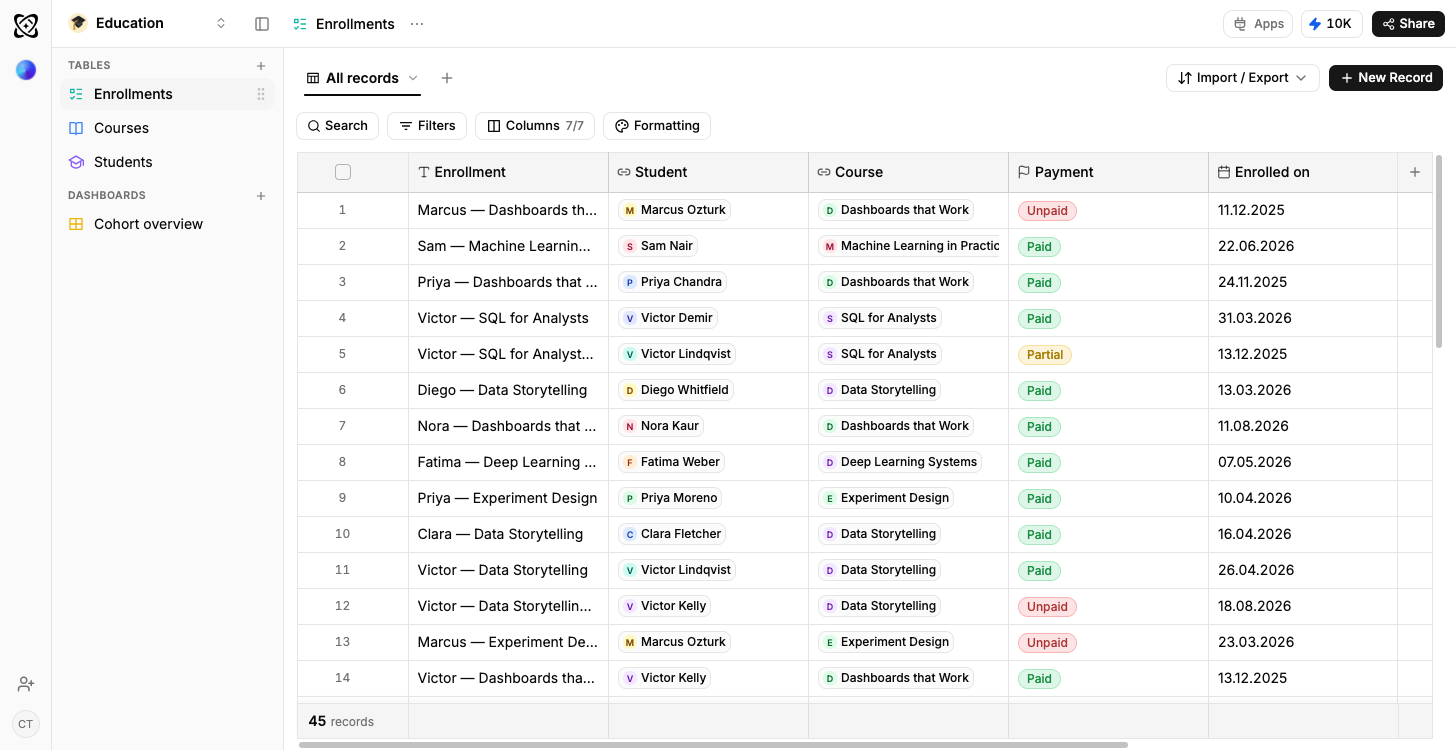
Education
Attendance and completion by cohort
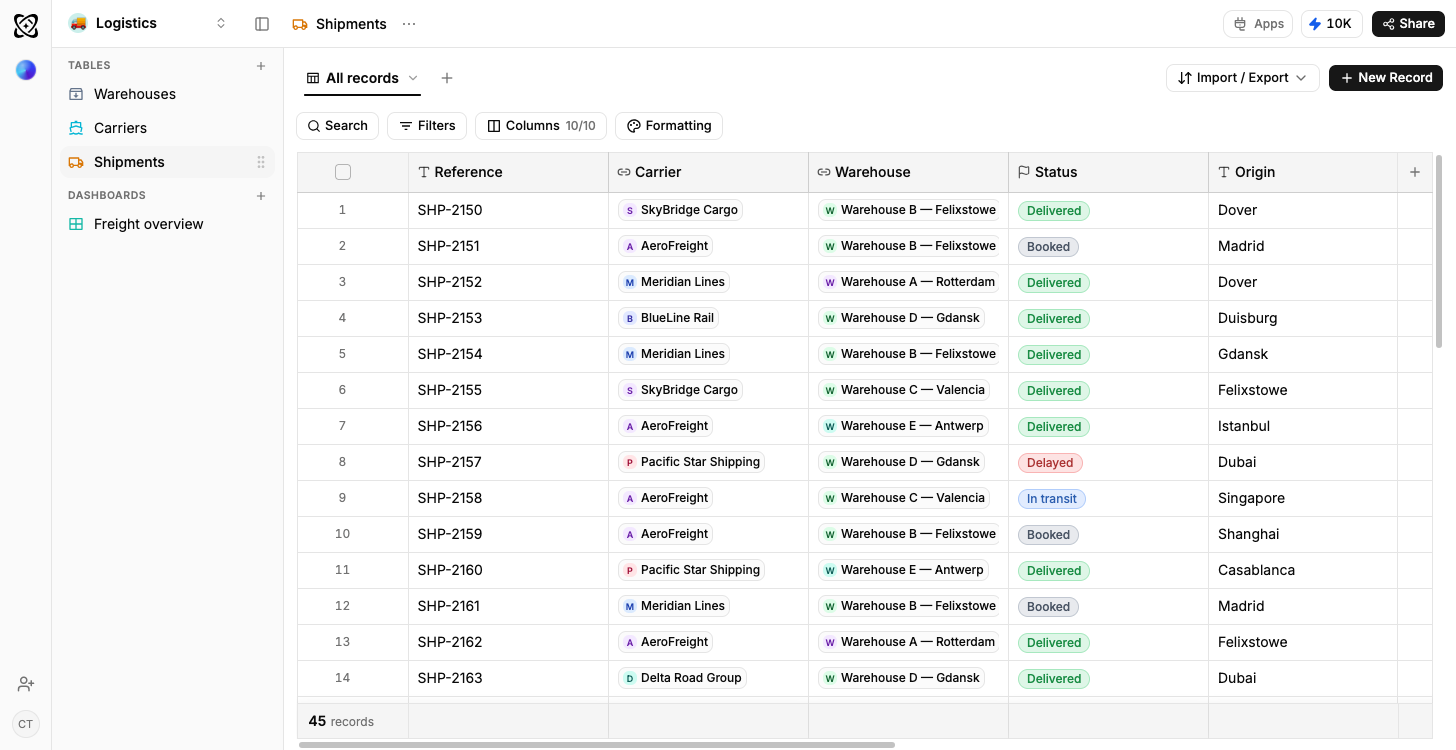
Logistics
On-time rate by carrier and lane
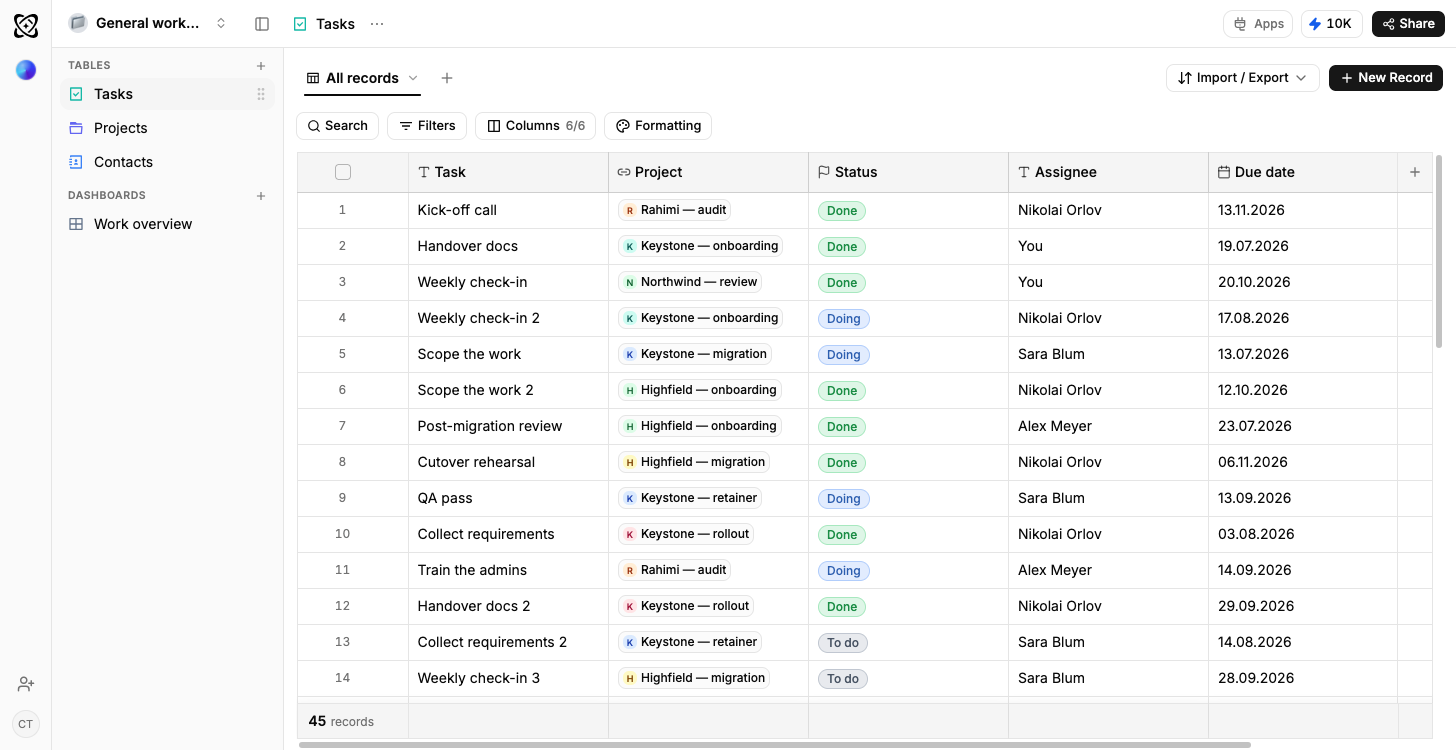
General workspace
Projects and budget by status