
How do you calculate customer retention rate?
Retention rate = (customers at end − new customers added) / customers at start × 100
Start a period with 500 customers, end with 480, and add 30 along the way: you kept (480 − 30) / 500 = 90% of the customers you began with. That's retention rate: ending count minus new additions, divided by the starting count. Churn rate is whatever's left, 10% here.
The subtraction is the whole point. New signups can hold a headline count flat while existing customers drain out underneath it. Benchmarks hang on your market: B2B SaaS companies typically aim for annual logo retention above 90%, and consumer subscriptions run lower. Measure on a steady cadence, monthly or quarterly, and read the trend by cohort rather than any single number.
A customer list in Ferra holds the start count, the end count, and the new additions side by side, so you can ask for retention by month or by segment in plain English.
How the retention rate calculator works
Three counts go in: start of period, end of period, and new customers added. The calculator strips the newcomers out of the ending count, divides what's left by the starting count, and reports retention: churn rides along as the remainder.
- Customers at start of period
- Active customers on day one of the period. Decide up front how free and trial accounts are treated, then keep that rule fixed: a moving definition makes every period incomparable.
- Customers at end of period
- Active customers on the final day, joiners included. The calculator removes the new additions for you.
- New customers added
- Everyone whose first paid day landed inside the period. Pulling them out is what stops signup growth from covering for losses among existing customers.
Calculating retention rate
Isolate the survivors first: ending count minus new customers. Say you started the quarter with 1,000 customers, ended with 950, and added 100 along the way. Surviving original customers = 950 − 100 = 850.
Retention rate = 850 / 1,000 = 85%. Churn is the remainder: 100% − 85% = 15%, meaning 150 of the original 1,000 customers left during the quarter.
Divide the raw ending count by the start, no subtraction, and the number lies: 950 / 1,000 = 95%, with new signups masking two-thirds of the real churn. Period length trips teams up too. A 95% monthly rate and a 95% annual rate describe wildly different businesses, so label every rate with its period.
What is a good retention rate?
Anchor on the period before judging anything. For SaaS, 95% monthly customer retention, monthly churn under 5%, is a common target for SMB products, and annual retention of 90% or better is frequently cited as strong; enterprise businesses often run higher still. Consumer subscriptions sit lower across the board.
Retention also compounds. Keep 95% of customers twelve months in a row and you're left with 0.95 to the twelfth power of the original cohort, roughly 54% over the year. A rate that sounds high can still describe a leaky business, and moving monthly retention by a single point shifts the annual picture far more than it appears to.
How to improve retention rate
Customers renew when they hit value fast and someone notices when they stop. Every lever below serves one of those two jobs.
- Fix onboarding first
- Most churn is decided in the first weeks. Get every new customer to a first meaningful result quickly, and measure how many actually arrive.
- Watch usage for early warnings
- Falling logins and shrinking usage predict cancellation. A simple health score buys your team weeks of notice to step in.
- Reach out before renewal
- A check-in a month ahead catches problems while they're still fixable. The cancellation notice is too late to start the conversation.
- Track why customers leave
- Exit interviews and reason tracking split losses into price, product gaps, and bad fit: three problems with three different fixes.
- Stop buying bad-fit customers
- When one channel or segment churns at twice the rate of the rest, the retention fix is upstream: acquire less of it.
- Offer annual plans
- Annual billing removes eleven cancellation opportunities a year and tends to attract more committed customers in the first place.
Other calculators
Browse all calculatorsRelated templates
Browse all templates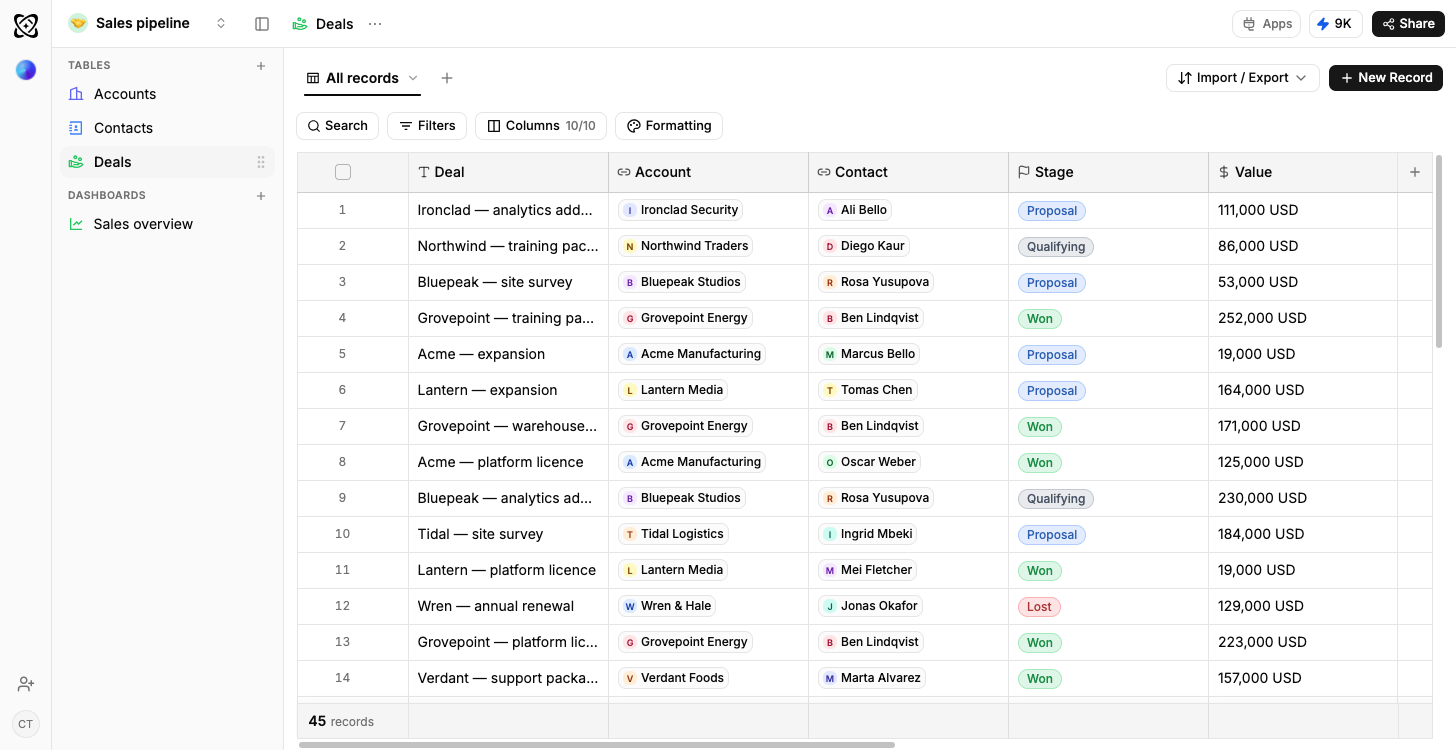
Sales pipeline
Open pipeline by stage, results by owner
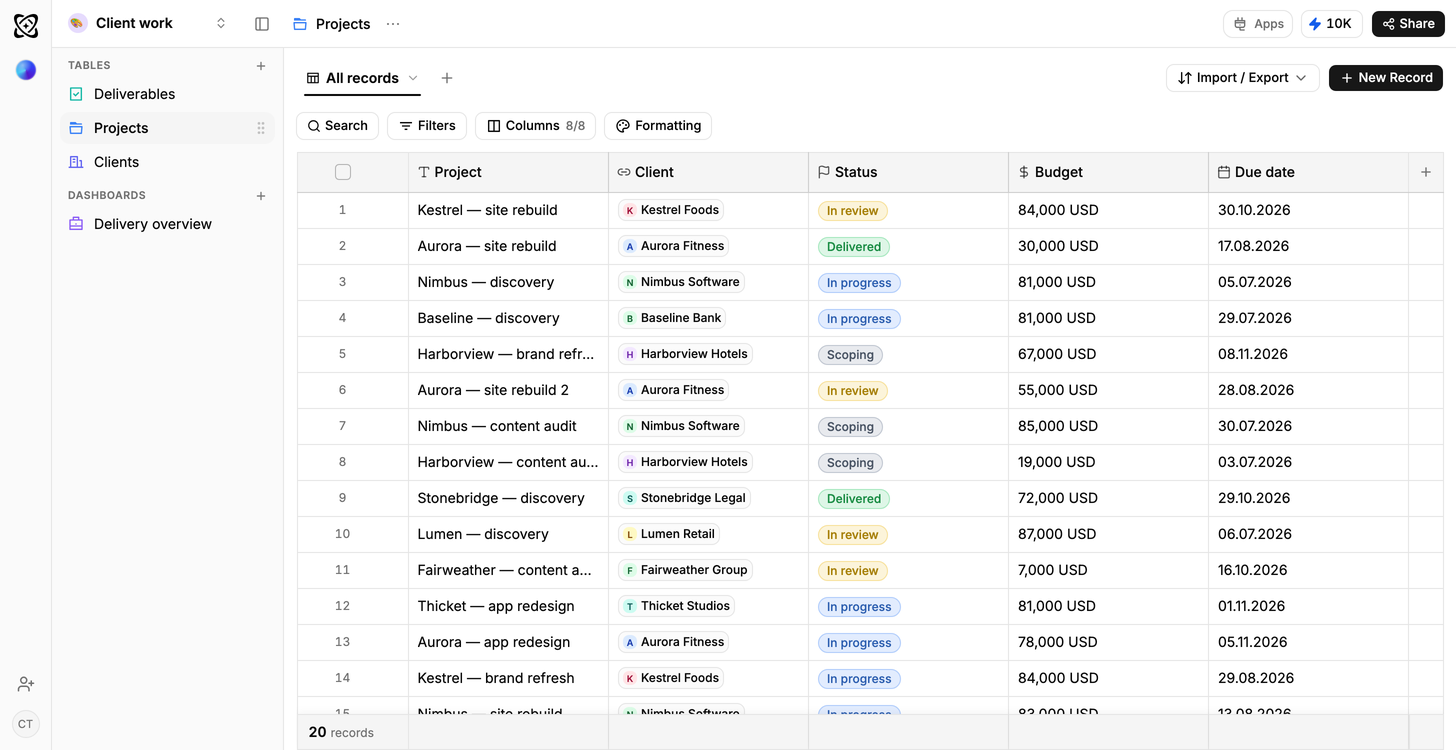
Client work
Due this week; shipped but not billed
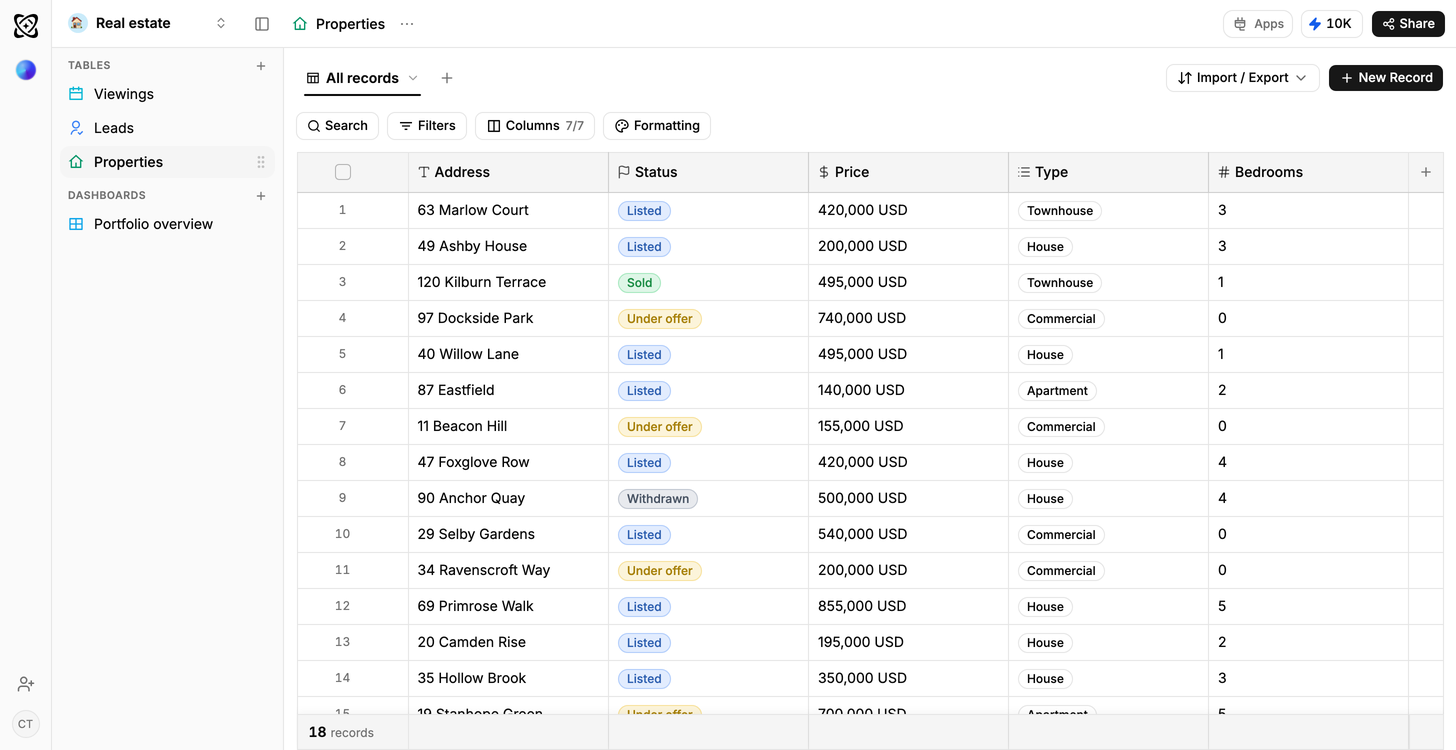
Real estate
Portfolio value and leads, by stage
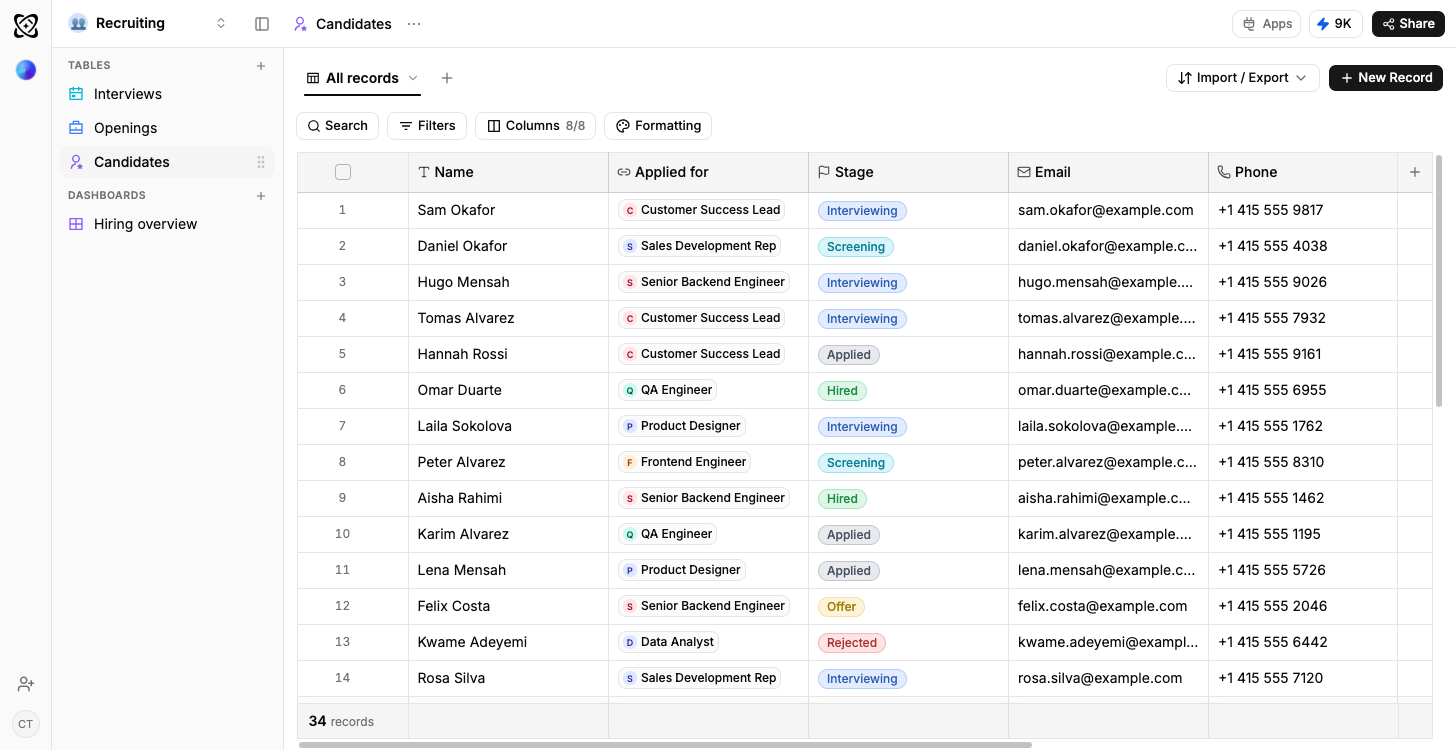
Recruiting
Candidates by stage, openings by status
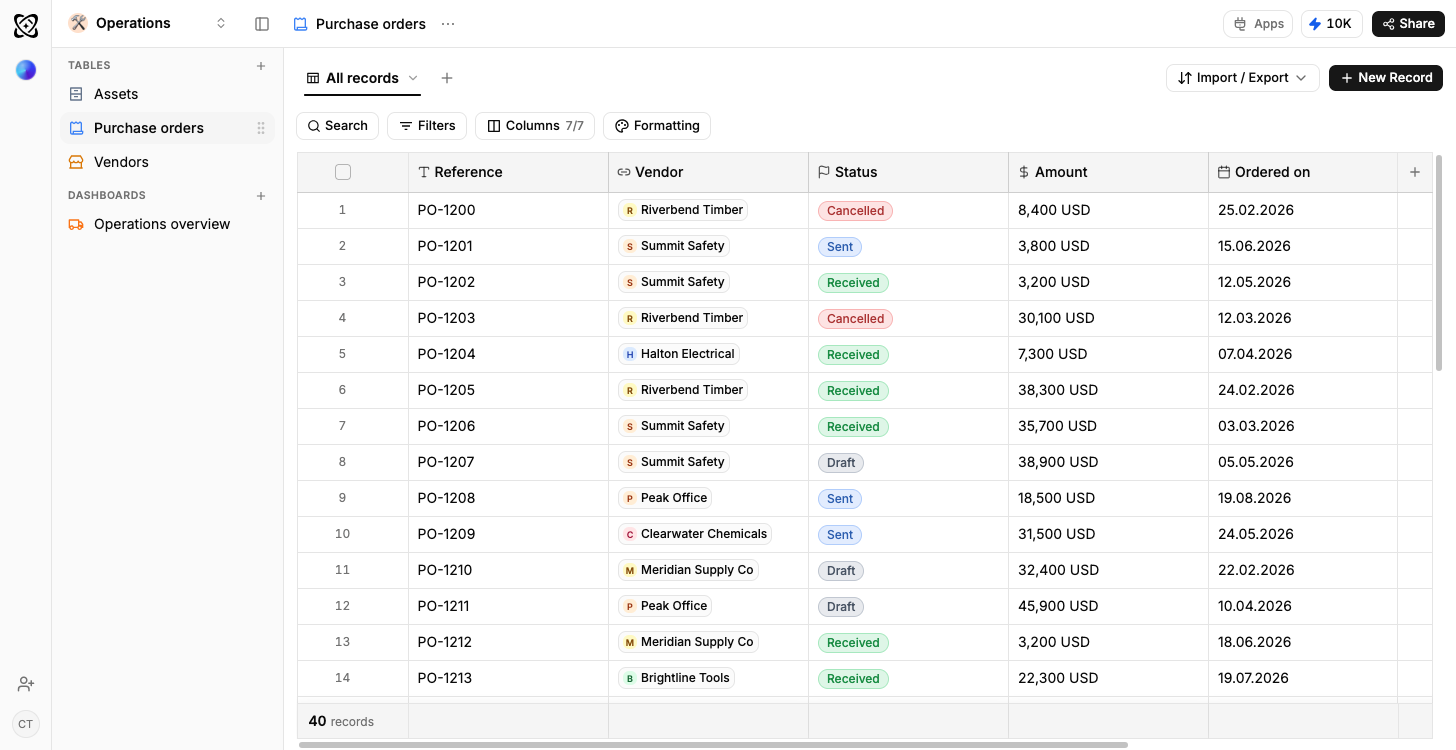
Operations
Orders in flight, spend by supplier
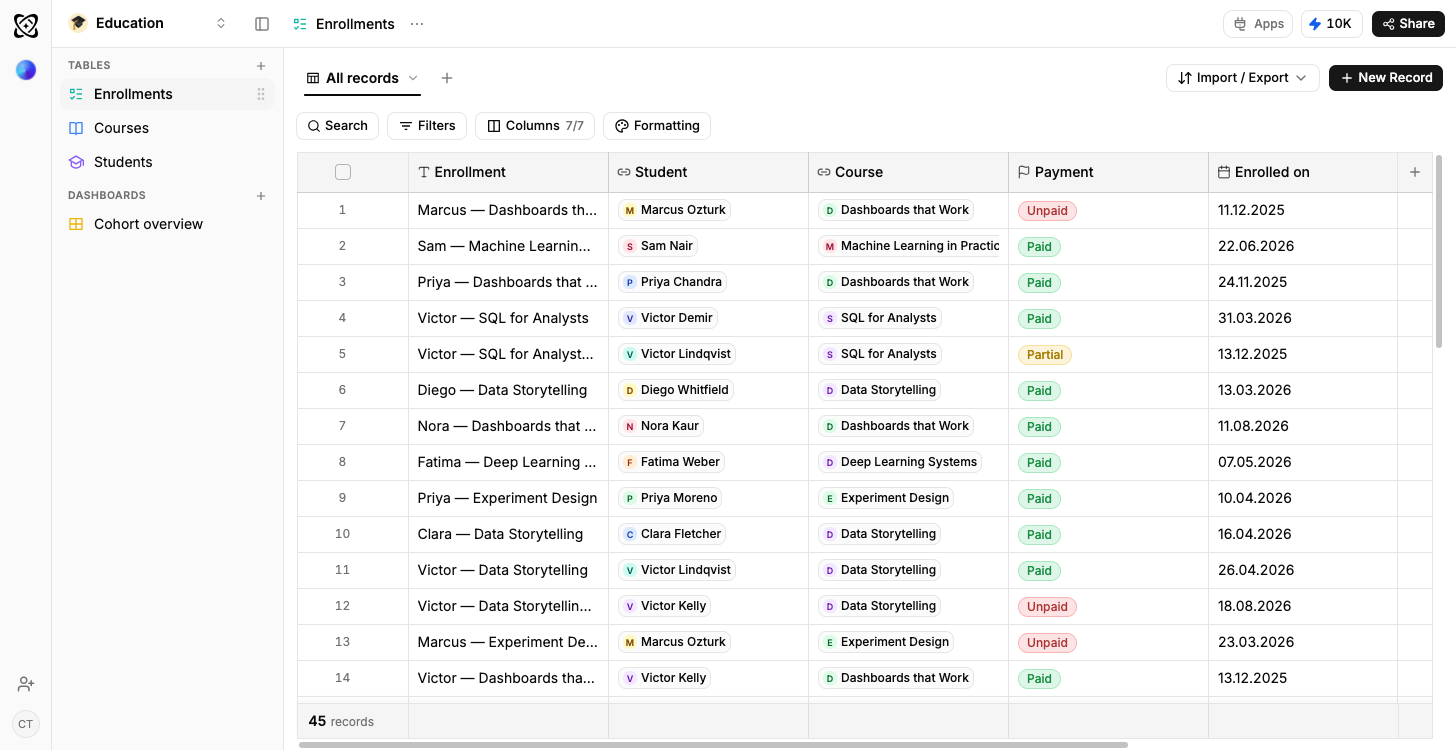
Education
Attendance and completion by cohort
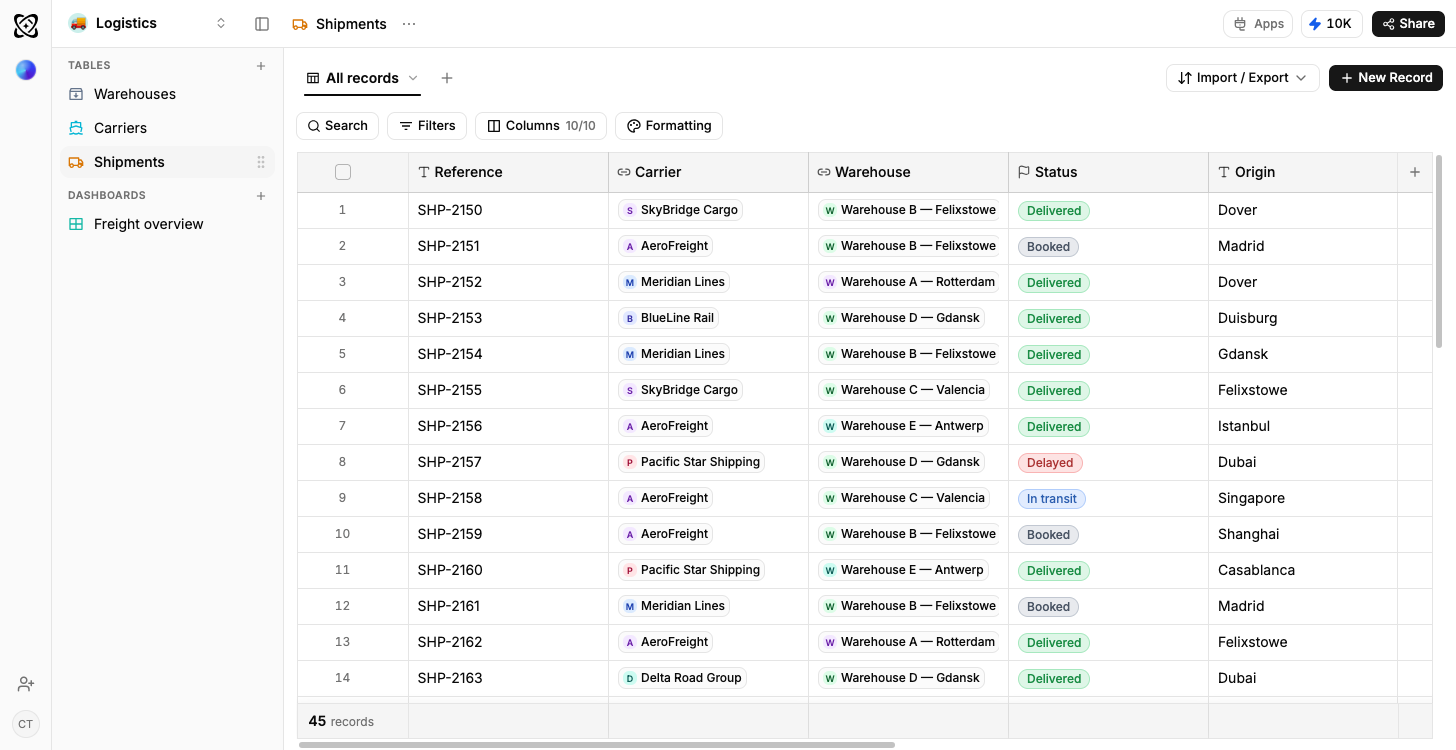
Logistics
On-time rate by carrier and lane
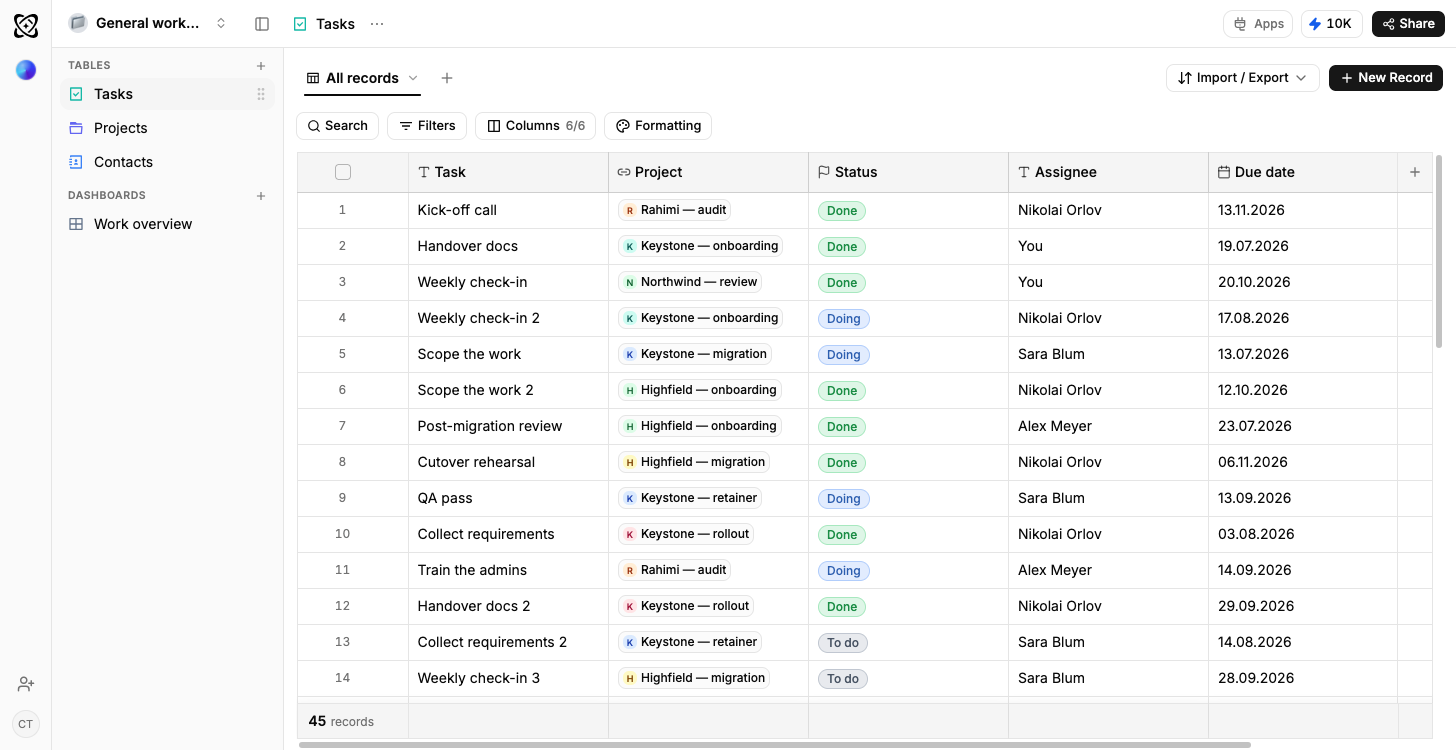
General workspace
Projects and budget by status