
What is the Rule of 40 and how is it calculated?
Rule of 40 score = revenue growth rate (%) + profit margin (%)
Grow 60% with a -25% margin and you score 35. Grow 20% at a 25% margin and you score 45. That's the Rule of 40: take year-over-year ARR or revenue growth as a percentage, add your profit margin, most teams use EBITDA or free cash flow margin, and a healthy software company's total should reach at least 40%.
The score prices the trade between growth and profitability. A fast-growing money-loser and a slow-growing cash machine can both pass, and investors read anything at or above 40 as a healthy balance either way. Younger companies lean on the growth term while mature ones lean on margin, so as growth slows, margin should be rising to meet it. Pick one margin measure and keep it every period, or the score stops being comparable.
With revenue and expenses in a Ferra table, growth and margin are one plain-English question away, and the score moves as each month's numbers land.
How the Rule of 40 calculator works
Addition, nothing fancier. Enter year-over-year revenue growth and profit margin as percentages; the calculator sums them and checks the total against 40, the threshold investors use to judge how a software company balances growth against profitability.
- Revenue growth rate (YoY)
- ARR or revenue growth over the trailing twelve months, as a percentage. This quarter's ARR against the same quarter a year ago, for instance.
- Profit margin
- Profit as a share of revenue for the same period; EBITDA margin and free cash flow margin are the usual choices. Losing money? The margin goes in as a negative number.
Calculating the Rule of 40
Growth rate plus profit margin, both covering the same period, typically the trailing twelve months, and either one can be negative. There's no weighting; a point of growth counts exactly as much as a point of margin.
Take a company that grew ARR from $16 million to $20 million over the past year: a $4 million increase on a $16 million base, or 25% growth. Over the same period it produced $2 million of EBITDA on $20 million of revenue, a 10% margin. Its score: 25 + 10 = 35, a few points short of the bar.
Cherry-picked margins are how this score gets gamed. Gross margin pushes almost any software company past 40 and reveals nothing, the rule only works with a bottom-line measure like EBITDA or free cash flow margin. The second failure is mixing periods: trailing-twelve-month growth against a single quarter's margin, or one input annualized and the other not.
What is a good Rule of 40 score?
At or above 40 reads as healthy, and sustained scores above 50 put a company among the best performers. Public SaaS companies that clear 40 consistently tend to command higher revenue multiples: that's why the rule keeps showing up in board decks and investor memos.
How you reach 40 matters less than reaching it. A company growing 80% while burning cash and one growing 10% at a 30% margin both clear the bar; the rule allows that trade deliberately. A score well below 40 says growth isn't efficient enough to justify the burn, or that a profitable company has stopped growing. Very early-stage companies routinely score under 40 while investing ahead of revenue: the rule carries real weight once a company reaches meaningful scale.
How to improve your Rule of 40 score
The score is a sum, so either term moves it, but the best levers lift growth and margin at the same time.
- Raise net revenue retention
- Expansion from existing customers grows ARR at a fraction of the sales cost of new logos, lifting the growth term and the margin term together.
- Cut spend that isn't buying growth
- Rank sales, marketing, and R&D programs by the revenue they return. Dropping the lowest-yield ones adds more margin than it subtracts in growth.
- Reduce churn
- Churned revenue subtracts from the growth rate dollar for dollar, and retention gains compound year over year.
- Revisit pricing
- A price increase adds revenue at almost no added cost, so it feeds both terms of the score at once.
- Improve gross margin
- Cheaper hosting and support per customer drop every saved point straight into EBITDA or free cash flow margin.
Other calculators
Browse all calculatorsRelated templates
Browse all templates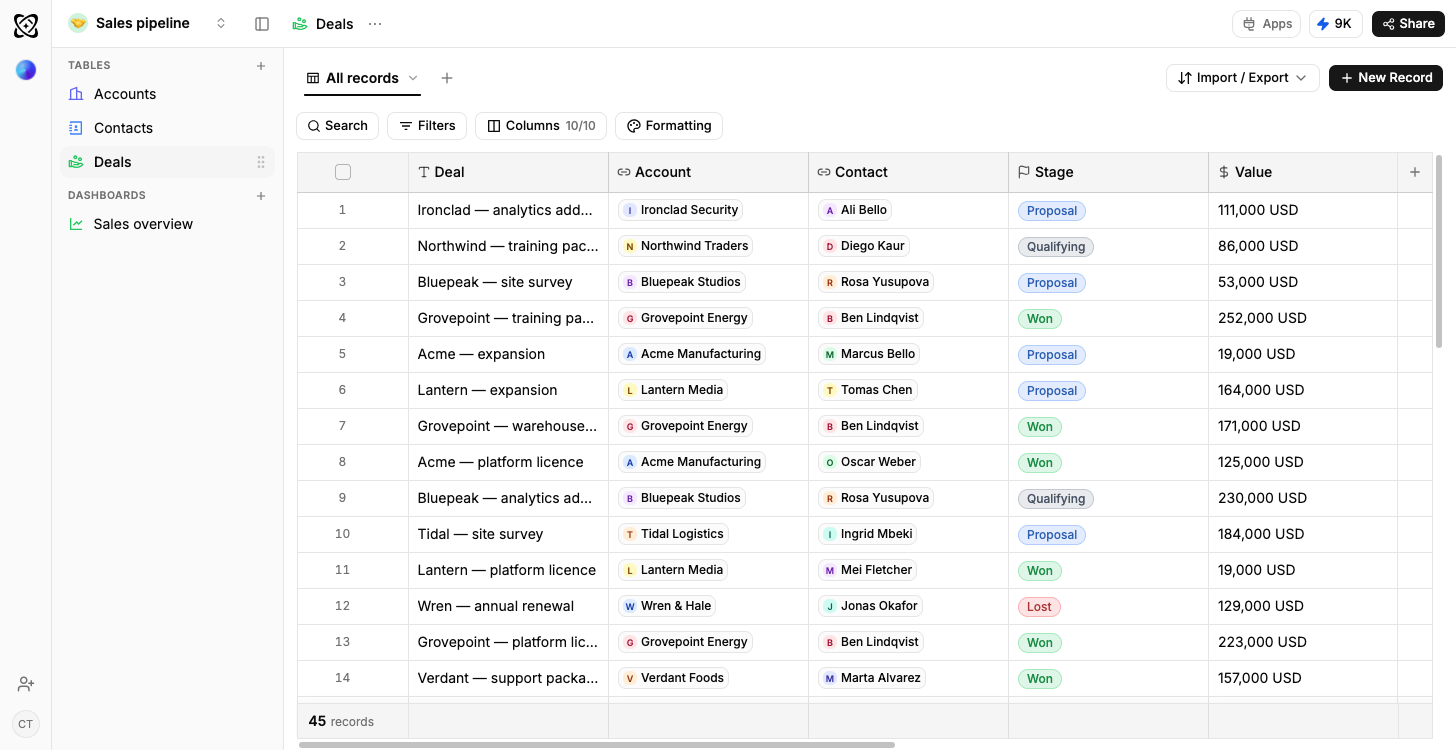
Sales pipeline
Open pipeline by stage, results by owner
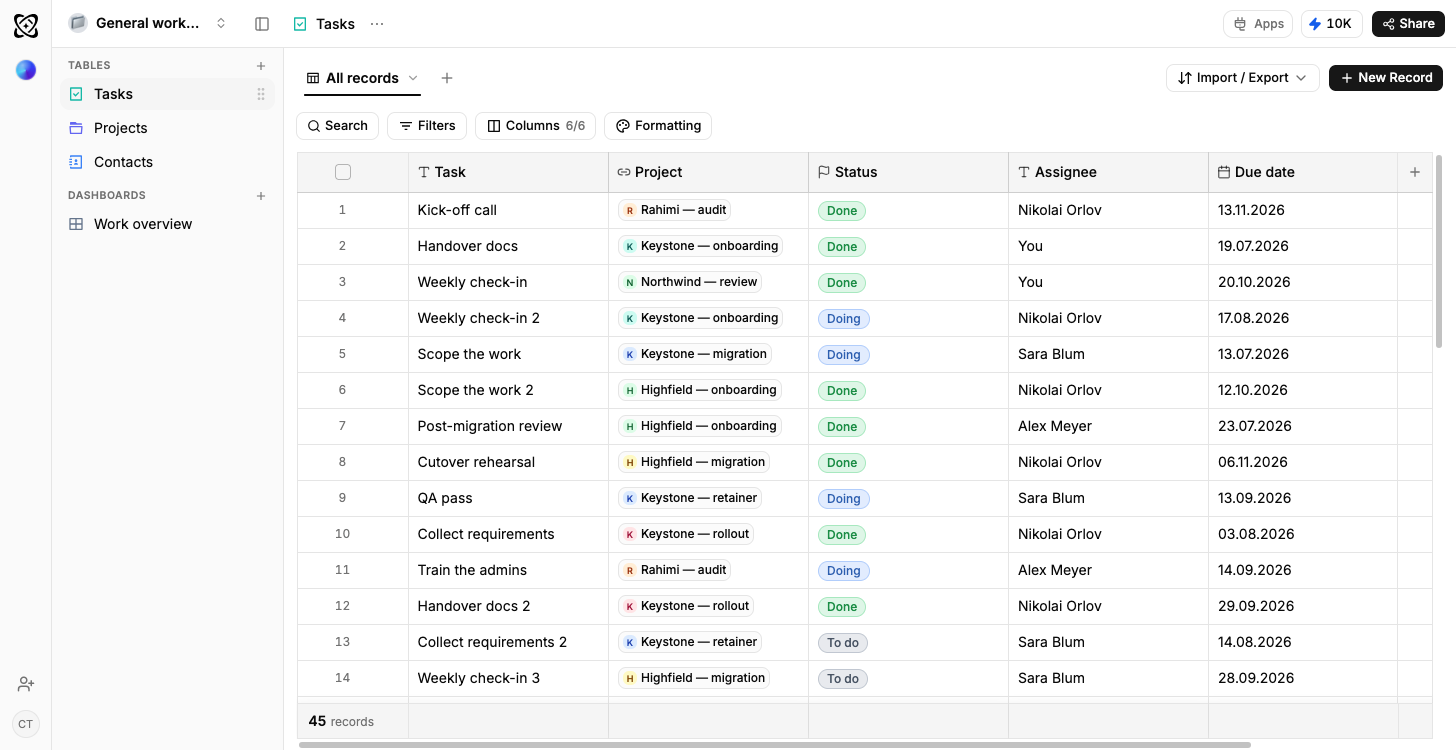
General workspace
Projects and budget by status
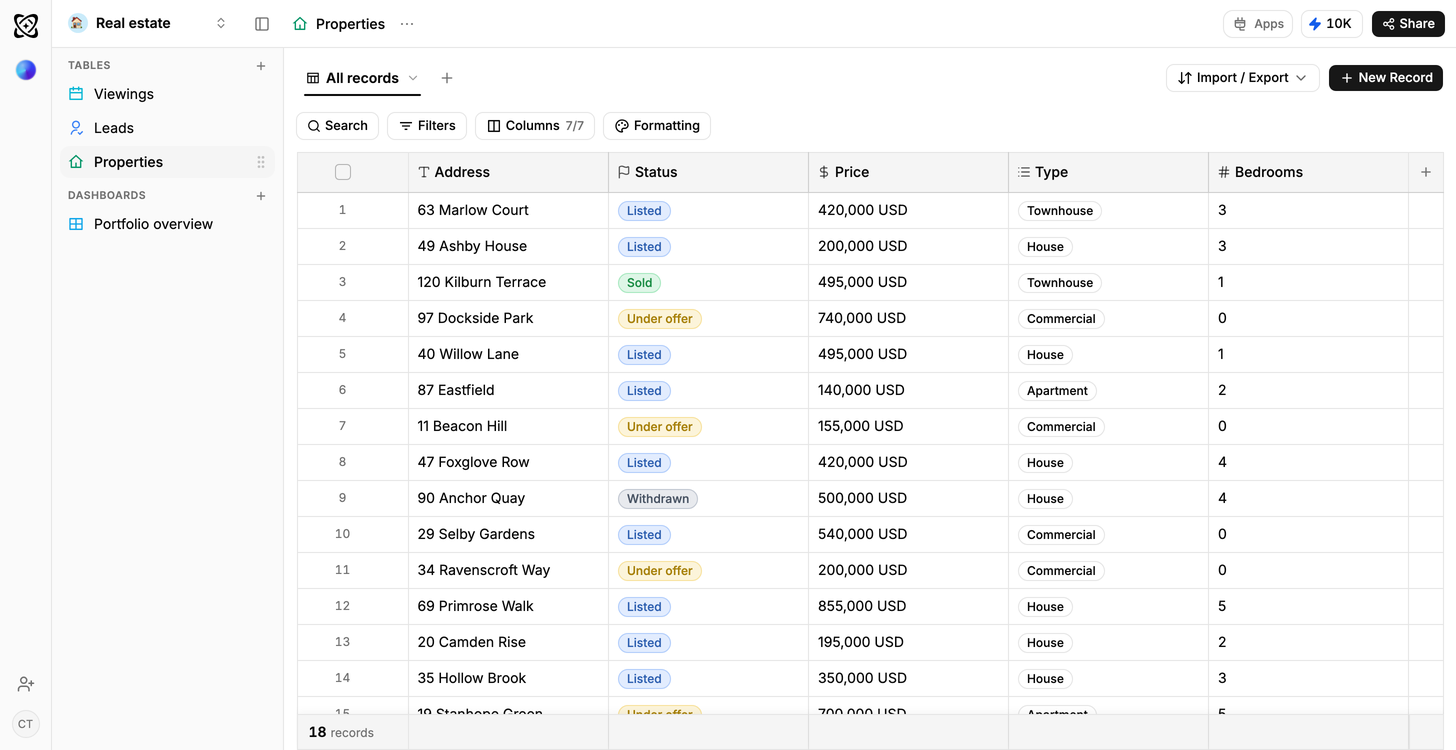
Real estate
Portfolio value and leads, by stage
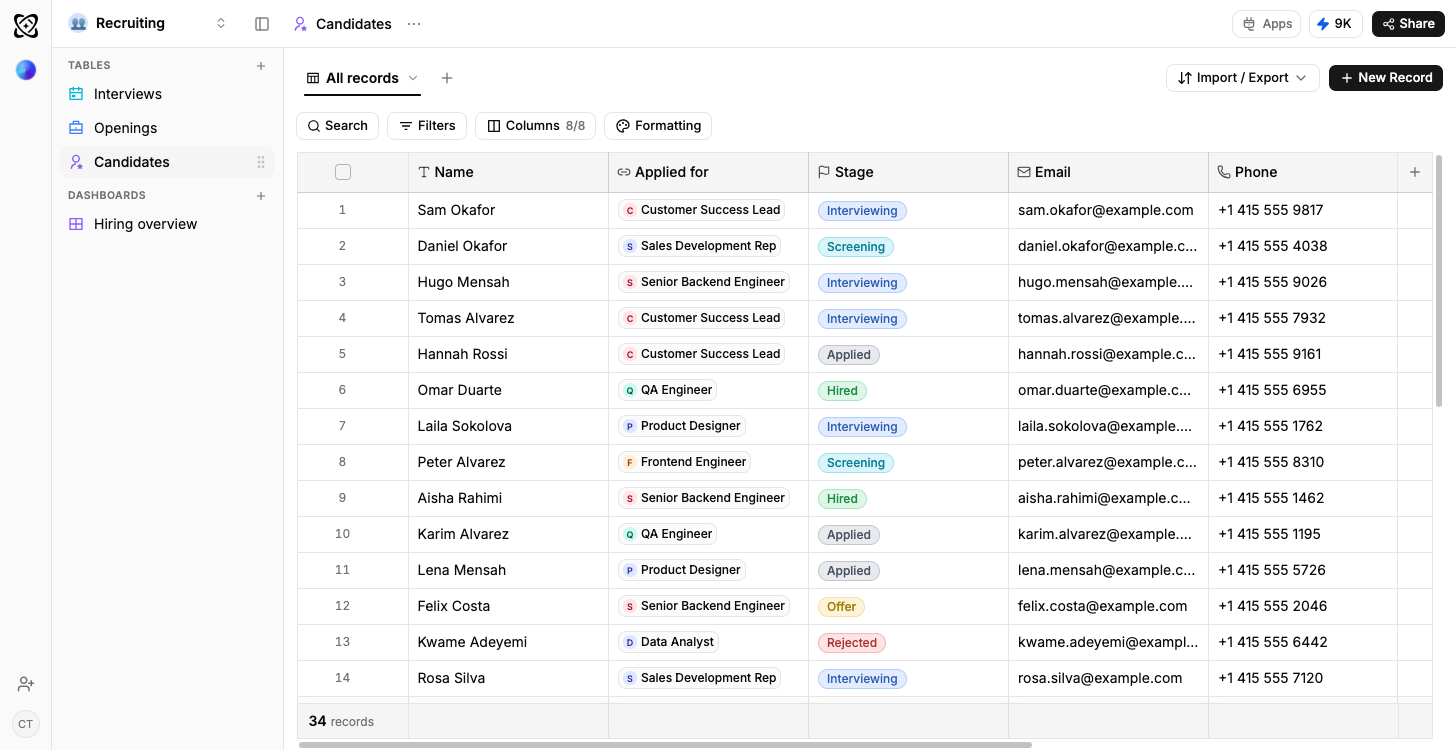
Recruiting
Candidates by stage, openings by status
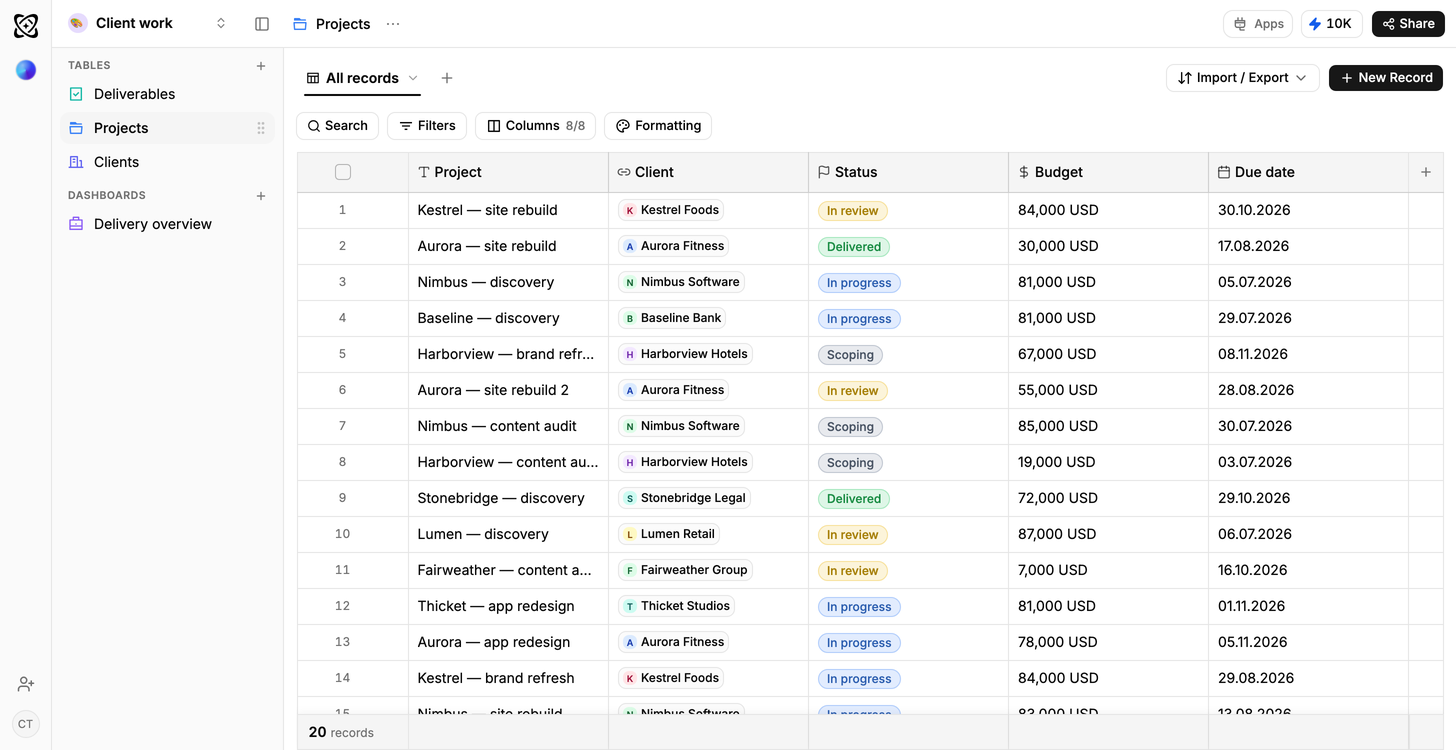
Client work
Due this week; shipped but not billed
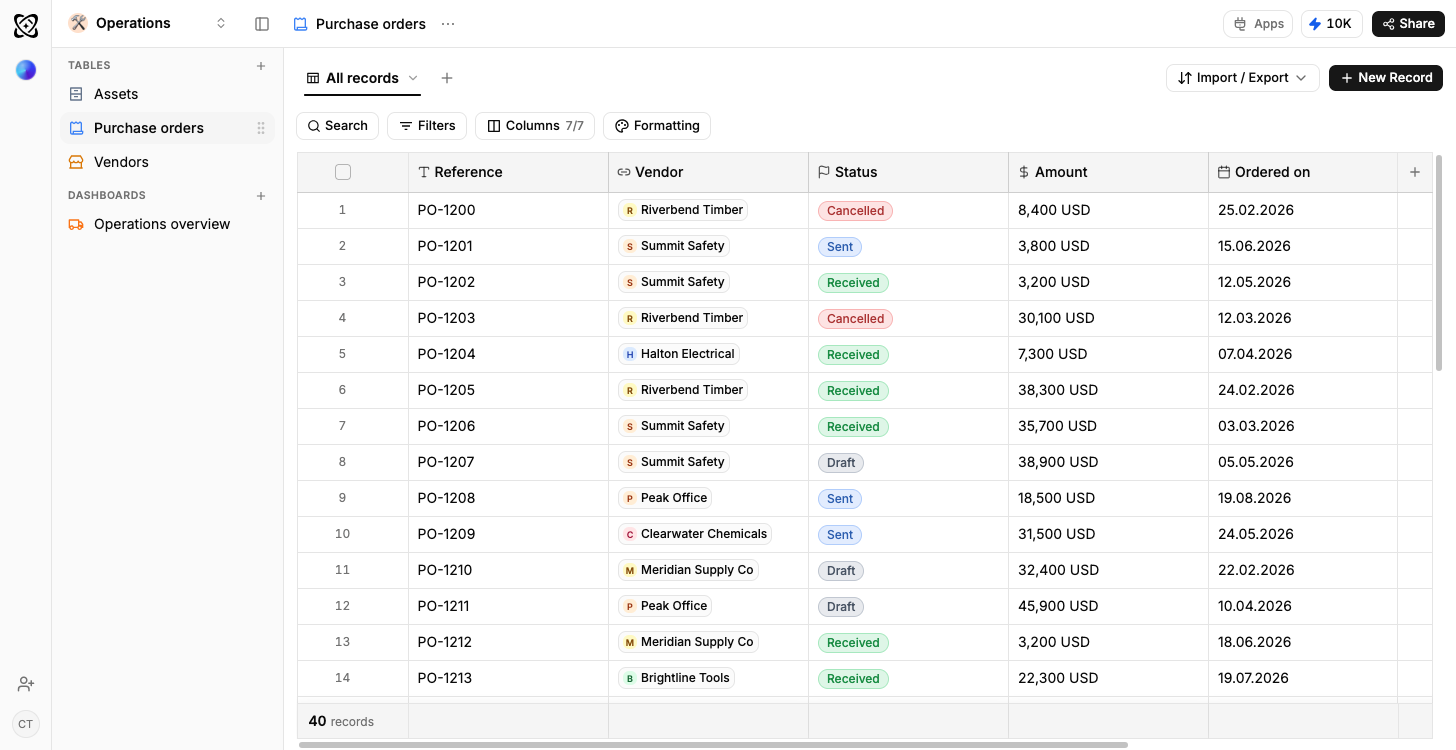
Operations
Orders in flight, spend by supplier
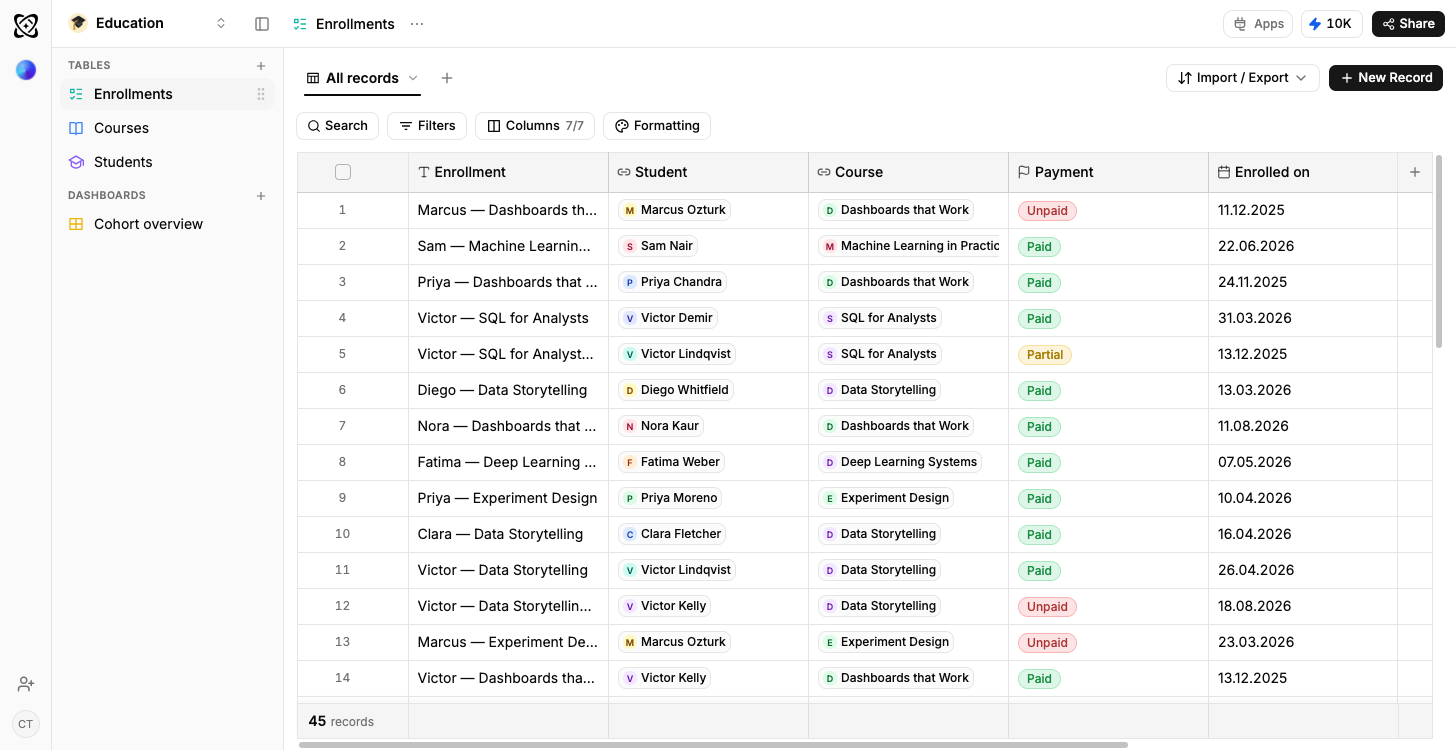
Education
Attendance and completion by cohort
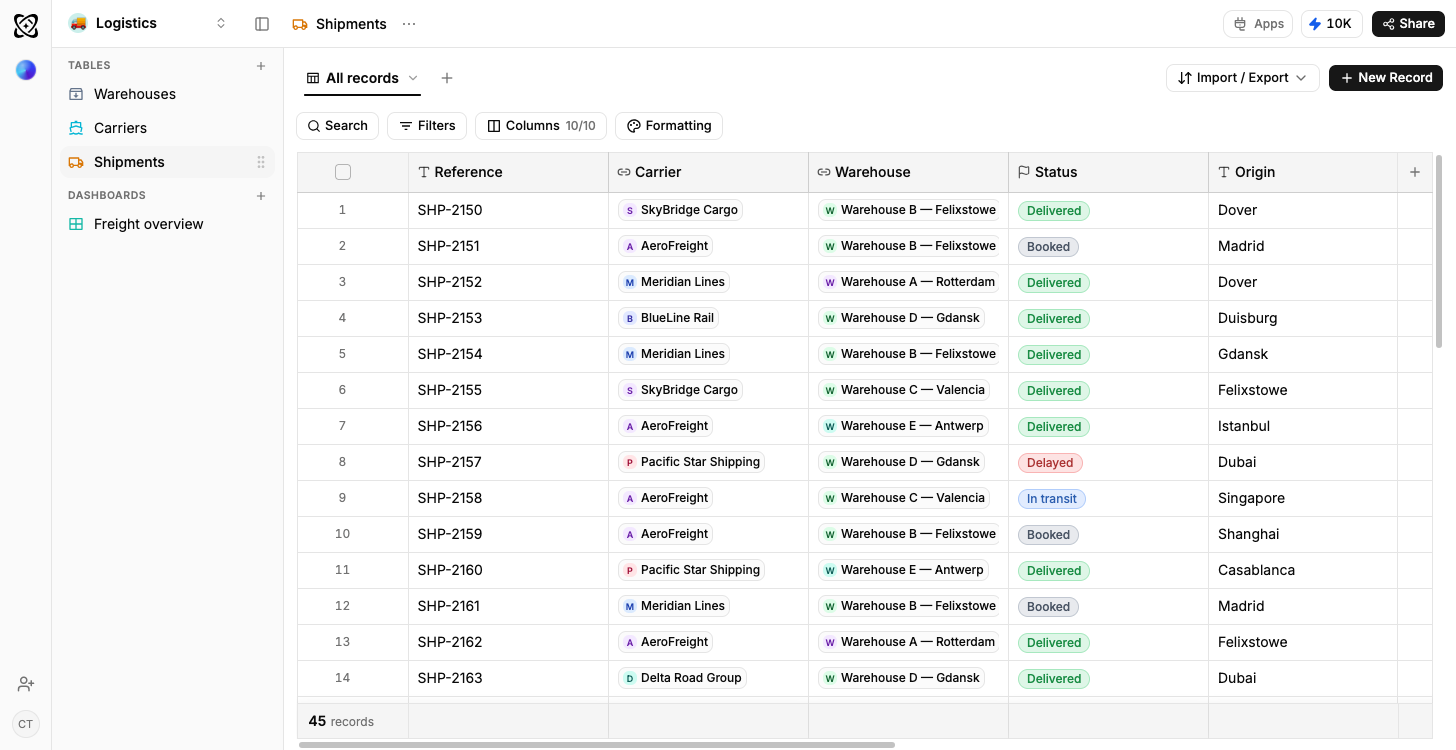
Logistics
On-time rate by carrier and lane