
How do you calculate compound interest?
Future value = principal × (1 + rate / n)^(n × years), where n = compounds per year
Interest on interest: that's the whole trick. For the future value, divide the annual rate by the number of compounding periods per year, add one, raise the result to the power of periods per year times the number of years, and multiply by the principal. Total interest is the future value minus the principal.
Time and rate dominate. Doubling the term does far more than doubling the rate over short periods, because growth accelerates in the later years. Compounding frequency matters less than people expect, at 5% over 10 years, moving from annual to monthly compounding adds about 1.8 percentage points to the total return (62.9% grows to 64.7%). Match rate bases when comparing offers: a quoted APY already includes compounding, a nominal rate doesn't.
Ferra suits the bookkeeping around it, a table of accounts and deposits, each balance projected forward under its own rate.
How the compound interest calculator works
Tell it the starting sum, the yearly rate, the term, and how often interest is credited. It returns two numbers: the future value, what the balance grows to, and the total interest earned, which is the future value minus the principal.
- Principal
- The lump sum at the start, before any interest: an opening deposit or a current balance you're projecting forward. The formula assumes no further contributions or withdrawals.
- Annual interest rate
- The nominal yearly rate the account or investment quotes, entered as a percent: 5 for 5%. Use the stated annual rate, not an effective yield that already bakes in compounding.
- Number of years
- How long the money stays put. Fractional terms work, enter 2.5 for thirty months.
- Compounds per year
- How often interest hits the balance: 1 for annual, 4 for quarterly, 12 for monthly, 365 for daily, stated in the account's terms. More frequent compounding earns slightly more at the same nominal rate.
Calculating compound interest
$10,000 at 5% compounded annually for three years. One compound per year makes the rate per period 5% flat, so the future value is 10,000 × 1.05³. Year by year: $10,500, then $11,025, then $11,576.25. Total interest is $1,576.25: $76.25 more than the $1,500 simple interest would pay, because the interest itself earned interest.
Frequency shifts the result at the margins. The same $10,000 at 5% compounded monthly uses 5 ÷ 12 percent per period over 36 periods and grows to about $11,615, roughly $38 more than annual compounding. Rate and time matter far more: adding a year beats adding compounds every time.
The formula breaks when the rate and the periods describe different units of time. Applying the full annual rate every period, 5% per month instead of 5 ÷ 12 percent, wildly overstates growth. Divide the annual rate by n, multiply the years by n, and the two line up.
When to use compound interest
Any time money sits and grows on itself: projecting a savings account or CD forward, say, or estimating what today's balance becomes by a target date. It also translates a stated rate into actual dollars. And it's the fair way to compare two accounts: compute both future values, because a higher rate with less frequent compounding can beat a lower rate compounded daily.
The same math runs in reverse on debt. A credit card balance or a loan with capitalizing interest compounds against you, and the numbers show why a balance carried at around 20% grows so fast: the rule of 72 puts its doubling time near 72 ÷ 20, about 3.6 years. Run the calculator on both sides of the balance sheet: what compounding earns you in savings, it costs you in debt.
How to earn more compound interest
Rate, time, and the size of the pot. Those are the inputs that matter. Time sits in the exponent, which makes it the strongest lever of the three.
- Start earlier
- Each extra year multiplies the entire balance one more time. Money invested now collects more compounding periods than the same money invested later, and the gap widens every year.
- Leave it alone
- A withdrawal shrinks the base that all future interest is calculated on. Interrupting compounding costs more than the amount taken out.
- Chase a better rate
- The rate lives inside the base of the exponent, so small differences grow large over time. Compare accounts by APY. It already accounts for compounding frequency.
- Add regular contributions
- The basic formula models a single deposit, but each new contribution starts its own compounding clock. Modest monthly additions end up a surprisingly large share of the final balance.
- Cut fees and taxes
- A 1% annual fee compounds against you exactly the way interest compounds for you. Tax-advantaged accounts keep the whole balance working.
Other calculators
Browse all calculatorsRelated templates
Browse all templates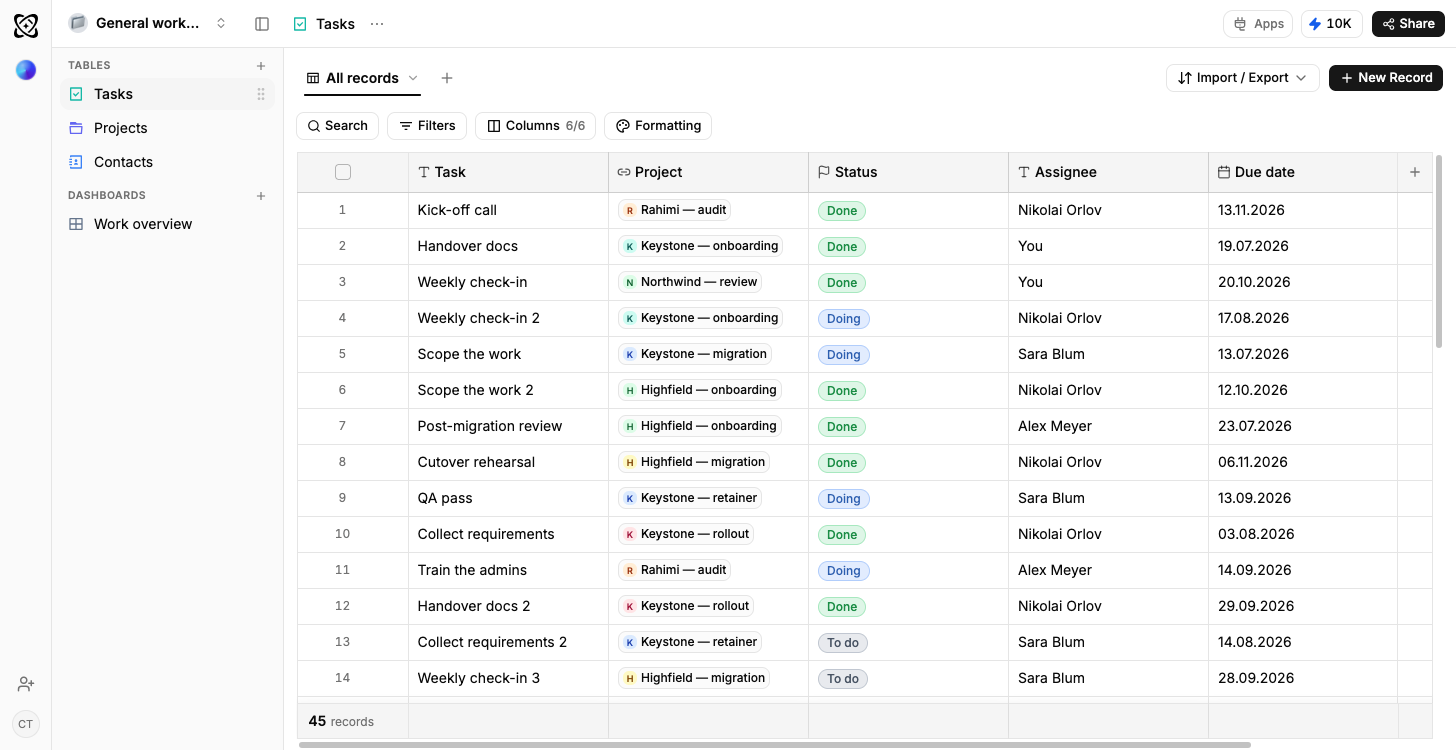
General workspace
Projects and budget by status
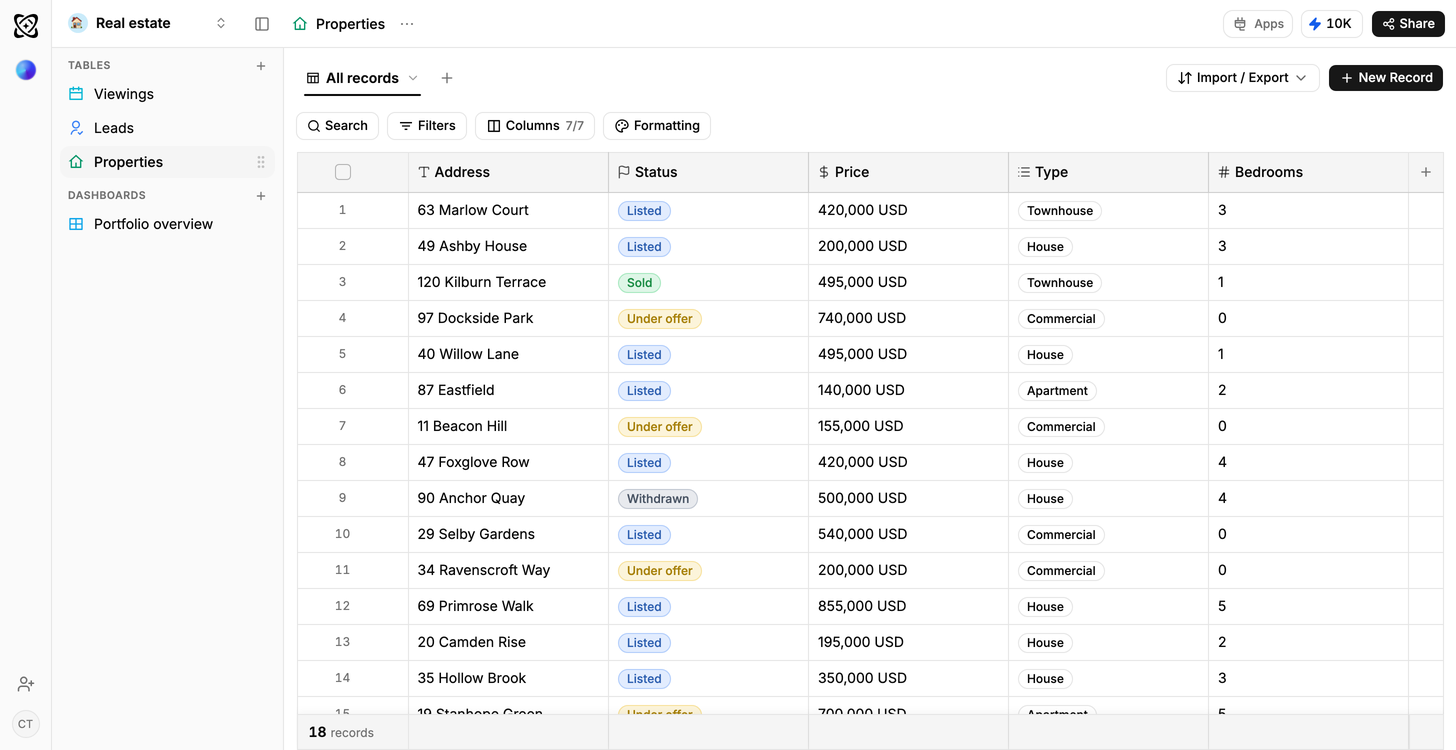
Real estate
Portfolio value and leads, by stage
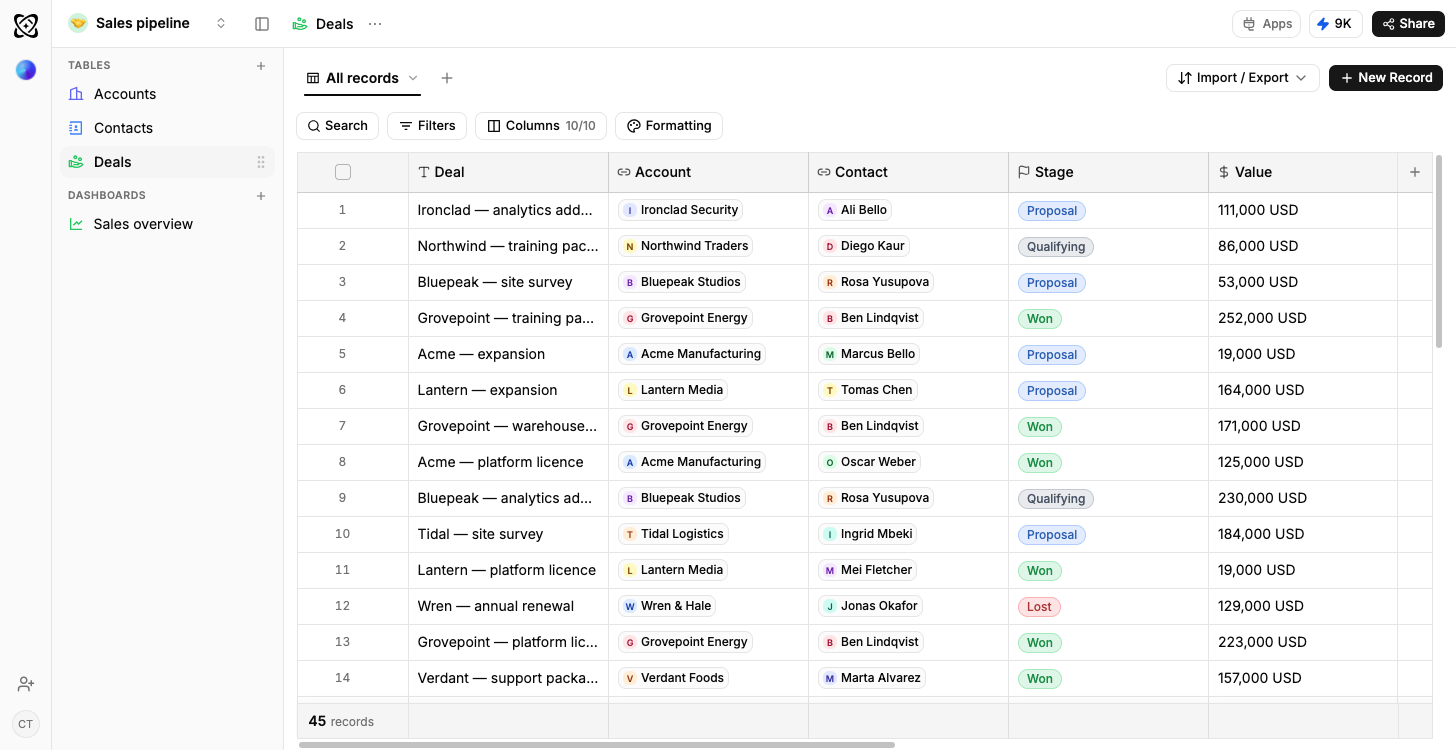
Sales pipeline
Open pipeline by stage, results by owner
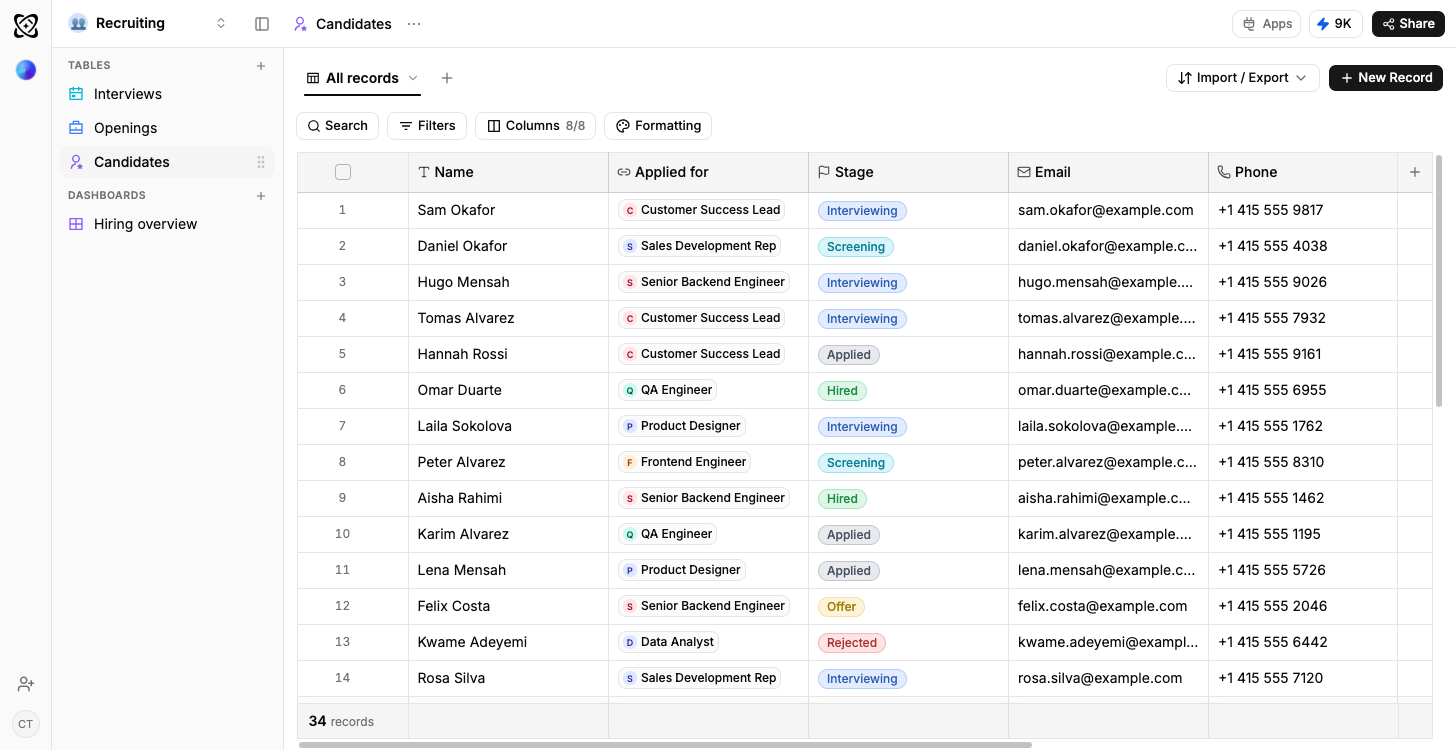
Recruiting
Candidates by stage, openings by status
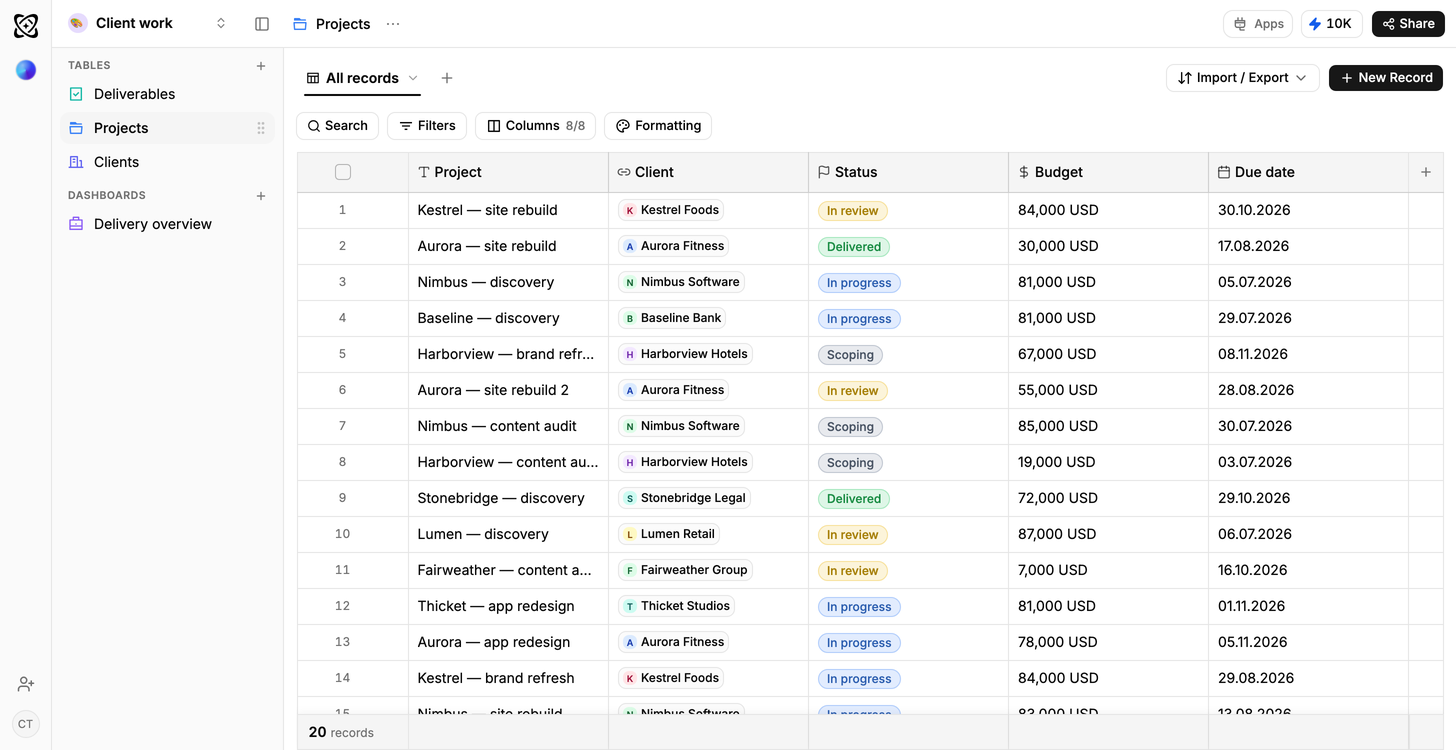
Client work
Due this week; shipped but not billed
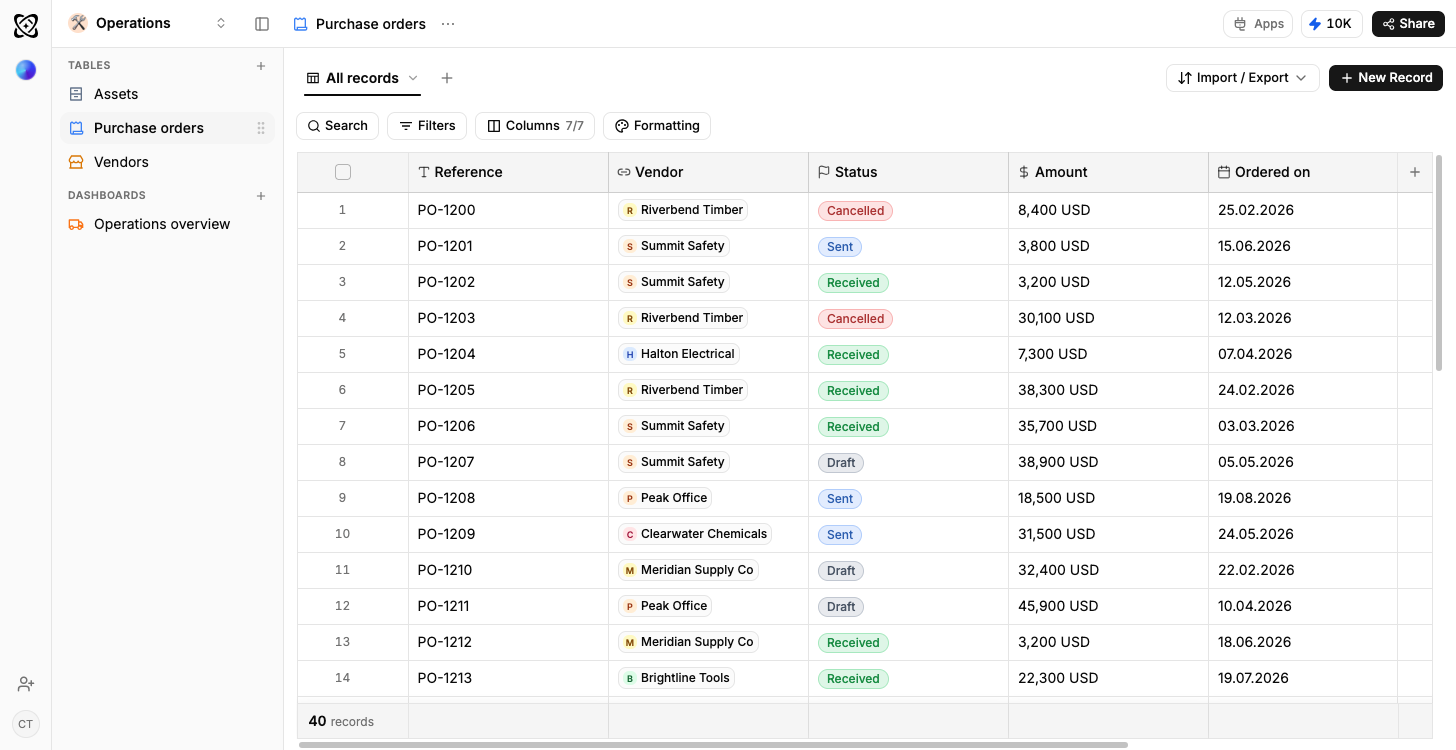
Operations
Orders in flight, spend by supplier
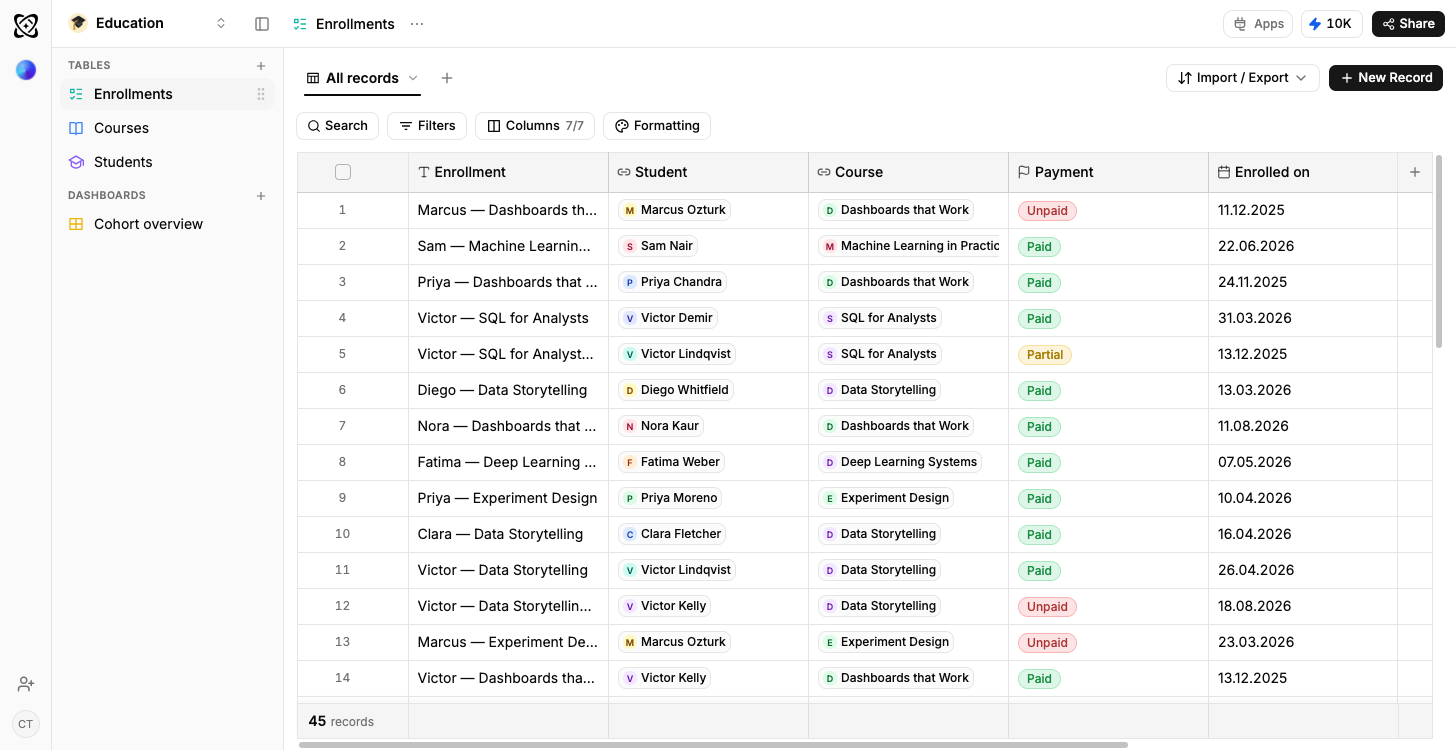
Education
Attendance and completion by cohort
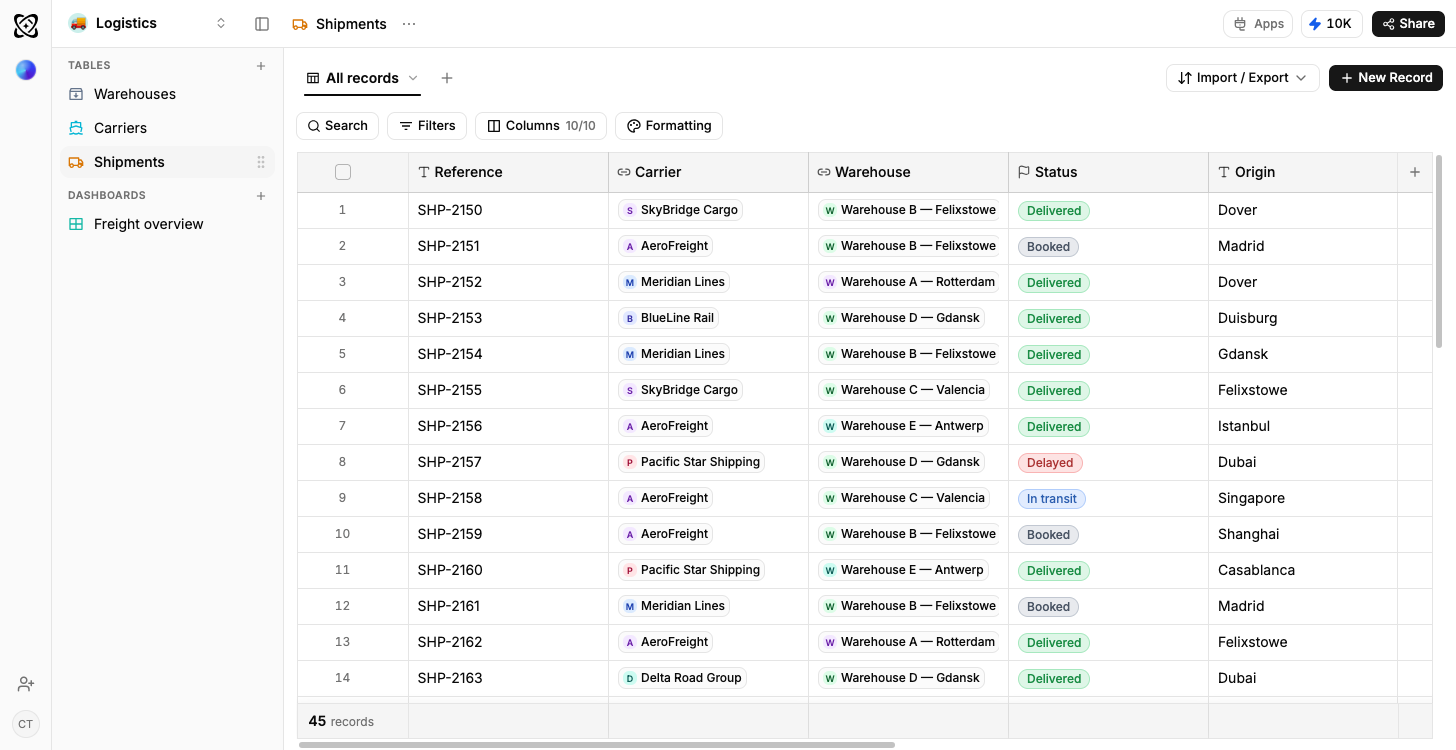
Logistics
On-time rate by carrier and lane