
How do you calculate percentage increase?
Percentage increase = (new value − original value) / original value × 100
Going from 80 to 100 is a 25% increase. Going from 100 back to 80 is a 20% decrease, not 25, because the base changed. The formula behind both: subtract the original value from the new value, divide the difference by the original value, and multiply by 100. A negative result means the value fell; one formula covers both directions.
Everything hinges on the base. The change is measured against the starting value, never the ending one: that's why an increase and its reverse decrease don't match. Keep percentage change apart from percentage-point change too: a conversion rate moving from 2% to 3% is a one-point change and a 50% increase at once. And for values that start at or below zero, the percentage is undefined; the absolute change is the honest number to report.
With this month's and last month's figures already sitting in a Ferra table, a change column keeps every row's percentage current as new data lands.
How the percentage increase calculator works
Give it the before and the after. It returns the percentage change, positive for growth, negative for a drop, alongside the absolute change, the raw difference between the two numbers.
- Original value
- The earlier figure, the base every percentage is measured against. Zero won't work: percentage change from zero is undefined.
- New value
- The later figure, in the same units and over the same kind of period as the original. A monthly number compared against an annual one produces a percentage that means nothing.
Calculating percentage increase
A metric moves from 250 to 300. Absolute change: 300 − 250 = 50. Divide by the original value, 50 ÷ 250 = 0.20, then multiply by 100 for a 20% increase.
Run it downhill and the base flips. Falling from 300 back to 250 is a change of −50 against a base of 300: −50 ÷ 300 ≈ −16.7%. That asymmetry is why a 20% gain followed by a 20% loss never returns home, 250 grown 20% is 300, but 300 cut 20% is 240.
Dividing by the wrong base, the new value instead of the original, is the error that shows up most. Right behind it: confusing percent change with percentage points. A conversion rate moving from 10% to 12% rises 2 percentage points but jumps 20%, since 2 ÷ 10 = 0.20. Reports that mix the two can overstate or understate change dramatically.
When to use percentage increase
Relative size is the point. A $5,000 raise on a $50,000 base and a $5,000 bump on a $500,000 base are the same dollars and wildly different events, 10% versus 1%, and percentages are what put them in honest proportion. That's the lens for comparing revenue growth across products of different sizes, or for judging if this month's jump in signups is out of line. It also puts a raise into terms you can weigh against inflation, and does the same for a price hike or a fee change.
Small bases lie. Going from 2 customers to 8 is a 300% increase, which sounds dramatic and means almost nothing. When the original value is small, report the absolute change alongside the percentage. And for a series of changes over time, chain them by multiplying, or use a CAGR, rather than adding the percentages up.
Tips for using percentage change
One-line formula, endless ways to misread it. These habits keep percentages honest.
- Name the base out loud
- The base is always the starting value, whichever direction the change runs. Restating the sentence, "up 20% from 250", makes the base explicit.
- Say points when you mean points
- Changes in rates and percentages are percentage points; reserve "percent" for relative change. Label which one a chart or headline uses.
- Pair the percent with the raw numbers
- A percentage on its own hides small bases. "+50%" next to "from 4 to 6" lets readers weigh it.
- Multiply, don't add, across periods
- A 10% rise followed by another 10% rise totals 21%, not 20%, because the second rise works on a bigger base: 1.10 × 1.10 = 1.21.
- Watch reversed comparisons
- A 50% increase is undone by a decrease of one third, not one half. Pick your base before quoting the number.
Other calculators
Browse all calculatorsRelated templates
Browse all templates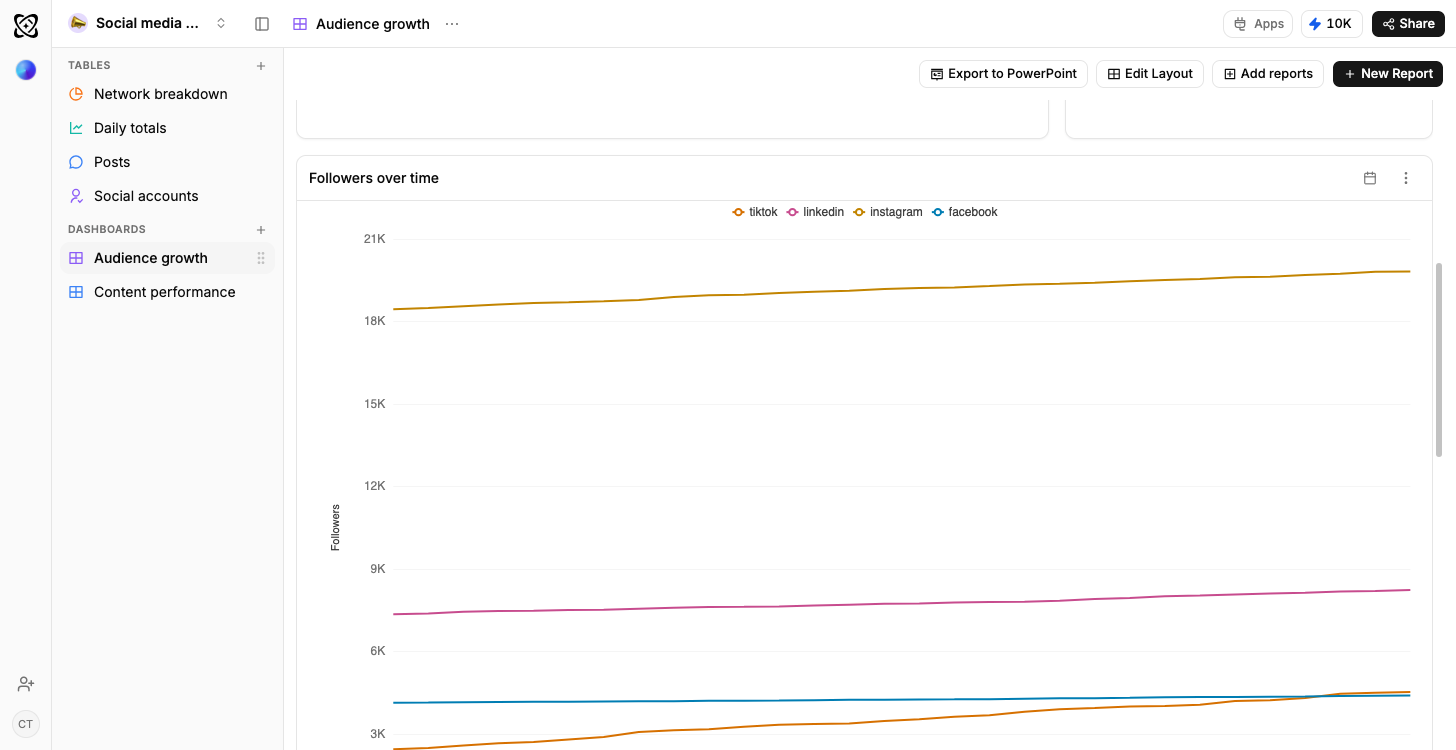
- TikTok
- YouTube
Social media analytics
Every channel compared, and what works where
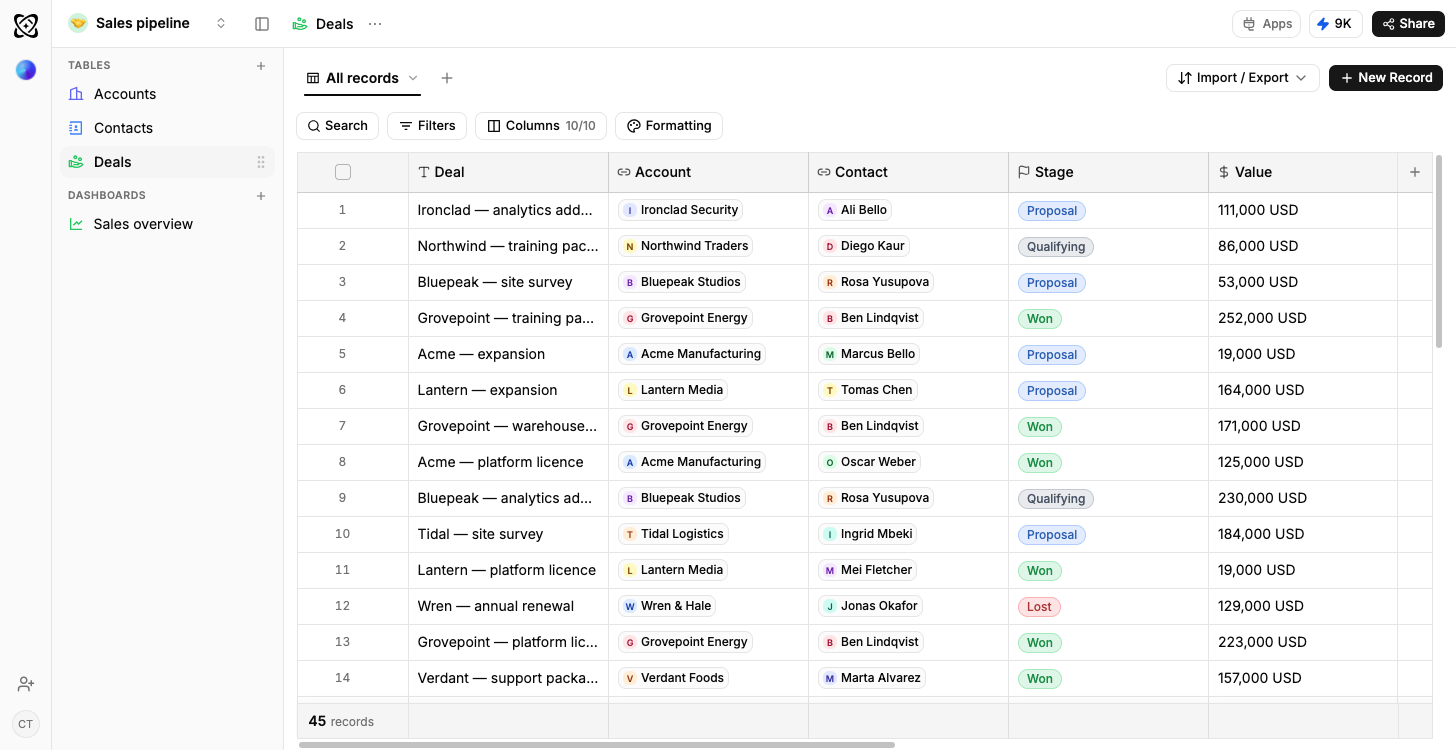
Sales pipeline
Open pipeline by stage, results by owner
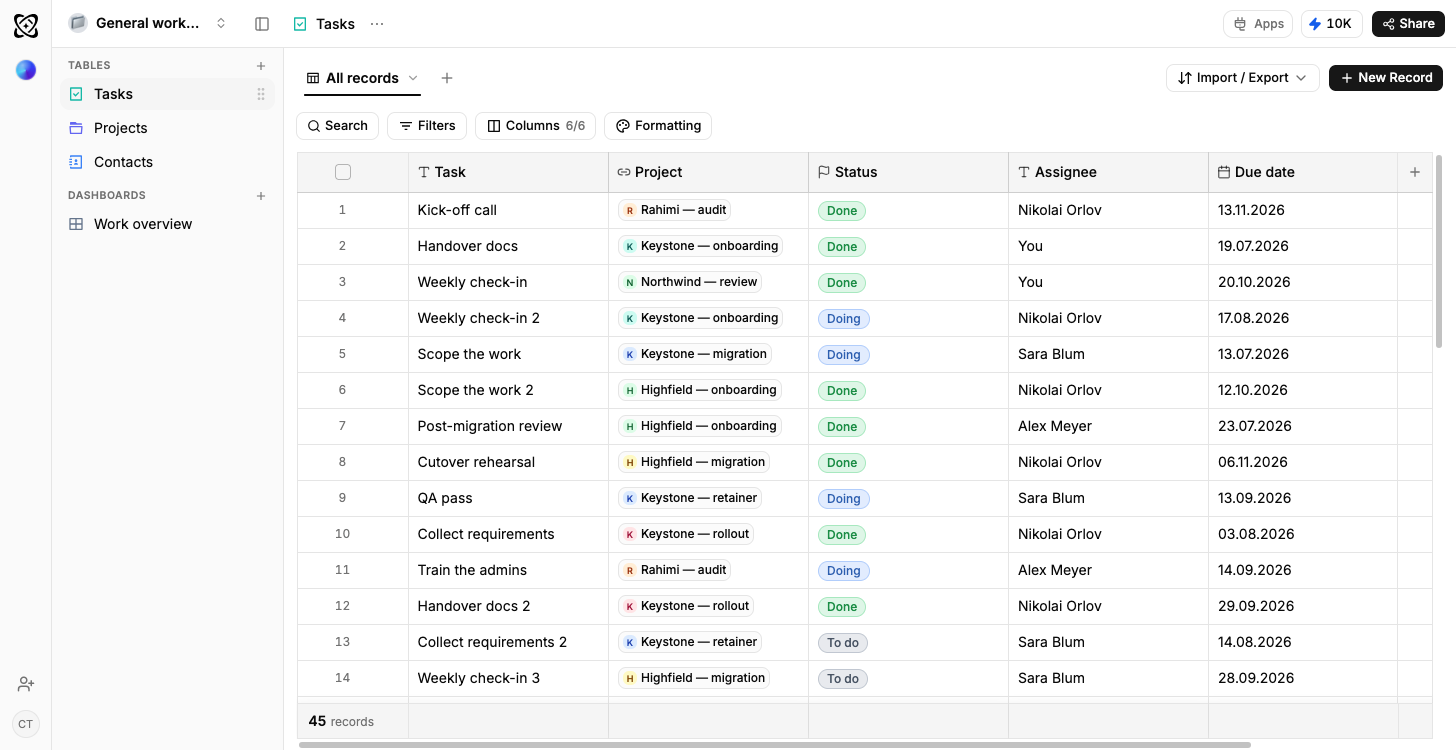
General workspace
Projects and budget by status
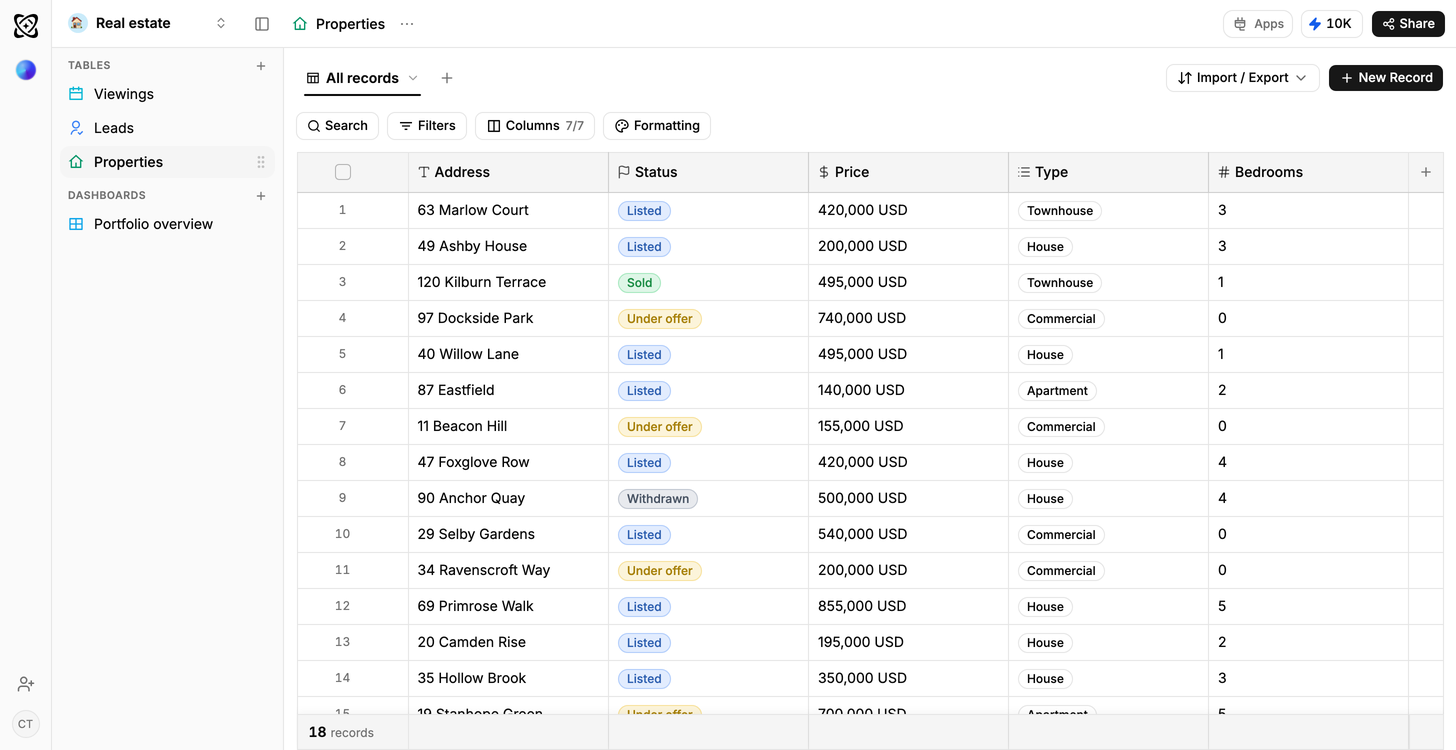
Real estate
Portfolio value and leads, by stage
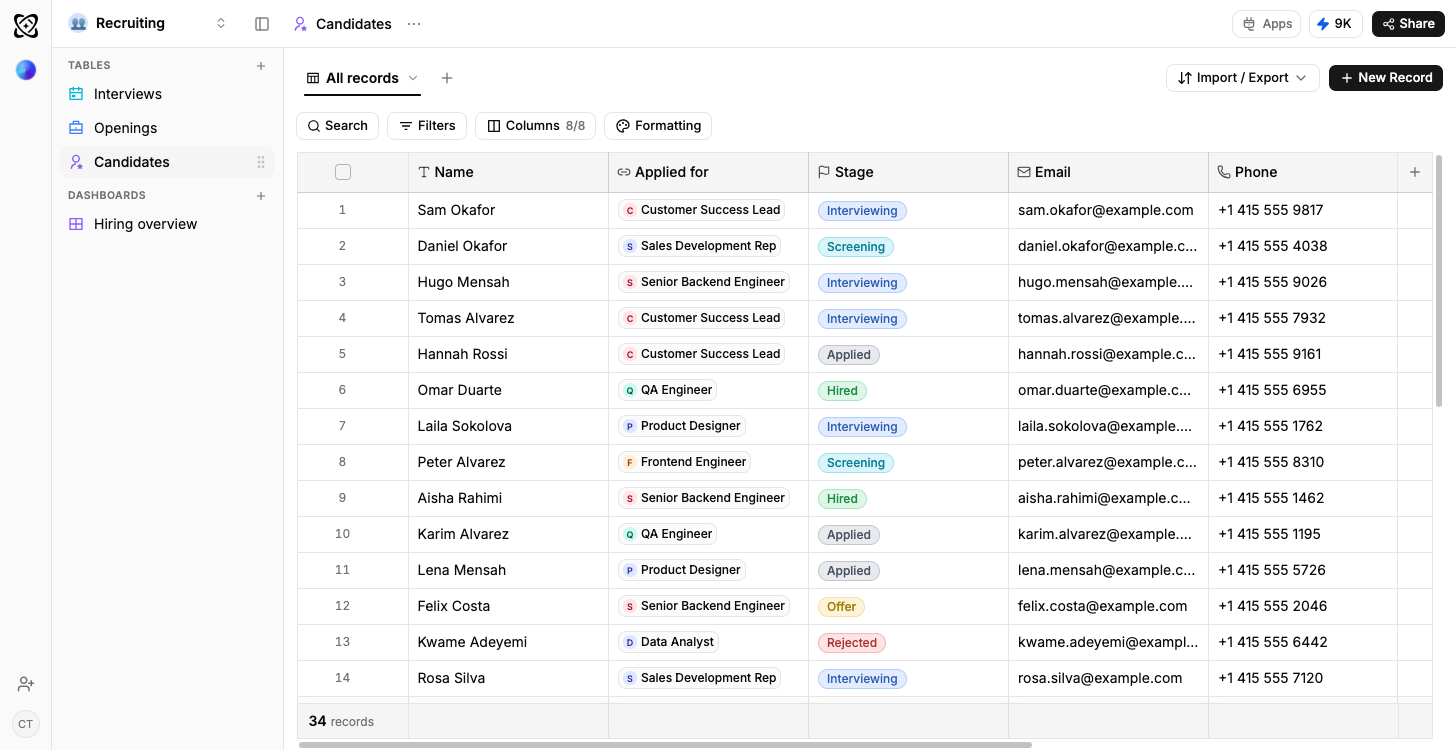
Recruiting
Candidates by stage, openings by status
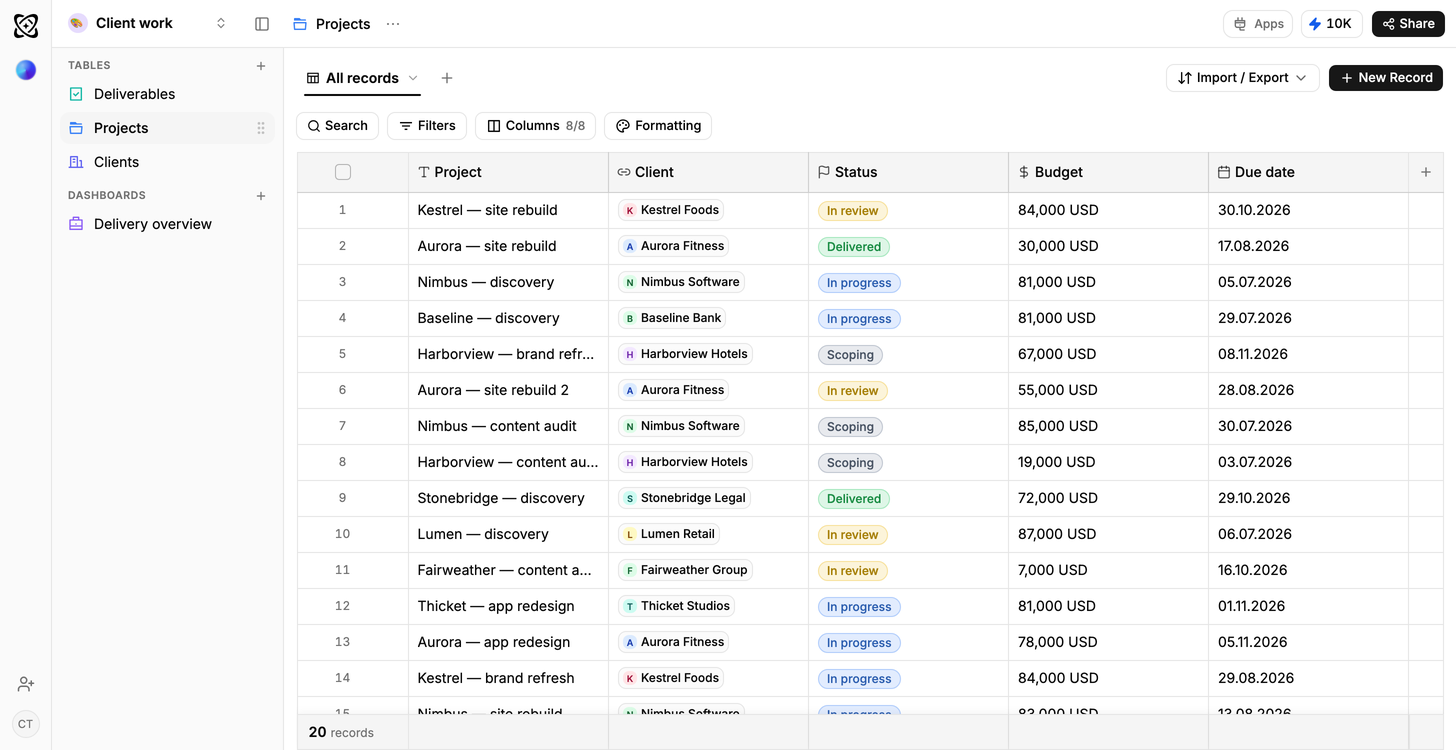
Client work
Due this week; shipped but not billed
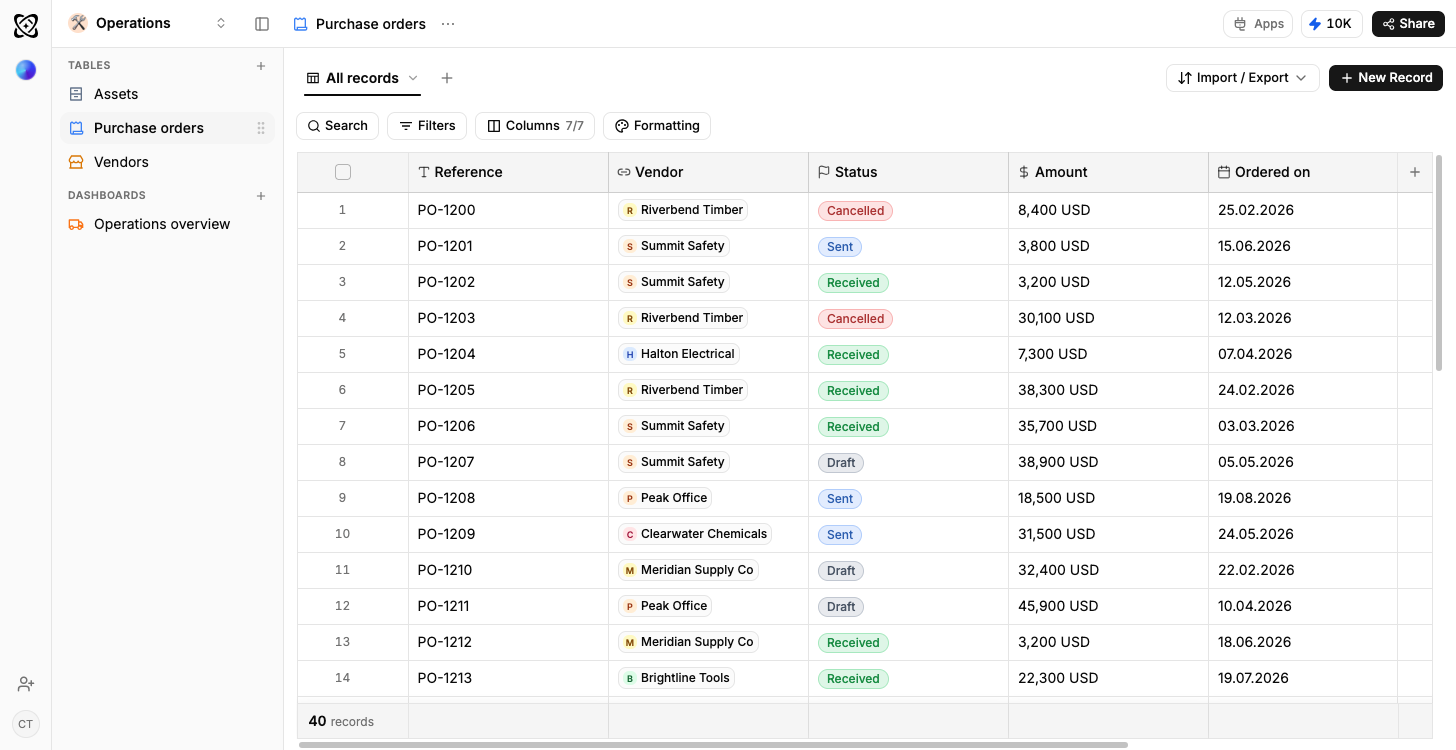
Operations
Orders in flight, spend by supplier
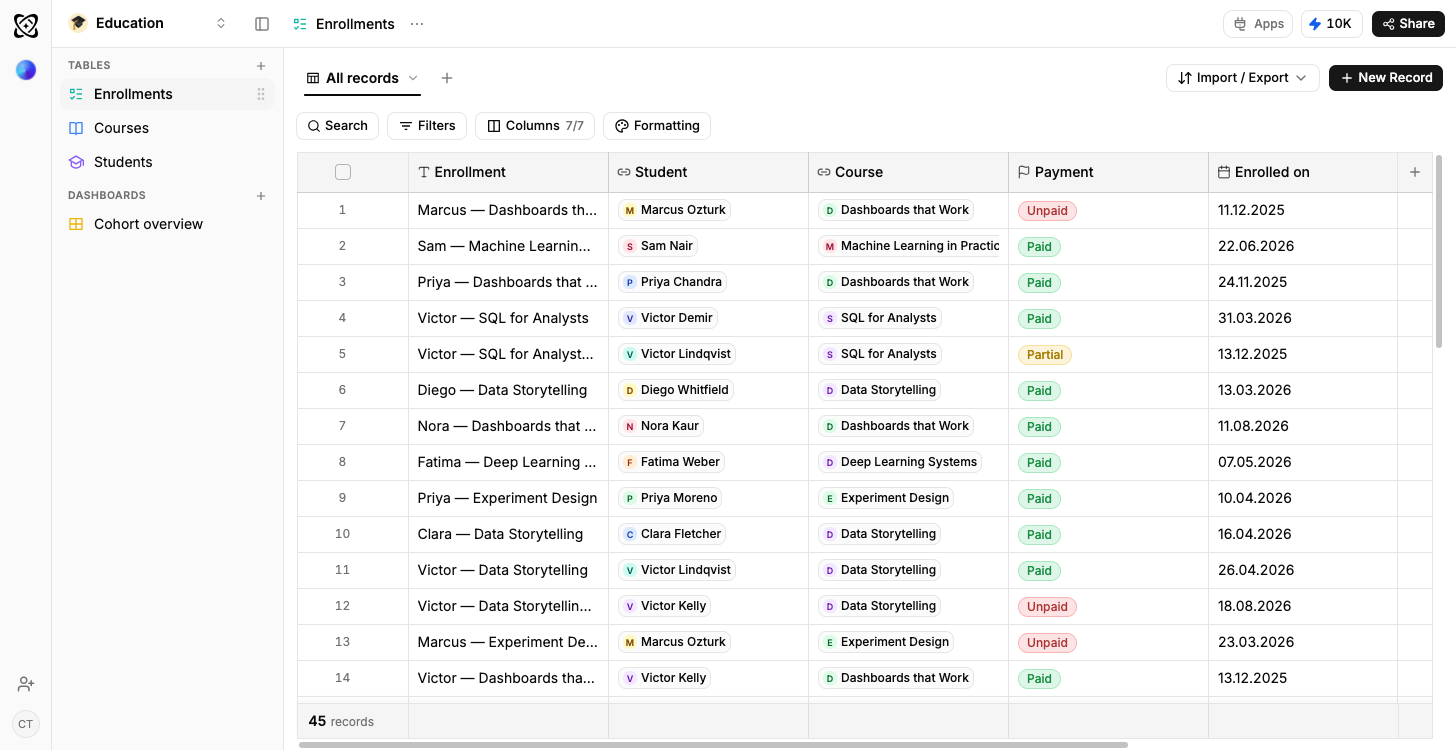
Education
Attendance and completion by cohort