
How is the SaaS quick ratio calculated?
quick ratio = (new MRR + expansion MRR) / (churned MRR + contraction MRR)
Add the MRR you gained this month, new plus expansion, and divide by the MRR you lost to churn and contraction. That's the quick ratio. A team that added $40,000 of MRR while losing $10,000 sits at 4.
The common health bar is 4 or higher: at least $4 of MRR gained for every $1 lost. Between 1 and 2 you're on a treadmill, replacing churn about as fast as you grow. Below 1, the business is shrinking even when new sales look fine. Check the mix too: a ratio propped up by heavy new sales over a leaky base is far more fragile than the same ratio built on expansion and low churn.
Land each month's MRR movements in a Ferra table and you can pull the quick ratio by month or segment with a question, leaks show up while they're still small.
How the SaaS quick ratio calculator works
Four numbers from a single month: two kinds of gain, two kinds of loss. The calculator divides the MRR you gained by the MRR you lost, showing how efficiently the business grows relative to its own leaks.
- New MRR
- Recurring revenue from customers whose first payment landed this month. Upgrades by existing customers don't belong here, that's expansion.
- Expansion MRR
- Extra MRR from customers you already had: an upgrade, added seats, a cross-sell. Count only the increase over their previous MRR, never their full new total.
- Churned MRR
- The full amount previously paid by customers who cancelled outright this month.
- Contraction MRR
- MRR given up by customers who downgraded but stayed. Enter it as a positive number, the calculator books it as a loss.
Calculating the SaaS quick ratio
New plus expansion is your gain. Churned plus contraction is your loss. Divide gain by loss, and pull all four figures from the same month, or the result means nothing.
A company adds $25,000 of new MRR and $5,000 of expansion in a month while losing $9,000 to churn and $1,000 to contraction. MRR gained is $25,000 + $5,000 = $30,000; MRR lost is $9,000 + $1,000 = $10,000. Quick ratio: $30,000 / $10,000 = 3, three dollars of recurring revenue in for every dollar out.
Mixed periods and mixed units wreck this ratio quietly: a month of new MRR against a quarter of churn, or MRR in one field and ARR in another. Misclassification does the same: log a downgrade as churn or an upgrade as new MRR and the ratio moves with zero change in the business. And this is not the accounting quick ratio, which compares liquid assets to liabilities and shares nothing but the name.
What is a good SaaS quick ratio?
Four is the bar: a healthy growth-stage SaaS company adds $4 of recurring revenue for every $1 it loses. Above 4, growth is efficient and most new revenue survives the leaks. Between 2 and 4, growth is real but expensive to sustain. Below 2 you're filling a leaky bucket, and below 1 it drains faster than you pour.
One month can lie. A single large cancellation craters the ratio, so read it as a rolling trend rather than reacting to one print. Two companies can also share a ratio in very different health: strong sales over heavy churn versus modest sales over minimal churn, and the second is the stronger business. Look at the components, not just the quotient.
How to improve your SaaS quick ratio
Grow the numerator or shrink the denominator. Shrinking churn is almost always the cheaper move.
- Get customers to first value fast
- Most churn is decided in the first few weeks. Customers who reach value quickly rarely show up in the denominator later.
- Spot at-risk accounts early
- Falling usage and stalled logins predict cancellations weeks in advance, enough time to step in before the MRR churns.
- Give customers room to grow
- Tiers, seats, and usage-based pricing that scale with the customer turn ordinary retention into expansion MRR.
- Shift customers to annual contracts
- Annual plans can't cancel month to month, which steadies the denominator and buys time to fix problems.
- Interview every downgrade
- Contraction is churn's early warning. The reasons cluster fast, and fixing the top one shrinks both loss lines.
- Sell only to best-fit customers
- A poor-fit deal inflates new MRR now and reappears as churn within months. It hurts the ratio twice.
Other calculators
Browse all calculatorsRelated templates
Browse all templates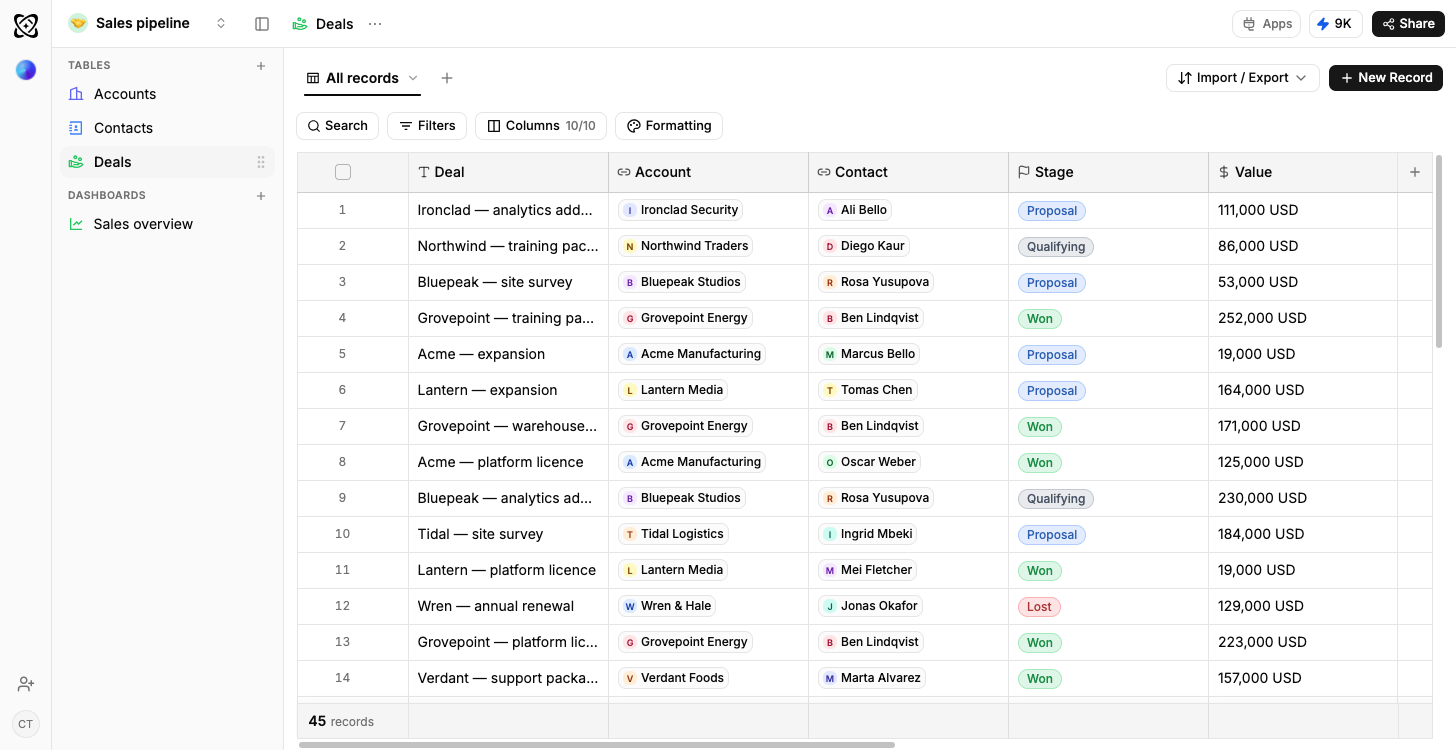
Sales pipeline
Open pipeline by stage, results by owner
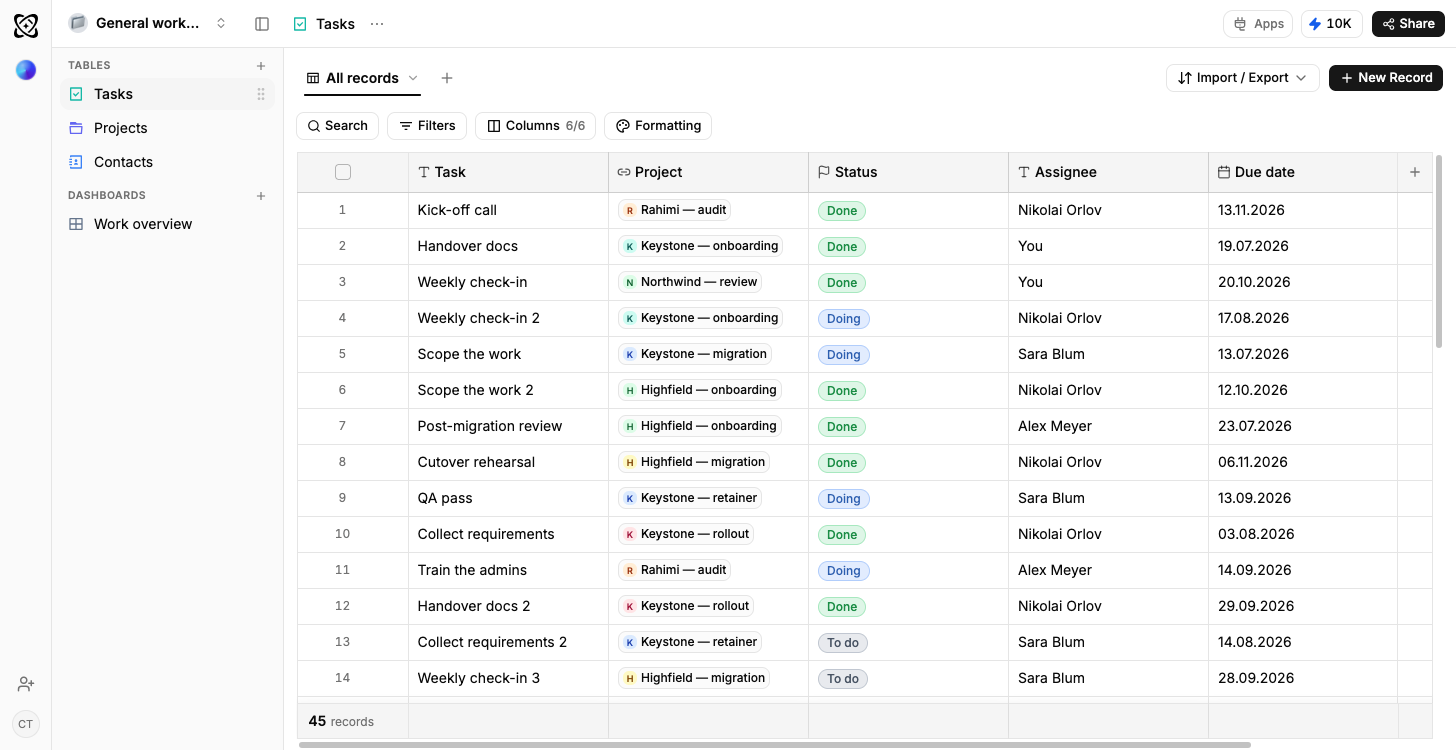
General workspace
Projects and budget by status
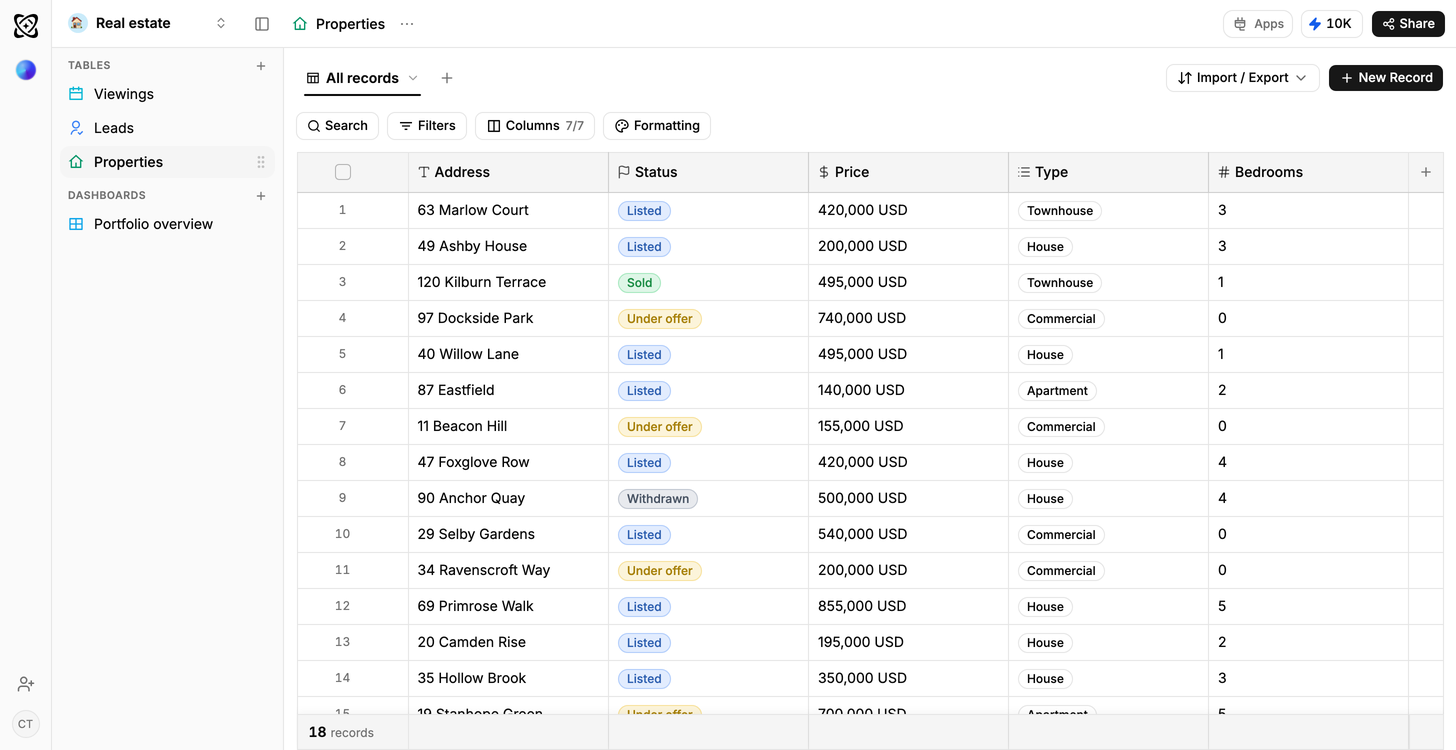
Real estate
Portfolio value and leads, by stage
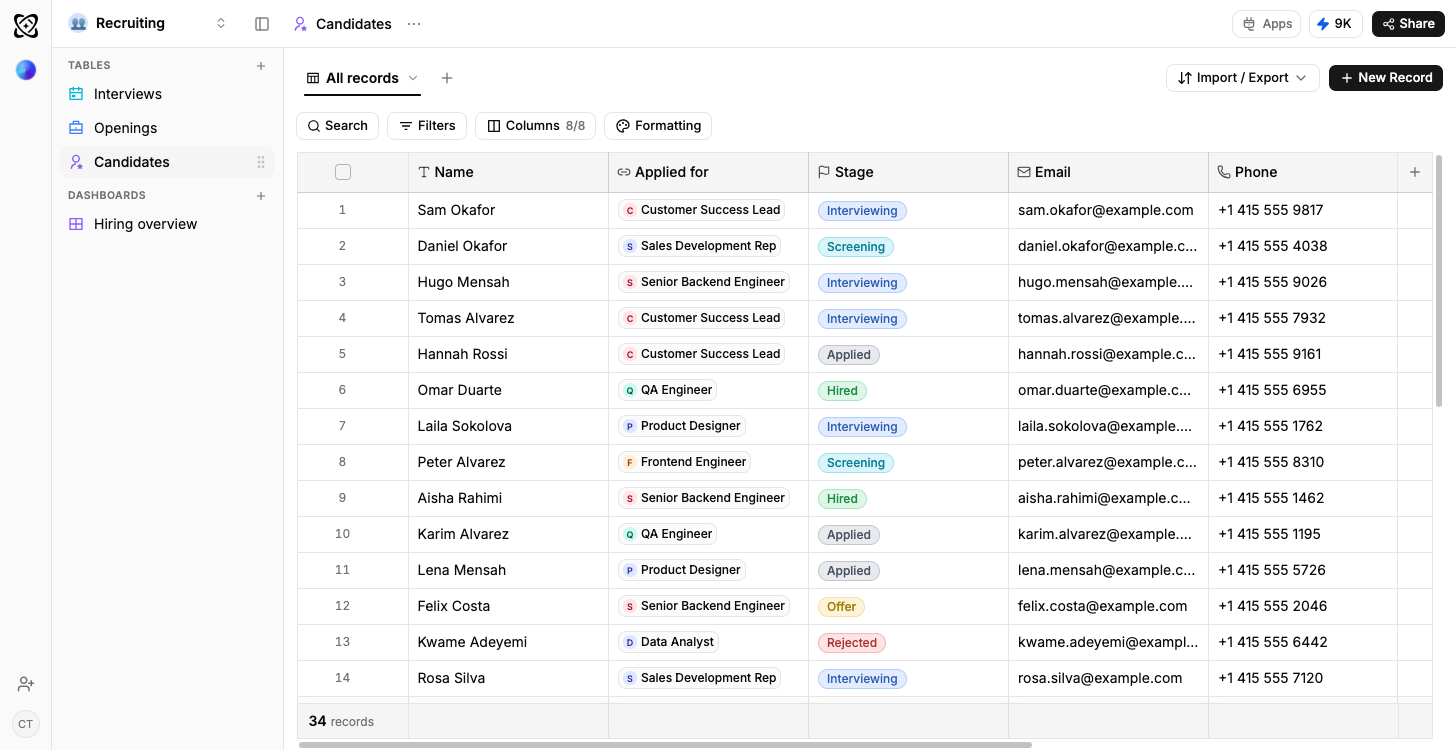
Recruiting
Candidates by stage, openings by status
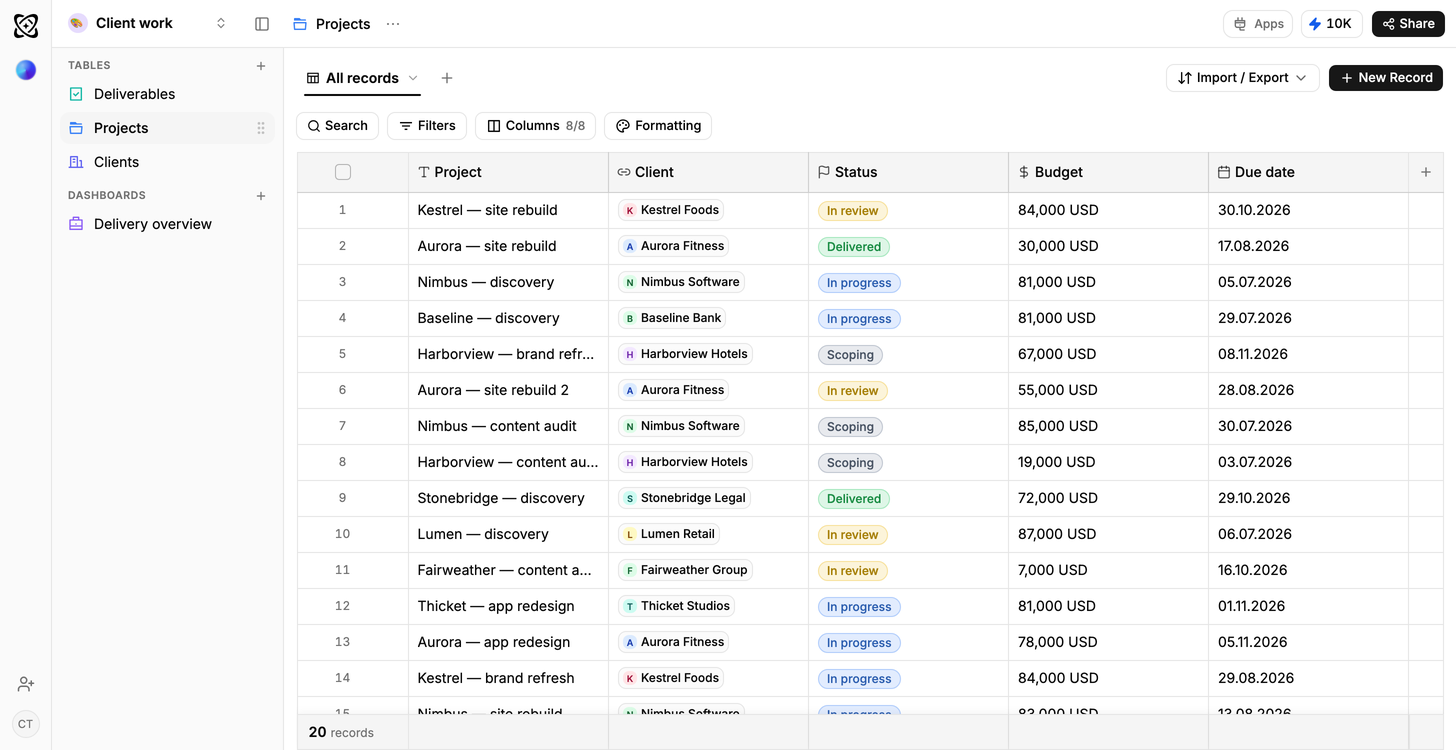
Client work
Due this week; shipped but not billed
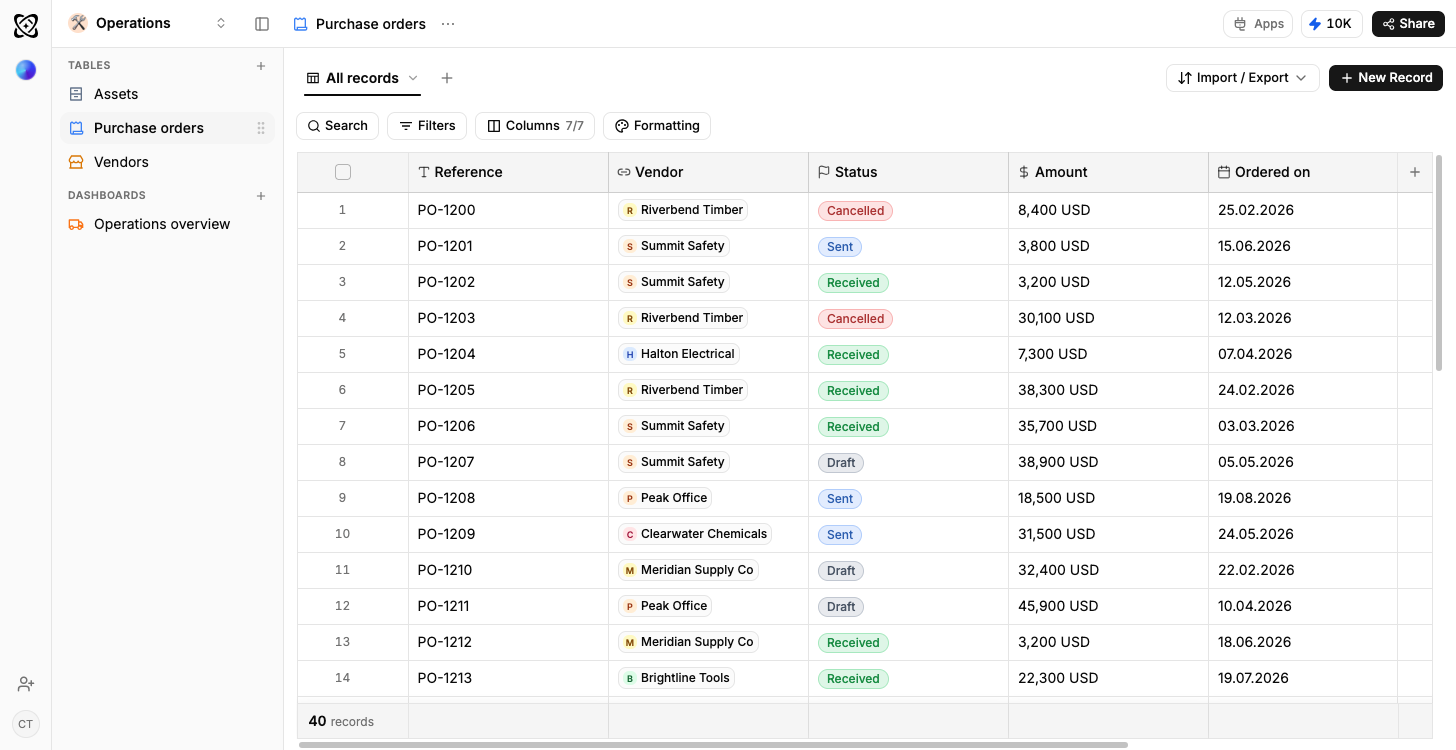
Operations
Orders in flight, spend by supplier
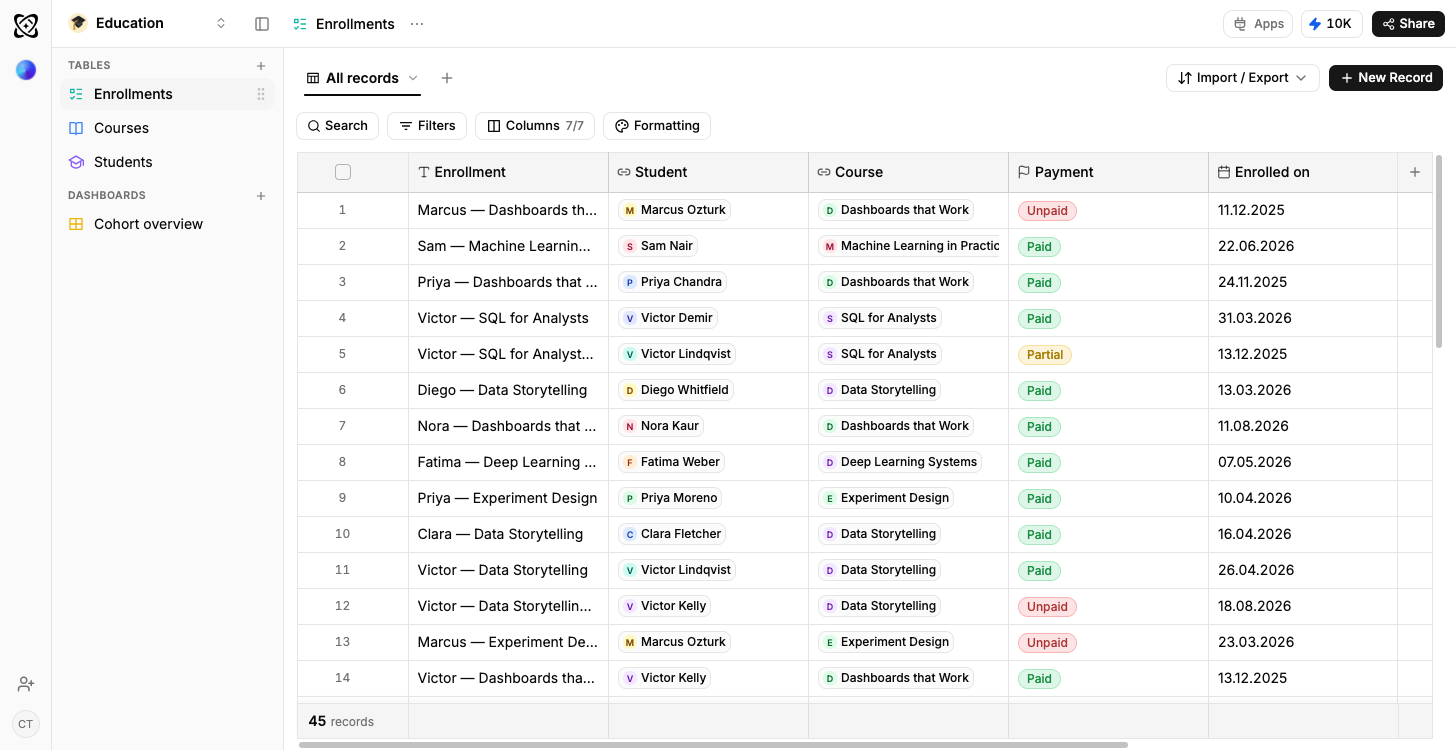
Education
Attendance and completion by cohort
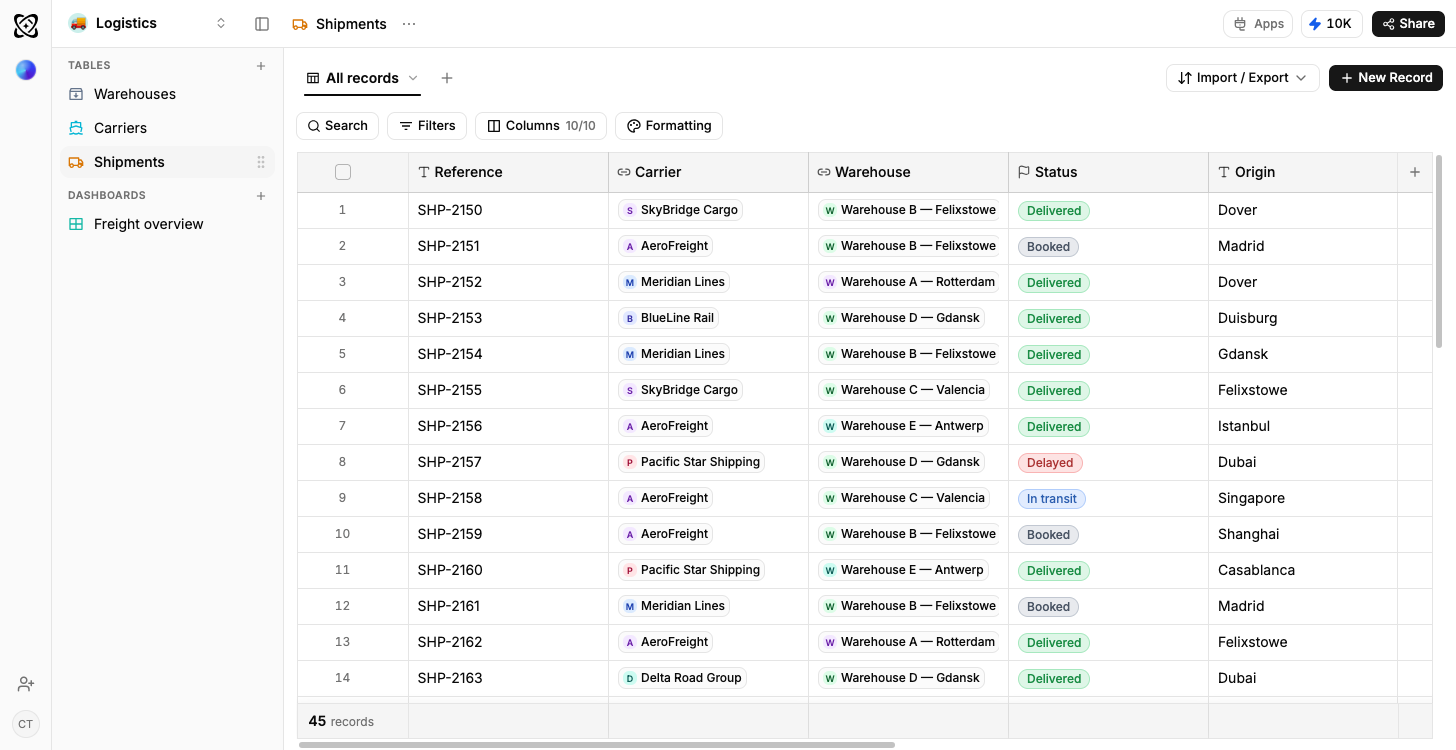
Logistics
On-time rate by carrier and lane