
How do you calculate the number of days between two dates?
days = |end date − start date| in whole days; weeks = days / 7
January 1 to January 8 is 7 days, not 8. You're counting the gaps between dates, not the dates themselves: put both dates on a common timeline, subtract the earlier from the later, and the whole days in between are your answer. Divide by 7 and you have the same span in weeks.
Use the elapsed count for durations, project length, say, or shipment transit time, and for counting down to a deadline. Billing and rental days usually want both endpoints counted: add 1 for that inclusive version. These are calendar days, so a business-day count that skips weekends and holidays comes out lower, and leap years handle themselves because the math works from real dates.
When Ferra tables carry date columns, order placed and delivered, say, or role opened and filled, you can ask for the average gap between them in plain English and watch it update as rows land.
How the days between dates calculator works
Pick two dates and you get the whole days between them, plus the same span in weeks. Order doesn't matter: the calculator takes the absolute difference, so swapping start and end gives the same answer.
- Start date
- The earlier date: a project kickoff or an invoice date, even a contract signing. The count begins the day after it, because elapsed days measure the gaps between dates, not the dates themselves.
- End date
- The later date: a deadline or payment due date, or just today. It's the last day counted, so identical start and end dates give zero.
Calculating days between dates
March 1 to April 15, same year. Both dates become positions on a single timeline and get subtracted: March has 31 days, so March 1 to March 31 covers 30 elapsed days, and March 31 to April 15 adds 15 more: 45 days in total.
Divide by 7 for weeks: 45 / 7 ≈ 6.4 weeks, or exactly six weeks and three days. Planners tend to prefer that second form. Six weeks and three days maps straight onto a sprint or payroll calendar in a way 45 doesn't.
Off-by-one errors come from counting dates instead of gaps. January 1 to January 8 spans 8 calendar dates but only 7 elapsed days, and which number you want depends on the question: a deadline "in 7 days" means elapsed days, while "how many days was the conference" usually counts both endpoints. Settle the convention before you quote the number, and remember February has 29 days in a leap year, which shifts any span that crosses it.
When to use the days between dates calculator
Miss a net-30 deadline by one day and the early-payment discount is gone, or the contract is breached. Payment terms, SLA response windows, notice periods, and free-trial lengths are all day counts. Aging metrics start from the same subtraction: days sales outstanding is one date minus another, and so are ticket age and time-to-hire.
It works forward too. Counting the days from today to a launch or an event, or to the fiscal year-end, shows the runway you actually have, and the weeks figure converts that runway into sprints or reporting cycles. One caution for anything payroll- or business-day-sensitive: the result is calendar days, so adjust separately: nothing gets skipped automatically.
Tips for using days between dates
Most disputes over a date calculation are really disputes over which convention was assumed. The arithmetic never argues; the assumptions do.
- State inclusive or exclusive up front
- Decide if both endpoints count, and write it down. Adding 1 to an elapsed-day count gives the inclusive version: naming which one you used prevents the classic off-by-one argument.
- Keep business days separate
- Contracts and SLAs often mean working days. A 10-business-day window spans 14 calendar days at minimum; convert explicitly rather than eyeballing it.
- Watch leap years
- Any span crossing the end of February in a leap year picks up an extra day. Annual comparisons, this quarter against last year's, can differ by a day for that reason alone.
- Anchor recurring deadlines to dates, not counts
- "30 days after invoice" and "the same day next month" drift apart because months run 28 to 31 days. Pick one rule and hold it.
- Mind time zones on timestamps
- Two timestamps a few hours apart can land on different calendar dates in different zones. Convert to one zone before subtracting.
Other calculators
Browse all calculatorsRelated templates
Browse all templates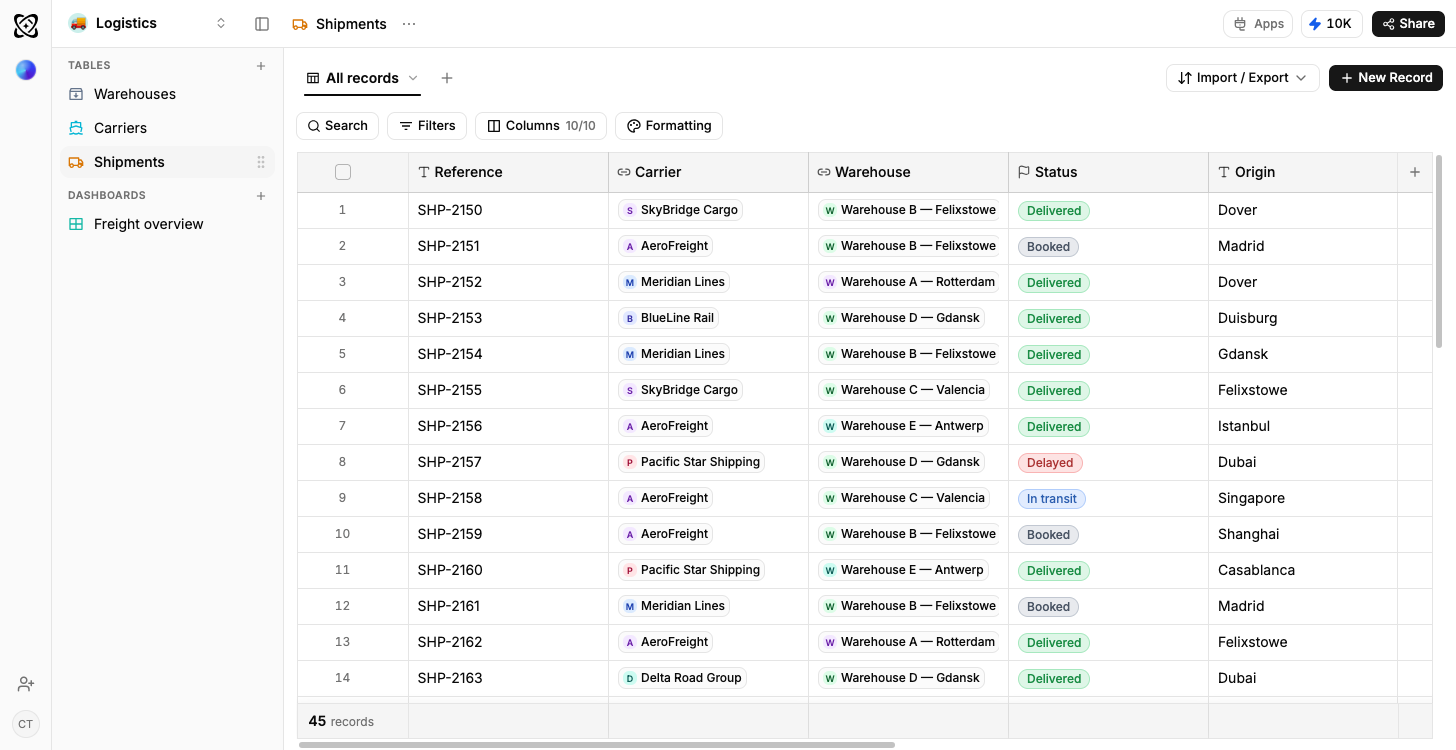
Logistics
On-time rate by carrier and lane
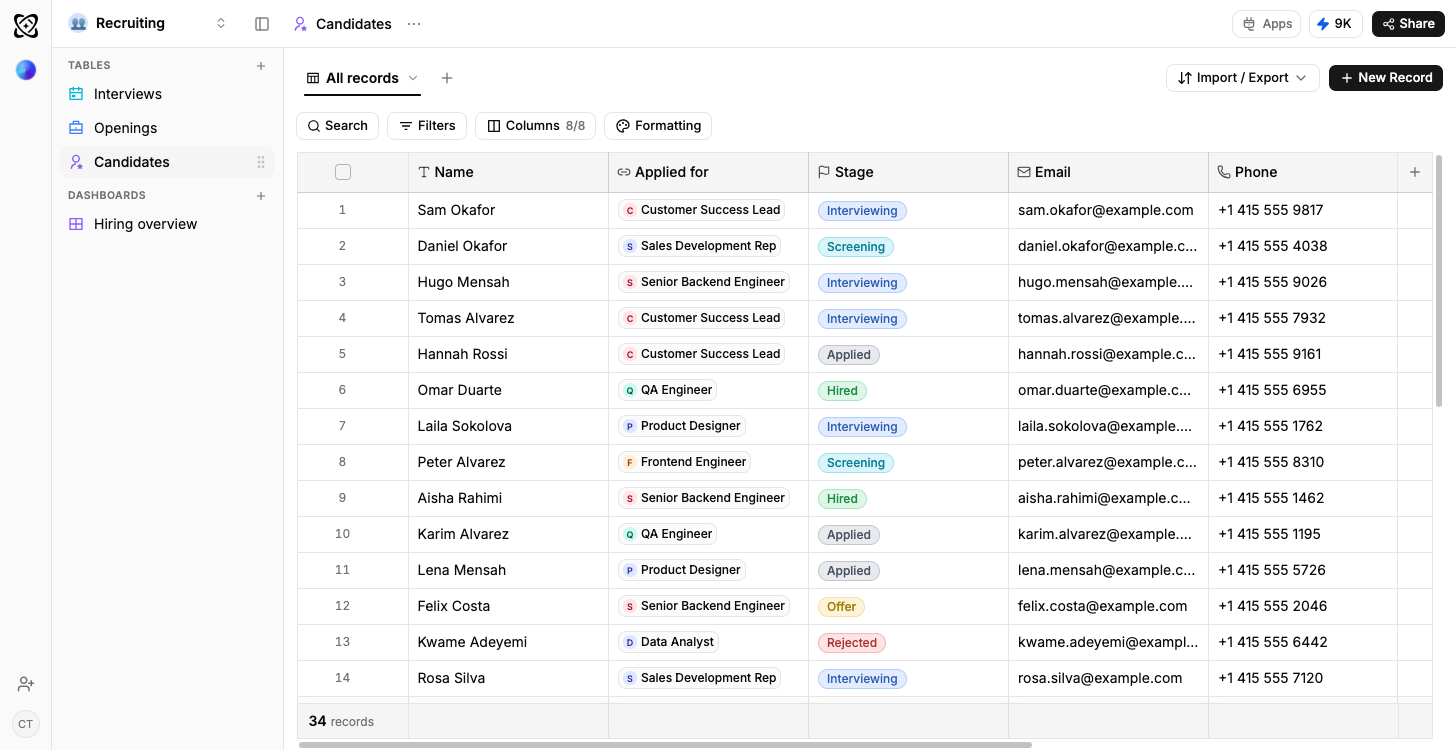
Recruiting
Candidates by stage, openings by status
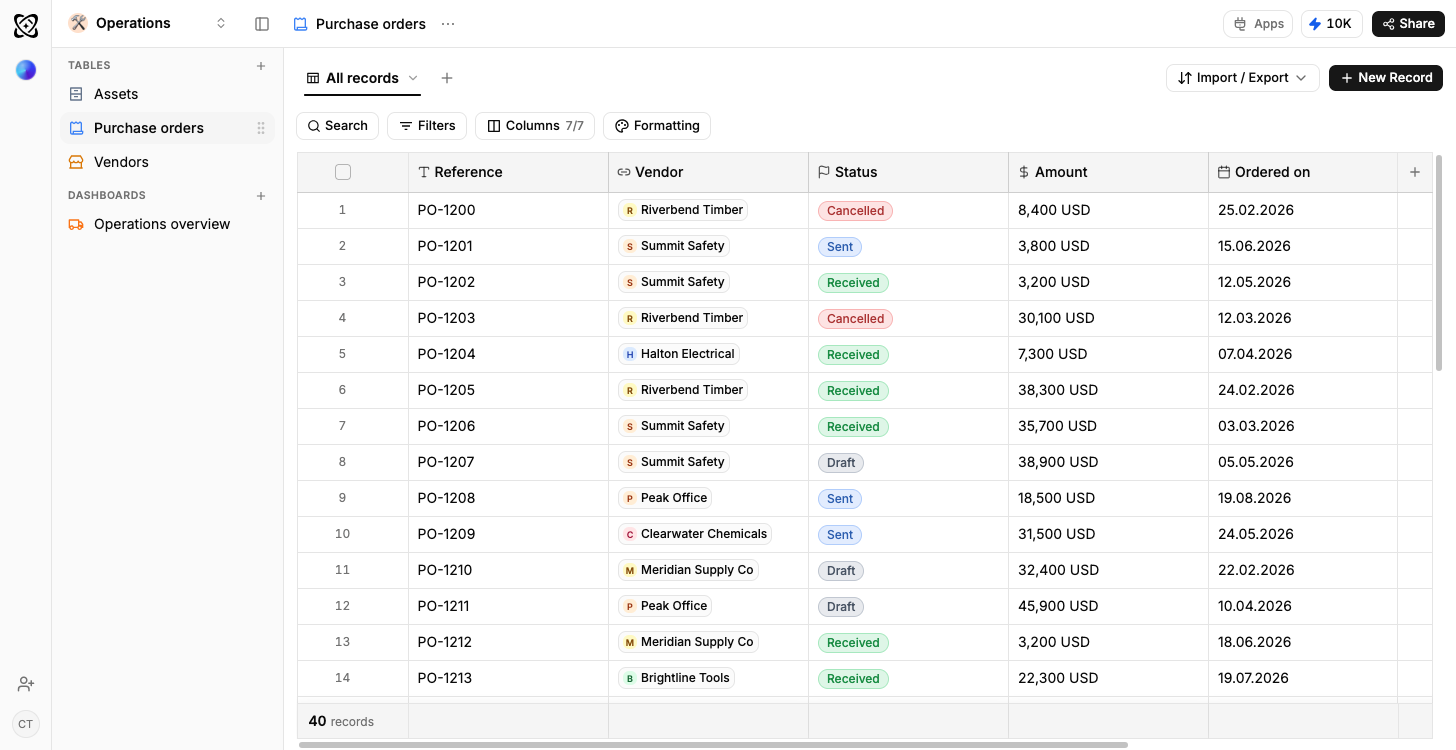
Operations
Orders in flight, spend by supplier
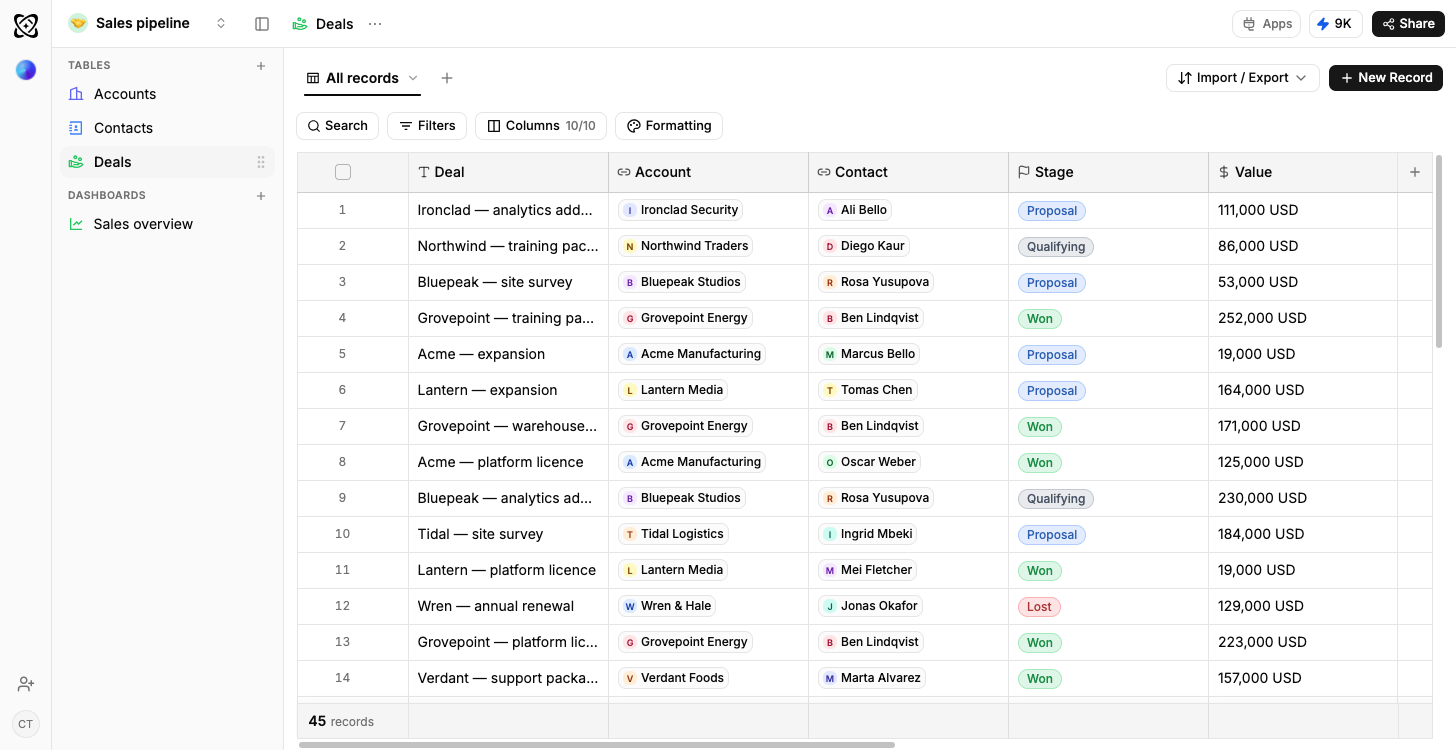
Sales pipeline
Open pipeline by stage, results by owner
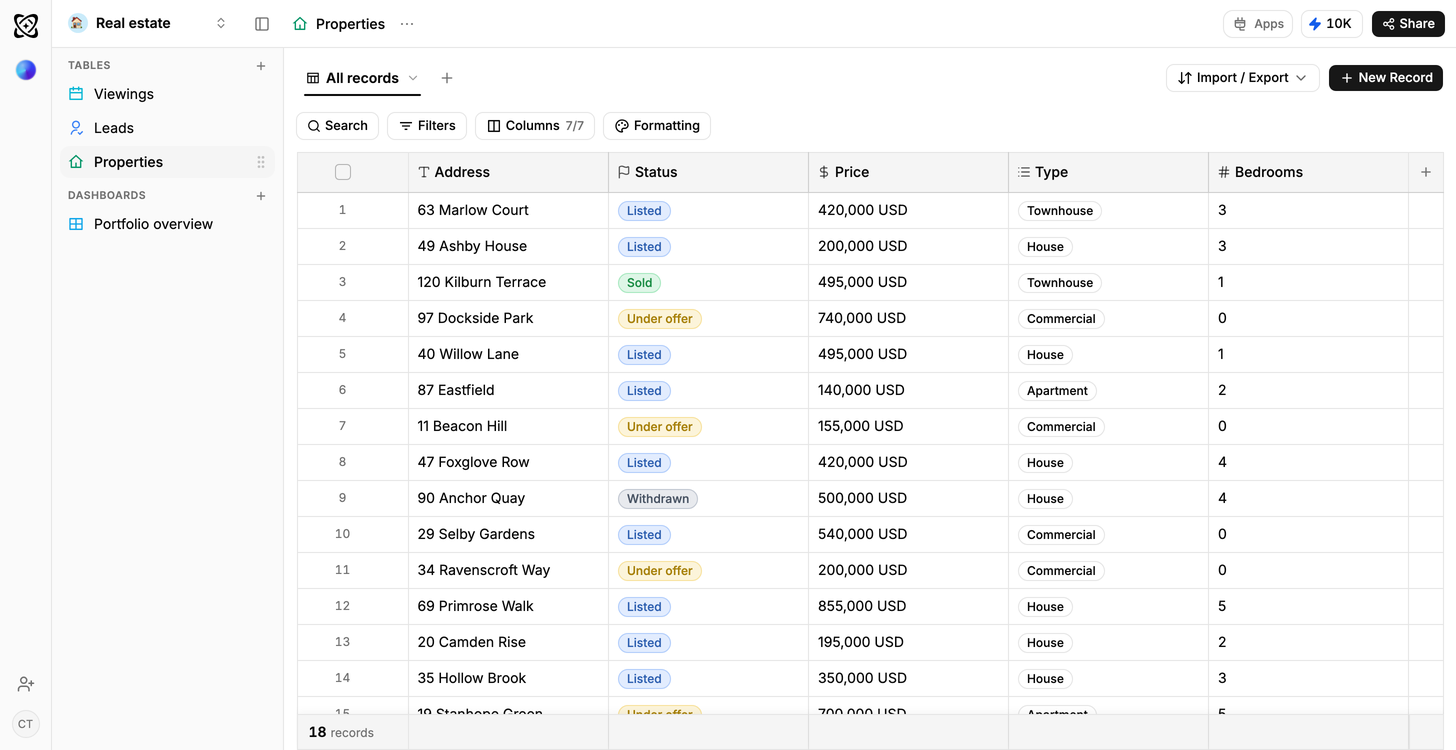
Real estate
Portfolio value and leads, by stage
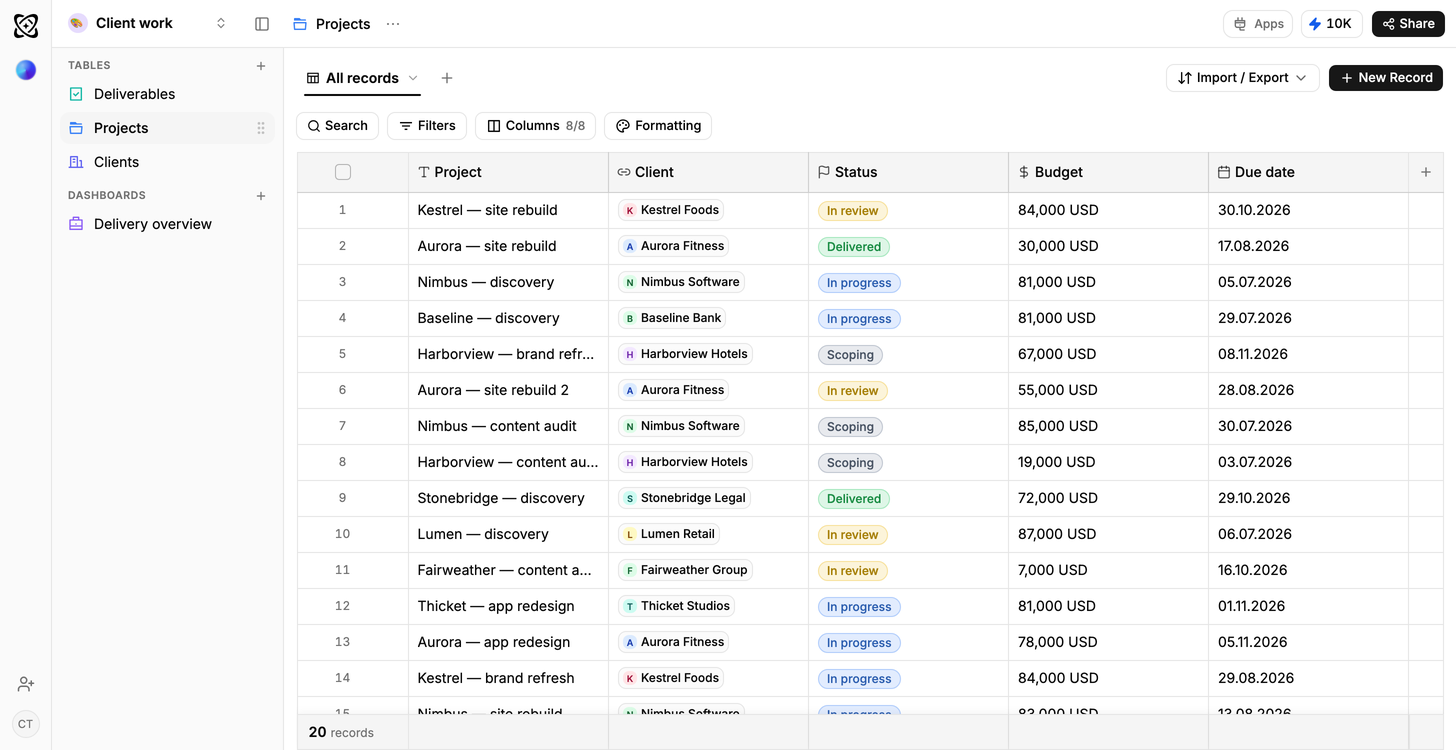
Client work
Due this week; shipped but not billed
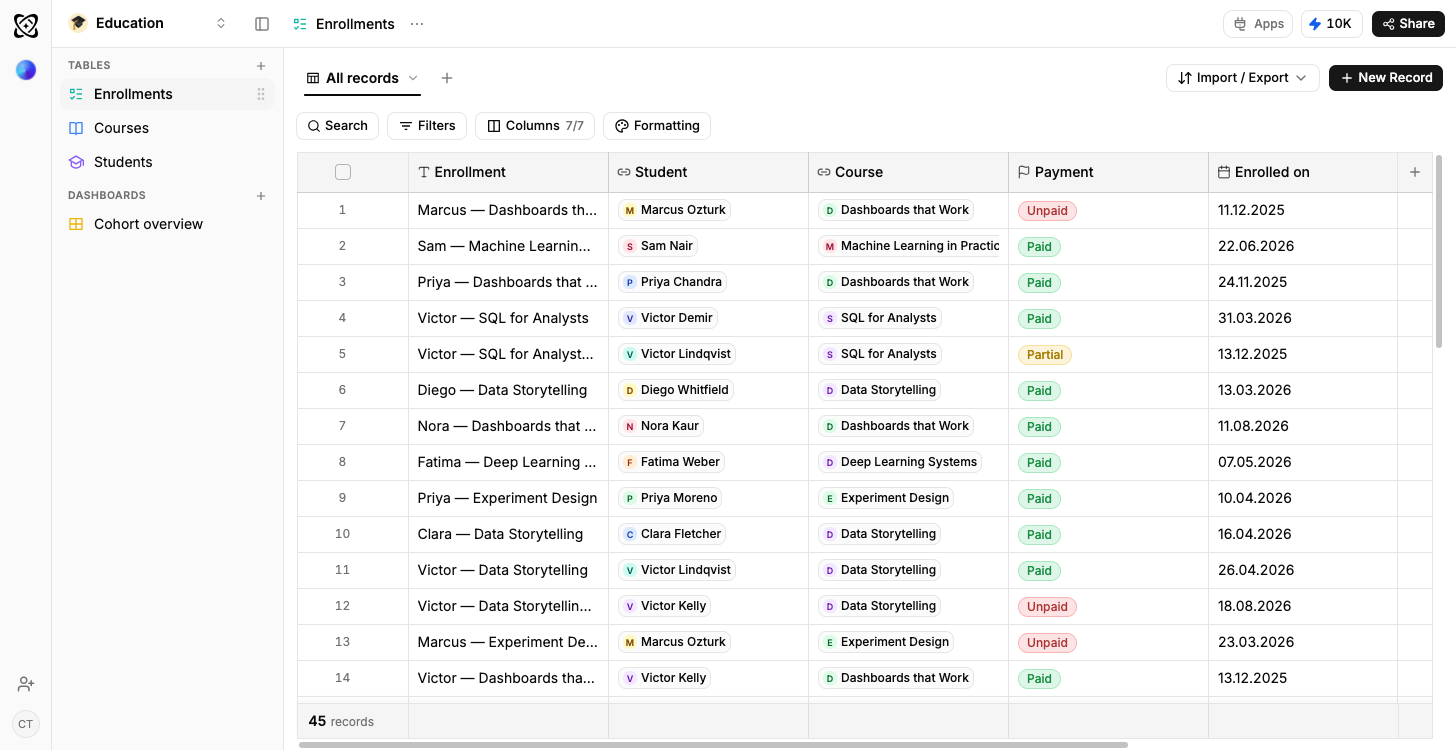
Education
Attendance and completion by cohort
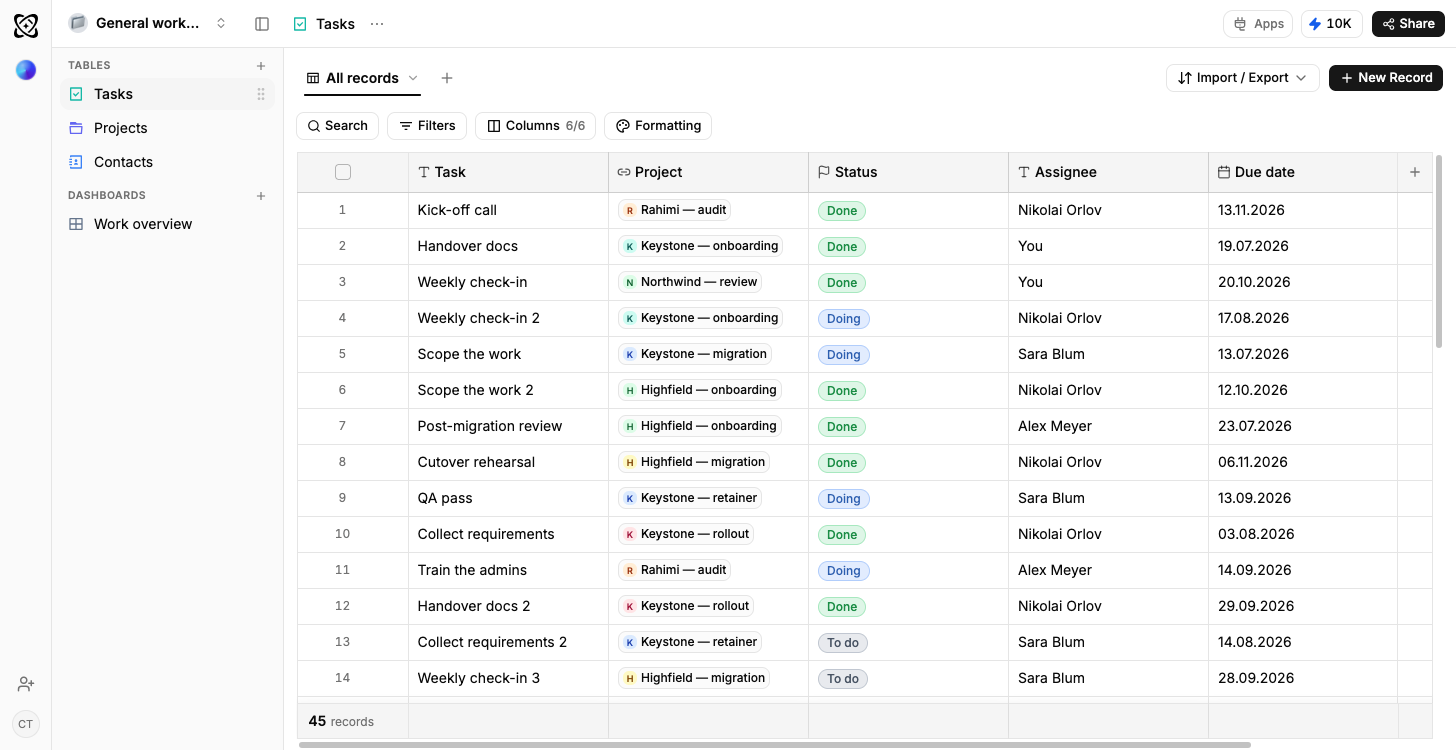
General workspace
Projects and budget by status