
How do you calculate email marketing ROI?
ROI = (emails delivered × conversion rate × average order value − campaign cost) / campaign cost × 100
Multiply emails delivered by your conversion rate to get orders. Multiply orders by average order value for revenue, subtract the campaign cost for profit, then divide profit by cost and multiply by 100. That percentage is your ROI. Deliver 20,000 emails at a 2% conversion rate and a $45 average order and you're looking at $18,000 in revenue against a $500 cost: an ROI of 3,500%.
Numbers that size are normal for email. Industry surveys put the average return around $36–40 per dollar spent, the highest of any marketing channel, mostly because sending to a list you already own costs next to nothing. The estimate is only as honest as its inputs, though: take the conversion rate from delivered emails rather than opens, and fold tooling and time into the cost instead of counting the send alone.
Track each send's cost, delivered count, and orders in a Ferra table and the ROI math reruns itself campaign by campaign.
How the email ROI calculator works
Four inputs: what the campaign cost, how many emails reached inboxes, the share that converted, and what an average order is worth. From those the calculator models revenue and profit, then returns ROI as a percentage: a fast read on if a send paid for itself, and a sandbox for testing what a better conversion rate or a bigger average order would have changed.
- Campaign cost
- Everything the campaign took to produce and send: the slice of your email platform's fee this send represents, plus design, copy, and any list costs. For a rough platform allocation, divide the monthly fee by campaigns sent.
- Emails delivered
- Sends minus bounces, straight from your platform's campaign report. This is the count that actually reached inboxes: delivered, not opened.
- Conversion rate
- The share of delivered emails that turned into an order, from campaign tracking or UTM-tagged analytics. Measured against delivered emails: not opens, not clicks.
- Average order value
- Revenue per order placed through this campaign. No campaign-specific figure? Your overall AOV stands in fine.
Working the ROI math
Say a campaign cost $400, reached 10,000 inboxes, converted 1% of recipients, and averaged $80 per order. Orders come first, emails delivered times conversion rate, then revenue, then profit, then the ratio.
10,000 × 1% = 100 orders. 100 × $80 = $8,000 in revenue. $8,000 − $400 = $7,600 profit. Then 7,600 ÷ 400 = 19, and 19 × 100 = 1,900% ROI: every dollar spent came back as $19 of profit.
The base of your conversion rate can wreck all of this. A rate calculated from clicks or opens runs far higher than one calculated from delivered emails, and plugging it in overstates orders several times over. The formula expects one base and one only: delivered.
What is a good email marketing ROI?
The folklore figure is $30–$40 back per dollar, a 3,000–4,000% ROI, and email earns its reputation as the highest-returning channel honestly. Individual campaigns scatter enormously around that average. Automated flows like welcome series and abandoned-cart emails typically beat one-off promotional blasts by a wide margin.
Treat the output as a revenue-based estimate, not accounting profit: product costs aren't in it, so a thin-margin business needs a much higher figure than a high-margin one to clear the same bar. And when ROI stays stubbornly low, the emails usually aren't the problem: list quality and deliverability are, and a stale list drags conversion down no matter how good the campaign is.
How to improve email marketing ROI
The send cost barely moves as performance improves, that's why email ROI compounds. Each lever below raises revenue against a mostly fixed cost.
- Segment your sends
- Campaigns targeted to purchase history, engagement, or lifecycle stage beat full-list blasts. Relevance lifts conversion and costs nothing extra.
- Automate the high-intent moments
- Welcome, abandoned-cart, and post-purchase flows catch people when they're most likely to buy, and keep earning after a one-time setup.
- Test subject lines
- Nothing else in the email gets seen if the subject line fails. A/B test on a slice of the list before the full send and opens, then orders, climb steadily.
- Protect deliverability
- Authentication, steady sending volume, and easy unsubscribes keep you out of spam folders. An email that misses the inbox is cost with zero chance of revenue.
- Prune inactive subscribers
- Never-openers cost platform fees and drag sender reputation. Run a re-engagement campaign, remove who stays silent, and the rates that drive ROI rise while cost falls.
- Raise order value in the email
- Bundles, cross-sells, and threshold offers ('free shipping over $75') push each converted reader toward a bigger order.
Other calculators
Browse all calculatorsRelated templates
Browse all templates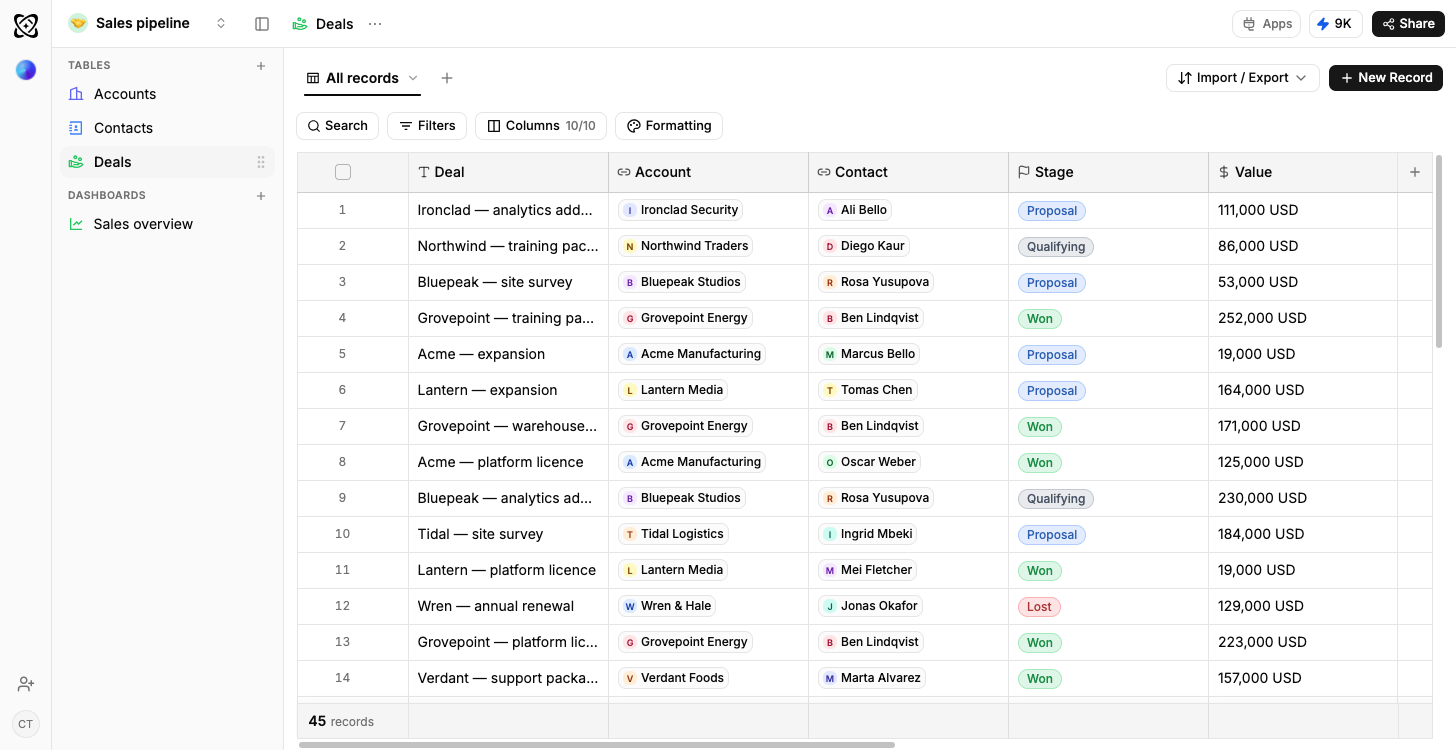
Sales pipeline
Open pipeline by stage, results by owner
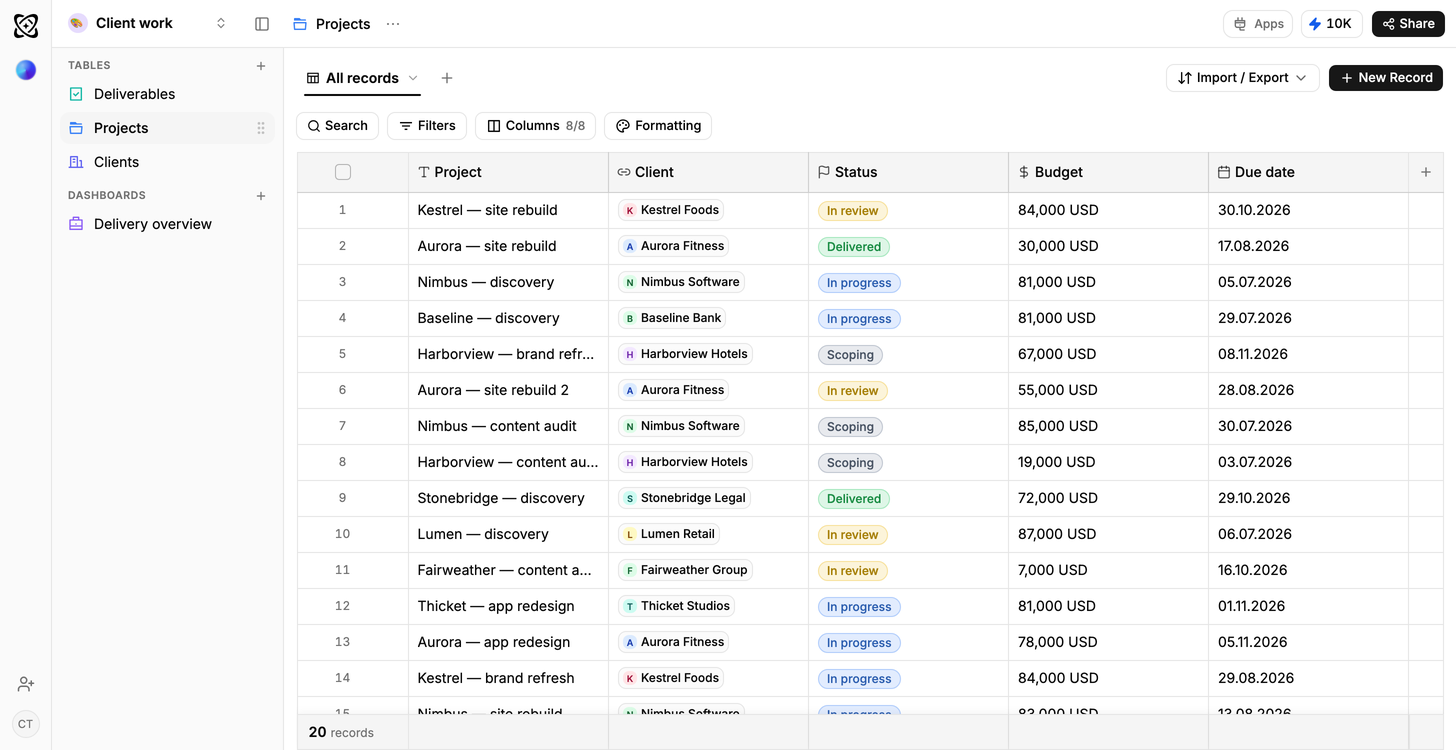
Client work
Due this week; shipped but not billed
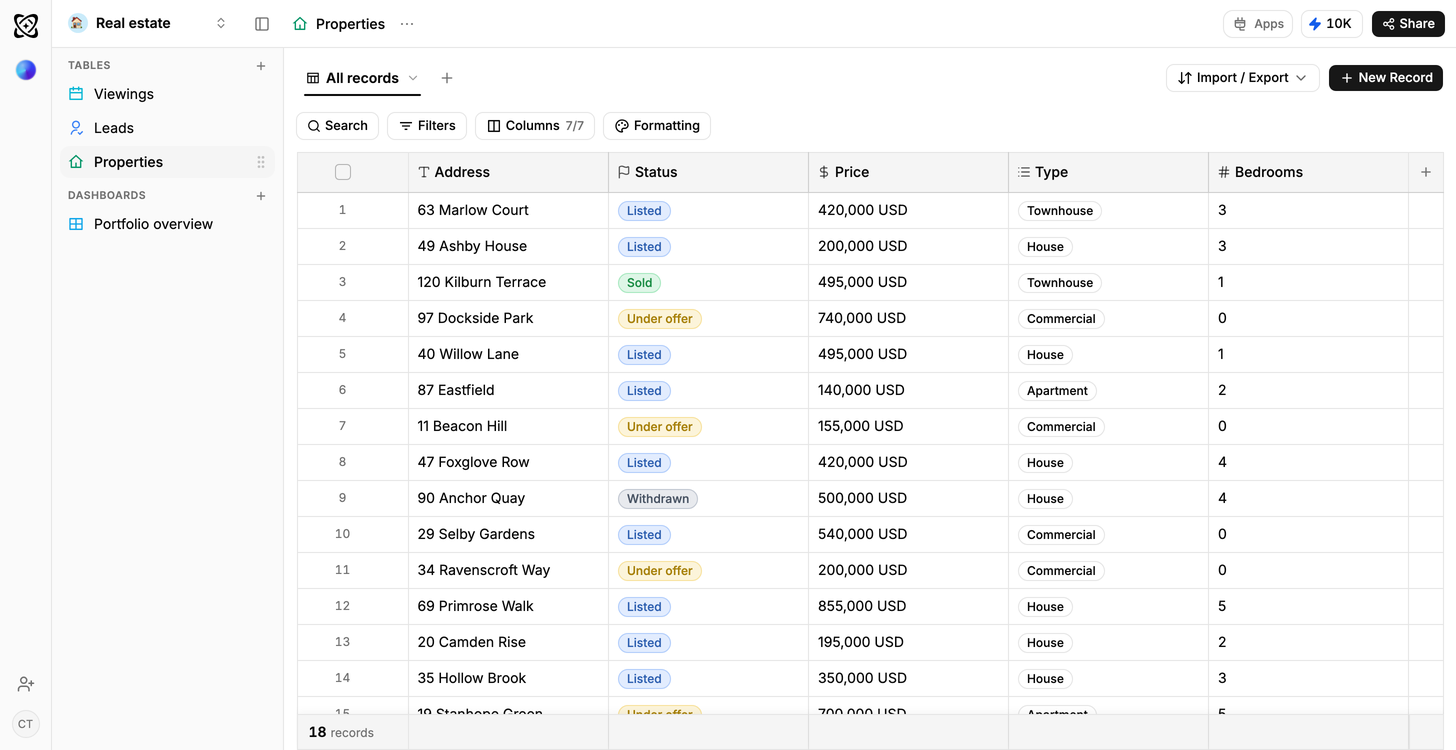
Real estate
Portfolio value and leads, by stage
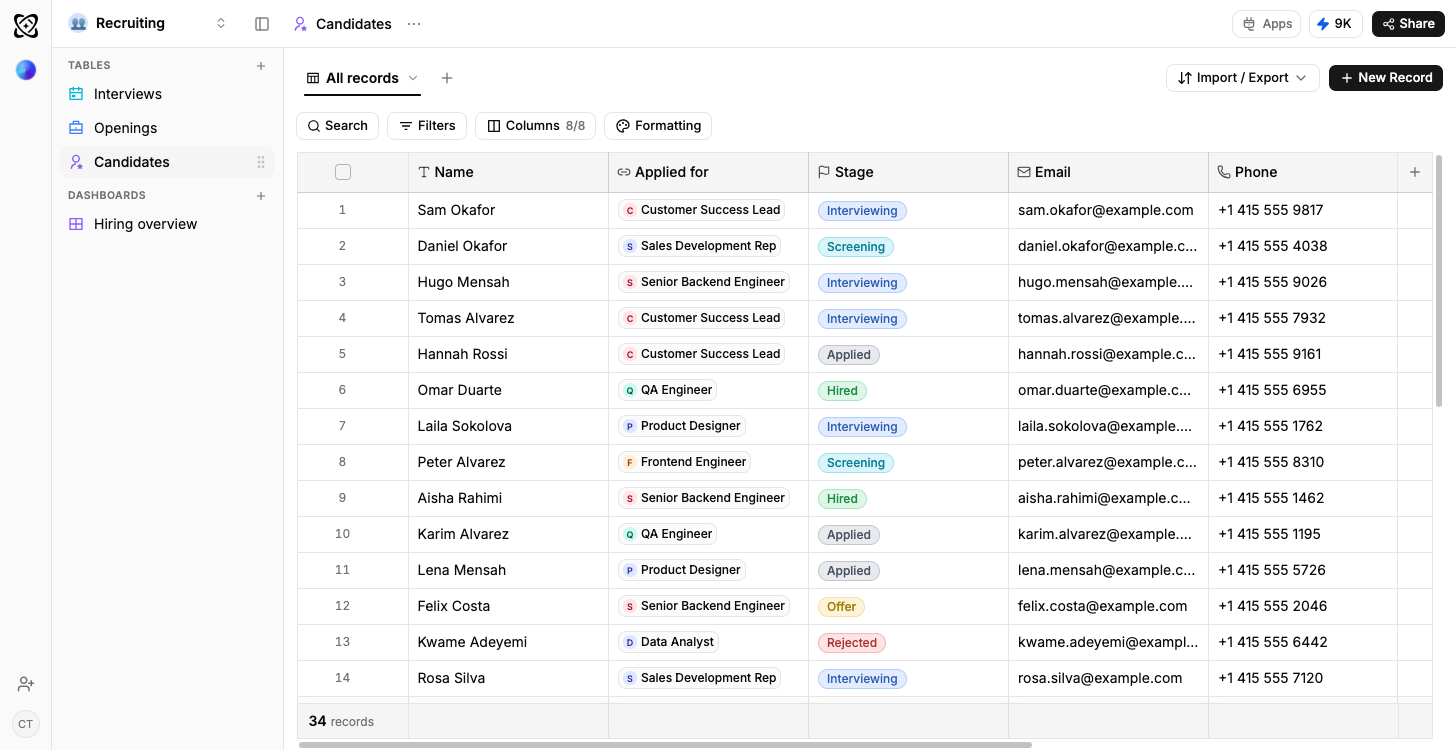
Recruiting
Candidates by stage, openings by status
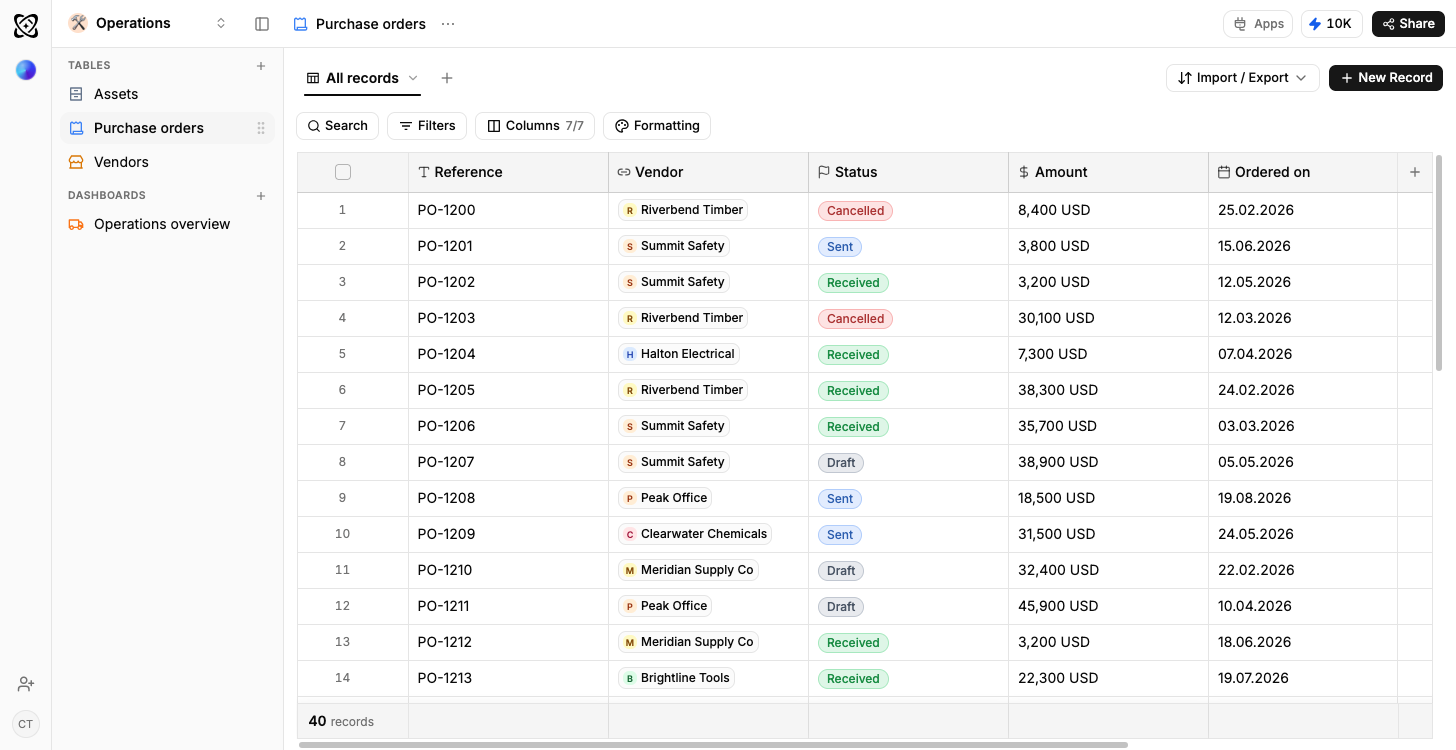
Operations
Orders in flight, spend by supplier
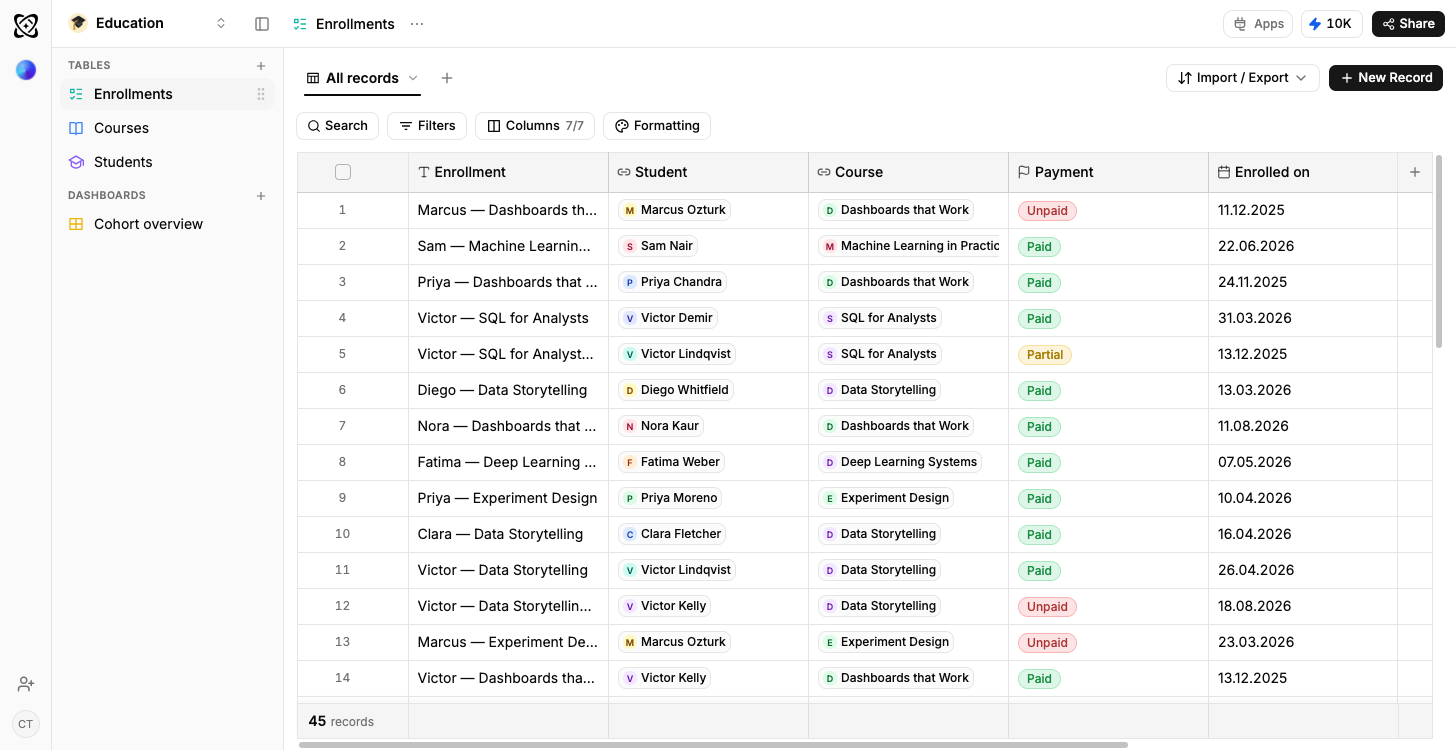
Education
Attendance and completion by cohort
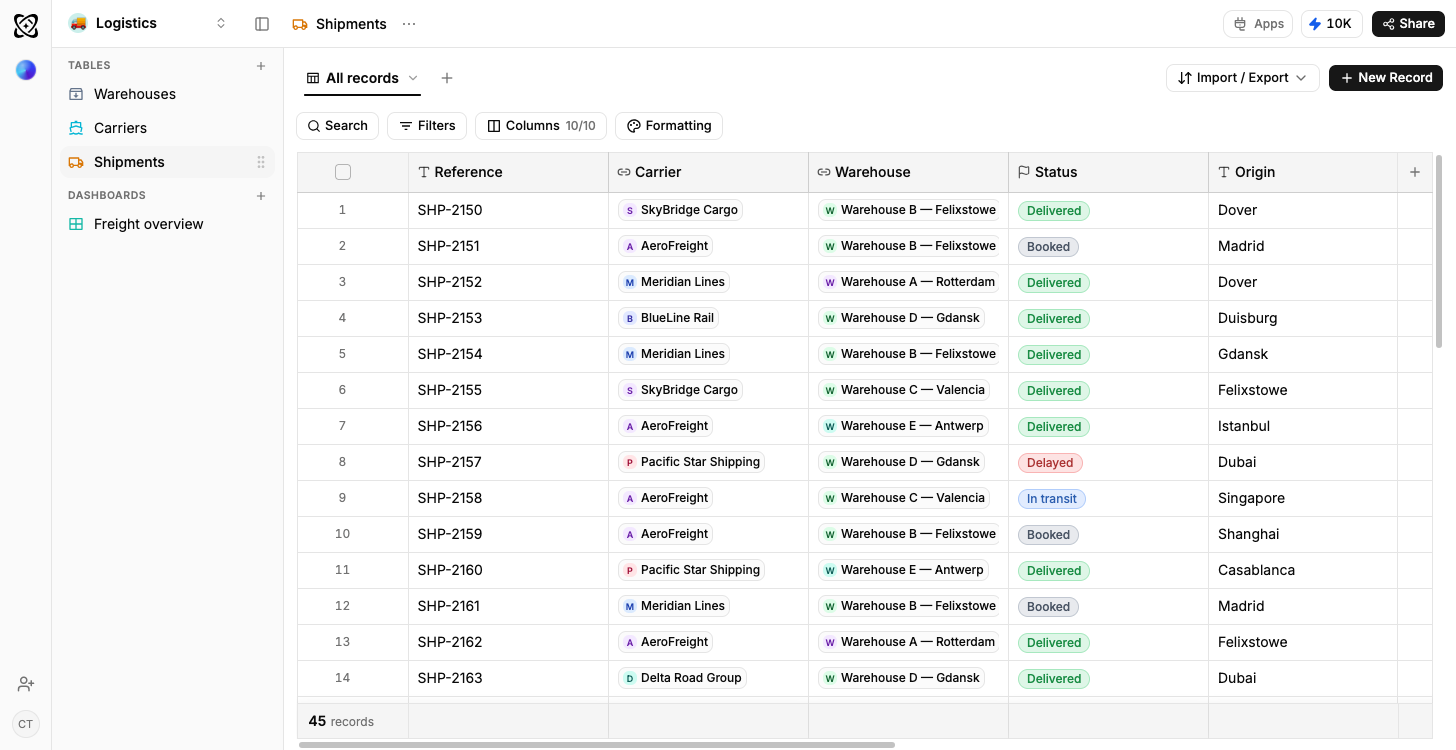
Logistics
On-time rate by carrier and lane
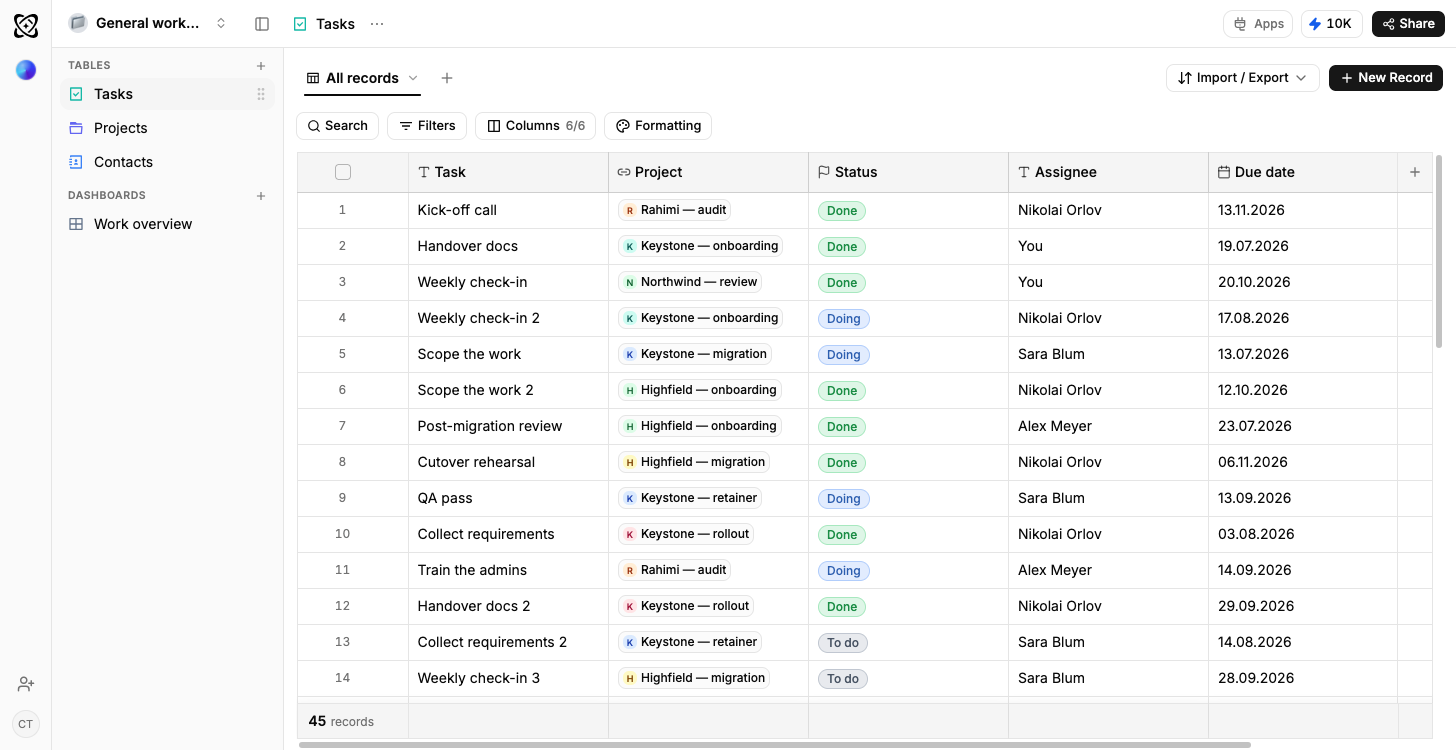
General workspace
Projects and budget by status